Back Country Bulletin
News from the Back Country
Get it on the Apple StoreGet it on the Google Play Store
NewsSportRuralCommunityEat, Drink, Stay
Back Country Bulletin
Why Your True Crime Obsession Isn't Weird: The Legitimate Benefits Behind the Guilty Pleasure

01 February 2026, 9:40 PM

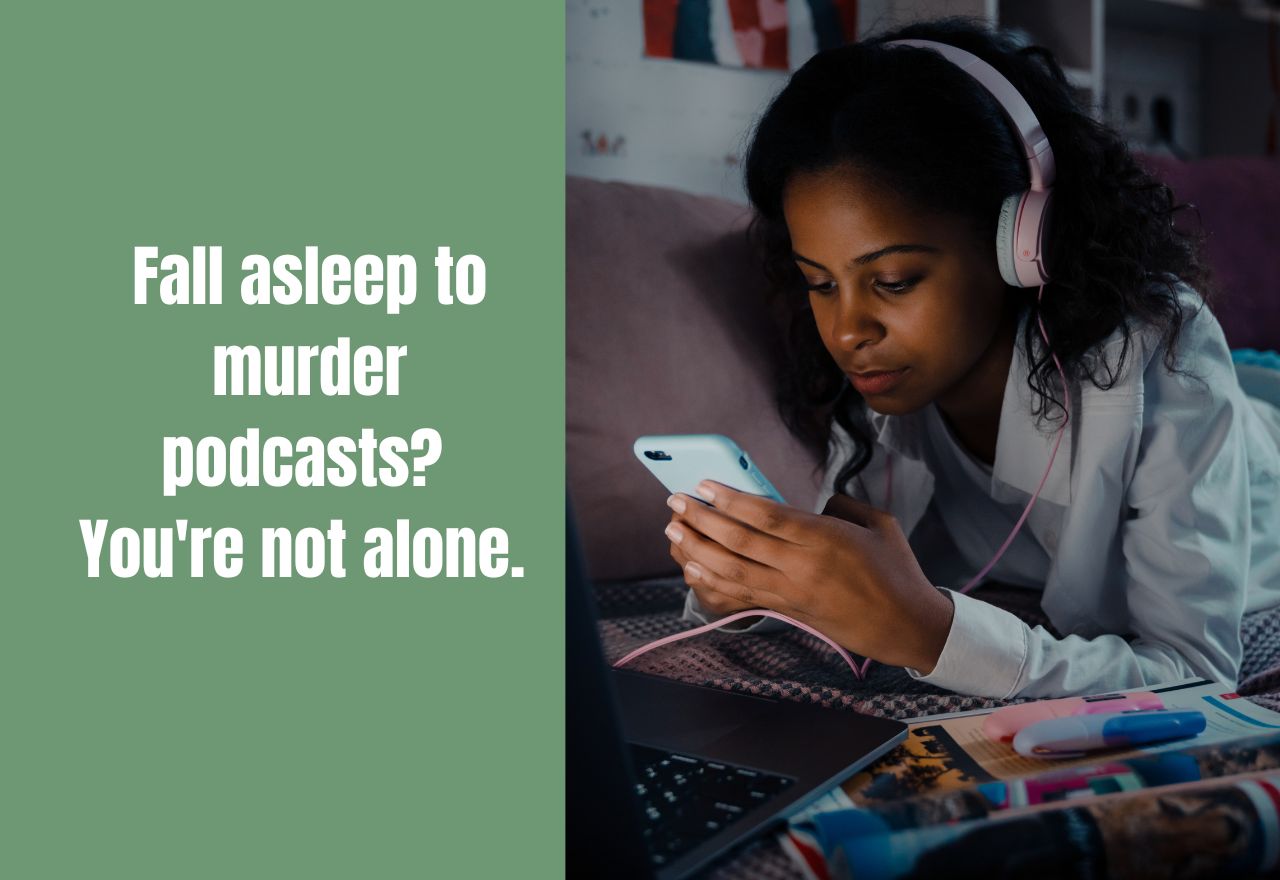
Fall asleep to murder podcasts? You're not alone.In Short:• Women make up 70% of true crime consumers and 85% of podcast audiences, using the content to learn survival techniques, identify red flags in behaviour, and mentally rehearse responses to dangerous situations• True crime serves legitimate psychological functions including emotion regulation, threat awareness education, and social connection, with research showing it helps people feel more informed and prepared rather than more fearful• While benefits include safety education and victim advocacy, healthy consumption requires moderation and choosing ethical content that centres victims rather than sensationalising violence for entertainmentYou're loading the dishwasher while listening to a detailed account of a serial killer's capture. You're walking the dog with a podcast host describing a crime scene in your ear. You fall asleep to episodes of a murder documentary. And somewhere in the back of your mind, you wonder if there's something wrong with you.There isn't. And the reasons why true crime resonates with millions of people, particularly women, are actually far more logical and beneficial than you might think.True crime has exploded into one of the most enduring entertainment trends of the past decade. Podcasts like Crime Junkie, My Favorite Murder, and Morbid attract massive audiences. Documentaries like Making a Murderer and series like Monster dominate streaming platforms. According to research, women are responsible for 70 per cent of Amazon reviews for true crime books. The audience for the podcast Wine and Crime is 85 per cent female. Even though men commit 80 per cent of violent crimes, women are significantly more drawn to true crime stories.It seems counterintuitive. Why would anyone, particularly women who are statistically more likely to be victims of violent crime, voluntarily consume content about murder, assault, and abduction? Why would graphic descriptions of crime scenes be relaxing? Why would anyone fall asleep to stories about serial killers?The answer isn't that something's wrong with you. The answer is that true crime serves genuine psychological and practical functions that we're only beginning to understand and appreciate.The most straightforward benefit is safety education. True crime content teaches survival techniques, helps identify red flags in behaviour, and provides practical knowledge about how crimes occur and how they can be prevented. For women in particular, true crime stories can educate about how to cope with scary situations and distant threats. They can teach practical tips that might prevent victimisation.Think about it pragmatically. Through true crime content, women can learn how they could be vulnerable to predators and what they can do about it. They can learn to recognise warning signs in relationships that might escalate to violence. They can understand manipulation tactics used by abusers. They can hear survival stories from people who escaped dangerous situations and learn from their strategies.One listener explained it perfectly when defending true crime consumption against criticism: "I've never been attacked by any kind of animal, nor do I know anyone who has. However, I do live in the forest and I have learned how to react if I ever encounter a cougar or bear by listening to other people recount their own sometimes horrible experiences. I like true crime and survival stories because I want to be a more aware person."There's a difference between hypervigilance, which can be a symptom of trauma, and choosing to be vigilant as a safety strategy. True crime consumption, for many people, falls into the latter category. It's intentional education about potential threats, not compulsive worry about them.Psychotherapist Helen Villiers points out that one of the most difficult things about being a woman is never knowing where an attack might come from. Being able to predict patterns of behaviour is seen as a way to keep safe. There's a deep sense of protection and security in the belief that you would be able to recognise danger and protect yourself. By explaining how crimes occurred and how perpetrators operated, true crime content provides a sense, even if somewhat false, that you'll be able to spot predators and keep yourself safe.The field of evolutionary psychology explains that we're wired to try to make sense of threats in our environment. We want to understand what would make people do things that would be unthinkable to us. Beyond just a natural drive to make sense of threats, studying the details of violent crime cases may make us feel like we'd have a better idea of what to do if we were ever in that situation. Following these cases gives our brains a rehearsal for the possibility of being a victim of crime. It's mental simulation of low-probability but personally relevant high-impact risks.Oddly enough, learning about crimes can actually make people feel safer, not more frightened. Dissecting what went wrong helps listeners feel more informed and more prepared. It's the difference between generalised anxiety about unknown dangers and specific knowledge about identifiable risks. The former is paralysing. The latter is empowering.True crime also serves important emotion regulation functions. The content delivers strong emotions like fear, anger, and outrage within a structured narrative arc, helping consumers manage those feelings productively. It's similar to how horror films function as a safe space to experience fear. You're processing genuine emotions, but you're doing it in a controlled environment where you can pause, stop, or step away at any time.For some people, particularly those who've experienced trauma, true crime content provides a way to re-experience traumatic situations in a safe environment where they have more control. This isn't necessarily unhealthy. Processing trauma through parallel narratives can be therapeutic, though obviously this depends heavily on the individual and their specific circumstances.The social connection aspect of true crime consumption is also significant. Listeners often describe podcast hosts as friends. These parasocial relationships, while one-sided, still fulfil social needs and foster trust. Online communities around true crime create spaces for discussion, analysis, and shared interest. Platforms like Reddit are filled with amateur sleuths who analyse cold cases and form global justice communities. For many people, these fandoms foster belonging and shared identity.There's also an element of justice-seeking and victim advocacy. Many true crime consumers are motivated by a desire to see justice served, to ensure victims aren't forgotten, to keep public attention on unsolved cases. Podcasts like True Crime with Kendall Rae explicitly focus on bringing awareness to victims and their families, including links to GoFundMe accounts, police tip lines, and donation pages in every episode description. This turns consumption into a form of activism, however small.The format matters as much as the story. Modern true crime media offers intimacy and immersion that older formats never could. Listening to a podcast creates an almost companionable experience, a voice in your ear that feels personal and present. You can consume it while doing other things, fitting it seamlessly into multitasking lives. These aren't just stories, they're shared emotional experiences, a blend of entertainment, education, and empathy.Now, this doesn't mean true crime consumption is without potential downsides. Cognitive biases and repeated exposure to emotionally intense narratives can lead to beliefs that the world is more dangerous than it actually is. This can result in overestimating personal risk, reduced trust in strangers or institutions, and chronic hypervigilance or anxiety. Even in the face of declining crime rates, true crime content can create perceptions of increased threat.Being aware of these risks is important. If you find yourself dwelling on cases hours after consuming them, if you're compulsively checking for updates, if you're fearful of going out or being home alone, if you're experiencing regular anxiety symptoms like rapid heartbeat, trouble sleeping, or constant tension, these could be signs that your true crime consumption is negatively affecting your mental health. Like any form of media, moderation matters.There's also legitimate ethical concerns about the true crime genre. The line between storytelling and sensationalism can blur. Some content is heavily dramatised and stylised, making it difficult to distinguish fact from fiction. This can desensitise audiences to real-life atrocities, shifting focus from justice and truth to entertainment value. In the pursuit of gripping narratives, respect and empathy for victims can get lost.Choosing ethical true crime content matters. Look for creators who centre victims and their families, who are transparent about their sources, who avoid gratuitous detail for shock value, who use their platform to advocate for justice rather than simply exploit tragedy for profit.But acknowledging potential downsides doesn't invalidate the legitimate benefits. For many people, particularly women, true crime consumption is a rational response to living in a world where violence is a genuine threat. It's education disguised as entertainment. It's emotional processing wrapped in narrative structure. It's community building around shared interest and shared concern.The next time someone asks why you're relaxing with a murder podcast, or raises an eyebrow at your true crime documentary queue, you can explain that you're not being morbid. You're being informed. You're learning to recognise manipulation tactics, understand predatory behaviour, and mentally rehearse responses to dangerous situations. You're processing fear in a controlled environment. You're connecting with a community of people who share your interests. You're advocating for victims and justice.Your true crime consumption isn't weird. It's a sophisticated psychological strategy for managing threat awareness, emotion regulation, and social connection. It's education about human behaviour at its worst, which helps you recognise and respond to warning signs in your own life. It's a way of feeling more prepared in a world where preparation matters.And if it helps you fall asleep at night knowing that you'd recognise the red flags, that you'd trust your instincts, that you'd know what to do if you ever found yourself in danger, then it's serving exactly the purpose it needs to serve.Just maybe skip the most graphic episodes right before bed. Even beneficial content doesn't need to fuel nightmares.

The Discreet Tote Saving Lives: How Escabags is Helping Rural Survivors Flee

01 February 2026, 7:00 PM

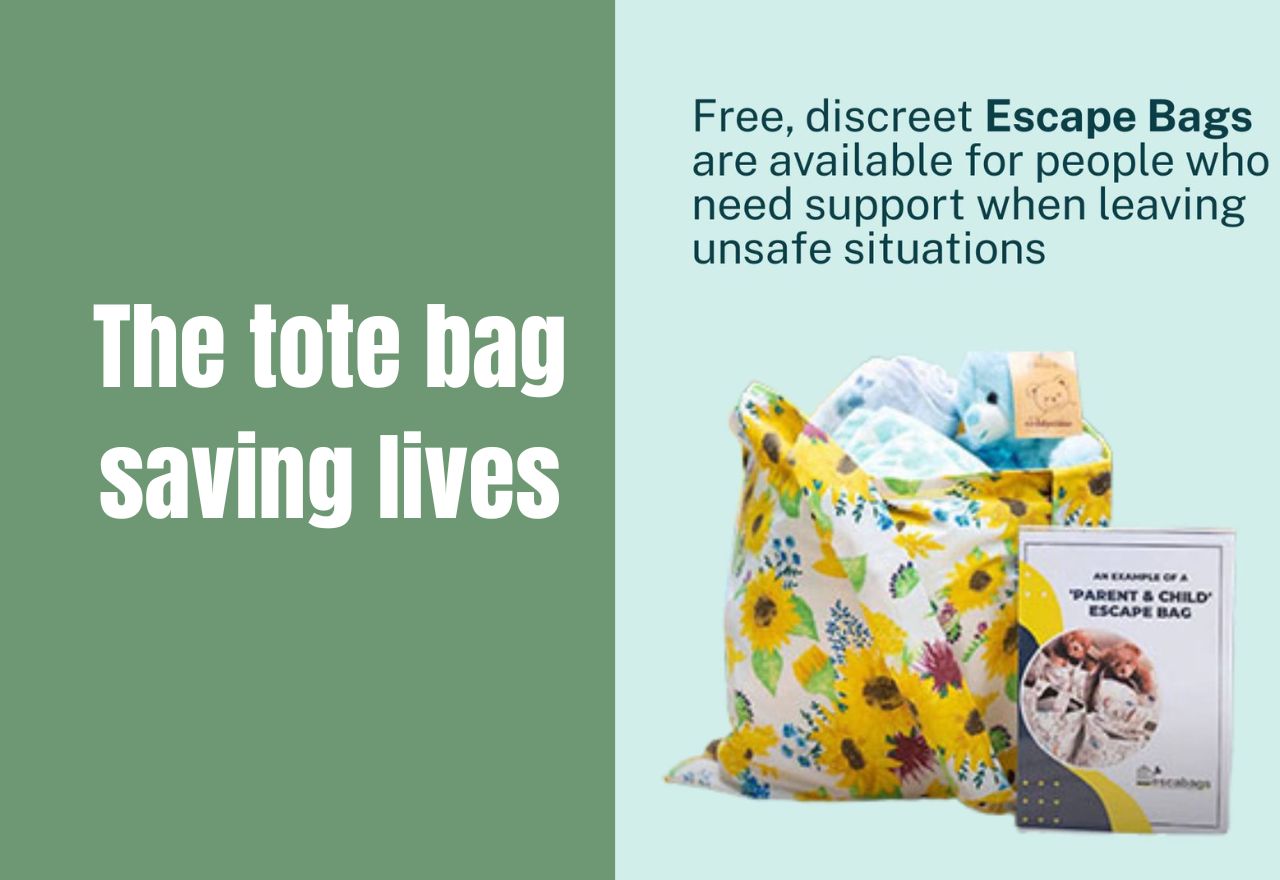
A Lifeline in a Bag: Escabags Brings Practical Hope to the Back CountryIn ShortImmediate Essentials: Escabags provides free, discreet "Escape Bags" (Adult and Parent/Child versions) containing toiletries, first aid, and a pre-paid SIM card for safe communication.Rural Accessibility: With over 2,000 stockists nationwide—including pharmacies and local shops—the charity aims to make help accessible even in remote back-country towns.Local Action: Community members can support the mission through tax-deductible donations, item drives, or by applying to become a local stockist.In the close-knit country communities across rural Australia, the bush telegraph is usually a source of comfort - a way to know when a neighbour needs a hand. But for those living in the shadow of domestic and family abuse, that same closeness can feel like a cage. In small towns where everyone knows everyone, the first step toward safety is often the hardest and most dangerous to take.Enter Escabags, a registered Australian charity that understands that escaping abuse isn't just a monumental emotional hurdle; it’s a logistical one.Bridging the Gap to SafetyFounded in 2020 by survivor Stacy Jane, Escabags provides free, discreet Escape Bags designed to support individuals and families in the critical early stages of seeking safety."I really don't know where I found the courage to leave," Stacy says of her own journey, "But I think I realised that this was my last chance." Her mission now is to ensure that no one else has to stand in that moment empty-handed.Each bag is non-gendered and intentionally discreet, appearing as a regular tote to avoid raising suspicion. They are available in two versions: Single Adult and Parent & Child. Inside, survivors find high-quality essentials that are often left behind in a rush:Practical Necessities: Toiletries and a mini first aid kit.A Digital Lifeline: A pre-paid SIM card, providing a safe way to contact support services without a perpetrator monitoring the device.For the Little Ones: The Parent & Child bags include items like nappies and comfort toys to soothe children during a traumatic transition.A Growing Network Since its launch, Escabags has built a national presence, boasting over 2,000 stockists across Australia. For those living in rural or remote Australia, this network is vital. Stockists aren’t just crisis centres; they are everyday businesses—pharmacies, medical centers, and local shops—that have raised their hands to be kind spaces.The charity’s goal is simple: to have an Escape Bag within reach in every suburb and town, ensuring that even in the most remote corners of the back country, a first step to freedom is never too far away.How the Community Can HelpEscabags is a Deductible Gift Recipient (DGR) organisation, meaning any donation over $2 is tax-deductible. While financial support is crucial for purchasing supplies, there are many ways for locals to get involved:Donate Items: High-quality, unopened toiletries and essentials.Volunteer: Join a packing day or help with logistics.Become a Stockist: Local business owners can apply to host the bags and display a discreet poster in their window, signaling to those in need that help is inside.The Riverine Grazier in Hay has applied to be come a stockist of Escabags and will update BCB News on the outcome.Seek SupportIf you or someone you know is experiencing domestic or family violence, help is available 24/7. You do not have to navigate this alone.1800RESPECT > Phone: 1800 737 732Text: 0458 737 732Online Chat: 1800respect.org.auTo find your nearest Escabags stockist or to learn how you can support their mission, visit escabags.org.

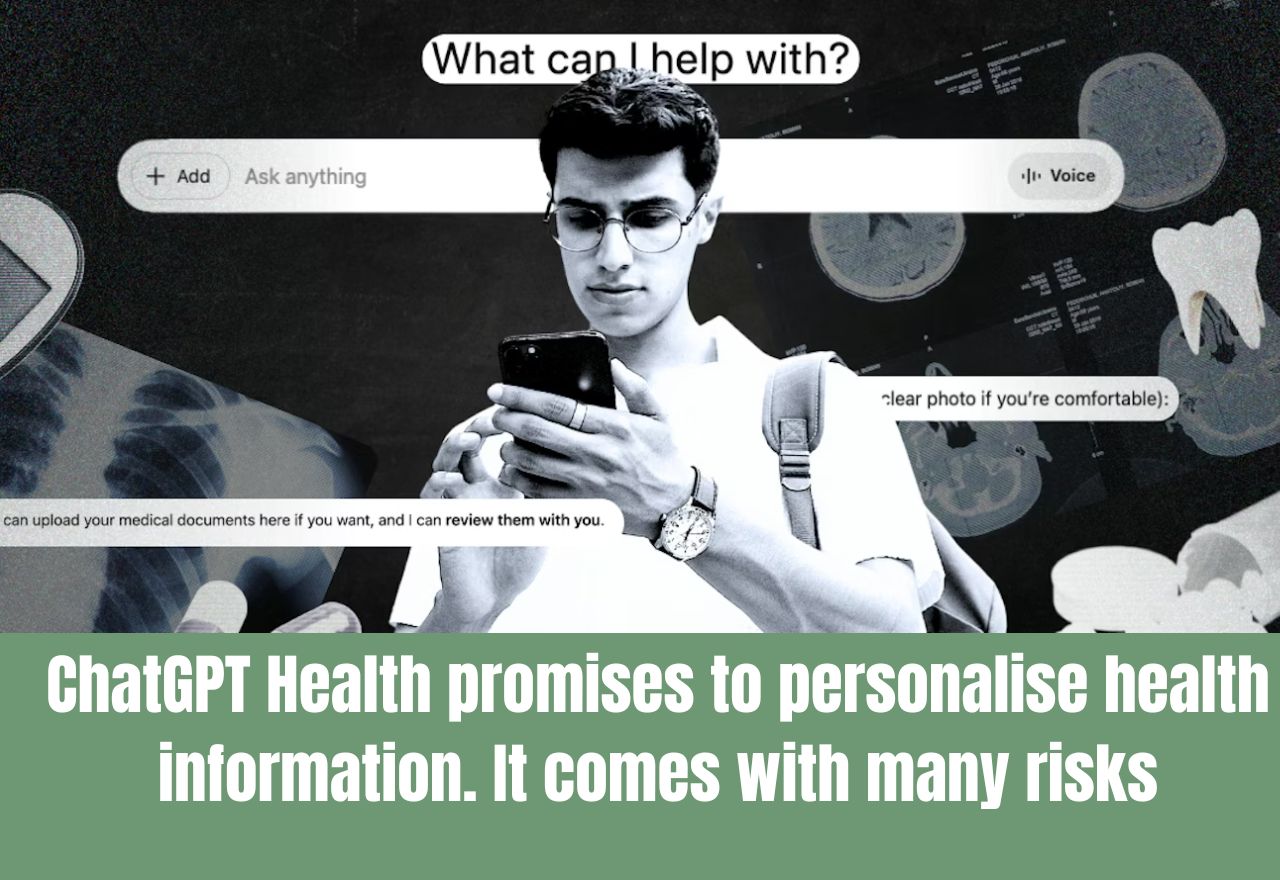
ChatGPT Health in Australia: Safety Risks & Accuracy Explained | BCB

31 January 2026, 7:00 PM

Is ChatGPT Your New Doctor? The Hidden Risks of OpenAI’s New ‘Health’ ToolBy Julie Ayre, Post Doctoral Research Fellow, Sydney Health Literacy Lab, University of Sydney, Adam Dunn Professor of Biomedical Informatics, University of Sydney and Kirsten McCaffery NHMRC Principal Research Fellow, Sydney School of Health, University of SydneyIn ShortA New Health Frontier: OpenAI has launched "ChatGPT Health," allowing users to link medical records and diagnostic images for personalized advice, though Australian access remains on a waitlist.Accuracy Concerns: Despite AI improvements, studies show tools still generate unsafe advice; 1 in 10 Australians already use AI for health, often those who struggle to access traditional care.Expert Advice: Experts categorize AI use into "High Risk" (symptom diagnosis) and "Low Risk" (brainstorming doctor questions). When in doubt, call 1800 MEDICARE for a registered nurse.Many of us already use generative artificial intelligence (AI) tools such as ChatGPT for health advice. They give quick, confident and personalised answers, and the experience can feel more private than speaking to a human.Now, several AI companies have unveiled dedicated “health and wellness” tools. The most prominent is ChatGPT Health, launched by OpenAI earlier this month.ChatGPT Health promises to generate more personalised answers, by allowing users to link medical records and wellness apps, upload diagnostic imaging and interpret test results.But how does it really work? And is it safe?Most of what we know about this new tool comes from the company that launched it, and questions remain about how ChatGPT Health would work in Australia. Currently, users in Australia can sign up for a waitlist to request access.Let’s take a look.AI health advice is boomingData from 2024 shows 46% of Australians had recently used an AI tool.Health queries are popular. According to OpenAI, one in four regular ChatGPT users worldwide submit a health-related prompt each week.Our 2024 study estimated almost one in ten Australians had asked ChatGPT a health query in the previous six months.This was more common for groups that face challenges finding accessible health information, including people born in a non-English speaking country those who spoke another language at home people with limited health literacy.Among those who hadn’t recently used ChatGPT for health, 39% were considering using it soon.How accurate is the advice?Independent research consistently shows generative AI tools do sometimes give unsafe health advice, even when they have access to a medical record.There are several high-profile examples of AI tools giving unsafe health advice, including when ChatGPT allegedly encouraged suicidal thoughts.Recently, Google removed several AI Overviews on health topics – summaries which appear at the top of search results – after a Guardian investigation found the advice about blood tests results was dangerous and misleading.This was just one health prompt they studied. There could be much more advice the AI is getting wrong we don’t know about yet.So, what’s new about ChatGPT Health?The AI tool has several new features aimed to personalise its answers.According to OpenAI, users will be able to connect their ChatGPT Health account with medical records and smartphone apps such as MyFitnessPal. This would allow the tool to use personal data about diagnoses, blood tests, and monitoring, as well as relevant context from the user’s general ChatGPT conversations.OpenAI emphasises information doesn’t flow the other way: conversations in ChatGPT Health are kept separate from general ChatGPT, with stronger security and privacy. The company also says ChatGPT Health data won’t be used to train foundation models.OpenAI says it has worked with more than 260 clinicians in 60 countries (including Australia), to give feedback on and improve the quality of ChatGPT Health outputs.In theory, all of this means ChatGPT Health could give more personalised answers compared to general ChatGPT, with greater privacy.But are there still risks?Yes. OpenAI openly states ChatGPT Health is not designed to replace medical care and is not intended for diagnosis or treatment.It can still make mistakes. Even if ChatGPT Health has access to your health data, there is very little information about how accurate and safe the tool is, and how well it has summarised the sources it has used.The tool has not been independently tested. It’s also unclear whether ChatGPT Health would be considered a medical device and regulated as one in Australia.The tool’s responses may not reflect Australian clinical guidelines, our health systems and services, and may not meet the needs of our priority populations. These include First Nations people, those from culturally and linguistically diverse backgrounds, people with disability and chronic conditions, and older adults.We don’t know yet if ChatGPT Health will meet data privacy and security standards we typically expect for medical records in Australia.Currently, many Australians’ medical records are incomplete due to patchy uptake of MyHealthRecord, meaning even if you upload your medical record, the AI may not have the full picture of your medical history.For now, OpenAI says medical record and some app integrations are only available in the United States.So, what’s the best way to use ChatGPT for health questions?In our research, we have worked with community members to create short educational materials that help people think about the risks that come with relying on AI for health advice, and to consider other options.Higher riskHealth questions that would usually require clinical expertise to answer carry more risk of serious consequences. This could include:finding out what symptoms meanasking for advice about treatmentinterpreting test results.AI responses can often seem sensible – and increasingly personalised – but that doesn’t necessarily mean they are correct or safe. So, for these higher-risk questions, the best option is always to speak with a health professional.Lower riskOther health questions are less risky. These tend to be more general, such as:learning about a health condition or treatment optionunderstanding medical termsbrainstorming what questions to ask during a medical appointment.Ideally, AI is just one of the information sources you use.Where else can I get free advice?In Australia we have a free 24/7 national phone service, where anyone can speak with a registered nurse about their symptoms: 1800 MEDICARE (1800 633 422).Symptom Checker, operated by healthdirect, is another publicly funded, evidence-based tool that will help you understand your next steps and connect you with local services.AI tools are here to stayFor now, we need clear, reliable, independent, and publicly available information about how well the current tools work and the limits of what they can do. This information must be kept up-to-date as the tools evolve.Purpose-built AI health tools could transform how people gain knowledge, skills and confidence to manage their health. But these need to be designed with communities and clinicians, and prioritise accuracy, equity and transparency.It is also essential to equip our diverse communities with the knowledge and skills to navigate this new technology safely.This article was originally published on The Conversation

When the heat gets inside your head: How 45-degree days affect your mental health

30 January 2026, 7:00 PM

Extreme Heat and Depression: What's Really HappeningIn Short:Research shows for every 1°C above optimal temperature, mental health deaths rise 2.2% and illness by 0.9%, with young Australians aged 15-44 most affectedExtreme heat impacts mental health through sleep disruption, dehydration, elevated stress hormones and social isolation, with hospitalisation for mood disorders increasing 40% during heatwavesStaying hydrated, prioritising sleep in cool spaces, maintaining social connection and being gentle with yourself are essential strategies for protecting mental health during extreme heatThere's something about a week of 45-degree days that does more than make you sweat. It creeps under your skin, settles in your chest, makes everything feel harder than it should. You're irritable. You can't sleep. The smallest things set you off. You feel flat, disconnected, like you're moving through thick air. And you wonder if you're imagining it, if you're just being weak, if everyone else is coping better than you are.You're not imagining it. The heat is getting inside your head, quite literally affecting your mental health, and the science is increasingly clear about just how significant that impact can be.As parts of New South Wales face extreme heat with temperatures climbing past 45 degrees Celsius, it's worth understanding what's actually happening to our brains and bodies during these relentless heatwaves. Because while we talk a lot about the physical dangers of extreme heat, the mental health impacts are just as real and far more common than most people realise.Research from Australian universities has found that for every one degree Celsius rise above a region's optimal temperature, mental health related deaths rise by 2.2 per cent and illness by 0.9 per cent. That's not a small number when you're talking about sustained heatwaves pushing temperatures 10, 15, even 20 degrees above what's comfortable.The connection between heat and mental health isn't new, but it's becoming impossible to ignore. High temperatures contributed to an annual loss of 8,458 disability adjusted life years in Australia, representing 1.8 per cent of total mental and behavioural disorder burden. Young Australians aged 15 to 44 are particularly affected, with most losses linked to living with poor mental health during hot periods.So what's actually happening when the mercury climbs into the mid-forties and stays there for days on end?The mechanisms are both physiological and psychological. Your body is working overtime to maintain a stable internal temperature, and that constant physical stress triggers a cascade of effects. The underlying mechanisms may include disrupted sleep, dehydration, elevated stress hormones and increased social isolation during heat events, all of which can worsen conditions like anxiety, depression, substance use and psychotic disorders.Think about your last truly hot night. You couldn't sleep, tossing and turning, sheets sticking to your skin, mind racing at three in the morning. Sleep disruption alone is a significant trigger for mental health issues, and during heatwaves, quality sleep becomes nearly impossible without air conditioning. Night after night of poor sleep compounds, leaving you exhausted, foggy, emotionally fragile.Dehydration affects cognitive function and mood regulation. Your brain is roughly 75 per cent water, and when you're dehydrated, everything from concentration to emotional stability suffers. During extreme heat, you're losing fluids faster than you might realise, and that physical depletion translates directly into mental and emotional depletion.The stress hormones are real too. For those predisposed to acute or chronic mental problems, failure to gain relief from the heat for extended periods of time may trigger irritability and episodic psychological distress, accompanied by risk behaviours such as excess alcohol consumption, violence and aggression.It's not just people with pre-existing mental health conditions who are affected, though they're certainly more vulnerable. Research shows that the likelihood of hospitalisation for mood disorders like depression and mania increased by approximately 40 per cent during periods of high heat. Hospital admissions for mental and behavioural disorders spike during heatwaves, and the pattern is consistent across different cities, different countries, different climates.There's also a deeply human element to how heat affects mental health that the statistics don't fully capture. During extreme heat, people withdraw. You stay inside, curtains drawn, trying to escape the worst of it. Social isolation increases. You cancel plans because it's too hot to go out. You skip exercise because moving feels impossible. All the normal coping mechanisms that help maintain mental health, the walk, the coffee with a friend, the trip to the park, become harder or impossible.For people in regional areas without air conditioning, or with limited access to cool spaces, the impact is even more severe. You can't escape it. You're just enduring it, day after day, night after night, and that relentless exposure wears you down in ways that are hard to articulate but impossible to ignore.The research also shows concerning links between extreme heat and suicide. Suicide rates rose by one per cent for each one degree Celsius increase in average monthly temperature. Young people are particularly at risk, with emergency presentations for suicidal thoughts and behaviours demonstrably linked to hot weather.This isn't about being melodramatic or weak. This is about understanding that extreme heat is a genuine stressor on the human system, and mental health is part of that system. Your brain doesn't exist separately from your body. When your body is under sustained environmental stress, your mental state suffers.The effects aren't uniform either. Some people are more susceptible than others. Those with pre-existing mental health conditions, older adults, people living alone, those without access to cooling, people on certain medications, all face heightened risk. But even people with no history of mental health issues can experience mood changes, increased irritability, difficulty concentrating, and feelings of hopelessness during prolonged heat exposure.The effects of sustained heat and humidity, accompanied by drought, water restrictions, bushfires and power outages, are likely to have marked effects on the mental health of both rural and urban communities, with possible increases in the incidence of episodic or chronic stress. And that's exactly what we're seeing play out across NSW right now.So what do you do about it? How do you protect your mental health during a week of 45-degree days?The basics matter more than you might think. Hydration isn't just about physical health, it directly affects your mood and cognitive function. Drink water even when you don't feel thirsty. More than you think you need.Sleep becomes crucial, which means doing whatever you can to keep your sleeping space cool. Damp sheets, fans, cold showers before bed, whatever works. Poor sleep compounds every other mental health challenge, so prioritising it during heatwaves isn't indulgent, it's essential.Stay connected, even when you don't feel like it. Text a friend. Call someone. Even brief social contact can help counter the isolation that heat imposes. If you're struggling, tell someone. The heat makes everything feel worse, including the reluctance to reach out for help.Limit alcohol. It's tempting to reach for a cold beer when you're hot and stressed, but alcohol disrupts sleep, causes dehydration, and can worsen mood. It's one of those risk behaviours that feels like relief in the moment but compounds the problem.If you have air conditioning, use it. This isn't about comfort, it's about health. If you don't have air conditioning, find spaces that do. Libraries, shopping centres, community centres. Don't just endure it at home if you have other options.Be gentle with yourself. If you're feeling flat, irritable, unmotivated, disconnected during extreme heat, you're not failing. You're experiencing a normal human response to abnormal environmental conditions. The heat will break eventually. Your mood will lift. But in the meantime, adjust your expectations. You don't have to be productive or positive or coping perfectly. You just have to get through it.For people with existing mental health conditions, talk to your healthcare provider about heat management strategies. Some medications can interfere with your body's ability to regulate temperature, increasing vulnerability to heat-related illness. Understanding your specific risks can help you prepare better.The broader reality is that extreme heat events are becoming more frequent and more severe. What we're experiencing now isn't an anomaly, it's increasingly the new normal. That means we need to start thinking about heat as a mental health issue, not just a physical comfort issue.Communities need cooling centres. Healthcare systems need to prepare for increased mental health presentations during heatwaves. Employers need to understand that productivity will drop when temperatures soar, and that's not laziness, it's biology. Urban planning needs to incorporate green spaces and cooling strategies. These aren't luxuries, they're public health necessities.On a personal level, it means recognising that mental health fluctuates with environmental conditions, and that's okay. It means being more compassionate with yourself and others during heat extremes. It means understanding that someone who's usually coping well might struggle during a heatwave, and that's not weakness, it's human.The next time you're five days into 45-degree heat and everything feels impossible, remember that it's not just you. The research is clear. The heat is real. The impact on your mental health is measurable and significant. You're not imagining it, you're not overreacting, and you're definitely not alone.Take care of yourself the way you would if you had the flu. Rest more. Lower your expectations. Reach out for support. Use whatever resources you have access to. And know that when the temperature drops, you'll feel more like yourself again.Because extreme heat doesn't just make you uncomfortable. It gets inside your head, affects your mood, disrupts your sleep, elevates your stress, and challenges your mental health in ways that are as real as the physical dangers we talk about more readily.Understanding that connection isn't about being alarmist. It's about being informed, being prepared, and being kinder to ourselves and each other when the mercury climbs past 45 and stays there for days on end.The heat will break. Until then, survival counts as success.

From the Paddock to the Runway: AgriWomen Connect Heads to Whitton

30 January 2026, 7:00 PM

From Ginning to Gala: The Riverina’s AgriWomen Connect Set to Transform WhittonIn ShortThe Event: A two-day conference (March 5–6, 2026) at Whitton Malt House focusing on the journey of food and fibre from the paddock to the consumer.The Highlights: Features an exclusive Southern Cotton gin tour, a "Farm to Fashion" runway show, and a keynote by 2025 AgriFutures runner-up Isabella Thrupp.The Skills: Day two offers a deep dive into agribusiness management with Carmen Quade, designed to boost farm business confidence and financial literacy.The Riverina is preparing to celebrate the role of women in the bush with the upcoming AgriWomen Connect: Food, Fibre and Farming Conference. Scheduled at the iconic Whitton Malt House, the two-day event on March 5–6, 2026, the program balances high-level industry expertise and commercial strategy with a showcase of the region's creativity.Partnering with Women Together Learning (WoTL), Riverina Local Land Services has curated a program designed to bridge the gap between the primary producer and the end consumer.From Ginning to Gala: Day One HighlightsThe conference kicks off with a look at one of the region’s powerhouses - Southern Cotton. A guided tour of the ginning facility will offer attendees a front-row seat to how raw Riverina cotton is transformed into the fibre found in wardrobes worldwide.Following the tour, the focus shifts to a dynamic panel discussion featuring local industry leaders:Kate O'Callaghan: General Manager of Southern Cotton and Whitton Malt House.Jenna Bell: Local cotton grower and dedicated Grower Services Manager.Daisy Toscan: Representing the innovative Cavaso Farming.The first day will conclude with a high-fashion twist - a Farm to Fashion Show showcasing garments crafted from regional fibres, before a three-course Paddock to Plate Dinner. The evening’s keynote will be delivered by Isabella Thrupp, the 2025 AgriFutures Rural Women’s Award Runner-Up, whose journey from Kimberley cattle stations to founding her own outback fashion brand has inspired many across the country.Business and Balance: Day TwoDay two balances physical well-being with professional development:Sunrise Yoga: Start the morning with a yoga session led by Saltbush Stretch’s Em Armstrong.AgriBusiness Course: Carmen Quade from AgriFocused will lead an intensive full-day course focused on the practicalities of farm business, from financial management to boardroom confidence.How to JoinRegistration: Open now via the NSW Local Land Services events page or by scanning the official event QR code (below).Tickets: Single-day tickets are available for $80, while the full two-day experience is priced at $120.Contact: For more information, contact Jade Auldist, Sustainable Agriculture Facilitator, at 0473 055 466.This initiative is supported by the Australian Government through the Natural Heritage Trust, highlighting the ongoing commitment to supporting climate-smart and sustainable agriculture in our region.

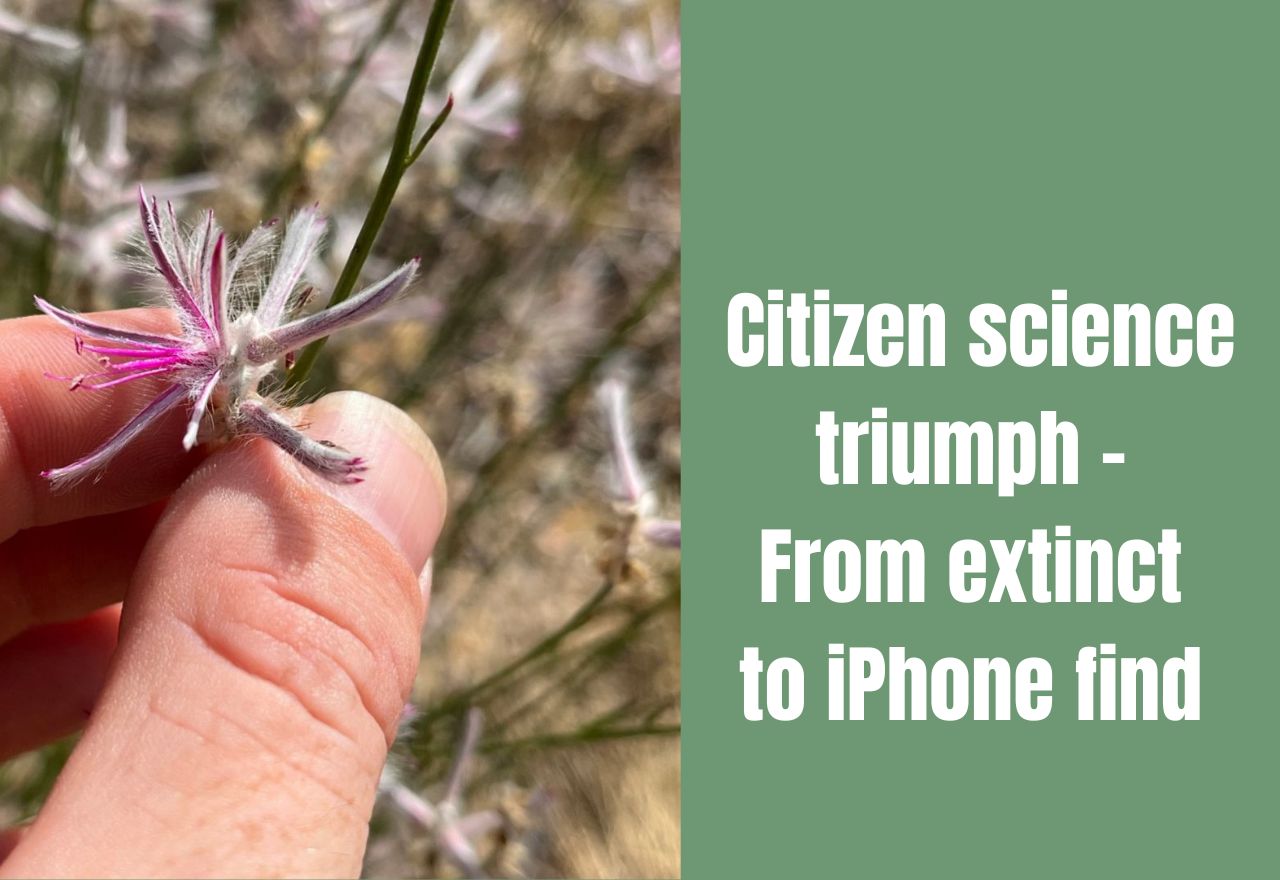
From Extinct to Found: How a Smartphone Could Spark the Next Big Discovery in the Riverina

30 January 2026, 7:00 AM

In ShortCitizen Science Success: A slender shrub (Ptilotus senarius) presumed extinct for nearly 60 years was rediscovered in Queensland via the iNaturalist app.Local Potential: Experts believe similar "lost" species are likely hidden across private holdings in the Hay, Balranald, and Central Darling shires.Privacy First: Landholders can contribute to scientific research using "obscured" GPS settings to protect the exact location of their property and assets.A plant species long presumed extinct in the wild has been rediscovered in northern Queensland, sparking conversations about the untapped potential for similar finds across the vast landscapes of the New South Wales Riverina and Far West.The rediscovery of Ptilotus senarius, a slender shrub from the Amaranthaceae family, was made possible not by a professional survey team, but by a horticulturalist with a smartphone and a keen eye. The plant had not been recorded since 1967 and was officially considered extinct until Aaron Bean uploaded photos of an unusual specimen to the citizen science platform iNaturalist in June 2025.From the Gulf to the Western PlainsWhile this find occurred in Queensland’s Gilbert River region, the implications for the Back Country is significant. Much like the northern Gulf country, our local districts consist of expansive private holdings and remote tracts of land that rarely see professional botanical surveys.The use of digital platforms allows landholders and hobbyists in our corner of the state to contribute to national conservation efforts without the need for intrusive academic expeditions.The Power of Local ObservationThe identification was confirmed after a new specimen was collected from the private property where it was found. Researchers suggest that this success story highlights a shift in how biodiversity is monitored in regional areas.Study lead author Thomas Mesaglio, from the UNSW School of Biological, Earth & Environmental Sciences, noted that such finds are just the beginning of the process.“Rediscoveries offer that opportunity to conduct follow-up, targeted surveys and consistent long-term monitoring to give us a better understanding of exactly where and how these species are distributed across the landscape,” says Mesaglio.For the Back Country, where the environment is often at the mercy of volatile climatic shifts, having a real-time database of local flora and fauna could prove vital for future land management and drought resilience planning.Bridging the Gap on Private LandOne of the persistent challenges for conservationists is accessing the vast majority of Australian land that is held privately. Mesaglio highlighted that iNaturalist is helping to bridge this gap between researchers and the people who actually live on the land.“iNaturalist has especially become an invaluable tool for recording biodiversity on private property, which can often be difficult to access by professional researchers,” says Mesaglio.As the Back Country continues to face scrutiny over biodiversity and land use, this rediscovery serves as a reminder that the next major scientific breakthrough could be sitting in a paddock in Balranald or along a dry creek bed in the Central Darling—waiting for a local with a camera to find it.Back Country Guide: How to Spot a "Lost" Species on Your PropertyThe rediscovery of Ptilotus senarius in Queensland proves that you don't need a PhD to make a massive scientific discovery—you just need a smartphone and a bit of curiosity while out on the bike or checking fences.If you’re living rurally, here is how you can use the iNaturalist app to help map our local biodiversity.1. Get the Gear (It’s Free)Download the App: Search for iNaturalist (look for the green bird logo) on the Apple App Store or Google Play.Create an Account: You can sign up with an email or link it to your existing social accounts.Join Local Projects: Once in the app, search for "Projects" nearby. You’ll often find local "BioBlitz" events or regional surveys run by groups like Murrumbidgee Landcare or Local Land Services.2. Making a Quality ObservationThe secret to a "Research Grade" identification is the quality of your photos. Scientists need to see more than just a pretty flower.The "Wide Shot": Take a photo of the whole plant. Is it a tiny herb, a sprawling shrub, or a tall tree?The Details: Get close-ups of the leaves (top and bottom), the flowers/seeds, and the bark or stem.Use a Scale: Place your hat, a pocket knife, or even your thumb next to the plant so experts can judge its size.Focus is Key: If your phone won't focus on a small flower, place your hand behind the plant to give the camera something solid to lock onto.3. Privacy on the StationOne of the biggest concerns for landholders is privacy. You might find something rare, but you don't necessarily want the whole world knowing exactly where it is on your back block.Geoprivacy Settings: When you upload a photo, you can set the location to "Obscured." This places a "buffer" over your coordinates on the public map (usually a 20km x 20km box). The public sees the general area, but only trusted researchers can see the exact pin."Private" Mode: You can also set it to private, which hides the coordinates entirely from everyone but you.4. What Happens Next?Once you hit "Share," the iNaturalist AI will suggest what it thinks the plant is. But the real magic happens when the community steps in.Expert Review: Real botanists and experienced hobbyists (like those mentioned in the Queensland find) review your photos.Confirmation: If two or more people agree on the ID, your observation becomes "Research Grade" and is automatically shared with the Atlas of Living Australia, helping inform state and national conservation records.

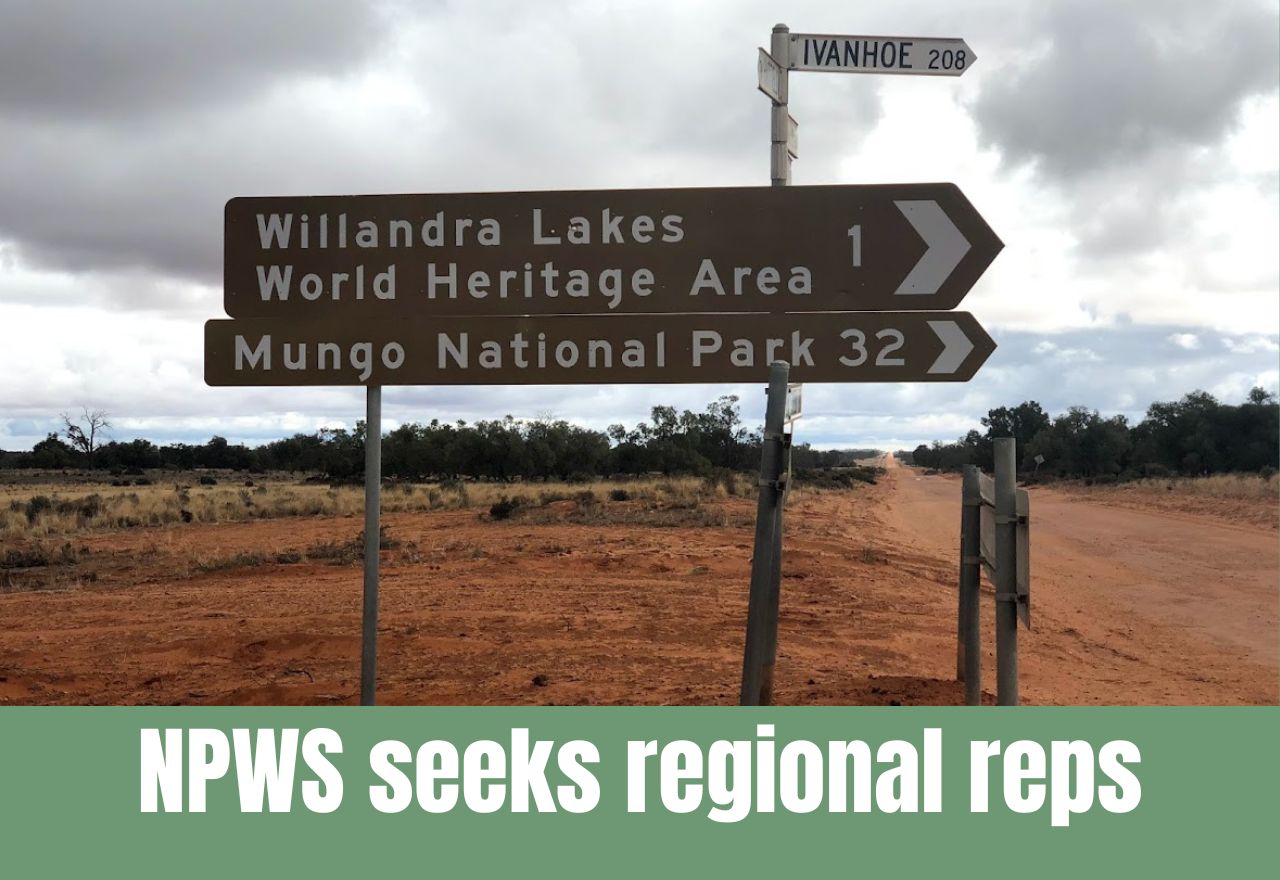
Help Shape the Outback: Applications Open for the West Regional Advisory Committee

29 January 2026, 7:00 PM

The Backbone of the West: Why Your Voice Matters for Our National ParksIn ShortLocal Influence: The NPWS is recruiting new members for the West Regional Advisory Committee (2026–2030) to provide direct advice to the Minister for the Environment.Critical Oversight: Members tackle unique Western NSW challenges, including feral animal control, fire management strategies, and the preservation of Aboriginal cultural heritage.Diverse Voices Needed: Applications are open to a broad cross-section of the community, including pastoralists, Aboriginal custodians, and regional tourism experts.In the vast landscape of Western New South Wales, the management of a national park is never just about what happens inside the fence. It’s about the health of the river systems, the management of feral animals that cross into neighbouring properties, and the preservation of cultural heritage that spans millennia.NSW National Parks and Wildlife Service (NPWS) is currently seeking new members for its West Regional Advisory Committee (RAC) for the 2026–2030 term. A Committee of LocalsThe West RAC is a statutory body designed to provide the Minister for the Environment with independent advice on park management, fire strategies, and pest control. The current West Region committee includes:Geoff Chapman (Chairperson): From Hay, Geoff brings extensive local government experience and a deep understanding of the Riverina’s land management challenges.Marie Russell AM (Deputy Chairperson): Based in Cobar, Marie is a long-standing advocate for Western NSW with a lifetime of experience in regional community service.Lachlan Gall: A pastoralist from the Wentworth/Far West region, providing the essential perspective of landholders who live alongside the park system.Dr. Michael Augee: A scientist and fossil expert closely associated with the Wellington area and the Wellington Caves.Bruce Reynolds & Michelle Pryse Jones: Representatives with strong ties to the Blayney and Central West areas, bridging the gap between local council interests and conservation.Yvette Myhill: Based in the Riverina, Yvette’s background in regional tourism highlights the economic importance of parks to our small towns.Jonathon Howard: An academic from Albury-Wodonga specializing in environmental management and community engagement.Other members, including Adrian Davey, Diana Hoffman, Dianne Kelly, and James Williams, ensure that voices from across the vast region are included in the conversation.The West Region parks are unique. National Parks such as Mungo, Sturt, and Kinchega are often remote and face pressures unlike those on the coast. Regional issues include extreme climate variability, complex invasive species management, and the protection of Aboriginal sites in shifting landscapes.According to NPWS RAC members will directly influence policy reviewing draft plans of management before they become law, and represent the voice of the community.RAC members also have a role in advising on where visitor infrastructure, such as campgrounds and heritage trails, should be built to best serve the community.NPWS says it is looking for a broad cross-section of people: Aboriginal custodians, farmers, educators, and those with a passion for outback tourism.Meetings: At least four times per year, held through a mix of online forums and in-person meetings at various regional locations.Field Trips: The committee travels to remote parks to inspect management issues firsthand.Remuneration: Members receive sitting fees and are reimbursed for travel costs, acknowledging the significant distances involved in West Region representation.Applications are open now and close on Monday, 16 February 2026.If you believe that local knowledge is the best tool for managing our landscape, consider applying. For application details and further information, visit the NSW Environment and Heritage website.

The Tiger of White Cliffs: Why Bradman Feared Australia’s Fiery Spin Legend

29 January 2026, 4:00 AM

Bill O’Reilly: The Greatest Bowler Sir Donald Bradman Ever FacedIn Short• Humble Beginnings: Born in the outback town of White Cliffs, O’Reilly honed his skills using a hand-chiselled banksia root for a ball and a gum-wood bat.• The Don’s Choice: Sir Donald Bradman officially named O’Reilly the greatest bowler he ever faced, a testament to his "spitting cobra" deliveries and relentless pace.• Uncompromising Legacy: Known as "Tiger" for his fierce competitive streak, he transitioned from a world-class economy rate of 1.94 to a legendary, sharp-tongued career in sports journalism.In the sport of cricket, where statistics often mask the soul of the game, the name Bill O’Reilly was more than just a bowler; he was a thunderstorm in flannels.Born in 1905 in the opal-mining outpost of White Cliffs, NSW, O’Reilly carried the grit of the outback onto the pristine lawns of the Sydney Cricket Ground and Lord’s. To watch him bowl was to witness a man in a state of perpetual, righteous indignation.O’Reilly’s childhoodO'Reilly was born in the opal mining town of White Cliffs. His father Ernest had been appointed to open the first school in the town, and had helped to build the school and its furniture himself.] Bill was the fourth child in the family, with two elder brothers and a sister.O'Reilly's cricket skills were largely self-taught; his family moved from town to town whenever his father was posted to a different school, he had little opportunity to attend coaching. He learned to play with his brothers, playing with a "gum-wood bat and a piece of banksia root chiselled down to make a ball."He learned to bowl because his older brothers dominated the batting rights. His bowling action was far from the classic leg spin bowler's run-up and delivery.One journalist said "he was asked to make up the numbers in a Sydney junior match and, with a method that at first made everyone giggle, whipped out the opposition". From a young age, O'Reilly was a tall and gangly player.The Tiger of the TurfStanding over six feet tall with a fierce glare and a windmill-like action, O’Reilly earned the nickname "Tiger." Unlike the gentle, loopy leg-spinners of the modern game, O’Reilly’s deliveries were hostile. He didn't just try to beat the bat; he seemed to want to bruise the batsman’s dignity.He bowled with a grip that defied convention and a pace that bordered on medium-fast, making his leg-breaks and "wrong 'uns" behave like spitting cobras.High Praise from the DonThe ultimate validation of O’Reilly’s genius came from the highest possible authority: Sir Donald Bradman. The Don, a man who treated most bowlers like mere background noise to his century-making, famously declared O’Reilly the greatest bowler he ever faced. Coming from a man who saw every trick the game had to offer, this was high praise.The rivalry between the two was the stuff of legend. Both were titans, both were fiercely competitive, and both hailed from the same era of Australian dominance. Yet, they were opposites: Bradman was the clinical accumulator; O’Reilly was the emotional, fiery interrogator.Beyond the WicketO’Reilly’s career numbers are staggering, even by today’s standards:144 Test wickets at a lean average of 22.59.An economy rate of 1.94, meaning he practically choked the life out of world-class batting lineups.But statistics only tell half the story. After hanging up his boots, O’Reilly transitioned into a legendary career as a journalist and commentator. He wrote with the same bite he used on the pitch—uncompromising, sharp-tongued, and fiercely protective of the game’s standards. He loathed the "showmanship" of later eras, remaining a purist until his passing in 1992.

We need to talk about what happened in Lake Cargelligo - and what we can actually do

28 January 2026, 10:00 PM

Trigger warning: Story discusses family violenceEditorial: : In the wake of the Lake Cargelligo tragedy, our communities are asking what we can actually do to prevent domestic violence. Here’s how every person can make a difference, including who to write to and campaigns to support. IN SHORT:• Three lives lost in Lake Cargelligo has left rural NSW devastated and asking hard questions about domestic violence. • This article explores practical actions every community member can take, from recognising warning signs to supporting victims to writing to your local MP, because doing nothing is no longer an option.• Resources at the bottom of the article including support agency contact numbers and MP addressesThe news from Lake Cargelligo hit our region like a physical blow. Three people dead. Another fighting for life. A community shattered. And across the Central West, the Riverina, and beyond, the same sick feeling of helplessness washing over us all. We’ve been here before, haven’t we? Another domestic violence tragedy. Another round of shock and grief. Another vigil, another statement from politicians, another promise that things will change. And then life goes on until the next time, and we’re left wondering why we couldn't stop it, why we didn’t see it coming, why nothing ever seems to get better despite all the awareness campaigns and all the hashtags and all the talk. But here’s the uncomfortable truth that nobody wants to say out loud. Most of us genuinely don’t know what to do. We’re not helpless because we don’t care. We’re helpless because we’ve never been taught how to actually help. We see the statistics. We know it’s happening. We might even suspect it’s happening next door or down the road or to someone we know. But when it comes to taking action, real action that might actually save a life, most of us freeze. So, let’s talk about what we can actually do, right now, in our own communities, that might make a difference. The first thing to understand is that domestic violence doesn’t look like what you think it looks like. We’re conditioned to imagine shouting matches, visible bruises, dramatic confrontations. But in rural communities especially, it often looks like isolation. It looks like someone who used to be social suddenly making excuses not to come to town. It looks like a neighbour whose partner always seems to answer the phone for them, or speaks on their behalf, or controls when and where they can go. It looks like someone who flinches when you make a sudden movement, or who’s always anxious about getting home by a certain time, or who’s stopped talking about their own plans and dreams and only ever talks about what their partner wants. If you’re reading this and thinking about someone specific, trust that instinct. Your gut is probably right. The second thing to understand is that asking someone directly if they’re okay is not overstepping. We’re so worried about being intrusive, about minding our own business, about not making things awkward. But you know what’s more awkward than asking if someone needs help? Attending their funeral and wishing you had. It doesn’t have to be confrontational. It can be as simple as saying you’ve noticed they seem stressed lately and asking if there’s anything you can do. It can be saying you’re worried about them. It can be letting them know that if they ever need to talk, or need a place to stay, or need help, you’re there. Plant that seed. Give them permission to reach out. Because often the hardest part for victims is believing that anyone would help them if they asked. The third thing, and this is crucial, is understanding that leaving an abusive relationship is the most dangerous time for victims. We love to ask why they don’t just leave, as if it’s that simple. But statistically, the period immediately after leaving is when violence escalates. When abusers lose control, they often become desperate and dangerous. So, if someone does confide in you, don’t push them to leave immediately. Support their timeline. Help them make a safety plan. Connect them with professionals who know how to navigate these situations safely. And speaking of professionals, let's talk about what resources actually exist in our region, because this information might save a life. The national domestic violence helpline, 1800RESPECT, operates 24 hours a day, every day. Counsellors are trained specifically in domestic violence situations and can help with safety planning, finding emergency accommodation, navigating legal options, and connecting people with local services. The call is free. It doesn’t show up on phone bills. You can call for someone else if you’re worried about them. For men who are struggling with anger, aggression, or controlling behaviours, the Men's Referral Service on 1300 766 491 provides confidential support and can help connect you with behaviour change programs. Recognising you need help isn’t weakness. Acting on it might save your family. In regional NSW, Women’s Domestic Violence Court Advocacy Services operate in many local courts and can help victims understand their legal options and navigate the system. Your local police station can connect you with these services. For immediate danger, always call 000. Police are increasingly trained in domestic violence response, and they can connect victims with crisis accommodation and support services. If you’re too scared to call from home, call from a neighbour's house, from work, from anywhere safe. But here’s where community really matters. Professional services are vital, but they can't be everywhere all the time. We can. We’re the ones who notice when our neighbour hasn’t been seen in weeks. We’re the ones who can offer to watch someone’s kids while they make a phone call in private. We’re the ones who can say yes when someone asks to leave a bag of important documents at our house, just in case. We’re the ones who can offer a spare room, no questions asked, at three in the morning. In small towns especially, everyone knows everyone’s business. That can be isolating for victims who fear judgement or gossip. But it can also be protective if we choose to use that knowledge wisely. If you know someone is in danger, check in regularly. A text message. A phone call. A visit. Make it normal and consistent so that if something goes wrong, you’ll notice the absence. And if you’re a business owner, consider becoming a Safe Space. Display the 1800RESPECT number. Train your staff to recognise signs of distress. Let it be known that if someone needs help, your business is a place they can ask. It costs nothing and it could save a life. For those of us with children, we have another responsibility. We need to teach our kids what healthy relationships look like. That nobody has the right to control another person. That love doesn’t hurt. That asking for help is brave, not weak. That they should never tolerate violence or abuse, and they should never inflict it. These conversations need to start early and continue throughout their lives. We also need to call out the casual misogyny, the controlling behaviours, the warning signs when we see them in our communities. That mate who’s always putting his partner down, monitoring her phone, deciding who she can see. That’s not normal. That’s not just how relationships work. And if we say nothing, we’re giving permission for it to continue and escalate. But beyond what we can do individually in our own communities, there are bigger systemic changes that need to happen, and we can make our voices heard on those too. Right now, Domestic Violence NSW is campaigning for a 50 per cent core funding increase for all specialist domestic and family violence services funded by the NSW Department of Communities and Justice. The current funding levels are appalling. Frontline workers are picking up excessive client loads at risk to their own wellbeing. They’re working unpaid overtime, fundraising on top of their paid work, and paying for food vouchers out of their own pockets. In 2024, NSW Police recorded over 100,000 domestic violence related crimes. Thirty-nine people were killed in domestic violence related murders in NSW alone. Services are turning women and children away because they simply don’t have the capacity. Turning someone away can literally mean the difference between life and death. You can make your voice heard by writing to your local members of parliament. For those of us in the Riverina and Central West, that's Michael McCormack MP, Member for Riverina, whose office is in Wagga Wagga. You can contact his office on 02 6921 4600 or write to him at Suite 2, 11-15 Fitzmaurice Street, Wagga Wagga NSW 2650. Tell him you want to see increased funding for domestic violence services. Tell him what happened in Lake Cargelligo cannot keep happening. For those in the Hay, Balranald, Carrathool, and Griffith areas, you’re in the federal electorate of Farrer, represented by Sussan Ley MP. Her Griffith office can be reached on 02 6962 6644 or you can write to her at 399 Banna Avenue, Griffith NSW 2680. Tell her that rural and regional domestic violence services are chronically underfunded and that needs to change. At the state level, write to Jodie Harrison MP, the NSW Minister for the Prevention of Domestic Violence and Sexual Assault. You can contact her via the NSW Parliament at Parliament House, Macquarie Street, Sydney NSW 2000, or through the Department of Communities and Justice. Tell her you support Domestic Violence NSW's call for a 50 per cent funding increase. Tell her that the current commissioning process for domestic violence services needs to prioritise long term, stable funding so that services can actually plan and deliver consistent support. There are also active petitions you can sign and share. Ali Saoirse, a domestic violence shelter worker and survivor, has two major petitions on Change.org that have gained significant traction. One calls for a Royal Commission into violence against women in Australia. The other demands immediate and adequate funding increases for frontline domestic violence services. These petitions are specific, informed, and backed by years of research. Find them by searching "domestic violence Australia petition" on Change.org and add your voice. You can also support Domestic Violence NSW directly by sharing their "Fund a Safer Today" campaign for the 2026 to 27 NSW budget. Their submission to government outlines exactly what’s needed and why. Share it on social media. Talk about it with your friends and family. Make domestic violence funding a topic that politicians can’t ignore. The NSW Government did launch a new strategy in December 2025 called Building Better Responses, which is the state's first dedicated plan to address perpetrators of domestic violence. That's a positive step. But strategies mean nothing without adequate funding to implement them. The Men's Behaviour Change Programs that are supposed to help address violent behaviour are underfunded and have waiting lists. Crisis accommodation is full. Support workers are overwhelmed. We need both the strategy and the resources to make it work. Write letters. Sign petitions. Share information. Donate to domestic violence services if you can afford it. Attend community forums. Make noise. Politicians respond to pressure, and right now, there’s not enough pressure. We get outraged for a week after a tragedy like Lake Cargelligo, and then we move on. They’re counting on us moving on. Don't let them count on that anymore. The Lake Cargelligo tragedy will fade from the news cycle. The investigation will continue. The community will grieve. And eventually, life will return to something resembling normal. But it shouldn’t. Not completely. This should be a turning point where we decide that we’re done being helpless bystanders. Domestic violence thrives in silence and isolation. It depends on victims feeling like nobody will help them and abusers feeling like nobody will stop them. We can break both of those assumptions, but only if we're willing to be uncomfortable, to ask hard questions, to offer real help, to hold each other accountable, and to demand that our governments actually fund the services that save lives. You don't need to be a counsellor or a police officer or a social worker to make a difference. You just need to be a human being who gives a damn. Check on your neighbours. Believe people when they tell you something’s wrong. Offer practical help. Know the numbers to call. Speak up when you see warning signs. Teach your children better. Write to your MPs. Sign the petitions. Share the campaigns. Make domestic violence funding an election issue. Don’t let politicians off the hook with vague promises and insufficient resources. Because the next time this happens, and there will be a next time unless we change, we need to be able to look ourselves in the mirror and know we did everything we could. Three people died in Lake Cargelligo. We can’t bring them back. But we might be able to save the next three, or the next thirty, or the next three hundred, if we finally decide that awareness isn’t enough and it's time to actually act.So, what are you going to do? Today, this week, this month? Will you call a friend you’re worried about? Will you write to Michael McCormack or Sussan Ley or Jodie Harrison? Will you sign the petitions? Will you share information about domestic violence services? Will you donate? Will you volunteer? Will you speak up at the next community meeting and ask what your council is doing to support victims? Because doing nothing is a choice too, and it’s one that costs lives. EMERGENCY CONTACTSNational Domestic Violence Helpline: 1800RESPECT (1800 737 732) Men’s Referral Service: 1300 766 491 Emergency: 000 Crime Stoppers: 1800 333 000 Lifeline: 13 11 14 NSW Mental Health Line: 1800 011 511 Beyond Blue: 1300 22 4636.TAKE ACTION AGAINST VIOLENCEWrite to your Federal MP: Michael McCormack MP (Riverina) Phone: 02 6921 4600 Address: Suite 2, 11-15 Fitzmaurice Street, Wagga Wagga NSW 2650 Sussan Ley MP (Farrer - includes Hay, Balranald, Carrathool, Griffith) Phone: 02 6962 6644 Address: 399 Banna Avenue, Griffith NSW 2680 Write to the NSW Minister: Jodie Harrison MP, Minister for the Prevention of Domestic Violence and Sexual Assault. Address: Parliament House, Macquarie Street, Sydney NSW 2000 Find petitions: Search domestic violence Australia petition on Change.org Support the campaign: Domestic Violence NSW ‘Fund a Safer Today’ 2026-27 Budget Submission Visit: dvnsw.org.au.
Griffith Calls on Businesses to Share Perspectives in Five-Minute Survey

26 January 2026, 10:00 PM

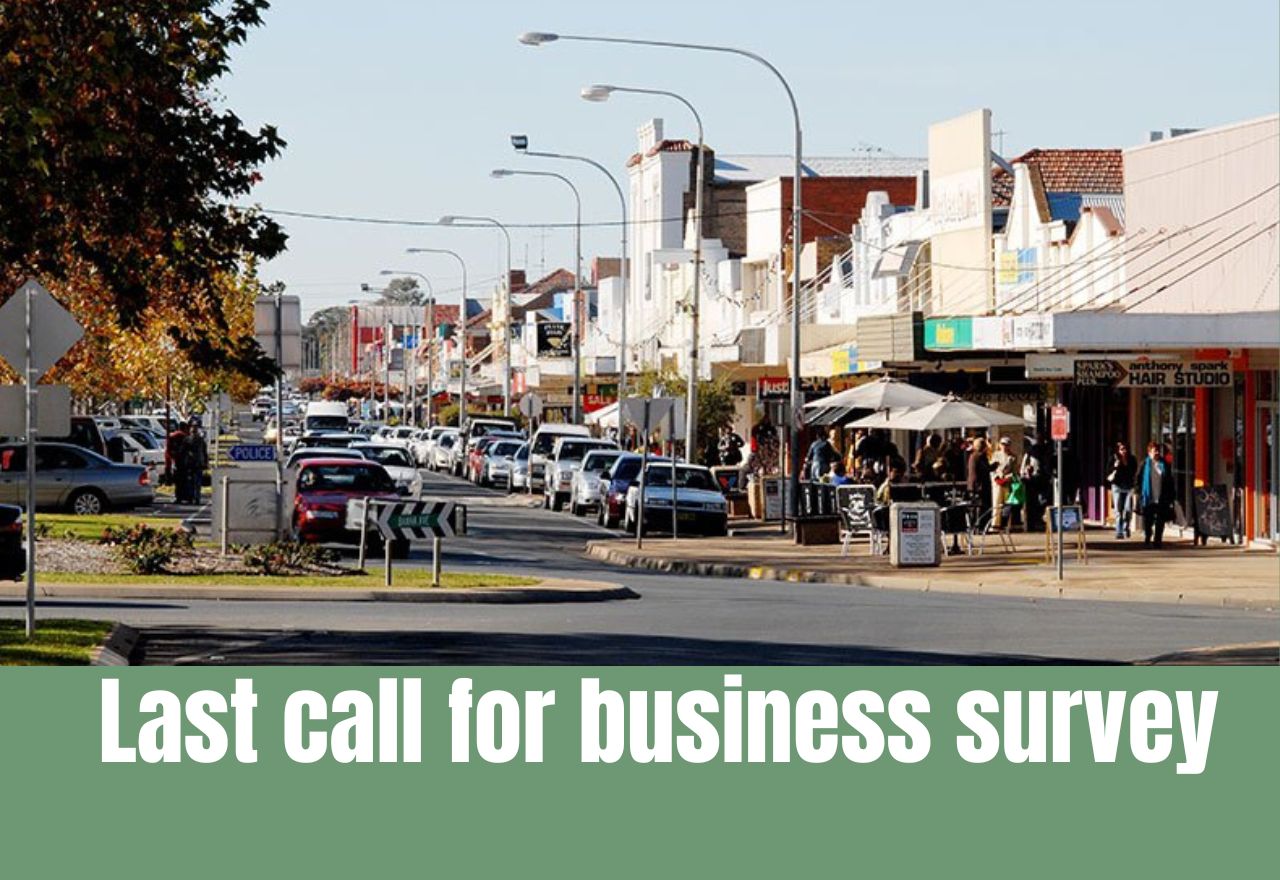
Griffith City Council is calling on local businesses to share their perspectives in a brief survey designed to shape the region's economic future, with responses due by January 31.In Short:Griffith City Council has launched a business survey to inform long-term economic strategies, grant applications and infrastructure planning for the regionThe five-minute survey closes on January 31, 2026, and is open to all businesses operating in the Griffith areaSurvey findings will help identify industry opportunities, support strategic economic decisions and provide information to attract investors to the regionThe Griffith Business Survey will inform the development of strategies and long-term plans as well as supporting grant applications for the region, providing information for major infrastructure projects and strategic economic decisions. Council has emphasised that strong businesses build strong regions and is seeking input from all business operators.The survey takes no longer than five minutes to complete and is available online HEREThe findings will serve multiple purposes, acting as a valuable tool for local businesses to determine opportunities within their industry while providing key information to attract investors to the Griffith region.Council has assured participants that privacy protection is a priority. The analysis of survey results will be conducted as a whole, with contact details collected only for the purposes of emailing business information to participants. The approach ensures individual business information remains confidential while still providing council with valuable aggregate data about the business community's needs and perspectives.The timing of the survey reflects council's commitment to evidence-based planning, with responses helping to inform decisions about where to focus resources and support over coming years. Survey data can strengthen grant applications by demonstrating actual business needs and opportunities, potentially bringing additional funding to the region for infrastructure and development projects.Council's Economic Development team has highlighted the range of support services available to businesses, including promotion of job vacancies through the Griffith Now Hiring Program and Jobs Riverina Murray, provision of statistical data and information for investment and growth opportunities, and assistance navigating council policies, procedures and the development landscape.The team also offers training, business workshops and events, along with a monthly Evolve Business Newsletter featuring news, events and information about available business grants. These services complement the survey process by providing ongoing support to businesses as they navigate challenges and pursue opportunities.Businesses interested in participating have until January 31, 2026, to complete the survey. For questions about the survey or to access Economic Development team services, contact Griffith City Council directly through their website.

Stay connected when disaster strikes: What remote communities need to know

24 January 2026, 7:00 PM

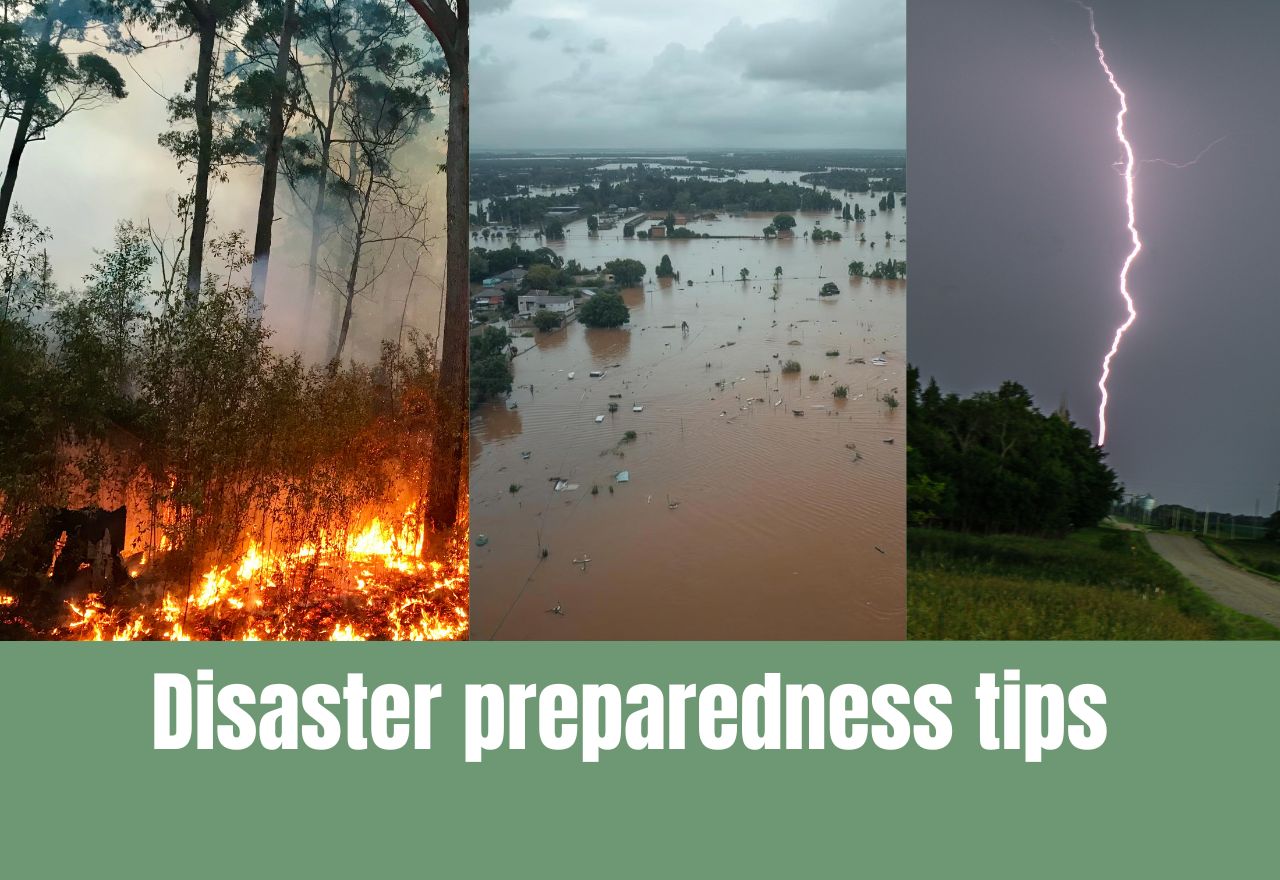
In Short: • Power banks, satellite messaging and printed contact lists can keep you connected when mobile networks fail during disasters • NBN home phones won't work during power outages – mobile backup essential for remote areas • Over 1,000 payphones now upgraded with free Wi-Fi and extended battery backup for emergency useAs another bushfire, flood and storm season approaches, communities across remote NSW need to ensure they have backup plans for staying connected when disaster strikes. For residents in areas like Hay, Balranald, Carrathool and Central Darling, where mobile coverage can already be patchy and help is often hours away, losing communication during an emergency creates serious safety risks. While it is important and probably advisable to look into the various products and tips to make sure it suits you specific circumstances, such as seeing if the services are indeed offered on your particular plan, Telstra has released some tips for getting prepared for when the worst happens.Telstra has released updated guidance on preparing for disasters, with several options particularly relevant for remote and regional communities. Telstra Satellite Messaging is Australia's first satellite-to-mobile text service, allowing customers with eligible plans and compatible devices to send and receive text messages when mobile networks are unavailable. The service uses Starlink's Direct to Cell satellite network, with compatible devices automatically seeking a satellite connection when outdoors with direct line of sight to the sky. While not designed as an emergency service and unable to text Triple Zero directly, the technology could help people in remote areas let loved ones know they're safe or reach out for assistance. For remote communities where power outages during disasters can last a week or longer, having alternative ways to charge phones is critical. Options include power bank battery packs that can be charged beforehand, portable solar panel chargers, or in-car chargers. Residents should also keep a printed, waterproof list of essential contact numbers, including Telstra's disaster assistance number, 1800 888 888, as well as local police, fire, SES teams, and family contacts. It is really important to note home phones connected to the NBN will not work during power outages, as the NBN requires electricity to operate. This makes having a charged mobile phone or satellite phone essential, particularly in remote areas where emergency services may take longer to reach. Residents with compatible devices should enable Wi-Fi calling, which allows calls and texts when connected to a Wi-Fi network even if mobile signal is unavailable. People who live in or regularly travel to areas with poor mobile coverage may benefit from Blue Tick certified phones or repeater devices. Network coverage extension devices can amplify mobile signals, extending the area where phones can operate. Telstra's Go Repeaters can maximise mobile signal in areas of low coverage, which could prove vital during emergencies. Telstra has upgraded over 1,000 payphones with free Wi-Fi and extended battery backup, making them more likely to withstand disaster impacts. For communities where the nearest payphone might be the only working communication point during an emergency, knowing its location beforehand could be crucial. Other preparation steps include: back up important data and photos to cloud storage download emergency services apps for your statesubscribe to weather alert servicesfollow local emergency services on social mediakeep a battery-powered radio or car radio for updatesensure older Samsung phones are updated for Triple Zero connectivity. Emergency services contact information and disaster assistance details are available through state and territory emergency websites, the Bureau of Meteorology, and ABC News services.

State government seeks community input on regional health plan

24 January 2026, 7:00 PM

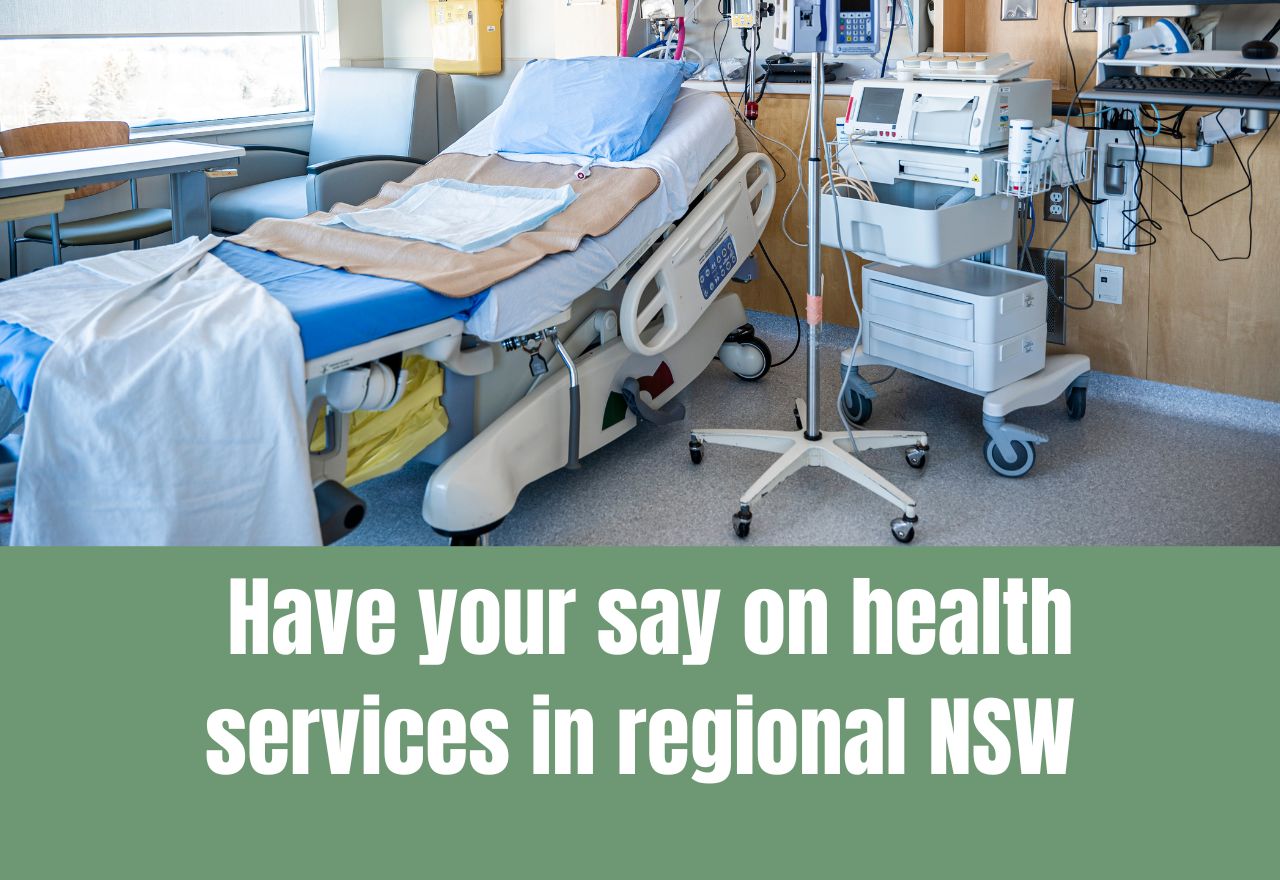
NSW Regional Health Plan consultation open IN SHORT: • NSW Health is seeking community feedback on the Regional Health Strategic Plan 2022-2032.• The plan sets out priorities for health services across regional NSW.• Member for Barwon Roy Butler says community consultation is essential to improving government programs.Consultation open on strategic plan that will shape health services across Barwon electorateResidents across the back country are being urged to have their say on the NSW Regional Health Strategic Plan, which sets out the priorities for health services in regional areas over the coming years.Member for Barwon Roy Butler said community consultation was critical to improving any government program or policy, and encouraged everyone with a stake in the regional health system to participate."I have often said that any government existing or new program, scheme, policy, service or procedure can be improved with community consultation," Mr Butler said in his weekly newsletter."Which is why I introduced a bill that set guidelines for best practice consultation back in 2024."The NSW Regional Health Strategic Plan 2022-2032 outlines the plans, pathways and priorities for providing health services across regional NSW, covering areas including Hay, Balranald, Wilcannia, Menindee, Ivanhoe and surrounding communities.However, Mr Butler emphasised that consultation is a two-way process that requires community engagement to be effective."The other side of the consultation is that communities need to engage with government agencies offering the consultation," he said."This document sets out the plans, pathways and priorities for providing health services in regional NSW. It can only be improved with input from regional communities."Access to health services remains a critical issue across rural NSW, with communities facing challenges including workforce shortages, distance to facilities, and service sustainability.The consultation provides an opportunity for residents to raise concerns specific to their local areas and suggest improvements to service delivery.The plan can be viewed ONLINE , and submissions can be made at haveyoursay.nsw.gov.au/regional-health-strategic-plan.

The 'First Day' Photo Mistake: Why the AFP is Warning Parents

23 January 2026, 7:00 PM

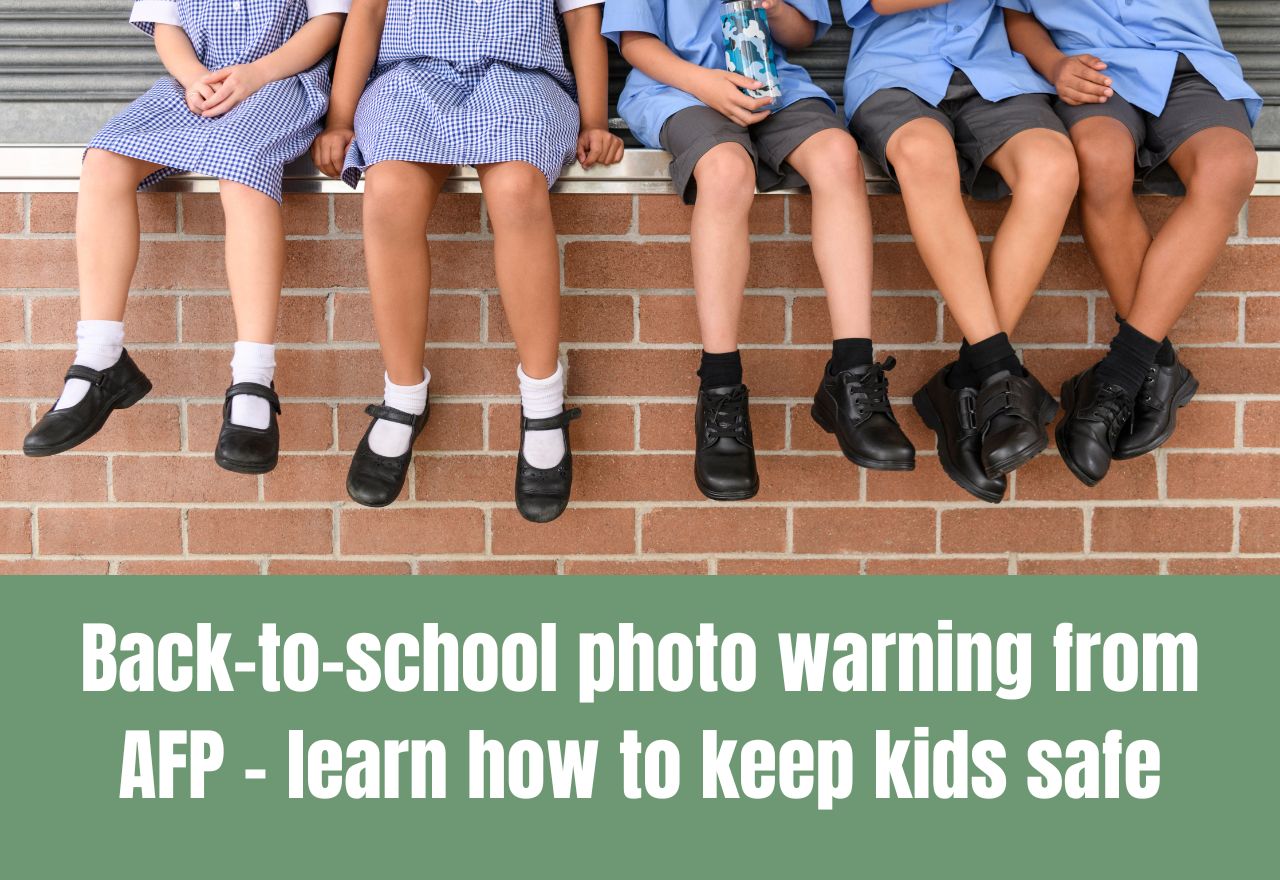
In Short• Hidden Roadmaps: Innocent details like school logos and street numbers can help offenders build "profiles" of your children.• Simple Fixes: The AFP recommends blurring logos, removing geotags, and checking that your house number isn’t visible in the background.• The "Yarn" Test: Review your friends list; if you wouldn't stop for a yarn with them on the street, they shouldn’t have access to your family photos.As the Christmas school holidays come to an end and families gear up for the first day of term, the kitchen bench is likely piled high with fresh uniforms and lunchboxes. But before you snap that proud "first day" photo for Facebook or Instagram, the Australian Federal Police (AFP) is urging parents to take a second look through the lens.In a recent safety alert, AFP Commander Helen Schneider warned that while sharing these milestones is a cherished tradition, innocently posted images can inadvertently provide a roadmap for those with "less-than-innocent" intentions.Small Details, Big RisksFor families in the back country, we often feel a sense of security in our close-knit communities. However, the digital world has no fences. The AFP highlights that seemingly harmless details can be used by offenders to build a "profile" of a child.“Small actions can mitigate big risks,” Commander Schneider said. “Seemingly innocuous details - such as a child’s favourite hobby or a street address visible on the front door - can enable offenders to build a profile of the child with the intent of grooming them.”Of particular concern to police is the use of school logos. A uniform logo immediately identifies exactly where a child will be for six hours a day, five days a week.The AFP’s Privacy Check-upTo keep our local kids safe, the AFP and the Australian Centre to Counter Child Exploitation (ACCCE) recommend a few simple housekeeping rules before hitting post:Hide the Logo: Use a photo editing app to blur the school emblem or simply place a fun emoji over the top of the crest on the uniform.Check the Background: Look past the smiling faces. Is your house number visible? Is there a street sign in the frame? Are there identifiable landmarks or your property’s name in the shot?Keep it Private: Ensure your social media accounts are set to "Friends Only." Use the start of the school year as a prompt to scrub your followers list—if you wouldn't stop and have a yarn with them in the street, they probably shouldn't be seeing photos of your kids.Ditch the Details: Avoid posting your child’s full name, age, or specific grade in the caption.Turn off Geotags: Ensure your phone isn't automatically tagging the exact GPS coordinates of your home or the school gate when you upload.A Family ConversationOnline safety isn't just about settings; it’s about the "talk." The AFP suggests involving children in these decisions. Asking a child if they are comfortable with a photo being shared - and explaining why we protect certain information - helps build their own digital muscle for the future.If you’re taking photos at the school gate where other children might be in the background, be mindful of their privacy, too. Not every family has the same comfort level with social media.For more tips and resources on keeping kids safe online, visit the AFP-led education program at ThinkUKnow.org.au. If you see anything suspicious online, it can be reported to the ACCCE at accce.gov.au.

Five-day childcare goal for Balranald families

23 January 2026, 7:00 PM

Local childcare gets a professional boost as LiveBetter takes the reins in Balranald.In Short:• Professional Takeover: LiveBetter officially assumed management of the Balranald Early Learning Centre on January 1, 2026, transitioning the service from a volunteer-led model to professional oversight.• Expansion Goals: New management aims to restore the centre to a five-day-per-week schedule, providing essential flexibility for working parents in the region.• Staffing Hurdles: The shift to full-time hours depends entirely on successful recruitment of qualified educators, a persistent challenge facing rural NSW.Professional management takes reins at Balranald Early Learning CentreArticle text: A significant shift in local essential services is underway as LiveBetter officially took over operations of the Balranald Early Learning Centre on January 1, 2026. The move marks the end of the volunteer-led committee era, transitioning the facility to a professional management structure designed to ensure long-term sustainability.For families across the Balranald shires, the transition highlights a familiar struggle, the difficulty of maintaining vital services through volunteer models alone. As volunteer fatigue impacts small communities, the arrival of an established organisation like LiveBetter is intended to provide the resources and administrative backbone that parent-led committees often struggle to maintain.The primary objective under the new management is an ambitious return to five-day-per-week operations. Currently, the centre has been operating on a reduced schedule, which has limited options for working parents and hindered workforce participation across the region.However, the path to a full-time schedule remains blocked by a hurdle well-known to residents of the NSW back country: staffing. The planned expansion is currently hinged on the successful recruitment of key qualified educators.Rural and regional centres continue to face stiff competition from metropolitan areas, where higher pay and larger applicant pools make recruitment easier. This staffing shortage remains the deciding factor for when Balranald families will see the doors open for those extra two days a week.Once staffing is secured, LiveBetter is expected to confirm further details regarding enrolment processes, fee structures, and updated operating hours. In the meantime, the transition represents a critical effort to keep quality early childhood education accessible in a region where such services are often scarce.Families seeking further information on the new structure or enrolment are encouraged to contact LiveBetter directly.

The first female Town Clerk: How Norma Male rewrote the rules of local government

21 January 2026, 7:00 PM

The Woman Who Broke the Outback’s Glass Ceiling: The Legend of Norma MaleIn Short• A National First: In 1944, 28-year-old Norma Male became the first woman in Australia permanently appointed as a Town Clerk, shattering a major gender barrier in local government.• Thirty Years of Service: Despite an arduous arrival in a drought-stricken town, Male served Balranald for three decades, leading the community through three major floods and a complex shire merger.• A Lasting Legacy: Beyond administration, she pioneered essential services including the local library and outback dental healthcare, eventually earning a British Empire Medal (BEM) for her service.In the mid-1940s, the "Town Clerk" was the ultimate archetype of the Australian male bureaucrat. A figure of stiff collars, ledger books, and unquestioned authority. That archetype was shattered in 1944 when a 28-year-old woman named Norma Male proved that administrative brilliance knew no gender.Norma Male’s childhoodNorma Thora Male was born in 1916 in Hughenden, Queensland to Henry James Male, then 28 years, and Louisa Ann Male (known affectionately as Bluey), then 27 years. Norma’s father was a postmaster and then Postal Inspector. The role required Norma’s family to move several times. They moved from Hughenden to Maryborough, Prairie, Charters Towers. Eventually Norma’s family settled permanently in Cootamundra in 1933. At the age of 18, Norma was employed by the Cootamundra Municipal Council as a grade C clerk, specialising in stenography. This was the start of a long and distinguished career in Local Government.Breaking the glass ceilingDuring the first and second world wars, women regularly moved into roles left vacant by the men who had enlisted. Norma Male’s ascent was not an accident of wartime necessity, but a triumph of professional persistence. Having mastered the rigorous certification exams required by the New South Wales Local Government Act - a feat many of her male peers found daunting - she secured her place in history in 1944Not content with a clerical role, and with the quiet support of a senior member of staff who recognised her potential, a Mr Louche, Norma studied and sat for the public service examination in two parts in 1942 and 1943. In doing so, she shortened the standard time taken to study and sit the exams by half. She qualified as a town clerk in 1944. That same year, at the age of 28, she applied for and obtained the position of Balranald Municipal Council Town clerk. She was the first female town clerk permanently appointed in Australia and news of the appointment was published far and wide in major newspapers.. By becoming the first woman in New South Wales to be permanently appointed as a Town Clerk, she didn't just take a job; she broke a legal and social "glass ceiling." Her appointment at Wyong Shire Council signaled a quiet shift in Australia’s view of traditional male roles, proving that a woman could command the respect of an elected council and manage the complex finances of a growing region.The move to Balranald: A 30-Year legacyWhile her "first" happened in Wyong, her heart and legacy were forged in the back country of NSW. In September 1944, Male accepted the position of Town Clerk for the Balranald Municipal Council. She arrived after a 12 hour journey via mail coach from Hay, stepping into a town gripped by a devastating drought and a community perhaps skeptical of a female leader.“I had to open every one of the 46 gates on the way, helped service the [lorry’s] producer-gas unit every 12 miles and we finally had to be towed the last leg of the trip because of a broken axle,” she later told a journalist. She finally arrived at Balranald at midnight. After finding refuge in one of the five hotels, she said she expected to see “Hopalong Cassidy” ride around the next corner. “I thought I had come to the end of the world and I said to myself, ‘My God Norma, what have you done’”.She would stay for thirty years, navigating the town through some of its most formative and challenging eras.During the historic floods of 1950, 1952, and 1956, "Miss Male" was the stabilising force of the region, coordinating relief and infrastructure repair with a calm efficiency that became legendary.During one major flood she manned the levy banks; directing operations and filling sandbags side by side with other locals well into the early hours of one Saturday morning. She turned up later that day to continue the work only to find the levy banks deserted; the waters were still rising, but the locals had opted to leave the bagging work to cheer on the local football team at the Saturday grand final. Norma oversaw the complex merger of the Balranald Municipality with the surrounding pastoral lands. Despite facing some local opposition, she proved the merger's value to the wider community and was subsequently appointed the first Shire Clerk of the newly formed entity.Norma believed the role of a Clerk extended beyond roads and rates. She was the driving force behind the Balranald Library (1947), the Baby Health Centre, and a pioneering Western Shires Dental Service that brought healthcare to isolated outback stations.Honors and enduring impactNorma Male retired in 1974, but her influence was well-rewarded. At the time of her retirement she was honoured with a testimonial dinner attended by 200 people including various State and Local Government ministers and undersecretaries. In 1975, she was awarded the British Empire Medal (BEM) for her extraordinary service to local government, a fitting tribute to a woman who spent three decades as the "engine room" of her community.A century of trailblazingNorma Male passed away in 2017 at the age of 101, having lived to see a new generation of women follow the path she hacked out of the Australian scrub. Today, the Norma Male Award is still presented to Balranald council staff who exhibit the same excellence she brought to her office every day for thirty years.

21-40 of 297
Back Country Bulletin
News from the Back Country

Get it on the Apple StoreGet it on the Google Play Store