The 'First Day' Photo Mistake: Why the AFP is Warning Parents

Krista Schade
23 January 2026, 7:00 PM
In Short
• Hidden Roadmaps: Innocent details like school logos and street numbers can help offenders build "profiles" of your children.
• Simple Fixes: The AFP recommends blurring logos, removing geotags, and checking that your house number isn’t visible in the background.
• The "Yarn" Test: Review your friends list; if you wouldn't stop for a yarn with them on the street, they shouldn’t have access to your family photos.
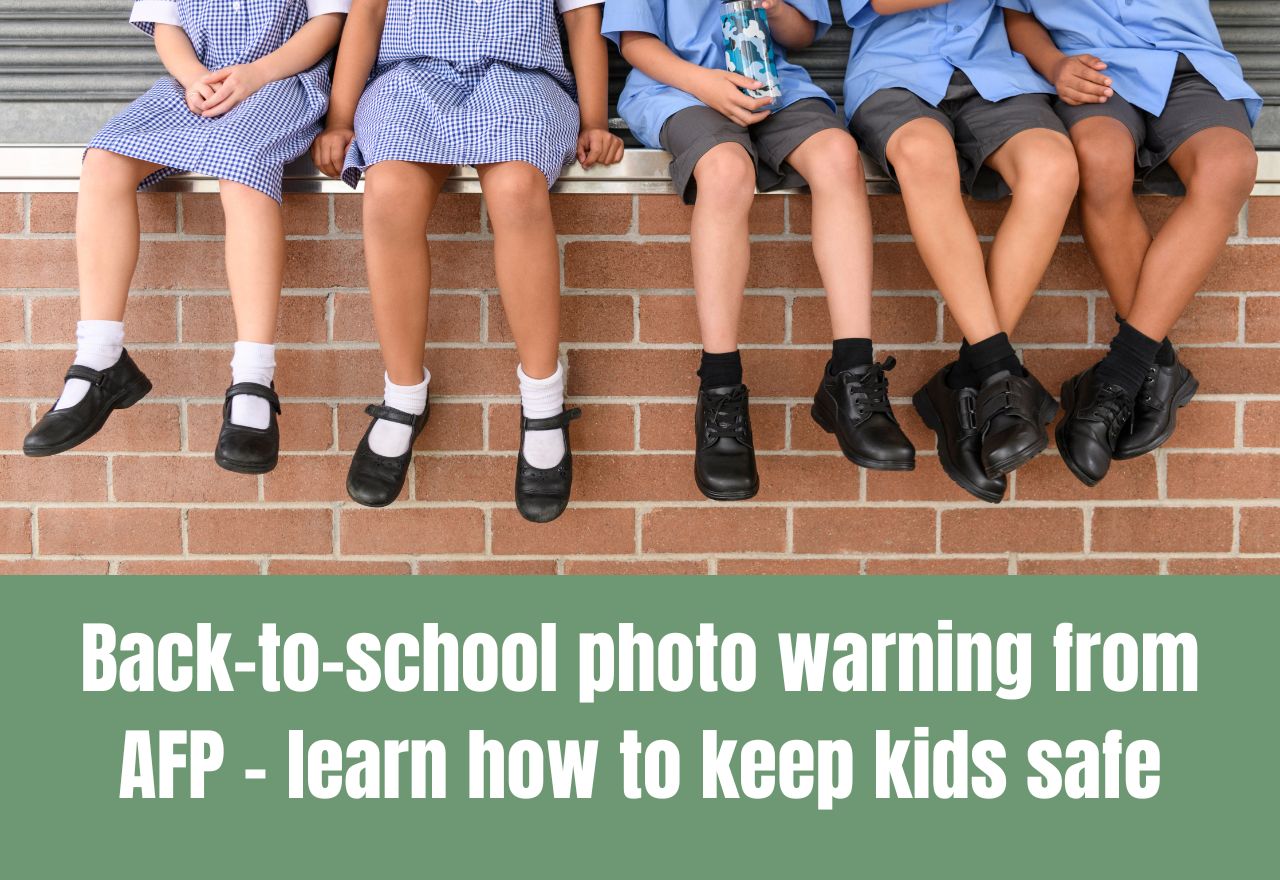
As the Christmas school holidays come to an end and families gear up for the first day of term, the kitchen bench is likely piled high with fresh uniforms and lunchboxes.
But before you snap that proud "first day" photo for Facebook or Instagram, the Australian Federal Police (AFP) is urging parents to take a second look through the lens.
In a recent safety alert, AFP Commander Helen Schneider warned that while sharing these milestones is a cherished tradition, innocently posted images can inadvertently provide a roadmap for those with "less-than-innocent" intentions.
Small Details, Big Risks
For families in the back country, we often feel a sense of security in our close-knit communities. However, the digital world has no fences.
The AFP highlights that seemingly harmless details can be used by offenders to build a "profile" of a child.
“Small actions can mitigate big risks,” Commander Schneider said. “Seemingly innocuous details - such as a child’s favourite hobby or a street address visible on the front door - can enable offenders to build a profile of the child with the intent of grooming them.”
Of particular concern to police is the use of school logos.
A uniform logo immediately identifies exactly where a child will be for six hours a day, five days a week.
The AFP’s Privacy Check-up
To keep our local kids safe, the AFP and the Australian Centre to Counter Child Exploitation (ACCCE) recommend a few simple housekeeping rules before hitting post:
- Hide the Logo: Use a photo editing app to blur the school emblem or simply place a fun emoji over the top of the crest on the uniform.
- Check the Background: Look past the smiling faces. Is your house number visible? Is there a street sign in the frame? Are there identifiable landmarks or your property’s name in the shot?
- Keep it Private: Ensure your social media accounts are set to "Friends Only." Use the start of the school year as a prompt to scrub your followers list—if you wouldn't stop and have a yarn with them in the street, they probably shouldn't be seeing photos of your kids.
- Ditch the Details: Avoid posting your child’s full name, age, or specific grade in the caption.
- Turn off Geotags: Ensure your phone isn't automatically tagging the exact GPS coordinates of your home or the school gate when you upload.
A Family Conversation
Online safety isn't just about settings; it’s about the "talk." The AFP suggests involving children in these decisions.
Asking a child if they are comfortable with a photo being shared - and explaining why we protect certain information - helps build their own digital muscle for the future.
If you’re taking photos at the school gate where other children might be in the background, be mindful of their privacy, too. Not every family has the same comfort level with social media.
For more tips and resources on keeping kids safe online, visit the AFP-led education program at ThinkUKnow.org.au. If you see anything suspicious online, it can be reported to the ACCCE at accce.gov.au.
NEWS


COMMUNITY