Help Shape the Outback: Applications Open for the West Regional Advisory Committee
Krista Schade
29 January 2026, 7:00 PM
The Backbone of the West: Why Your Voice Matters for Our National Parks
In Short
Local Influence: The NPWS is recruiting new members for the West Regional Advisory Committee (2026–2030) to provide direct advice to the Minister for the Environment.
Critical Oversight: Members tackle unique Western NSW challenges, including feral animal control, fire management strategies, and the preservation of Aboriginal cultural heritage.
Diverse Voices Needed: Applications are open to a broad cross-section of the community, including pastoralists, Aboriginal custodians, and regional tourism experts.
In the vast landscape of Western New South Wales, the management of a national park is never just about what happens inside the fence.
It’s about the health of the river systems, the management of feral animals that cross into neighbouring properties, and the preservation of cultural heritage that spans millennia.
NSW National Parks and Wildlife Service (NPWS) is currently seeking new members for its West Regional Advisory Committee (RAC) for the 2026–2030 term.
A Committee of Locals
The West RAC is a statutory body designed to provide the Minister for the Environment with independent advice on park management, fire strategies, and pest control.
The current West Region committee includes:
- Geoff Chapman (Chairperson): From Hay, Geoff brings extensive local government experience and a deep understanding of the Riverina’s land management challenges.
- Marie Russell AM (Deputy Chairperson): Based in Cobar, Marie is a long-standing advocate for Western NSW with a lifetime of experience in regional community service.
- Lachlan Gall: A pastoralist from the Wentworth/Far West region, providing the essential perspective of landholders who live alongside the park system.
- Dr. Michael Augee: A scientist and fossil expert closely associated with the Wellington area and the Wellington Caves.
- Bruce Reynolds & Michelle Pryse Jones: Representatives with strong ties to the Blayney and Central West areas, bridging the gap between local council interests and conservation.
- Yvette Myhill: Based in the Riverina, Yvette’s background in regional tourism highlights the economic importance of parks to our small towns.
- Jonathon Howard: An academic from Albury-Wodonga specializing in environmental management and community engagement.
- Other members, including Adrian Davey, Diana Hoffman, Dianne Kelly, and James Williams, ensure that voices from across the vast region are included in the conversation.
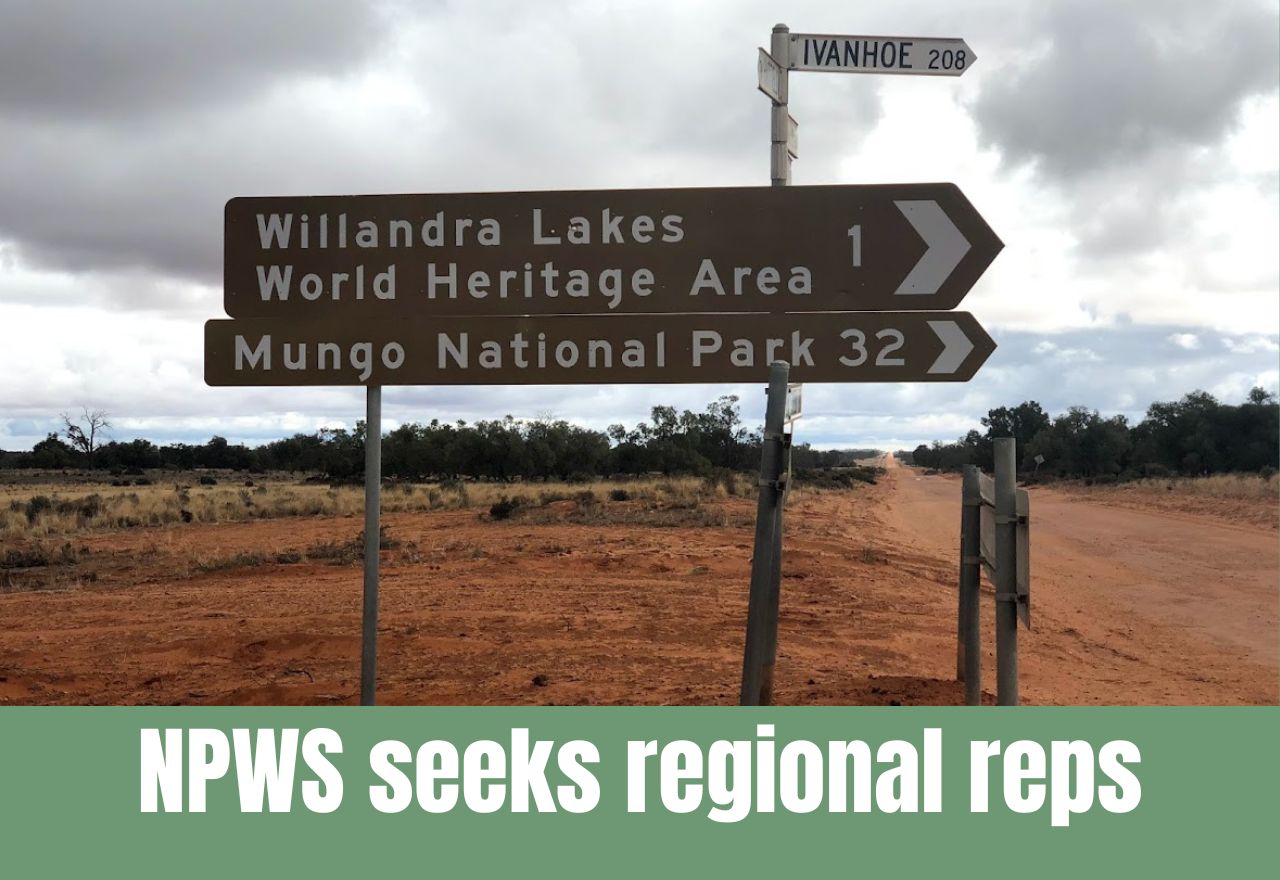
The West Region parks are unique. National Parks such as Mungo, Sturt, and Kinchega are often remote and face pressures unlike those on the coast.
Regional issues include extreme climate variability, complex invasive species management, and the protection of Aboriginal sites in shifting landscapes.
According to NPWS RAC members will directly influence policy reviewing draft plans of management before they become law, and represent the voice of the community.
RAC members also have a role in advising on where visitor infrastructure, such as campgrounds and heritage trails, should be built to best serve the community.
NPWS says it is looking for a broad cross-section of people: Aboriginal custodians, farmers, educators, and those with a passion for outback tourism.
Meetings: At least four times per year, held through a mix of online forums and in-person meetings at various regional locations.
Field Trips: The committee travels to remote parks to inspect management issues firsthand.
Remuneration: Members receive sitting fees and are reimbursed for travel costs, acknowledging the significant distances involved in West Region representation.
Applications are open now and close on Monday, 16 February 2026.
If you believe that local knowledge is the best tool for managing our landscape, consider applying.
For application details and further information, visit the NSW Environment and Heritage website.
COMMUNITY

RURAL
NEWS