Back Country Bulletin
News from the Back Country
Get it on the Apple StoreGet it on the Google Play Store
NewsSportRuralCommunityEat, Drink, Stay
Back Country Bulletin
Invitation for Elders to gear up for 24th Annual Aboriginal Elders Olympics in Yamba

15 January 2026, 10:42 PM

The call has gone out for Aboriginal Elders across the Far West and Riverina to lace up their sneakers and represent their communities, as registrations open for the 24th Annual Aboriginal Elders Olympics.In ShortThe Event: The 24th Annual Aboriginal Elders Olympics will be held on March 11–12, 2026, in Yamba (Yaegl Country).The Goal: Beyond the competition, the event focuses on community health, cultural exchange, and reconnecting Elders from across the Far West, Riverina, and the Coast.Deadlines: Teams and participants must register by Friday, January 30, 2026, to secure their spot on the field.Scheduled for March 11 and 12, 2026, the games will move to the coast, hosted by the reigning champions - the Biirrinba Coastal Emu’s - on Yaegl Country in Yamba. For Elders living in the Back Country, the event represents a significant opportunity to travel, reconnect with kin from across the state, and showcase the sporting spirit of the back country.A Focus on Connection and CultureWhile the "Olympics" title suggests fierce competition, the heart of the event lies in community health and cultural exchange. The two-day program kicks off on Wednesday with a cultural tour of Yaegl Country and a social meet-and-greet, followed by the main competition on Thursday at the Raymond Laurie Sports Centre.The New South Wales Aboriginal Land Council (NSWALC) is supporting the event via a Community Grant to assist with logistics and venue hire. In a new twist for 2026, NSWALC Councillors will be fielding their own team to challenge the local community groups.NSWALC Chairperson, Cr Raymond Kelly, highlighted the significance of the gathering for the state’s senior leaders.“Elders are such an important part of our communities - their wisdom, strength and guidance continue to inspire us all,” said Cr Kelly. “The Elders Olympics is a major event on our calendar and a wonderful way to celebrate their spirit and the role they play in keeping Culture strong. I am looking forward to seeing our Elders come together on Yaegl Country next year.”Representing the RegionFor residents in our local government areas, the event is more than just a trip to the North Coast; it is a chance to bring the hosting rights for 2027 back to the western plains. Teams from across NSW are invited to compete, and local families are being encouraged to make the trip to support their Elders.Diane Randall, NSWALC Councillor for the North Coast Region, said the 2026 games are set to be a highlight for social connection.“This year’s Aboriginal Elders Olympics will be an exciting time to connect with family, friends and meet new people. "NSWALC is excited to be fielding our very first team and participating in such a wonderful event,” said Cr Randall.Key Event DetailsDates: Wednesday 11 – Thursday 12 March, 2026Location: Raymond Laurie Sports Centre, YambaRegistration Deadline: Friday, 30 January 2026How to Join: Contact Noeline Kapeen at [email protected]

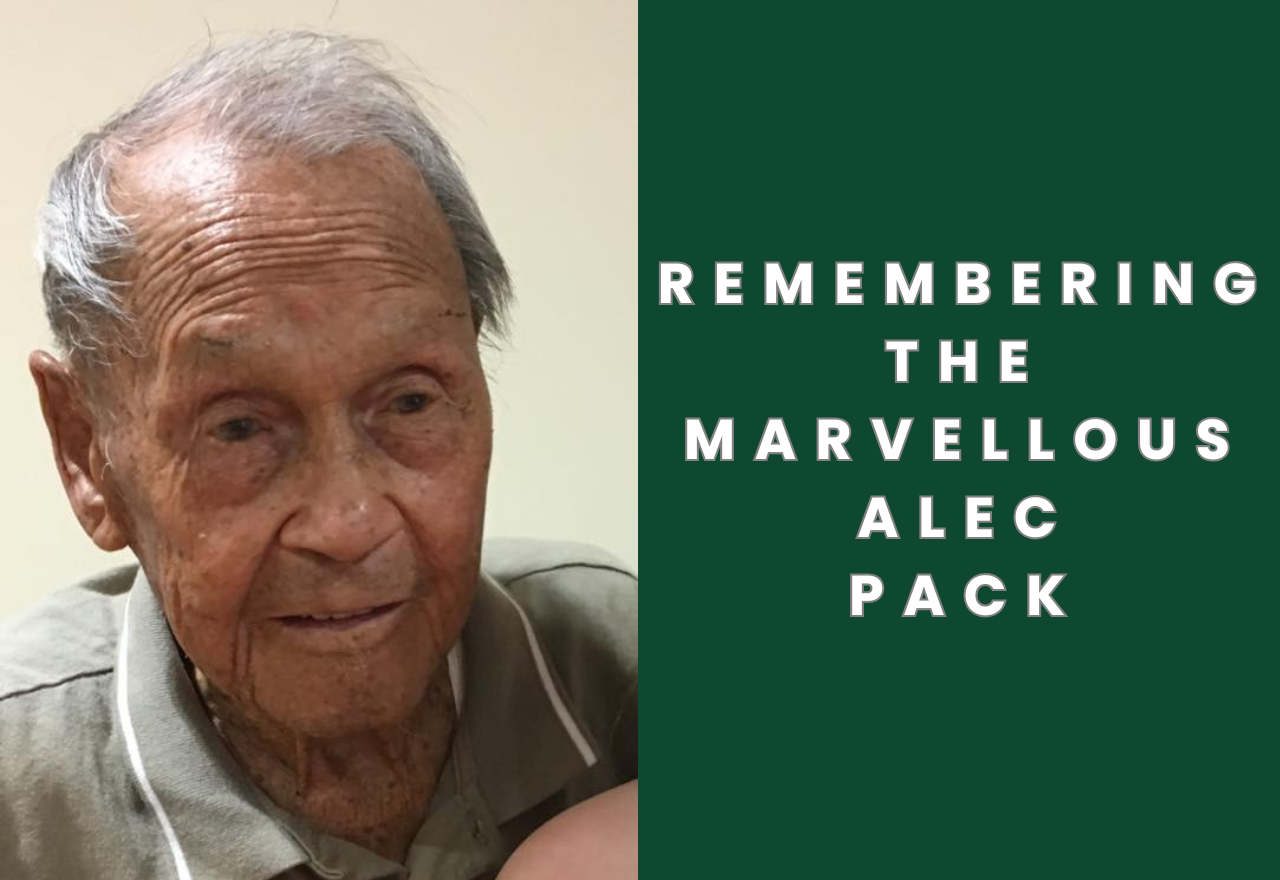
Remembering the marvellous Alec Pack

12 January 2026, 10:00 PM

As we dig into the Blast from the Past archives, little treasures fall out. One such treasure is the following article about Mr Alec Pack. Fondly remembered by all who knew him, he was a kind and gentle soul.Alec Pack was the youngest of eighteen children of Ah and Margaret Pack and was born on the same block where he now lives in Macauley Street.He tragically lost both parents before he turned six.His mother died shortly after giving birth to his brother Eric, and his father passed not long after.Alec was raised by his family, and remembers the loving time of being part of a large family unit.Alec’s parents, Ah and Margaret Pack were some of the earliest settlers in the Hay districtAh was a gardener at Til Til, situated between Balranald and Ivanhoe. He used to travel into Hay, hawking his vegetables.Alec attended Hay Public School, but as was common in those times, he finished his schooling at age 13, after gaining employment as a groom with John Rees at Daisy Plains.“It was like living at home,” Alec recalled. “One of my older sisters, Kathleen also worked there.”It was at Daisy Plains that Alec first had experience shearing.“Mr Rees needed a couple of rams shorn before joining, so I had a go with the blades,” Alec said.“I cut them ragged, so I made the decision then and there that shearing was not my go. Mr. Rees agreed.”However, it did not deter him from getting into the ‘game’, and he went shearing in 1945. He started of with contractor O.J. Smith before joining up with Ray Congdon’s team a year later.“We worked some pretty big sheds. Tupra was as big as anything around in those days, plain and basic, with as many as sixteen shearers on the go. It was a huge shed, with plenty of work.’He remained in the shearing industry until 1955, before he had, as he described, burnt himself out, and intended to give it away.He returned to Daisy plains, and stayed there another 15 years.“I had no intention of going back shearing again, but around 1970 I felt I had come good again, and was talked into going back.“I freelanced, and had plenty of work. I used to average about 160 to 170 a day. The best I shore a day was 228, and that was using narrow gear. About 20 years later, I shore the same number at Kooba Station using the wide combs.“I never understood the opposition to the wider combs, they made shearing a lot easier. You know, I was always a union man. The union made the job a lot safer and more comfortable for shearers. When I first started out, we were given two chaff bags, which we had to fill with straw to use ofr mattresses. It is a lot different now. The hard work and sacrifices for conditions that have been made by shearers, even before my time, have paved the way for better conditions the current shearers now enjoy.”Alec said he enjoyed shearing, and the fact that he enjoyed the work made it easy for him to stay in the industry for so long.“I never tried to chase the shearer I knew I could not beat,” he said.” I just poked along at my own pace, and it wasn’t too hard. I remember working one time with the late Pat Kelly, and he told me a fellow shearer a fellow shearer, by the name of Gordon Nash, had expressed concern to Pat that I was taking him on, ad then Pat would drop back, and I wouldn’t try to beat on, and beat him. I always aimed at shearing my average.”He said he wouldn't like to be in the game now.“Too much weekend work,” Alec said. “In my time you could earn enough working Monday to Friday. The cost of combs and cutters these days makes it a pretty expensive trade. I remember buying two dozen cutters for eight quid. Nowadays, I believe they are about six or seven dollars each. And a comb costs $35.”Alec estimates that he has shorn almost 200,000 sheep in his expansive career. He retired in 1987, after the death of his son Andrew, and now spends his time at home, enjoying the company of his wife Isabelle, their family and grandchildren.Alec has a well earned reputation for being a good, hard working shearer, a team man who always pulled his weight.He is a credit to the shearing industry, and a credit to his strong work ethic.

Australia Day Ambassadors announced for Hay, Balranald, Carrathool and Central Darling Shires

07 January 2026, 7:00 PM

As we approach January 26, the Back Country Bulletin is proud to spotlight the remarkable Australians heading to the Back Country. From world-class athletes to high-altitude mountaineers, the 2026 Australia Day Ambassadors bring a wealth of inspiration to our local ceremonies in Hay, Balranald, Carrathool, and Central Darling.Here is your guide to who is visiting our region:-Balranald Shire Council: Ms. Isabella (Bella) BainBalranald is set to welcome a powerhouse of innovation and resilience. Isabella Bain is the 2025 NSW/ACT Young Achiever of the Year and a world-class athlete.Who she is: A multi-talented designer, STEM advocate, and co-founder of Ambient and Co, known for award-winning light installations at festivals like Vivid Sydney.Achievements: Beyond her professional success in human-centred design at IBM and Macquarie Group, Bella is a five-time World Champion in Dragon Boating.The Inspiring Bit: Diagnosed with Multiple Sclerosis (MS) in recent years, she has become a vocal advocate for accessibility and inclusion.Carrathool Shire Council: Mr. Sam Bramham OAMThe celebrations at Rankins Springs Hall will be headlined by one of Australia’s most charismatic Paralympians, Sam Bramham.Who he is: A legendary Australian Paralympic swimmer and media personality.Achievements: Sam made a splash on the world stage at the 2004 Athens and 2008 Beijing Games, ultimately claiming two Gold, two Silver, and one Bronze medal. He broke the world record for the 100m Butterfly and was awarded the Order of Australia Medal (OAM) for his services to sport.The Inspiring Bit: Known for his larrikin spirit and motivational storytelling, Sam is a master at teaching others how to turn disability into an ability through humour and grit.Central Darling Shire Council: Mr. Andrew Lock OAMIn the far west, Central Darling will be visited by a man who has quite literally stood on top of the world. Andrew Lock is Australia’s most accomplished high-altitude mountaineer.Who he is: An elite climber and the first Australian to scale all 14 of the world’s 8,000-metre peaks (the highest mountains on Earth).Achievements: Andrew’s feat is so rare that more people have been into space than have accomplished what he has. He has survived avalanches, extreme frostbite, and the mountainous Death Zone to document the world's most brutal environments.The Inspiring Bit: Awarded the OAM for his contribution to mountaineering, Andrew brings a message of extreme perseverance and risk management..Hay Shire Council: Mr. Ron DelezioThe addition of Ron Delezio will deliver a level of national inspiration to the ceremony at the Hay Gaol.Who he is: A dedicated father, humanitarian, and co-founder of the Day of Difference Foundation. He is perhaps best known to the public as the father of Sophie Delezio, whose survival following two horrific accidents captured the heart of the nation.Achievements: Since founding the Day of Difference Foundation in 2004, Ron has helped raise over $14 million to support critically injured children and their families. His work has funded vital medical equipment and research into paediatric clinical care across Australia.The Inspiring Bit: Ron is a former NSW Citizen of the Year and Australian Father of the Year. He speaks candidly about resilience, overcoming depression, and the power of "going that little bit further" when life presents unimaginable challenges.

Beating the heat: White Cliff’s underground solution

01 January 2026, 1:00 AM

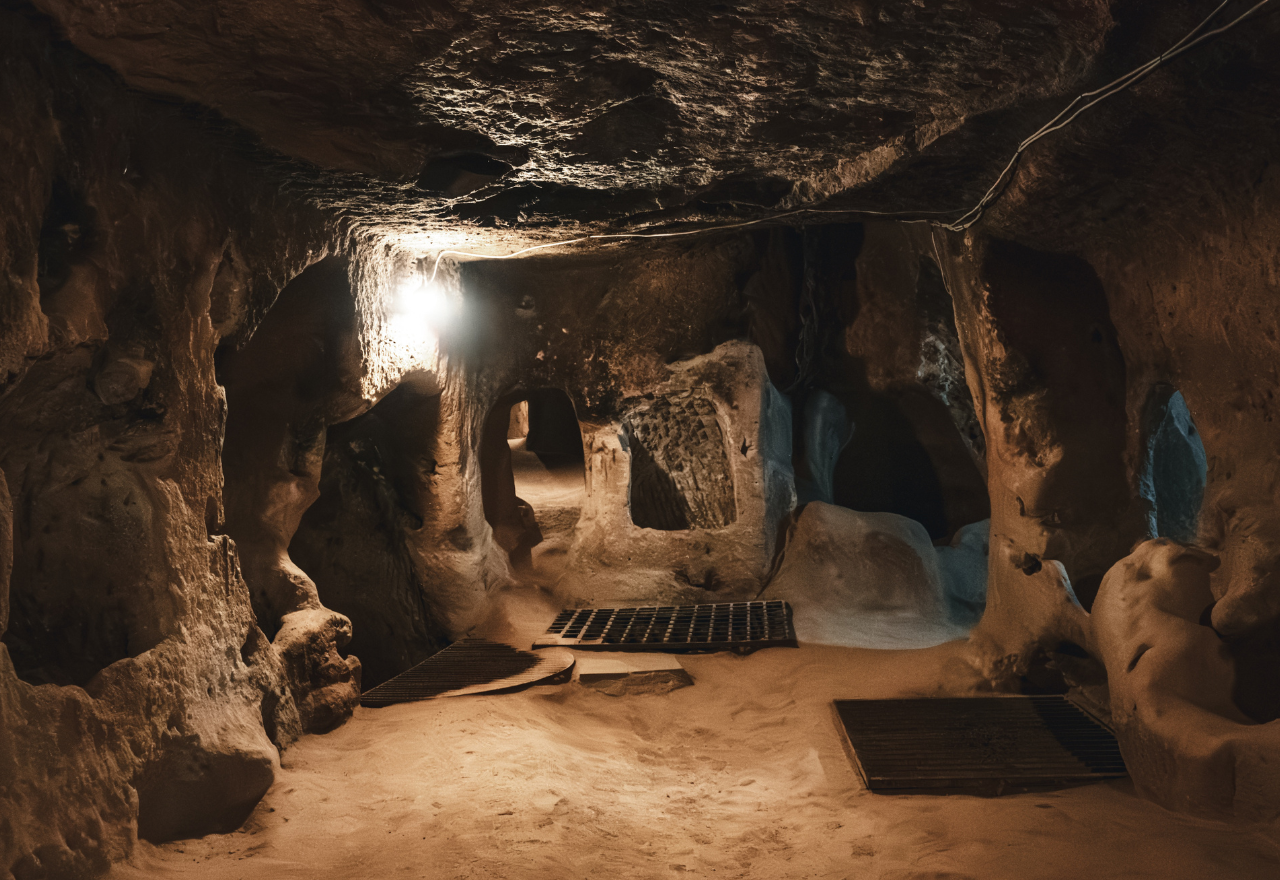
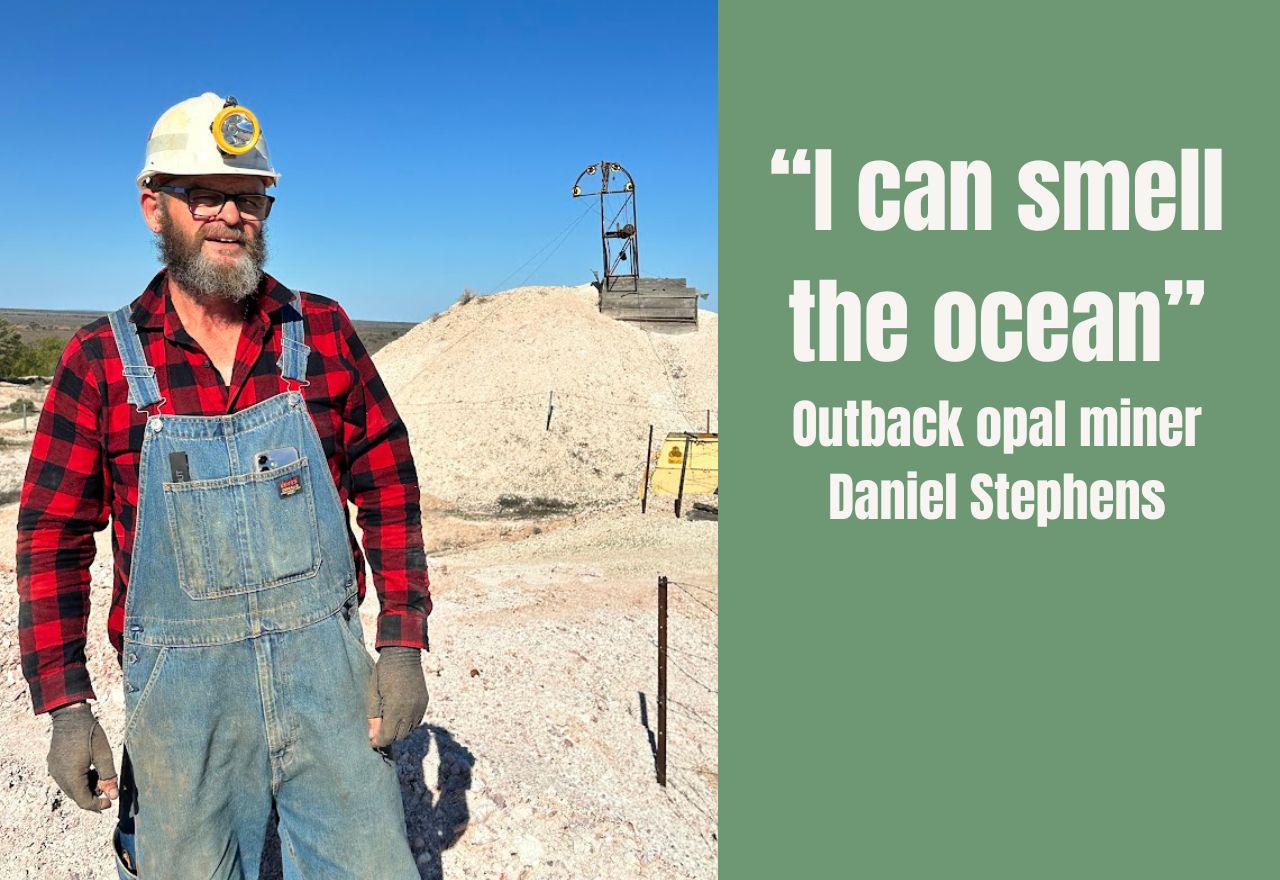
As summer temperatures across inland NSW regularly exceed 40 degrees Celsius, the small outback town of White Cliffs, 93km north of Wilcannia, offers visitors a unique solution; go underground. For more than a century, White Cliffs residents have been excavating homes, businesses, and now tourist accommodation beneath the surface, where temperatures remain a constant, comfortable 22 degrees regardless of the inferno above. Around 150 people call White Cliffs home, with approximately 140 underground dwellings scattered across the hillsides surrounding the town. Using mining equipment, residents have dug extensive networks of rooms, hallways, and living spaces into the stable sandstone that characterises the region. White Cliffs became Australia's first commercial opal field after stock workers found pretty rocks in 1889 that turned out to be valuable opals. The rush that followed saw the town peak at around 5,000 residents in 1902, with opals worth £140,000 extracted that year alone. While the glory days have passed, opal mining continues. The town produces the rare "pineapple opals" (technically double pseudomorphs) found nowhere else on Earth, distinctive specimens with spiky shapes that command premium prices from collectors. Graeme Dowton, owner of Red Earth Opal, runs underground mine tours that take visitors 45 feet beneath the surface through multiple levels of old and new diggings. The tour includes demonstrations of mining equipment, explanations of where and how to fossick for opals, and the chance to see working seams. "You can still find opals if you're patient and lucky," Dowton explained. "The old-timers were only after the high-quality stones, so they discarded lesser pieces and small fragments. After rain, these wash out of the mullock heaps and you can find them on the surface." Under the Mining Act 1992, anyone can fossick on the White Cliffs Reserve without a licence, though registered claims must be respected. The White Cliffs Underground Motel, carved into "Poor Man's Hill" (so named because no opal was ever found there), offers 30 underground rooms plus two above-ground options. The motel opened in 1989 and has gradually expanded to the size of a football field beneath the earth. A rooftop viewing area provides spectacular sunset views, while below ground, guests experience total silence and constant temperature. While coastal Australians swelter through humid Christmas Days, White Cliffs' underground residents enjoy comfortable conditions. Several families travel to White Cliffs specifically for Christmas, booking underground accommodation months in advance to escape coastal heat and humidity. Beyond underground living, White Cliffs offers several distinctive attractions.The Solar Power Station, built in 1981, was the world's first commercial solar thermal power station. Though it ceased operation in 2005 after being converted to photovoltaic panels in 1997, the fourteen large dishes remain as Engineering Australia heritage-listed reminders of Australian innovation. The Bill O'Reilly Oval, a red dirt cricket pitch with not a blade of grass, honours the legendary spin bowler born in White Cliffs in 1905. Playing cricket here requires special rules about dust and heat. The Pioneer Children's Cemetery (1890-92) provides a stark reminder of outback harshness, with children's graves, victims of typhoid and other diseases that thrived in primitive mining camp conditions. The Stubby House, built from over 50,000 beer bottles, combines bush ingenuity with folk art, while displaying fine examples of White Cliffs' crystal opal set in jewellery.White Cliffs sits 255km northeast of Broken Hill via the sealed Opal Miners Way from Wilcannia. The road is sealed all the way, making the town accessible to conventional vehicles, though exploring surrounding national parks requires 4WD. The nearest commercial flights arrive at Broken Hill, with the three-hour drive to White Cliffs along the Barrier Highway and then north passing through classic outback scenery.While White Cliffs can be visited year-round thanks to underground accommodation, the period from May to November offers more comfortable surface exploration. Summer visits (December-February) require planning activities for early morning or evening, with midday hours spent underground or in air-conditioned venues. For summer visitors seeking genuine outback experience without the usual discomfort, White Cliffs represents one of inland Australia's best-kept secrets, proof that with ingenuity, even the harshest environments can become comfortable homes.  

Ring in the New Year safely: A guide for rural Australia

31 December 2025, 4:00 AM

New Year's Eve in rural Australia has its own special character. Whether you're heading to a community celebration at the local pub, hosting a gathering on the property, or making the drive to a neighbouring town for festivities, the night promises good company, cold drinks and the chance to farewell one year while welcoming another. But the same factors that make country celebrations memorable can also create risks if we're not careful.The distances we travel, the heat of an Australian summer, the isolation of our properties, and the relaxed atmosphere of rural gatherings all require some thoughtful planning to ensure everyone welcomes 2026 safely. This isn't about dampening the celebrations or wrapping everything in cotton wool. It's about making sure that the stories we tell about New Year's Eve 2024 are good ones.In rural areas, almost every celebration involves a drive, and those drives are rarely short. The local pub might be 30 kilometres away. A mate's property could be an hour down the road. That neighbour's gathering you've been invited to might require navigating unsealed roads in the dark. Add alcohol to the equation and you've got a potentially deadly combination.The message about drink driving has been repeated so often it risks becoming background noise, but the statistics in rural Australia remain sobering. Country roads are less forgiving than urban streets. There are no streetlights, no footpaths to stumble along if you realise you shouldn't be driving, and often no mobile phone coverage if something goes wrong. A mistake that might result in a dented bumper in town can be fatal on a dark country road.The solution requires planning before the first drink is poured. Designate a driver who commits to staying sober for the entire night, not someone who plans to stop drinking an hour before leaving. Organise to stay overnight where you're celebrating. Pool resources with mates and hire a bus or arrange transport. Some rural communities organise courtesy buses on New Year's Eve specifically to address this issue. Check whether your area has this service and use it.If you're hosting a celebration on your property, take responsibility for your guests' safety. Offer accommodation for anyone who's been drinking, even if it's just swags under the stars or stretchers on the verandah. Make it clear from the start that nobody will be driving home after drinking, and have a plan in place to make that possible. Your mates might grumble about the inconvenience, but they'll thank you when everyone wakes up safe on New Year's Day.An Australian summer New Year's Eve often means celebrating in temperatures that can reach 40 degrees or higher. Add alcohol to hot weather and you've got a recipe for dehydration, heat exhaustion and poor decision making. The effects of alcohol in the heat are intensified, meaning people become impaired faster and more severely than they might expect.Make sure there's plenty of water available at any gathering and encourage people to alternate alcoholic drinks with water throughout the night. It sounds simple, but in the excitement of celebrations, it's easy to forget. If you're hosting, keep water cold and readily accessible. If you're attending a celebration, take responsibility for your own hydration.Watch for signs of heat exhaustion in yourself and others. Excessive sweating followed by cold, clammy skin, dizziness, nausea, rapid heartbeat and confusion are all warning signs that someone needs immediate cooling down and medical attention. In remote areas where medical help might be an hour or more away, prevention is far better than treatment.Provide shaded areas for people to escape the sun during the day and ensure adequate ventilation if celebrations are happening indoors. Consider the timing of outdoor activities, perhaps starting celebrations later in the evening when temperatures have dropped. If you're planning a barbecue or outdoor meal, schedule it for after the worst of the day's heat has passed.Summer in rural Australia means fire danger, and New Year's Eve traditionally involves fireworks, barbecues, fire pits and other potential ignition sources. Check the fire danger rating for your area before planning any celebration involving flames or sparks. On total fire ban days, fireworks are prohibited, campfires are banned, and even some barbecues aren't permitted.If you're on a property, make sure you know where your fire fighting equipment is and that it's in good working order. Hoses should be connected and ready, fire extinguishers should be accessible and fully charged, and water tanks should be full. If you're using a fire pit or campfire on a night when it's permitted, have adequate water or sand immediately available to extinguish it, and never leave it unattended.Be particularly careful with fireworks if they're part of your celebration. Follow all safety instructions, keep a safety distance, never attempt to relight fireworks that have failed to ignite, and always have water available. Consider whether fireworks are appropriate given the conditions. A memorable celebration isn't worth starting a bushfire that threatens properties, livestock and lives.Rural communities pride themselves on looking after their own, and New Year's Eve is a night when that matters more than ever. Keep an eye on mates who might be overdoing it. Check in with people who seem distressed or unwell. Make sure everyone has a way to get home safely or a place to stay.If someone has had too much to drink, don't leave them alone to "sleep it off." Alcohol poisoning is a real danger, and what seems like drunken sleep can actually be a medical emergency. If someone is unconscious, difficult to wake, breathing irregularly, has cold or bluish skin, or is vomiting while semi-conscious, get medical help immediately.For older residents or those with health conditions, the excitement and late night of New Year's Eve can be challenging. Make sure they have their medications with them if they're attending celebrations away from home. Check in on elderly neighbours who are home alone, either in person before you head out or with a phone call.Mobile phone coverage in rural areas can be patchy or non-existent, which creates challenges if something goes wrong. Before you head to a celebration, make sure someone knows where you're going and when you expect to be home. If you're hosting, ensure you have a working phone and know the exact address or location to give emergency services if needed.Charge your phone fully before heading out and consider bringing a power bank. If you're in an area with no mobile coverage, know where the nearest phone is and how to contact emergency services. In a genuine emergency, the difference between getting help quickly and struggling to make contact can be critical.New Year's Day recovery in the country comes with its own considerations. If you've stayed overnight somewhere after celebrating, remember that you might still be over the legal limit the next morning. Just because you've slept doesn't mean you're safe to drive. The only thing that eliminates alcohol from your system is time, and depending on how much you drank, you might need to wait well into New Year's Day before getting behind the wheel.Stock up on hangover supplies before the shops close on New Year's Eve. In rural areas, shops might not reopen until well into the new year, and the nearest chemist could be hours away. Have pain relievers, electrolyte drinks and easy food available.None of these safety considerations should diminish the joy of celebrating New Year's Eve. Rural celebrations have a warmth and character that urban parties often lack. The sense of community, the familiarity of faces around you, the tradition of gathering with people you've known for years or decades, these are things to be cherished and celebrated.But the best celebrations are those where everyone makes it home safely, where memories are good ones, and where the start of 2026 isn't marred by tragedy or regret. A little planning, some thoughtful decisions, and genuine care for the people around you can ensure that New Year's Eve 2024 is remembered for all the right reasons.So plan your transport before the night begins. Keep water flowing as freely as the beer. Watch the fire danger and keep flames under control. Look after your mates and check in on your neighbours. Charge your phone and let someone know your plans. Take it easy in the heat and don't push through if you're feeling unwell.When midnight strikes and you're raising a glass to 2026, you'll be doing it surrounded by the people who matter, in the place you call home, with the confidence that everyone will be there to see the sunrise on New Year's Day. That's worth celebrating, and it's worth the effort to make it happen safely.Here's to a safe and happy New Year's Eve, rural Australia. Look after yourselves, look after each other, and make 2026 a year to remember for all the right reasons.

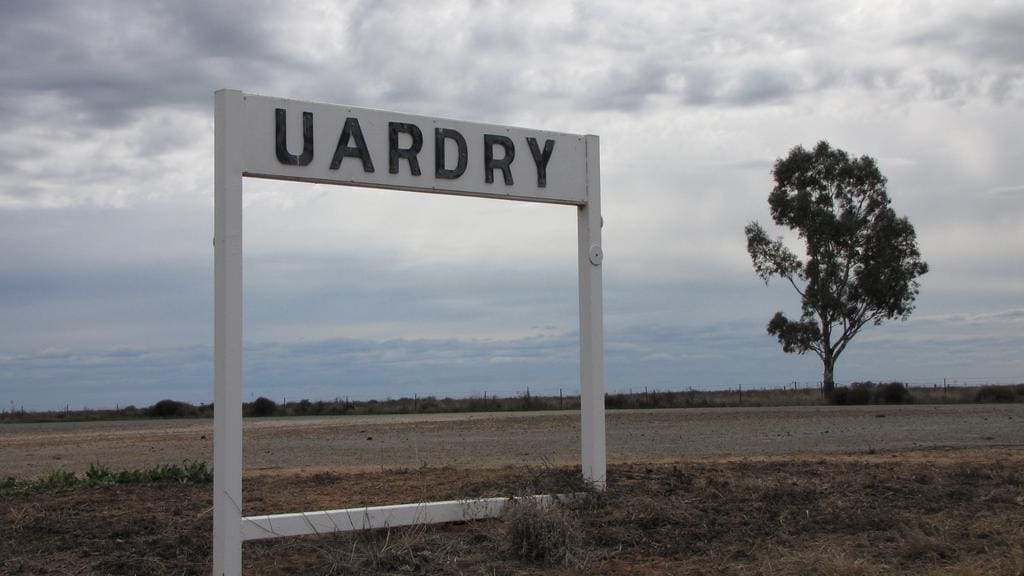
Recollections from a late icon: Rod McCully's Uardry memoirs

28 December 2025, 10:00 PM

THE BREEDING PROGRAMWhen I moved to Uardry my experience in breeding stud sheep was restricted to watching others do it, particularly at Oolambeyan where Pat Thomas and Ian Marwedel held the reins. We did however implement some practices there that hadn’t been in place; the recording of the classing results of the progeny of individual sires. This not only gave a clear indication of how good or otherwise a sire was, but it told us just what the survival rate of his progeny was, and I can tell that over the years of doing this both at Oolambeyan and Uardry, we certainly got some surprises.Pat Thomas had an unusual recording system in place which unfortunately had fallen into disuse when I got there. It was a stud book for breeding ewes, where all special stud ewes were recorded, and their breeding history was entered up each year. When I started to try to catch up, the records were over 10 years out of date, so in many ways it was a lost cause as most of the ewes had died. However I managed to get the books updated to the end of the fifties, but even then I wasn’t dealing with any live sheep. I think that was why the records had fallen into disuse, and also the fact that a breeder was five years old before her worth was really obvious. IE: Two years old when her first lamb was born, 3½ years old and joined again before the results of her first progeny were available, and so on. You really only had one more breeding year to make a decision based on her results.However this recording made me think about the accepted way of breeding stud sheep - make a decision about which sires you wanted to use; run the special studs in on the desired date for joining, then select the ewes to join to a particular sire, and then justify why you did it. Was it to breed the best with the best to try and breed that “gun sire” that everyone aims for, that most never do; but many will tell porkies about how good a certain sire was, but have little or no evidence to prove it because little is recorded; or were you going to corrective mate each ram to use his strengths, or alternatively, breed against his weaknesses? (and despite the rose-tinted glasses of most stud breeders, every sire had a fault of two) – just the nature of genetics.But the bottom line which got at me more and more was the fact that we knew little or nothing about the ewe herself, and when you analyse it, the success or otherwise of the mating depended largely on how good a mother the ewe was. This was proven to me in spades when in 1980, ‘Nancy’, our Champion Strong Wool and Grand Champion Ewe in all the shows we entered her in including Dubbo, was mated to a very good heavyram who we had sold in Dubbo to Western Australia but had to come home to be shorn and readied for transport. (‘Nancy’ was bred by one of the two Pemcaw (Haddon Rig blood) rams purchased in 1978.)“Nancy” wasn’t perfect, but nearly so. She was a little bare over her eyes, but that was all. But when she produced a ewe lamb that year, she produced a beauty, but she lost all the wool over her eyes, and her legs, and was a dead-set medium wool. In fact any classer looking at her would down-grade her to a Single stud ewe. Her daughter “Nerissa” went on to become Grand Champion Strong Wool ewe at the Sydney Sheep Show in 1982! Really proved what I thought was the case.It was during Nancy’s reign that I decided to change the way we were doing things. It wasn’t an idea borrowed from anyone else, but it fitted my thinking. I decided to grade all the Special Stud ewes into types: best Mediums, best Strongs, best Radicals (heaviest cutters, heaviest skins, odd faults), plainer Mediums, plainer Strongs. Thick Mediums, thick Strongs, and thinner-wooled sheep (mostly progeny from a Merryville ram bought in 1976 I think – very correct sheep with good wool but lower yielding).This grading could not be perfect as we had no way of knowing how many lambs each ewe had borne, nor reared, nor what standard the progeny was – as was the case on most bigger studs. Thi problem disappeared as the graded maidens became older.However when it came to the maiden Special ewes, it was a new ball game. They had been classed into the Specials in the previous November and joined as one mob to not the top Special Stud rams, but the next best, including any new young Special sires. (We avoided joining the young Special sires on their own in case they were shy breeders.) So the maidens almost had the best they could. The grading didn’t take place until the following May, about a week before they were shorn. This was the only time we saw them in full wool, unaffected by the ravages of motherhood.That day became almost the “Holy of Holies” so far as breeding days went, certainly as important as the days the rams were joined. I made sure that I had nothing else to worry about; had the best jackeroo or two with me; and only my quiet old dog ‘Cash’, present in the earlier years. Later after I lost Cash it was still only one very quiet dog.I graded the maidens the same way as the older ewes, using different coloured ear tags for each group. Then each year afterwards when we went through the breeders to cast out the old and infirm, I was again able to assess them on their type, and if there were any who had broken down (generally feet and backs, and occasionally discoloured wool) they were downgraded to Double Studs or sometimes cast out.Then when it came to joining, the Specials were drafted into their various grades and joined to the appropriate sire. Obviously the top groups were joined to the top rams, but the rest were correctively mated. I always made sure that the maiden Specials, loined as one group, were joined to very good rams, and plenty of them!   Over the next seven years, it was noticeable that there were groups in the maiden grading system that became smaller, and in the case of the thinner woolled group, they disappeared, and the thicker and plainer groups reduced in numbers.    Ironically, it wasn’t until Charlie Massy stayed with us several times during his massive effort of writing “The Merino – the History” that the subject of how I personally bred the sheep came up, and I told him. To my surprise (and delight) he told me that I was doing more or less exactly what the doyen of Riverina breeders, Tom Culley of Wonga, did. That was a pleasing thing to know.   In addition to recording exactly what each Special stud sire, and the syndicates’, results were, we were able to assess the ‘survivability’ of each ram’s progeny ie how many of his lambs survived to classing. We got some horrible surprises and rams were culled because of it. I remember one 5.5 family ram only had a 47% survival rate. One of the better results was that the Maiden syndicate was well up with the better sire results. I also used to combine two singly-mated rams together for their last cycle, which caught up with ewes that didn’t mate in the first two cycles for whatever reason – it produced good results as well.    Speaking of families, the three families which were supposed to be the backbone of the stud, were the 5.5, 5.8. and 1.64 families. When I started at Uardry, there were very few Special stud sires from any of these mobs. The only 5.8 sire had been lent to a client, Brian Crawford from Harden, in place of a ram he bought at Dubbo a couple of years previously which turned out to have an undershot jaw! I requested the ram be returned, and when he arrived, to my disgust, he had an infected shoulder where the raddling harness he had had on forever had cut into the flesh. So he wasn’t much good for while. (Coincidently, one of my old Condo mates, Neil Wald, bought the Harden property) There were two 5.5 rams, one of whom we had to cull, but the other produced a few good sheep. The only 1.64 ram we had was a weedy chap born in the wettest of years, 1974, but he produced several good sons and grandsons who also produced good results.    Some notes on ram selection. There were inherent faults in the Uardry stock which whilst annoying, were accepted as part of a very good parcel. Tight horns and woolly faces were part of that, and bad feet at times.  When selecting the appropriate sires for one of our last Autumn lambings, probably 1983, I deliberately left out any ram whose horns were close, or whose feet were not as good as they should be. When I looked at what was left out, I wasn’t very impressed, so I rang Howard Holmes (classer) and said so. He came down from Dubbo immediately and we had a good look at what I meant, and his comment was – “Well, do you have to use these again?” I said no; not if he was prepared to select younger rams as sires, ie at 15 months of age. Howard had no objections to that, providing we kept an eye on them and removed rams that went wrong after their first joining (which very few did).  And so Uardry made a giant leap forward – most studs were doing the same thing, and the results were most noticeable. Some years later, our best Western Australian client, Buster Dawes from Yealering, WA, visited, and his first comment when he saw the Reserve rams in the ram shed was “You have certainly fixed up the heads,” and he was a long-time Uardry client. So we started selecting two-tooths, even as Special stud sires, and in one year, we selected four – a 1.64 family, a 5.8 family, and two others, all named after Roman Caesars. One was called Nero, and he was a big brute, not a great head, and covered in loose skin. We mulled over his future for some time and my opinion was that he was either a Special, or a cull. Howard’s approach was join him separately, and see what happens. So we did. He bred these magnificent big plain ewes, which you could pick coming up the race – not the greatest woolled sheep but fitted the long stapled medium wool group in the Specials very well. Nero also bred our only Grand Champion ram at the Dubbo Sheep Show, although he should never have won it (but that’s another story).   During my time of breeding sheep at Uardry, we didn’t have one ram who dominated the stud – nor did I want to. There were too many long-term faults which I had come to know at Oolambeyan, that had to be removed, and we did. We no longer had a group of sale ram which were over developed; the heads were pretty good; the feet were certainly much better and as a consequence we had very few sheep on the stud with weak backs or discoloured wool. Also despite all the stories I had heard over the years about how good this ram or that ram was, I was never told how good their progeny was. That wasn’t to say they didn’t breed well, but there was no proof, and as I have said, there were too many inherent faults in the stud.     Another point of influence was weight-gain. The Uardry rams weren’t the biggest around, but weighed pretty well in comparison to her bloodlines as we found when we were selling wethers for the boat trade. (See the story on finances.) So I decided we should weigh the reserve rams when they were shorn after selection, and again when they came into the ramshed about eight months later, and then monthly, so we had an average weekly weight gain over twelve months when they were still growing. When it came to sire selection, this was taken into account and any ram whose weight gain was below the average of the group was flat out getting a look-in!   Incidently the foot problems were fixed almost by accident. We always toecut the young ewes before they were classed, until the year we had a massive rainfall and we just didn’t get around to it. I apologised to Howard, but he just said after classing, that we had done ourselves a marvellous favour, because we had been hiding a fault that need attending to. We also had to replace the former timber slatted bottom of the elevated classing race, which we did by filling the elevation with scrap steel from the tip, and then concreting it. The view of a sheep’s feet was so much clearer after that.   Nature had a very dominant way of helping if you let her. One January (1984 I think) we had a massive fall of rain – five or six inches I think – which produced a massive fly wave. We didn’t chase flyblown sheep; we just jetted everything on the place. So when it came to shearing, and casting out the old ewes, we changed the practice from casting-for-age, to casting for faults. Threw out anything that had been flyblown (not that many) but more importantly, anything with discoloured wool, which coincidentally, had front feet which weren’t perfect. Killed several birds with one stone!   The evidence of our success in removing weaknesses came to fruition in 1986 I think. Howard and I had decided we had built up the breeders enough (from 6,500 in 1978 to 8,500) to re-class the lot. Don Ewen by that time was the general manager, and oddly enough asked me when we were going to re-class all the breeders – which we had already decided. He demanded we were not to start until he was present, to which both Howard and I just shrugged our shoulders.On the required day, we had over 3,000 breeders in the yards, and when Ewan arrived there were no formalities – he just said: “Howard I want you to get rid of all these wrinkly bastards!” Howard’s response was – “Well show me the sort you mean Don”.Ewan walked through almost all the yards of ewes before he found one, and for the next two days Howard didn’t let up on him – there were so few of them and I think Ewan was harking back to his days at Goolgumbla (the 1970’s), when all the Uardry sheep were heavy and had quite a lot of skin.  So things were progressing pretty well and the standard of the sheep improved – rather more at the bottom level than the top. Our culling rate dropped in both the rams and the ewes, and because of better lambings, the breeder numbers continued to rise.    Then two disasters struck. The “board” decided to sack Howard in 1985, and then in 1987 they decided that I wasn’t to do the mating any more.  First things first. The only inkling I may have had about Ewan being after Howard was that he would often ask “how old Howard was?” then eventually at Dubbo in 1985, Ewan showed me the letter that Ian McKenzie (his predecessor) had written to Tom Lilburne in 1979, re-engaging him as a stud representative, (Lilburne had been sacked in Lew Bell’s day because he was interfering with management too much)and to eventually take over from Howard Holmes. (I had agreed with the letter at the time). Ewan claimed that Lilburne had thrown this up as a reason why he should be classing, but in hindsight, I think Ewan just wanted to get rid of Howard for his own selfish reasons. This move upset us greatly, because Howard was more than a classer; he was our friend and remained so until he died in the 1990’s.  The mating change was more complex. Ewan said that Margaret Black wanted more major ribbons. It was true that we had not won a major one (in Dubbo) for three or four years, but we were doing OK in our regional shows. Rowand Jameson said that our specials weren’t dominating our sale teams like his did, which I proved wrong because one of the few records we had at Uardry were the old Sydney Ram Sale catalogues, which showed the breeding of all the team. Our Dubbo Sale teams in the main contained more specially bred rams than the Sydney teams did, so I rang him up and told him exactly that. ( I learnt many years later that Rowand was not consulted about this decision; he was just told, and being yes man, he agreed with it on the above basis). Another complaint was that I didn’t have one ram who was dominant. That was true because I was correctively mating, and that our syndicates were getting better results than the individuals. When he mentioned that, my memory reminded me of the number of times that I saw Ewan and Lilburne poring over the results recorded at classing, during a break. In other words, Lilburne was sowing the seed long before it happened. Some of the syndicates were getting good results, particularly the maidens and those which were the result of two singly joined mobs being put together for the last cycle of joining. No matter what I said, Mrs Black had made up her mind, (after some prompting I am sure) and that was that. I was very close to leaving Uardry because of this decision, but at the end of the day, the education of Sam was still being partly paid for by the company, which was something I couldn’t do myself. So we stuck it out. Ewan had a nasty habit of ringing me up to remind me to be present when Lilburne was doing the mating. That grated, as Lilburne immediately reverted to the old ways, and as a matter of fact, the Uardry show results, (apart from 1988 when we won the City of Dubbo trophy for the fourth time in nine years with a team of sheep that I bred, and became the first stud to win four times) did not improve, and it was twelve years before Uardry won the City of Dubbo again. He never asked me what the different coloured ear tags meant, nor the breeding of the sires, and I hated every minute of being present.THE FINANCESWhen I took on the job, all I knew of the financial situation was the little that Lew Bell told me – that rams sales were down, due to the flood years, footrot, fire and famine.So when, after about three months, Ian McKenzie told me the truth, it came as a bit of a surprise, but not really. He told me that Uardry was losing $100k a year, and had a debt of $250k. Also that if I couldn’t turn it around within five years, the Blacks would sell it.  Apart from the above calamities mentioned, the root cause of the problem was that the previous owners sold 1500 breeders, and didn’t replace them with anything. I eventually found this out from Hugh Lydiard, the manager before Lew Bell. For several years up until about1970, a ewe flock known as the W.A. flock, had been put together specifically to breed rams suitable for the Western Australian clientele. They were plainer, tending to be bare-headed, and genuine strong woolled.   The strong wool market dipped badly in the early 1970’s so the previous owners decided that they had to be sold, which they were, for $5 each! In Hugh’s opinion, the decision was made by the Managing Director, John Bell, and Tom Lilburne the then marketing manger or some such. (The only information I found was that Lilburne made the sale and took the commission)  Uardry was under offer at the time to the Blacks but they were never told, so when they signed up there were 1500 breeders short of what they expected. This was about one quarter of Uardry’s capital at the time, and the previous owners had done nothing to make up for the lost income  Lew Bell wad doing his best to breed the numbers up, and had some success, but with footrot losses, and another 1500 breeders dying in the 1975 fires, in 1976 breeder numbers were still 6500. So that was what I was faced with. It was already obvious to me that the property was understocked, so I rang Frank Warburton, the company secretary, and asked him if I could have enough money to buy wethers without question, to which he agreed. So away we went, buying young wethers, preferably with no more than two teeth up and mostly bare shorn; running them for a year, shearing them, fattening them and selling them to the boat trade.  All this was dependant on good seasons, which we had almost every year, and at one stage we had about 7000 wethers on the place – some coming, some growing, and some ready for the boats. We bought them all over the place – many weaners from Queensland, and two tooths from clients and from out west of the Darling. I remember one place west of White Cliffs we went to, we had to drive through a wheat crop to get to the property! We bought the SA blood wethers and then stopped at the pub in White Cliffs for something to eat. When Jum Dwyer (Elders Hay) – short, and stout, and me just plain big, walked in, quite a few patrons left the bar. The publican told us later that they thought we may have been Police, which was a frequent occurrence! Something we learnt to our benefit was to weigh the wethers ready for sale. It proved to us that the Uardry type (Peppin) weighed just as much as the SA bloodlines. One day we had several mobs yarded for sale, and Peter McGregor had weighed a sample of each mob and written the weights on them with raddle and put them in a yard on their own, out of the way. The agent offered $25 for the apparently bigger SA mob; $22 for the Peppin mob (appeared smaller) and $20 for another mob which obviously weren’t as big. I told him we would take the $20, and the $25, but we also wanted $25 for the Peppins. He demurred on this so it was then that we revealed the weighed group, which showed the Peppins to be as heavy as the others. He didn’t laugh, but he smiled, and agreed with my request, and never questioned our requests again! (It was this exercise that convinced me to carry this weighing process into our breeding program.)  At the same time we tried to lamb in Autumn and Spring, with the emphasis on the latter, and from memory, we were over 7500 breeders by 1982. We were aided in this by Steve Phillips, Sheep and Wool officer at Deniliquin, who started a fertility group in Hay. I was straight into it as the Uardry records we had of lambings, which were very few, showed that Uardry very seldom averaged 90% from a Spring lambing. We had started wetting and drying each lambing, but all we did was join those dry ewes again – we weren’t chucking them out. So as a result of these group discussions, and with Ian McKenzie’s agreement, we sold off these dry ewes. However later when I wanted to cull out maiden ewes that didn’t rear a lamb after one joining (in Ewan’s time) I wasn’t allowed. But if they missed twice running, they were out. What Ewan didn’t know was that we kept the ‘second lambers’ separate, and lambed them separately, and tagged them if they reared a lamb. What we eventually found was that they only reared a lamb every second year, so we were right the first time. When we sold them (about 600) to the Starr family north of Carrathool, they got a much better result as they ran their stock a lot heavier than we did, so they got the fat right off them! By 1983 we had caught up a fair way, so we dropped the Autumn lambing, which made management a lot simpler, and with our other bits and pieces, we had 100% of lambs in 1989, which was about as good as we were going to do until we threw out maiden ewes (about 15%) that didn’t rear a lamb at the first time. I doubt if that ever happened. The breeders had also grown from 6,500 to just under 9000 joined in 1989.  With the wethers, good seasons, improving wool prices, and improving ram sales in numbers and average prices, we turned the profitability around quite quickly and there was hardly any debt left in 1983, and from there on we made a lot of money.THE IMPROVEMENTS Even though I lived next door to Uardry four the four years prior, I had no idea of the state the improvements on the property. I just expected them to be in fair to good order as I had been used to on every other place I had worked on. So it was a real shock to find that the best condition to describe them was poor to fair.   This was no reflection on my immediate predecessors, as Lew Bell had to put up with floods, footrot, fires and the famine that followed. Hugh Lydiard wasn’t the manager long enough to have planned any expenses. I blame the previous owners as the 1950’s and 60’s had been pretty good financially, and they chose not to spend money apart from a new ram shed, and more irrigation. Nothing out on the run.  A bit of fencing had been done north of Elemang in the early 1950’s but that was it.. On my first tour of the place with Colin Gibson the assistant manager who had been in charge for the previous two months after Lew Bell left, I found all the cattle, except the Cobran Herefords, were in one paddock - about 250 of them, in Snake Camp, and they had completely wrecked the only ground tank, which was only about 2000 yards in size. In fact the water situation was very ordinary. None of the ground tanks were bigger then that, and they were all filled twice a year from the Wah Wah No2 channel system. As I was to find out very quickly, they ran very low in the summer before the Autumn/winter filling. As well, many of the bores were old wells in poor condition, with inadequate storage tanks. So we had to start a rebuilding program, which went for the next 12 years. After enquiring from Kevin Williams, the Wah Wah engineer, I found I could double the size of the existing ground tanks without incurring extra expense, and we could take the channel water outside the area we were paying water rates for (the Elemang country), and pay for the extra but we weren’t guaranteed fillings if for some reason the system didn’t have enough water. As Kevin said, that was extremely unlikely. So I put my plans to Ian McKenzie as it was going to cost a lot of money over time, and he came back to me with Margaret Black’s enthusiastic support. This was in 1979 and the surveying started, and any progress depended on what I saw through the theodolite. I was given a lot of confidence by Bob Weir of ‘Darcoola’, who had run water for many places west of Hay. He just said, “you can run water anywhere – you might have to dig the channels and dams a bit deeper, but you can put water exactly where you want it”. So I borrowed Bill Booth’s surveying gear and off we went. Over the next ten years, we took the water south from the No2 Channel, through two substantial ridges, (not without surveying errors – which were fixed) down the eastern side of the property to Hornimans paddock which joined the railway line, and along the way ran water west as per the natural fall into most paddocks and by 1989 we only had three paddocks north of the railway which didn’t have fresh water stored in them.We also rerouted the drainage water off the small area of eastern irrigation into dams along the creek which ran south of the line, to the west. So by 1989 very few paddocks didn’t have fresh water in them.The bores/wells were a different story. I think we lost five wells in 10 years when they either collapsed of the supply dried up. Some we replaced with bores, and we sank a couple of new bores, one of which was because we bought a paddock from Bill Booth which was just north of the line on the western side; 2500 acres in size with one well right in the middle. The paddock had been flogged badly by the people Bill Booth bought it from and there was a circle of bare ground about 500 metres in diameter around this single bore. We made it a policy not to carry more than one sheep to four acres during the winter months, and to remove all stock when the grass-seed appeared. After 10 years, the circle around the centre bore had reduced to under 100 metres. The new bore also serviced the 4000 acre Four Mile, which previously only had access to one bore in the north-east corner.So in my opinion, the property was very badly watered before we started the improvements, and I could only put it down to the fact that the two long-term managers, Basil Clapham (1942-1951) and Rowand Jameson (1951-1971) were both Queensland trained and experienced, so the lack of water was normal.Fencing was becoming a real problem. To keep the young rams out of the breeders or young ewes, we had to put wethers in between the sexes, or use the natural barrier of the railway line. There were no netting fences, other than the boundary. So after our finances improved we started a fencing program. By that time (1983) I had become friends with David (Irish) Melia through Golf, and he and his fencing mate, Tom Smith, started the program. The staff had renewed one fence line running east-west south of East Tank paddock, so we started there and went west to the boundary. We decided that getting good wooden strainer posts was possible, but as we had seen in the 70’s, you could lose a lot of good fencing in bushfires. So steel became the go. I was able to buy a deal of old railway line from Victoria which was a lot lighter guage than the NSW lines, so it was easier to work. We used that, and old bore casing (up to 4 inch) as strainers and running posts; the gates adjacent to the boundary were double 12’ for easy access for fire-breaking. Corner and strainer assembles were all welded steel, assembled in the workshop and carted on-site. All the fences had ringlock netting and a barb on top, and once we finished the first set, we just moved south and ran the next fence right across the property, thus providing another barrier. We settled on 10 kilometres each year, so by 1989 we had moved south of the railway line. From 1987 to ’89 we only did five kilometres annually, as the homestead rebuild took a lot of cash. ($350,000 over three years!!).Yards were also a problem. The only cattle yards were the horse-yards at the homestead. As mentioned before we built the small set in East Tank, but the sheep yards were a real problem. They were OK for general usage, but all were in need of repair. The Elemang yards were an awful design; the Days Shed yards were only adequate for shearing or crutching as the sand had built up too much and sheep could easily jump fences, and as we had decided in 1979 to sell rams only from the main woolshed yards, they had to have a major revamp. Peter McGregor had a good design brain and he put together a master plan for the woolshed yards, which we stuck to by and large. Each year we would spend $1000 on pipe which in the early days meant one sling of 1 ¼” and one sling of ¾”, which actually went a fair way. By the time they were finished, in 1987, we had three selection races, a half-bugle drafting set-up, and plenty of room. We also built two sets of paddock yards out of redgum round-backs (from the various sleeper-cutters’ camps in the Uardry forest and the two reserve areas) and old rabbit netting. These were used mainly for lamb-marking and jetting when necessary, and were based on the design of the Oolambeyan paddock yards. The rebuilding of the homestead became an absolute necessity in my book. I had been putting a few dollars into it early in the peace, but I eventually had to tell Mrs Black that any money I put into it was really a waste of time. She agreed to restore it in early 1986, and by 1989 we had spent in the region of $350,000 on it but overall we still made a profit. That is how well we were doing. During the rebuild, we lived in three rooms only – changing according to where all the work was occurring. The process was fairly simple. The building had to levelled up. After many years of the garden being irrigated and the water getting under the house, everything got out of wack. So the highest fireplace was found (in the dining room) and everything was jacked up to that level or as close as possible. In most cases the outside of the house got to within an inch of being level. All the old redgum stumps were removed and replaced with new redgum all cut from milled trees in the Uardry forest. There was only one different stump; one big box stump which Rowand Jameson took great pride in often telling us hw he had got Barty O’Donovan, store-keeper and carpenter from Carrathool to replace it under a billiard room door, in the late 1960’s. During the rebuild, when the bearers of that door were lifted into line, the box stump just fell apart, and was the only one that did! All the gum stumps to all intents looked very sound and came out in one piece, but when they were turned over, the heart wood had mostly gone and they looked like egg cups – but they had been in the ground since 1884 !!It wasn’t easy for us. The architect from Sydney, Peter Freeman, was virtually a passenger costing us quite a lot of money. His contract was annual so it wasn’t renewed. Too many bad choices which I had to fix. Fortunately we had a great crew from Griffith, who turned up on Monday mornings early and went home every night, which cost us, but they refused to camp out. That was minor really because they were so good at their job that they were worth it. Freeman’s off-sider used to turn up occasionally but his decisions were so often wrong it was good to see the last of him. In the process of the rebuild we were able, with the agreement of Mrs Black, to redesign parts of the house pretty well back to where they were originally, and guests became pretty independent of use, which wasn’t the case beforehand. So at the end of the program we were very happy with what we had achieved – not that we were there long enough to enjoy it.In summary, it was like another job for me. I had to be there every morning, and tried to be there late in the day before the troops left. I doubt to this day that Eweanor anyone else realised that.Staff quarters were mostly old and had become inadequate. The jackeroos had a dining room attached to the main kitchen; it joined a lounge room and it was a short walk to the bedroom wing. There was also the disused ‘Dungeon’, next to the main office, which had a large room surrounded by bedrooms but was only gauzed and got filled with dust from the square, so had fallen into disuse. So when Ray and Elsa Warr retired from the 8 Mile in 1988, we moved their house to a site away from the square on the river, enlarged the ablution block in the middle of it, and moved the Dungeon as well and joined them together. This gave the 10 or so jackeroos pretty complete independence, and distance, from the homestead.IRRIGATIONThe Irrigation areas varied in standard and quality, due to their age. The eastern area started before 1883, as there was a channel which ran north-west to the Four Mile paddock, so a special culvert had to be put under the railway line when it was built at that time, There was also reference to the ‘lovely green paddocks’ around the homestead, written by the famed sheep classer Thomas Shaw, who was a good friend of Charles Mills. By the time I got to Uardry, the old diesel motors had been replaced by an electric motor, and that area had expanded, but was in need of renovations, which we started. Well drained contour paddocks were lasered within each bay, filling in the tow drains so that each bay drained completely; bad contours were flattened and lasered out into border-check lay-outs with mixed results as the old contour banks had been there so long and were almost impossible to eliminate. They required another laser after cropping, within each bay and that seemed to fix it. When we started, one paddock was under wheat as a donation to the Carrathool Jockey Club, who had run into Tax payment problems in 1971 after the club couldn’t race in 1969. More of that later. Most of the remade paddocks were planted to oats or wheat in their first year, but I soon worked out that we had to have yields of around 30 bags to the acre to be better off than if we bought the oats, and in good years, the oats we bought was of very good quality. Whilst Ian Mackenzie understood what I was on about, Ewan didn’t believe me and tried to make me grow our own. More about that later as well. On the eastern area we had no recycling of drainage water, so we eventually sunk several dams along a creek south of the railway line, then ran a channel along the edge of the creek, where we ran the drainage water, and could also pump direct from the river (as Charles Mills did), thus water-proofing everything south of the line.The western irrigation, centred on the Redgate pump, was a major development in the 1960’s. It was all laid out by a surveyor named Fauchs, after whom one paddock was named. It was state of the art then with all the channels below ground and requiring a substantial amount of pumping to get the water up to useable levels. We couldn’t fix that overnight, so concentrated on rejuvenating the contour and/or converting it the border check. We also installed a recycling system, pumping drainage water back in a separate lasered channel from the western end to about the middle. We calculated that we returned about 25% of the water for reuse. We also changed the way we watered at the start of the season in the Autumn. Instead of filling one contour bay, then draining it into the next bay, we kept the water in each bay for at least 48 hours, and hardly had any drainage. This reduced substantially the amount of rewatering we had to do. The recycling also changed Illiliwa Dry paddock from a mess only good for cattle and cull rams, back into a good sheep paddock, as no drainage water got out there, and we had enlarged the ground tank in it which only had to be topped up annually.The whole object of repairing the irrigation raised a few Black eyebrows, and the smart one, Nerrisa, was always asking questions as to why we were spending so much money. I was able to demonstrate very specifically in about 1985, the difference the better pastures were doing to the wool clip. By that time we had very good improved pasture of rye grass and clovers, which remained unstocked through the winter months, but as soon as the barley grass ran to seed – about end September or a bit later, we brought all the ewes and lambs onto this irrigated pasture out of the grass -seed. We had enough feed to run them at about eight ewes to the acre, and they stayed on the irrigation until their January crutching and lamb-shearing, and weaning, at which time the breeders went bush again, and the weaners followed as soon as the “silly season” – Christmas New Year holidays – and also the fire risk had decreased by mid-January. So I was able to demonstrate a better survival rate of weaner sheep, and more importantly financially, I had better wool prices. One year the Mungadal wool results fell off the back of a truck. They sold their wool at the same time as we did, and after we got the irrigation program going properly, out Vegetable Matter content in our wool was some 2-3% lower tat theirs – and our previous levels for that matter. It was also enabling us to increase the number of breeder we were carrying, and I told Nerrisa that my objective was 10,000 breeders. I think I got to 9,200 in 1989.When we brought Arundel next door in 1988, not big but mostly irrigated land, she asked me-“how many now?: (meaning breeders), I said 15,000, to which she said “Thought so.” A very intelligent and smart young lady who should have taken over when Margaret died.So with these figures I was able to convince Ewan that growing crops was not the right way to go. At least for Uardry.THE OBJECTIVESIan Mackenzie gave me only three directions when I took over. Keep footrot out; get rid of the pigs; and fix Uardry’s Public RelationsFootrot was easy to keep under control due the amount of work Lew Bell had done since 1975 when it started, to the point where Uardry sheep were close to getting back into Western Australia. That happened after a final inspection by their nominated experts in the winter of 1979, so from then on we were able to offer rams at the Perth Ram Sales.Pigs were a bit harder. They were quite bad on the northern (Elemang) end, and we had a couple of drives with our northern neighbours and reduced the problem a lot. We then found (winter of 1979) that they were coming in from Howlong on the eastern side into a contracted barley crop in the 10 Mile paddock. Late one afternoon I shot about ten of them as they raced towards the boundary. After telling Trevor Henwood of Howlong, we got on top of them to the point that the instruction was that if you saw a pig, you chased it until you got it. All soon appeared well, until one afternoon in 1980 I was returning from Hay at dusk, and I saw what I first thought were black sheep on the western end of the Redgate irrigation. On closer inspection, it was a sow with two litters with her, and they ran out through the drainage system into Illilawa Dry. The next morning it was all hands on deck – fairly risky really – but we got the lot and there were some big old pigs amongst them. So that was the end of wild pigs on Uardry.Uardry’s public image took quite a lot longer to fix. Footrot leaving the place in rams and spreading in the inside country, (initially the buyers were not told apparently) the bushfires, for which Uardry unfairly got the blame, were the main two reasons for a bad public image. Coupled with that was the fact that I was pretty well an unknown quantity so far as major stud management was concerned. In fact, much later I discovered that one or two individuals spread a story that I was a good book-keeper first and foremost. They (Peter Matthews, Eurolie, and Jim Fay, Merriola, were the main instigators), but I didn’t know this and I could only work on being a good neighbour, involved in the district, and I set about sorting out the other problems as best I could.I had to do a lot of travelling as many of our clients really knew nothing about Uardry and what our intentions were. We - Owen Capper – Queensland representative, and myself- started an oddesey through Queensland. I met up with Owen at the Blackall Show in early May and for the next three weeks we were only on bitumen roads when we crossed them. Time is too short to tell all the stories, but a couple have to be told.  Garth and Judy Davidson lived well west of Blackall, near Yaracka, We had stayed with Allan and Delice Clark at Boonooke North during the show, and moved to Davidson’s straight after that. The first thing Judy said to me was that she remembered me from the Armidale school, where she was a year behind me. Now that was in 1946-47, which was a pretty good effort to remember. Anyway Garth was on for a party, which consisted of pre-dinner drinks followed by lots of red wine at dinner. Then after dinner we adjourned into his billiard room, where he pulled the corks out of a bottle of scotch and a bottle of rum, and threw the corks out the window! Now I had known Garth quite well in his days at Uardry when I was at Oolambeyan, so I knew what to expect. Capper plaited his legs at about midnight and stumbled off to bed, but we batted on until about 2am – the standard of billiards by then was ordinary to say the least.We finally parted outside his bedroom door and I toddled off; up on time as is expected, and into the kitchen where a rather cranky Judy asked me what I did to Garth, because he didn’t get to bed. She then started laughing as he told the rest – she woke up to hear Garth snoring, but not in bed! He was on his knees, still dressed, beside the bed sound asleep!I can tell you that the next day wasn’t good.After recovering at the Longreach show a few days later, we flew out to Richmond by charter plane, where we met up with our only two clients in that region, then flew on to Kilterry, the home of the Lord family who were our northern-most clients on the headwaters of the Flinders River, and north of the Rockhampton-Mt Isa railway line. They were two most intriguing days, to see how Uardry merinos survived in one of the hottest areas in Australia. They got the heaviest rams in terms of development that we had, and the progeny were pretty plain. We saw 10-year old ewes who still had a good covering of medium wool, which was an education. And we were the first people from Uardry to ever visit.It was that night in the Longreach Club that we got a bit of a shock. Owen’s preferred pilot couldn’t take us out, but was very happy to see us returned safely. It turned out that the pilot who flew us out, ran out of furl on his previous trip out back! That trip to Queensland taught me one very good lesson – our clients wanted to know what we were doing, and didn’t want any sugar-soaping. (A prime example was Arthur Helps at Hillston In other words, no rubbish. That trip, plus others, particularly locally, gave me the idea of contacting our clients on a regular basis, so I started a newsletter which jus told people what we were up to. For example, at the 1979 Riverine Field Days, we collected a batch of client’s wool for display, which we later sold and donated the proceeds to Legacy, which featured in that first edition with a photograph of me presenting a cheque to Jack Eason, President of Hay Legacy. What we were trying to do was show our clients that we were involved as much as we could be with our local region etc.. I tried to do two newletters each year, to anyone who had been a flock client in the previous three years, but in the Stud area, they got a newsletter if they had bought a ram in the past six years. I remember Raymond Taylor from Pooginook complaining to me some years later that he hadn’t received a newsletter for some time, to which I told him that it was time he bought another ram! Made no difference of course! The standard of the blurb was pretty ordinary for a start, but when I found that we couldn’t improve the standard in Hay with the Grazier, we had to go to Griffith, particularly as we wanted more and better photographs. All in all, a very worthwhile exercise, and one that over time was repeated by many other Riverina studs.I found myself becoming more and more involved with the marketing of Uardry, which in the past had been done through show results, and reputation, alone. That had changed with the downturn in Uardry’s position, so a different approach was needed. The newsletters were a start. I then designed a car sticker, and got the art teacher at Hay WMH School to refine it into an oval shape, white with a black border, and an internal oval circle which enclosed a stylised map of Australia with Uardry in colonial style lettering over the map. They were produced in Tasmania and outlasted many of the vehicles they were placed on, although I saw one ten years later on a farm ute! Not to be outdone, Alec Morrison of FSF Boonoke, made up one which was a coloured map of the world, with F.S.F suitably imposed on it – this followed his production of a “newsletter” – more like a magazine – in full gloss colour. He did have the facilities of News Ltd, who owned Boonoke, to help!I tried to do something different every couple of years if the money was available, and overtime produced a farmers’ notebook with the logo on it; Uardry ties of a similar style, and in 1989 to mark 125 years we had a Calculator made with a hologram of a ram’s head in it, and for the ladies, a manicure set. By that time the powers that be had decided on a new logo, which we put on staff jumpers and ties.So far as ram selling was concerned, our promotion was varied. We started producing a catalogue of the entries for the Dubbo Ram Sales in 1982, which included a photograph of each ram, well made by the inimitable Max Stephens, formerly of the defunct Pastoral Review magazine; whatever figures we had on the individuals, including bodyweights and weight-gain figures, which was unusual. At the ram sales, we changed the way the sheep were exhibited, by firstly tying them up outside their pens so inspections could be made easier, but that got stopped by the authorities when most exhibitors started doing the same thing and therefore really clogging up the passages. So we tied them up inside their pens and took the gates off, which worked quite well. At night we made up a big pen and let he rams out into it so they could at least have some exercise. We fed them there and penned them up early the next morning. Not too popular with the organisers but the rams were getting a fair go. So all these things, apart from whatever we did with the sheep, went towards fixing Uardry’s public relations. Other things that happened also contributed, but the above was what made the difference.The show ring was, at least to the industry, relatively important. It was important to us as well as it was a barometer as to where our best sheep each year stood in the general standard, as they competed against the best the other studs had at that time. And it was also a public relations exercise and our clients liked to see us succeeding.Our first year in the show ring was 1979, with an average team, and the results were average. I knew they were going to be because Gordon McMaster, a guest at lunch one Sunday, told me so, in front of many others, that they weren’t much good! Gordy’s imimitable style! However our Pen of Five Sale rams came third which was a relief in a way, and just before the sale, Howard Holmes rushed up and told me he was going to make my sale as he had $1000 to spend one ram for the King’s Claverton Stud at Cunnamulla! I think he bought the second-last ram of the Stud draft! Made our day as prices weren’t that hot.Things changed from then on. I had already adopted the practice of drafting the ram weaners at about five months of age, and taking off the best 120 or so, just on the drafting gate. I selected the longest sheep, wide between the ears, and showing an obvious good skin. I also gave specially-bred rams a bit of leeway. Those tops were then run separately until classing some nine months later. They were given the best country available, generally in the Elemang area, and treated especially well. It was interesting that at general classing, where they were mixed in with all the other rams, how many of them ended up in the top (Reserve) group of rams. (They had a small brand on them so we were pretty sure of the result – something like 80% ended up in the Reserves.) This meant that the top young rams were getting the best of everything for their first two years of life, instead of in the past when they only got very special treatment from about 15 months of age. Consequently, from 1979 onwards, we at least gave Uardry a chance to compete, and compete we did. At Dubbo in 1980, we didn’t quite ‘scoop the pool’, but very nearly. Won the City of Dubbo trophy for three rams and two ewes; Champion Medium wool ram; Champion Strong wool, and Grand Champion Ewe (Nancy); second or third in the Pen of Five Sale rams, and should have been up there with a very good strong wool ram, except that the judge from WA thought he was hocky, which he certainly wasn’t, and the judge copped it from his fellow judges and interested spectators, including Howard Holmes! The City of Dubbo win was special, as Uardry hadn’t won it before, and over the next eight years we won it three more times and so became the first stud to win this trophy four times, and that win was the sweetest as it was with the last drop os sheep that I bred. Incidentally it was another 12 years before Uardry won it again. Not every year was as good as this, but we were up there all the time, competing mainly against Haddon Rig and Pooginook. Forbes Murdoch (HR Manager) rang me up as soon as he heard I was leaving Uardry, and asked “who was he going to compete with now?” (We had a very strong friendship – at the end of each Dubbo Rams Sales - which HR dominated – we were the last two to leave the bar, without fail!) In 1983 due a decision to change the Dubbo Ram Sale date to suit clients better, there were two Dubbo Sheep Shows; March and October. We dominated these showx, and were the Most Successful Exhibitors on both occasions. So far as Dubbo was concerned, we then had some lean years until 1988 when we won the City of Dubbo, but having said that, we were always up there and competitive.It was the same at the other shows we attended – Deniliquin, Jerilderie and Hay particularly, and Uardry held its own, but as these were generally short wool shows as opposed to Dubbo (full wool), we were at a disadvantage with our thicker-woolled sheep.STUD SALES. We didn’t have very good prices for our top auction teams until about 1983 – prior to that the top sheep weren’t great, but I also felt that the industry was watching our progress with footrot, DUBBO AVERAGES INSERT HERE.However we always sold everything, and even at sales like Melbourne and Goulburn we held our own amongst the Peppin studs. We never really cracked Perth – it was a tough gig and I always felt we were up against Elders as well as the South Australian studs’ However our big day came in 1988 when we held our first Foundation Sale. I had been working on it for some years and the idea of offering most of our old sale (CFA) ewes, and our young classed-out ewes, had been floating around in my mind for several years. WE always sold them privately at our prices, but we had a loose booking system whereby if a client put his name down for ewes, he joined the queue at the bottom and waited his turn. The bloke who wasn’t keen on this was West Australian millionaire John Roberts, the owner of the building firm Multiplex, and he was prepared to pay $300 a head for the best of our old ewes, but by the time he got that keen we were well on the way to organising the first Foundation Sale. Don Wean had been at me since 1983 to have an on-property Ram sale, but I resisted as we were picking up clients who were being forced through that system, to pay far more than their preferred price. One chap from Jerilderie came up and paid $2000 each for four or five rams which weren’t in the Dubbo squad - ie the seconds, and I felt we would lose him if he was forced to buy at auction, as he had been elsewhere. However the ewes were the catalyst. Unbeknown to Ewan our anyone else, I had been working quietly with Bob Ellis, Manager of Raby at Warren, and Allan Hayes, Manager of Merribbee north of Griffith, on buying particularly the old ewes. So we had three clients with money. McMaster stuck his bib in, coming over and having a look at the old ewes only in the paddock, and then telling me tat although he couldn’t be present and would have someone else (David Davies as it turned out) operating for him and on behalf of John Roberts.The sale took a lot of organising and credit is due to Michael Elmes, our overseer, who managed the whole performance without a hitch, even though we had a real Riverina thunderstorm which delayed the start of the sale. It was a ripper and we had to cover the 75 rams who were penned up, with rolls of black plastic which worked!We had a lunch beforehand at which David Asimus, former Chairman of the Wool Board opened proceedings for us, telling me in no uncertain terms that now he was no longer Chairman, he could say what he liked about exporting rams from Australia, and so he did. Totally against it! But that was no surprise and really there was no money much in it at all. I just plain resented the fact that others could try to dictate what the stud industry could or couldn’t do, and I always said that if we exported our environment, and some senior stud-masters, that would make a difference, but not the sale of rams.Then the sale started – storms had cleared – and we offered the old ewes first.Pen 1 – Merribee $600 per ewe in pens of 25; 2- John Roberts $500; 3 – Merribee $625 and so on. Peter McGregor had returned for the sale and was with an agent, who remarked after the first two pens that it had to be a set-up. Peter told him in no uncertain terms, that there would be no set-ups here. And there weren’t f course. The old ewe prices finally settled a bit and from Pen 15 onwards ranged from $150 to $90. The 706 sold averaged $236. Then came the young ewes. Pen 31: Raby $800; 32 – Merribee $675 and so on, with the tail end ranged from $125 to $90,with the 484 sold averaging $313.  We offered 35 2-yr od rams which sold to $24,000and averaged $2297, and 40 1-yr olds sold to $3500 and averaged $1131. The sale of the top ram was interesting. Russell Tomlinson from Mitchell, Queensland had seen the ram and we were aware he would go to $20,000 if necessary to get him. So when a bid came in above $20,000, there was a very surprised look on Tom Lilburne’s face. I wasn’t surprised – from the rail I knew that David Davies was bidding for John Roberts, and he just kept going until Tomlinson bid $24,000!  So it was one hell of a day. It exceeded even my expectations and grossed $440, 240.
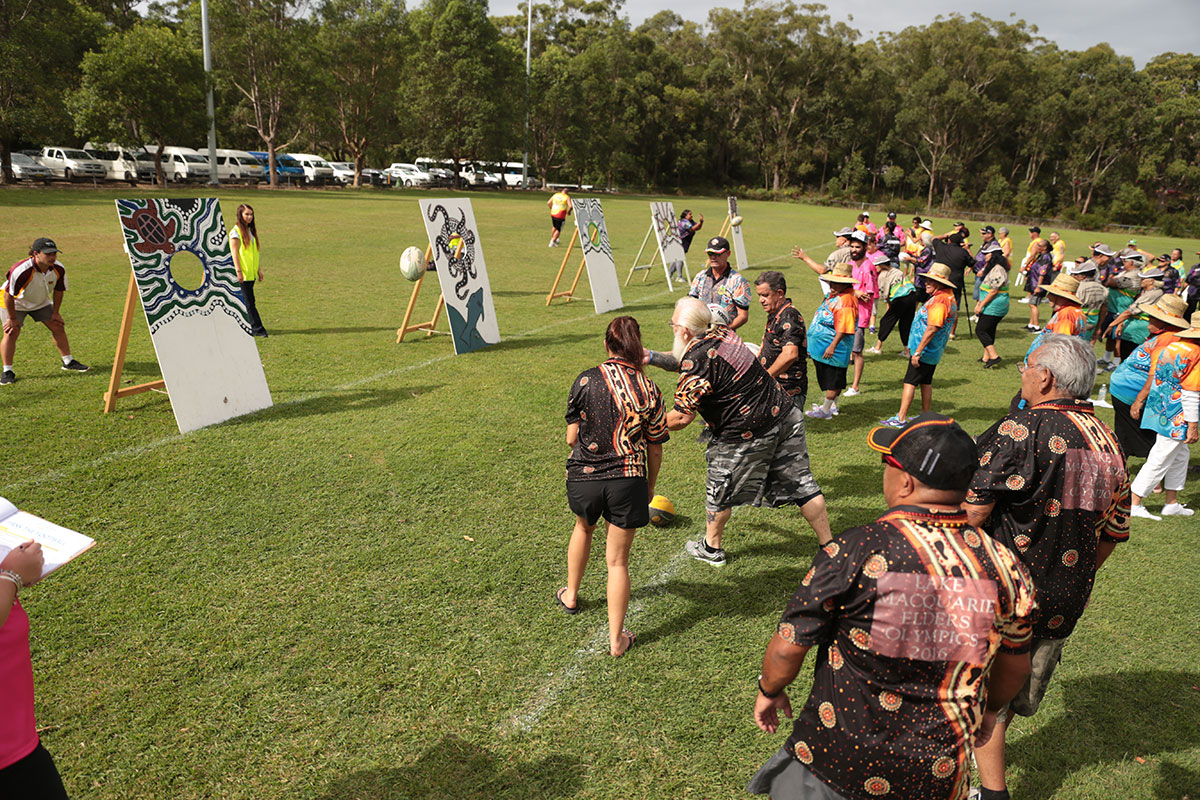
The River Kings: Cramsie, Bowden & Co. and the golden age of Riverina trade

27 December 2025, 1:00 AM

This article was made with information taken from a Blast From the Past written by the late Rod McCully.Long before highways and freight trains connected the inland to the coast, the lifeblood of commerce in the Riverina flowed along the rivers themselves. During the golden age of river trade in the late 1800s, one company dominated the waterways like no other. At its peak, Cramsie, Bowden & Co. employed 700 workers during wool season and operated a fleet of paddle steamers and barges that carried the wealth of the inland to markets in Melbourne and beyond.The story begins with an Irish immigrant named John Cramsie, born in 1832 in Ballymoney, County Antrim, Northern Ireland. He arrived in Australia around 1858 with little more than ambition and a willingness to work hard. Cramsie made his way to Swan Hill in Victoria where he found employment with Sparks, Perkins & Co., a store specialising in station supplies. It was there that he learned the business that would make his fortune.Within a year, Cramsie had become a partner with T. H. Sparks and together they established a similar business at Balranald in 1859, trading as Sparks, Cramsie & Co. The timing was perfect. The inland was opening up, pastoral stations were expanding, and the river trade was beginning its spectacular boom. The new company quickly established itself as a vital link in the supply chain that kept the stations running.An intriguing footnote to Australian exploration connects to the company's early days. In 1860, the famous Burke and Wills expedition left surplus equipment with Sparks, Cramsie & Co. for auction. One can only imagine the bustle at the Balranald store as curious locals examined the gear from one of the most ambitious expeditions ever mounted in Australia, little knowing the tragedy that would soon befall the explorers.The partnership changed in 1868 when Sparks died, but Cramsie's business acumen only grew stronger. In 1870, he took on Maurice Aron from Euston and Louis Gerstman as partners in what became John Cramsie & Co. This partnership lasted only a few years before dissolving in 1873, but it led to the most significant collaboration of Cramsie's career. That year, John Clark Bowden became his partner, and together they would build an empire on the rivers.John Clark Bowden brought his own remarkable story to the partnership. Born in Geelong in 1844, he came from a family steeped in Australian colonial history. His grandfather, chief surgeon Matthew Bowden, had accompanied Lieutenant Governor David Collins aboard the sailing ship Ocean in 1803 to found a settlement at Port Phillip. That expedition ultimately moved on to establish Hobart after deciding Port Phillip lacked sufficient timber and fresh water. During their brief time exploring the area, a convict named William Buckley escaped and lived with local Aboriginal people for 32 years, becoming part of Australian folklore.John's father, William Henry Bowden, married Catherine Clark in 1835 and moved to Port Phillip in 1842, establishing a flour mill on the Barwon River at Geelong and a farm at Mount Duneed. Catherine came from Newton, Wick in Caithness, Scotland, which may explain why the family's later business dealings often involved the Waugh company. William and Catherine raised 10 children, and young John received his education at Geelong.The young Bowden began his working life with the shipping company Holmes, White & Co., agents for the famous Loch line of clippers that connected Australia to the world. Around 1870, he joined Cramsie and Aron in Wentworth before moving to Balranald. In 1873, he bought out Aron and became Cramsie's partner in what would become one of the most successful trading operations in the Riverina.The scale of Cramsie, Bowden & Co.'s operations was staggering for its time. The company established branches at Hay, Euston, Wentworth, Wilcannia, Milparinka, Mount Browne, Tibooburra, Echuca, Melbourne and Sydney. This network of stores ensured that pastoral stations across the vast inland could source their supplies, no matter how remote their location. The Hay branch was particularly important, managed by Hugh 'Huie' N. Bowden, John's brother, who oversaw operations on the Murrumbidgee.But it was on the rivers themselves that the company truly dominated. Cramsie and Bowden operated an impressive fleet of paddle steamers and barges on the Murrumbidgee, Edward, Murray and Darling rivers. The steamers included the Barwon, Goldsborough, Kelpie, Pearl and the ill-fated Rodney, which would later be burned by striking shearers in 1894. The company's barges bore names like Confidence, Horace, Jessie, Namoi, Nelson, Paroo, Pimpampa, Sprite, White Rose and Woorooma. The paddle steamer Lancashire Lass is often associated with the company and may have been leased, while another steamer called Kilfera, mentioned in company reports from 1881, appears to have operated with the barge Jessie.These vessels were the trucks and trains of their era, carrying wool from the stations to markets and bringing supplies back to the inland. The rivers were highways of commerce, and Cramsie, Bowden & Co. commanded those highways like few others. During wool season at the height of the river trade, the company reputedly employed 700 hands, a workforce that speaks to the enormous scale of their operations.The company's premises on Court Street in Balranald became a hub of activity, running what was described as a most extensive wholesale and retail business. The partnership wasn't just about commerce, though. John Cramsie entered politics, serving as Member for Balranald in the NSW Legislative Assembly between 1880 and 1887. He also invested in well-known pastoral properties including Kilfera, Tibbereenah, Glendon and Strathdarr in Queensland. His son, John Boyd Cramsie, managed Strathdarr between 1891 and 1896.In 1884, the partnership underwent a significant change when Bowden took over the business, establishing John C. Bowden & Co. Four years later, in 1888, Bowden sold the fleet of steamers and barges to Permewan, Wright & Co. The age of river transport was beginning its slow decline as railways started to penetrate the inland, though the rivers would remain important for several more decades.The Hay operation was sold to Meakes & Wheeler in 1890, ending the direct Bowden family involvement in that branch. In Balranald, Bowden's former bookkeeper, H. L. Harben, took over the business at the end of the decade, continuing operations in the premises that had been the company's headquarters for so many years.John Bowden extended his business interests to Melbourne, where he conducted an extensive ironmongery business with his son, specialising in aluminium goods. He became well known in Melbourne as a racing man, a passion that began during his time in Balranald in 1883 when he ventured into horse racing with the late Alexander Lawrence.The company managers who worked for Cramsie, Bowden & Co. often went on to establish their own successful businesses. William Bowring, who managed the Balranald branch in the early 1870s, later operated his own steamers. R. D. Murray managed the Balranald branch under John C. Bowden & Co. in 1887. These men learned their trade working for one of the most successful operations on the rivers and took that knowledge into their own ventures.John Cramsie died in 1910, having built a commercial empire from humble beginnings as an Irish immigrant. John Clark Bowden lived until 1924, passing away at the age of 80. Together and separately, these men had shaped the commercial landscape of the Riverina during its most dynamic period of growth.The story of Cramsie, Bowden & Co. is more than just business history. It's the story of how the inland was connected to the wider world, how wool from remote stations found its way to markets, how supplies reached places that seemed impossibly distant, and how entrepreneurial vision combined with hard work could build something lasting. The paddle steamers are long gone, their hulls rotted or burned, their names surviving only in historical records. The stores have changed hands many times. But the legacy remains in the towns they helped to build and the connections they helped to forge across the rivers and plains of inland Australia.

Haydays: When a community built a home for its elders

26 December 2025, 10:00 PM

In 1968, something remarkable happened in Hay. A retirement centre opened its doors completely free of debt, built entirely through community fundraising and determination. The story of how Haydays came to be is a testament to what small country towns can achieve when they decide to look after their own.It began in 1964 when 46 community minded people gathered at a public meeting with a simple goal: to create a place where elderly residents could live with dignity, security and companionship. A fundraising committee was formed on the spot, with Mayor RB Hornshaw elected as President. The honorary secretary was Mrs Elizabeth McFarland, with Mr R Goss taking on the role of honorary treasurer. Rounding out the committee were Reverend Fr J Kelly, Mr Archer Smith, Mr C Clift, Mr FV Vormister and Captain Hayward from the Salvation Army.These weren't wealthy philanthropists or government bureaucrats. They were ordinary Hay residents who saw a need and decided to do something about it. What followed was four years of fundraising efforts that would become legendary in the town's history.One of the most popular and successful fundraisers turned out to be a recipe book. Local supporters contributed their favourite recipes, and the collection was published and sold for two dollars per copy. The book was titled "Haydays Plains and Fancy", a clever play on words that combined the town's name with the classic cookbook style. The recipes must have been good because the book even made its way to Buckingham Palace. The thank you letter from Queen Elizabeth II is still on display, a source of pride that shows just how far the humble fundraising effort reached.The proceeds from the recipe book were put to strategic use. The committee employed a professional fundraiser who raised an astonishing 35,000 dollars in just three weeks. The momentum kept building. At the opening ceremony in 1968, Member for Murrumbidgee Mr Al Grassby offered his congratulations and stated that the raising of 11,000 dollars in a single week would stand as a record for some time. He wasn't wrong. Even today, that kind of fundraising effort in a small country town would be remarkable.As construction neared completion after four years of work, the committee needed a name for the new centre. They offered a cash prize for the most suitable suggestion. A local lad named Trevor Best came up with the winning entry, suggesting the centre be named Haydays after the recipe book that had kickstarted the whole venture. It was perfect. The name captured both the town and the golden years its residents would spend there.On 2 July 1968, the Riverine Grazier's headline proclaimed "Haydays opened free of debt". The front page featured a photograph of the Honourable WC Wentworth, then Minister for Social Services, shaking hands with Mr Bill Ryan, chairman of the Haydays committee, as part of the opening ceremony. It was a moment of immense pride for everyone involved.The centre that opened that day comprised ten single units and two double units, each thoughtfully designed with the residents' comfort and independence in mind. Every unit had a large bed sitting room and a modern kitchen complete with two cupboards, a refrigerator and electric stove. Two people shared a shower room and toilet, a common arrangement for the time that helped keep costs manageable. Each room came supplied with floor coverings, curtains, a bed of high standard, bedspread and pillows. Residents could bring whatever additional furniture they chose and were responsible for keeping their own units clean.The cost per week began at seven dollars and fifty cents, which included a hot lunch. To put that in perspective, the average weekly wage for a male in New South Wales in 1968 was 66 dollars, making Haydays genuinely affordable for pensioners.The heart of the centre was its large dining room where residents gathered for lunch and enjoyed morning and afternoon tea together. It was more than just a place to eat. The dining room became the social hub where friendships formed, cards were played, television was watched, and a genuine sense of community developed. The room was cooled in summer and heated in winter, ensuring year round comfort. A modern kitchen adjoined the dining room, and a good cook was engaged to prepare the meals.At the opening ceremony, Minister Wentworth declared that the entire cost of development totalled 86,611 dollars and 54 cents. Remarkably, after all that fundraising effort, only 200 dollars remained outstanding, and that was for the communal television. Upon hearing this, the Riverine Grazier reported that the Highway Social Committee and Hay Pigeon Club immediately donated enough to cover the television purchase. Even at the finish line, the community was determined that Haydays would open completely debt free.Mr Archer Smith spoke at the opening about his hopes for Haydays. He envisioned a sense of communal living where residents would enjoy security and peace. The committee, he promised, would make every effort to keep rules to a minimum. The admission age was set at 60 years for women and 65 for men, reflecting the different pension eligibility ages of the time. To apply for a room, potential residents needed to supply a medical certificate and two personal references.As was customary at such occasions, trees were planted in the grounds of Haydays by the various dignitaries. The Grazier noted a moment that perfectly captured the relationship between country people and their visiting politicians. When the question of digging holes for the trees had been raised at a committee meeting, someone suggested that those planting the trees could dig the holes themselves. However, Mr Mick Beckwith volunteered for the task, sparing the dignitaries from manual labour. You've got to admire that bit of country cheek shown to the visiting politicians.The following week, on 5 July 1968, the Riverine Grazier's front page featured a photograph of Haydays' first residents. Mrs E Hurle, Mrs DE Brown and Mrs EM Butcher were pictured with hostess VK Read, the pioneers of what would become a beloved institution in Hay. These women were the first to call Haydays home, the first to gather in that dining room for lunch, the first to experience the security and companionship that the community had worked so hard to provide.The story of Haydays is about more than just bricks and mortar, fundraising totals and opening ceremonies. It's about what happens when a community decides that its elderly residents deserve better than loneliness and insecurity in their later years. It's about 46 people who showed up to a meeting in 1964 and refused to accept that nothing could be done. It's about recipe books that reached royalty, professional fundraisers who smashed records, and pigeon clubs that donated the last few dollars to buy a television.Most of all, it's about the understanding that a community is measured by how it treats its most vulnerable members. The people of Hay in the 1960s understood this instinctively. They didn't wait for government programs or outside help. They rolled up their sleeves, contributed their recipes, donated their money, and built something that would serve their community for generations.When those trees planted by the dignitaries grew tall, they stood as living monuments not to the politicians who planted them, but to the ordinary people of Hay who proved that extraordinary things are possible when a community comes together with a common purpose. Haydays opened free of debt because the people of Hay valued their elders enough to make it happen. That's a legacy worth remembering.

 A Letter through time: Anthony Bradford’s journey  from Hay to building an empire in mental health
A Letter through time: Anthony Bradford’s journey from Hay to building an empire in mental health

22 December 2025, 4:00 AM

When the Anglican Church time capsule was cracked open, there was excitement in the air, and then dust, and then the first letter was drawn. It was addressed to the future children of Anthony Bradford. Anthony’s hands must have trembled slightly when they handed him the envelope. Inside the year 2000-time capsule opened in Hay was a letter his grandfather, Jim Bradford Senior, had written to him back in 1972, a letter he’d completely forgotten about. “I’ve got goosebumps talking about it,” Anthony said, the emotion still fresh despite the years that have passed. But the story doesn’t end there. Inside that envelope were photographs of his father, Jim Bradford, as a child, images Anthony had never seen before. So moved by this connection across generations, he made a decision that would create yet another bridge through time. He repurposed those precious photographs and the letter, adding them back into a new time capsule along with photographs of his own wife and messages for his two sons, who didn’t even exist yet when he sealed that capsule in 2000. “I can't open that letter because it’s not addressed to me,” Anthony explained. “It’s addressed to my two boys.” Now those boys are grown. Eldest son Finn, 22, has just returned from Europe and finished his degree in politics, philosophy and economics at university in Canberra. Sam, turning 19 in January, has just completed first year psychology at ANU, following in his mother Rachel’s footsteps. Anthony is waiting for the right moment to bring them both together to finally open that letter and see what wisdom their father captured for them a quarter century ago. “I’m scratching my head trying to think what it might've been,” he laughed. “I’m a bit scared actually. I’m a bit worried that I haven’t written things like ‘this is the sort of parent that I want to be’ and I hope I’ve actually delivered.” Given what Anthony has achieved since leaving Hay on January 22 1988 at just 17 years old, it seems likely he’s exceeded any expectations he set for himself. The young man who left Hay that day, one of the youngest in his year 12 class, not turning 18 until April, had dreams of exploring the world. Growing up in a family that wasn’t wealthy and didn’t travel much beyond visiting relatives in Wodonga, Anthony saw the defence force as his ticket to adventure. He studied hard, got the marks, and was accepted into the Defence Academy in Canberra. For eight years, he served as a navigator, driving ships and patrol boats around Darwin and Perth before moving to head office in Canberra. But the world he would ultimately explore wasn't mapped in nautical charts, it was the complex landscape of the human mind. After leaving the Navy, Anthony pursued further studies and moved into private consulting. Then, in 1999, just before he wrote that letter to his future children, he and Rachel started their own business in corporate psychology, specialising in workplace stress. “We had no idea when we started out what our world would become and what we’d end up doing,” Anthony reflected. “It wasn’t even a grand plan really. It just sort of evolved.” Evolved it certainly did. Over 26 years, they grew that business to employ over 100 psychologists across the country before selling it last year, a life achievement that Anthony suspects featured prominently in the advice he wrote to his sons. “One of the themes I feel I would’ve written about was when we started our business, you know, the world’s your oyster, have a crack, what’s the worst that can happen? “Believe and succeed, motivational stuff,” he said. all that “Because we specialised in workplace stress, I probably wrote stuff around don’t take life too seriously, enjoy life, seize the day, look after yourself; resilience, mental health, all that sort of stuff. That’s what our business was all about.” Now, semi-retired and contemplating his next chapter, Anthony has strong views on the mental health crisis facing Australian youth, views shaped by decades of expertise and, no doubt, by watching his own sons navigate modern life. “One in three girls under the age of 16 now has a clinically diagnosed anxiety condition in this country,” he said sombrely, the statistics clearly troubling him. “Which is outrageous. It is absolutely outrageous.” The problem, as Anthony sees it, lies in a fundamental misunderstanding of what builds resilience. He speaks passionately about the difference between self-esteem and self efficacy; a distinction most people don’t know exists, but which he believes is crucial to understanding youth mental health. “We’ve focused way too much on self esteem in our society, in our families, in our schools,” he explained. “Don't upset little Johnny’s feelings, you know, that’s not nice. “We don’t want to upset anybody. But what's more important is self-efficacy, which is the belief that you can do things. That’s an inner confidence.” Self-efficacy, Anthony explained, is what allows someone who fails an exam or gets rejected from a job interview to think, “Never mind, I’ll be right. I know what I can do. I can try again.” But developing that confidence requires something modern parenting often denies children, the opportunity to fail and recover. “You build self-efficacy from having a go, falling off the horse, getting back on,” he said. “Unfortunately, we see way too often now in the cities where kids aren’t allowed to even get on a horse to start with, let alone risk falling off and hurting themselves. “That in itself is a really big problem in our society.” The irony, he said, is that parents have become hyper-focused on protecting children from physical dangers while neglecting the far greater psychological dangers of unlimited internet access. “We focus so much on protecting our children from the outside world in terms of physical danger that we’ve neglected the non-physical danger such as the online space,” he said. “We just let our kids spend 10 hours a day on the internet in their bedrooms. “We stopped them going out and doing crazy things, riding bikes and climbing trees because they might get hurt, stranger danger and all that. “But online seems to be fine. In fact, it’s the opposite. It’s online that is the most danger, not riding your bike around the river and jumping out of a tree like I used to do.” He’s equally forthright about parenting styles. “You have too much peer parenting. Parents want to be best friends with their kids rather than be parents. “The old days of tough love, holding people accountable and setting standards, that’s not child abuse, but people confuse it. “They think saying no to a kid or punishing them, grounding them, taking away pocket money because they didn’t do what they said they were going to do is child abuse. “We can’t hurt their feelings because we’re so desperate for them to be our best friend, to love us, and all that stuff is at the expense of being a parent and holding standards and maintaining accountability.” Its perspective born from both professional expertise, his wife Rachel is “We focus so much on protecting our children from the outside world in terms of physical danger that we’ve neglected the non-physical danger such as the online space.” one of Australia’s leading experts in workplace stress, and personal experience. Anthony looks back fondly on his simple Hay childhood, even as he acknowledges there were parts he didn’t enjoy. That simplicity, that freedom to explore and take risks, shaped who he became. He still returns to Hay at least once a year, and usually for the Bradford-Harvey family reunion held every five years at Easter. People come from all around the world now for these gatherings, booking out the Hay South Caravan Park, though fewer Bradfords remain in town these days. His younger sister Veronica, is now a humanitarian worker based in Oman, working on Palestinian refugee projects after spending two years in Ukraine. His sister Gaylene is somewhere in between them. Only a couple of cousins remain in Hay itself. Not this past Anzac Day, but the one before, Anthony gave the commemorative address at the dawn service, a homecoming of sorts for the boy who left at 17 with dreams of seeing the world and ended up building an empire in understanding the human mind. When he finally sits down with Finn and Sam to open that letter from their father’s younger self, Anthony might be surprised by what he reads. Or perhaps he’ll find that the themes he suspects are there; resilience, self-efficacy, having a go at life, looking after yourself, are exactly the values he’s lived and passed on to his sons through example rather than words. After all, he took his own advice. He had a crack. He believed. He succeeded. And now, one letter from his grandfather and one to his sons bookend a remarkable journey from Hay to the heights of Australian corporate psychology. This journey started with a simple desire to see the world and ended with helping thousands of Australians navigate the most important landscape of all; their own mental health. The world may have been his oyster, but Anthony Bradford proved that sometimes the greatest adventures aren’t about the places you go, but the lives you touch along the way. Occasions such as the opening of the time capsule illuminate the fact of what people from Hay who are now spread far and wide around the world have done, and are doing amazing things, and still hold Hay dearly in their hearts.

Johlee is NSW best Ampol All-Rounder

07 December 2025, 7:00 PM

Ampol has announced the winner of the Ampol Best All Rounder Award for New South Wales. The 2025 recipient of New South Wales' Best All Rounder Award is Johlee Masters from Hay War Memorial High School.2025 marks the 40th anniversary of the Best All Rounder initiative and stands as a testament to Ampol's dedication to advancing education, employment and community engagement opportunities through the Ampol Foundation. This is the fourth year Ampol has recognised state and national best all-rounder winners for their exceptional achievements. "The Ampol Best All Rounder Award has been a key initiative to powering better journeys for students nationwide into its fourth decade," Ampol Executive General Manager, People and Culture Meaghan Davis said."We are proud to acknowledge the most outstanding final-year students and the remarkable impacts they have made to both school and community, and believe this important initiative has played a role in developing well-rounded graduates over the last 40 years.""Everyone at Ampol wishes to congratulate all of our winners, and in particular, those who received the well-deserved accolade of state and national winner."As adept in the classroom as she is on the sporting field, Johlee is admired by her peers and teachers alike and was an overwhelming choice for school captain.A state-level cricketer and Australian Rules player and junior coach, Johlee also represents the Riverina in swimming and athletics and still has time to play soccer and basketball locally.Johlee also mentors primary school age students in the conservation of Plains-Wanderers, a critically endangered bird based primarily in the Hay Plains.As part of her recognition, Johlee has won a $2000 cash grant and a $1000 AmpolCash gift card, in addition to a $2000 grant for Hay War Memorial High School.Hay War Memorial High School Head of HSIE and TAS Graeme Smyth said: "Hay War Memorial High School is overjoyed for Johlee Masters being selected as a very deserving 2025 NSW Ampol Best All Rounder winner."Johlee typifies an all-rounder. She is someone who will always give things a go, always gives her best, and represents the school with pride."Johlee consistently demonstrates personal conduct that aligns with the highest standards of integrity, respect, and responsibility. She is courteous and considerate in all her interactions and sets a positive example for her peers."Whether in the classroom, on the sports field, or in leadership roles, she conducts herself with dignity and humility and her behaviour reflects the values at the heart of the Ampol Best All Rounder Award."The Best All Rounder Award is Ampol's longest running community program. Since 1985, more than 36,000 young Australians have been recognised in high schools across the country as their school's best all-rounder.The program now forms part of Ampol's broader focus on education through its community partnerships. Other organisations supported through the Ampol Foundation include The Smith Family, Clontarf Foundation and Stars Foundation. 

Maximise your time off this holiday period

28 November 2025, 1:00 AM

As Australians prepare for the festive season, smart holiday planning can turn a handful of annual leave days into extended breaks perfect for family gatherings, road trips, or simply relaxing at home. The 2025/26 summer holiday period offers several opportunities for savvy workers to maximise their time off, particularly around Christmas, New Year, and Australia Day. This year's calendar creates an ideal situation for extended breaks. Christmas Day falls on Thursday, December 25, with Boxing Day on Friday, December 26. New Year's Day lands on Thursday, January 1, 2026. By taking just three days of annual leave on Monday December 22 through Wednesday December 24, workers can enjoy a six-day break from Saturday December 20 through Sunday December 28. Similarly, taking leave from Monday December 29 through Wednesday December 31 extends the New Year break. For those with generous leave balances, combining both strategies creates a spectacular 10-day holiday from December 20 through January 4, using only six days of annual leave. Australia Day on January falls 26 on a Sunday in 2026, meaning Monday January 27 is observed as the public holiday, creating a natural three-day long weekend; no annual leave required. This provides an ideal opportunity for a quick getaway to start the year, particularly appealing to regional families who might visit coastal areas or explore nearby attractions. School holidays run from mid-December 2025 through late January 2026, creating the busiest period for regional tourism and family activities. Parents working in education have the advantage of automatic alignment with school breaks, but other families must plan carefully to coordinate with children's holidays. For agricultural workers in the Riverina, summer holidays often compete with harvest schedules. Cotton growers around Bourke and Hay, citrus farmers in Griffith and Menindee, and grain producers across the region face difficult choices about timing breaks. Shearing contractors face similar challenges, with teams moving between properties through summer. Many coordinate their holidays for late January or early February when seasonal work temporarily slows. Regional small businesses often operate with skeleton staff between Christmas and New Year, with some closing entirely. Government offices, banks, and professional services typically maintain minimal staffing during this period, with many transactions requiring extra time to process. Tourism operators report that accommodation in popular regional destinations books out months in advance for peak periods. Grey nomads, who make up a significant proportion of regional tourism, often plan their itineraries a year ahead to secure preferred locations. Employment experts recommend several strategies for maximising summer breaks.These include to submit leave requests early, especially if working in industries with high holiday demand, coordinate with coworkers to ensure adequate coverage, consider shoulder periods (early December or late January) when prices are lower and crowds thinner, be flexible with dates if possible; sometimes one day's difference dramatically improves availability, check if your employer offers extra public holiday provisions in enterprise agreements. For regional NSW workers, the 2025-26 summer offers excellent opportunities to recharge, reconnect with family, and explore both local attractions and further afield, provided they plan ahead.

Forget Washington: Inside the Handcrafted Outback 'White House' Built to Beat the Heat

13 November 2025, 7:00 PM

Dugout Luxury: Tour White Cliffs' Stunning Underground 'White House'In ShortUnderground Oasis: The hand-dug 'White House' in White Cliffs is a unique example of sustainable outback living, using handcrafted history and recycled materials to stay cool in 45°C+ heat.Art and Engineering: The home, shared by Lindsay White and artist Cree Marshall, features a striking round kitchen, massive timber centerpiece, and curved walls to create privacy without doors while ensuring fresh air circulation.Open Doors: Unlike its namesake in Washington, the White Cliffs White House is open to the public twice daily (11 am and 2 pm) for tours showcasing its unique luxury, from light wells to an enormous movie screen.The White House at White Cliffs might share its name with the imposing home of the US President, but the vibe couldn’t be any more different.I’ve been to Washington and squinted to peer through the security fencing to spy the American landmark from afar, but at the White Cliffs White House the door is opened for you by mine host Lindsay White.White the US lock you up for attempting to get into their White House, in White Cliffs, thousands of visitors have crossed the threshold, into one of the most unique and beautiful homes I have seen. It is a testament to a handcrafted history of living below ground, recycling materials and working with the environment instead of against it.I joined other visitors to the tiny outback town for the daily tour of Lindsay’s home, which he shares with artist Cree Marshall. Cree was off with the local art group that day I visited, but her striking artworks speak for themselves. We entered at ground level, into the living area of the home, featuring a distinctive round kitchen and massive hunk of timber tree trunk, that is the centrepiece of the room. Cree’s artworks dot the walls and surfaces, which are either walls of glass overlooking the lunar landscape of the town, or cool, rendered earthen walls.When Lindsay began his tour, the well-worn banter rolled from him in waves, as he explained the process of turning a hill on the opal fields into his home. As we travelled through the hand-dug hallways he explained the artworks and creations, while also explaining the engineering that keeps fresh air recycling.In order to keep the underground space well-ventilated there are no doors – privacy is created by curved walls that hide beds and toilets.Far from feeling cave-like of dark, the white washed walls reflect sunlight from overhead light wells, while protecting Lindsay and Cree from outside temperatures that scorch the land in the summer. In White Cliffs temperatures regularly exceed 45 degrees Celsius from November to February.The home is luxurious but not outrageous, in that it has everything a modern home needs – en suite bathrooms, walk in robes, guest rooms, comfortable nooks that invite you to curl up with a book, and a huge movie screen that descends from the ceiling.And it is all handcrafted. The walls have been shaped by pick and shovel, then painted, and the floors have been levelled by Lindsay and tiled by Cree. It defies a style definition expect to say it is the home of an accomplished artist and a dugout builder of the highest reputation. We toured the studio where Cree creates and climbed a spiral staircase that leads to a glass tower, with views out across the town and opal fields. We looked in on the entertainment area, which was under construction when I visited. Lindsay has big plans for the large inground jacuzzi, which includes much more of Cree’s mosaics. I decided then and there that I would check out the progress on my next visit, because I will be back.The home is the fifth White Cliffs dugout built by Lindsay, an ex-shearer, turned opal miner. And while the home of the US President is strictly invite only, Cree and Lindsay throw their doors open to visitors twice daily at 11am and 2pm.

Snake in the machine: Hay man's terrifying co-pilot becomes a viral TikTok sensation

07 November 2025, 11:40 PM

Snake video goes viral for Hay coupleIn ShortViral Scare: Hay, NSW local Peter Hutchison found a highly venomous Eastern Brown Snake coiled inside the cabin of his excavator.Overnight Sensation: His wife, Sheree Doidge, posted the 15-second video to TikTok, where it has already surpassed 916,000 views globally.A True Blue Reaction: Instead of panicking, Peter's Australian response was to film the encounter, turning a terrifying daily event into a viral internet hit.A video posted to social media platform TikTok by Sheree Doidge, has made her husband Peter Hutchison an overnight sensation.A typical morning at Peter's job on a property outside of Hay, NSW suddenly became an international sensation this week, proving once again that when you live out bush, the mundane can be terrifying—and hilarious—when viewed through a phone camera.He was preparing for a day's work in an excavator when he spotted an uninvited co-pilot: a highly venomous Eastern Brown Snake coiled inside the cabin.The reptile had snuck into the cabin and become lodged under the foot pedals of the heavy machinery.Instead of panicking, "Hutchy" did what countless Aussies do when confronted with an unbelievable situation: he pulled out her phone and started filming, sending the short video back to his wife.Sheree promptly shared it on TikTok, and at the time of writing the 15 second clip had been viewed by more than 916,000 users.The video clip is disarmingly simple, which is exactly why it rocketed up the global charts. There are no special effects, no dramatic music, and no fancy editing—just pure, uncut rural reality."He's a bit scared," Petr says in his narration. "Scared the sh*t out of me." The rest of the video is expletive heavy, given the shock of seeing the trapped reptile, and realising it was lashing out between where Peter sat and the door to freedom.In a digital landscape saturated with overly polished, staged content, the raw, relatable authenticity of Shezza’s video struck gold. The TikTok algorithm, which favours genuine surprise and high engagement, quickly pushed the clip past local borders, first across Australia, and then into the feeds of millions across the world.For the global, urban audience, the video is compelling for two main reasons.First, it feeds into the beloved, slightly exaggerated "Australia is trying to kill you" narrative. For international viewers who only know Australia through wildlife documentaries, realising a snake is capable of popping up anywhere, even inside a piece of heavy machinery confirms all their wildest fears about the Outback. It's a perfect example of Australian danger delivered in a tiny, digestible clip, narrated by a truly Aussie character.The couple have already been contacted by media companies, including LADBible Austraila, for the rights to re-share the clip.Mr Hutchison called a workmate to help remove the reptile but it had injured itself under one of the excavator pedals, and did not survive.Watch the vide HERE - (language warning)

"Forty Four Degrees in the Shade" to launch at White Cliffs Hotel

21 October 2025, 7:00 PM

" Forty Degrees in the Shade" is a novel by Linda George which will launch in White Cliffs. The book launch will take place at the White Cliffs Hotel at 11:30am on Cup Day. The event will include readings from the novel, a book signing session with the author, and a question-and-answer session where attendees can discuss the work with George.The book features artwork by Jenny Hayes, with the cover showing the distinctive landscape of opal mining dugouts against a dramatic outback sunset. "I was riveted from the start by this depiction of life in an out of the way place where lawlessness, the harsh environment and the heat bring out the best and worst of human nature," says reviewer Guya Nichols.Copies of "Forty Four Degrees in the Shade" will be available for purchase at the launch.The story is set in a tiny speck on the map in the vast Australian outback where fortune hunters seek the most elusive and glorious of gemstones – opal. In this god-forsaken place, temperatures regularly reach 44 degrees Celsius in the shade during summer, forcing residents to retreat to the cool of their underground dugouts for relief. George describes life as raw in this pressure-cooker environment. The heat and isolation, combined with the lack of police presence and absence of a moral authority or any structure representing the whole community, means that power falls into the hands of whoever makes a grab for it.The narrative follows two contrasting characters navigating this harsh landscape. Matt has escaped the constraints of his soul-less city life to seek his fortune in the opal fields, whilst Tess has been living and working in the town for six years, struggling with the power players and town politics. Throughout the story, George weaves humorous and thought-provoking observations on the nature of wankers, romance, truth, quality, wisdom, despair and human nature. The novel paints a picture of modern life and the current state of the world in general, exploring the challenges of being human and examining how a cohesive community of likeable misfits can become a dysfunctional town full of vicious backstabbers out to hurt each other.

The alchemist of White Cliffs: Hayley Atkins turns dust into gold

21 October 2025, 4:00 AM

In the red dust and relentless heat of White Cliffs, where most people see waste and hardship, Hayley Atkins sees possibility. The 43-year-old mother of four has built an extraordinary life from the fragments others discard, turning worthless opal chips into luxury soaps, kangaroo fat into healing balms, and personal heartbreak into business success. Her story reads like a masterclass in rural resilience and creative innovation, proving that sometimes the most unlikely ingredients can create something magical. Hayley's journey to White Cliffs began in the sophisticated world of television production. After studying design for theatre and television, she landed coveted positions in Sydney's entertainment industry, first at Wonderland Sydney's wardrobe department, then at Channel 7 working on the hit medical drama All Saints."I was still a country kid in the city," she reflected, describing her years navigating Sydney's fast-paced television world. Her career came to an abrupt end when a new boss brought in her own crew, leaving Hayley unemployed and disillusioned. She retreated to Albury, working at the White House Theatre, where she met her future husband, an opal miner with big dreams and bigger promises. With three children under four, Hayley found herself following him to White Cliffs, a decision that would transform her life in ways she never anticipated. "My grandfather used to come up here as a 'wintery', that's what they call the winter visitors," she explained. When her grandfather grew frail, they proposed a deal: he'd buy a dugout, and they'd maintain it for his visits. "So he took the deal and we found a dugout. Then he never came up." What started as a family arrangement became Hayley's introduction to one of Australia's most challenging and rewarding communities. As a young mother with four children under five, she found herself running an opal showroom seven days a week while her husband focused on mining. "He was a very good miner. He used to pull out a lot of opal, but not all of it is pretty stone," she recalled. "There was a lot of potch, a lot of colour that wasn't worth anything." It was this apparent waste that sparked Hayley's entrepreneurial genius. With her design background and outside-the-box thinking, she looked at the piles of discarded opal chips and saw opportunity where others saw rubbish. "I thought, surely there's something you can do with all this. So I crushed it up, I took great pleasure in crushing up those little bits of colour," she laughed. "But then I actually scratched my leg with it because it's essentially glass. I was like, 'Oh, that's not going to work.'" Trial and error led to breakthrough. Using the finest sieve to remove dangerous particles, Hayley created a useable crushed opal powder that she incorporated into soaps, nail polish, and candles. "I'm the inventor of crushed opal products," she said with justifiable pride. "Nobody else does it." As her marriage deteriorated, Hayley's determination to provide for her children led her down an unexpected path. A local kangaroo harvester needed an offsider for nighttime work, and despite having never handled firearms or processed game, Hayley took the job. Her routine became almost superhuman, up early to get the kids to school, run the opal showroom until 3 PM, prepare dinner for the family, then head out for nighttime kangaroo harvesting, returning home at 3 or 4 AM for a few hours' sleep before starting again. "I did that for quite some time just to earn some extra cash to try and get ahead financially," she remembered. Leaving a marriage with four young children in a remote town requires extraordinary courage. For Hayley, the decision came down to her children's wellbeing. "I didn't want to admit that I'd failed, because you didn't fail. But I only wanted to get married once." The man who'd hired her as his kangaroo harvesting offsider became something much more significant. "My now partner is the guy," she said simply. "He's lived on the land all his life. Down to earth. And my kids, like, they were little at the time and they just gravitated towards him." Her new partner brought stability, routine, and most importantly, taught Hayley to find her voice again. "He taught me to speak up. Do you find it liberating? Really liberating. I love it. We get in the biggest rows, like the biggest rows, and I just say to him, 'You taught me, so you just cop it.'" Hayley's innovative spirit didn't end with crushed opal, but introduced her to another waste product with hidden potential, animal fat. "He was out there doing killers for other people, and the fat came out of it, and he'd go, 'Do you want to keep this?' And I'm like, 'Yeah, I don't know what for, but it just turns into tallow.'" Research revealed tallow contains a lot of vitamins making it particularly beneficial for skin health. After learning the rendering process and removing impurities, Hayley created what can only be described as a miracle balm. "I tested it on myself. That summer, cracked heels, gone. My close friend who does catering with me has autoimmune diseases which make her allergic to sun. She has to cover up when she goes out, and if she doesn't, she breaks out in this fried skin rash. She's had antihistamine constantly, and she tried my kangaroo tallow and it cleared it up in no time." Despite creating genuinely innovative products that solve real problems, Hayley faces the classic rural entrepreneur's challenge; limited resources and markets. She jokes about her early ambition to "sell a million soaps at a dollar each and make my million dollars," but the reality of turning cottage industry into commercial success remains elusive. "I don't have the finances. I don't have the space. I don't have the marketing or business skills to get it further than where it is," she admitted honestly. Yet her innovation continues. Natural shampoo and conditioner join her product line, each receiving rave reviews from friends and family who serve as her testing ground. "I haven't had a bad review yet," she said with quiet satisfaction. Hayley has created a beautiful home from her partner's former bachelor pad, complete with a massive kitchen bench perfect for making pizzas in their 900-degree oven. The dugout she once lived in now operates as a bed and breakfast that lets visitors experience underground living. Shopping requires military-style planning, a six-hour round trip to Broken Hill, with winter daylight hours limiting shopping time to avoid animals on the road. "You literally crack the whip, hit the ground running. Click and collect saves the day. You do everything you need grocery-wise, run around for all the other specialty shops, get all your appointments done, and three hours home." Despite these challenges, Hayley has built multiple revenue streams; the bed and breakfast, a catering business called "Heart of the Back" with her friend, and her innovative product lines. She's also juggling four teenagers while maintaining her relationship and community commitments. "I can't imagine myself anywhere else," she said.This contradiction captures something essential about life in remote Australia, it's simultaneously the hardest and most rewarding place to build a life. The isolation that makes simple shopping an expedition also creates space for innovation and community bonds impossible in cities. Hayley's teenage children have adapted to their unique environment, spending school holidays in Dubbo, helping with the family businesses, and learning resilience from their mother's example.At 43, Hayley Atkins represents a new kind of rural entrepreneur, someone who sees opportunity in waste, possibility in hardship, and innovation as survival strategy. Her story challenges assumptions about what's possible in remote Australia and what resources actually matter for business success. Her crushed opal products and tallow balms may never make her the million dollars she once joked about, but they've created something more valuable; a sustainable life built on creativity, resilience, and the ability to transform the discarded into the desirable. "People coming into the showroom wanted opal but no jewellery," she recalled of her breakthrough moment. "I thought, surely there's something you can do with all this waste." That question, what can be done with waste, has become the driving force behind a life that turns challenges into opportunities and proves that sometimes the most unlikely places produce the most extraordinary innovations. In White Cliffs, where the red dust settles on everything and the nearest major shopping centre is three hours away, Hayley Atkins continues her work as an accidental alchemist, transforming the overlooked and discarded into products that heal, beautify, and inspire. Her story is proof that innovation doesn't require venture capital or technology hubs, sometimes it just requires the courage to see potential where others see problems, and the persistence to turn possibility into reality. From television wardrobe to underground luxury accommodation, from crushed opal soaps to kangaroo tallow healing balms, Hayley's journey proves that reinvention isn't just possible in remote Australia, it's essential. And sometimes, when you're brave enough to follow an unconventional path, you discover that the life you never planned is exactly the life you were meant to live.

Golden moment for Barellan as teamsters become legends with 62 horse team

13 October 2025, 7:00 PM

A million dollars’ worth of horses and harness, an historic wool waggon and three of the nation’s best teamsters captured global attention in setting a new Australian and world record for 62 horses in harness pulling a laden tablebtop wool waggon at The Good Old Days Festival.NSW teamsters Bruce Bandy, Barellan, Steve Johnson, Lake Cargelligo, and Aleks Berzins, guided a team of pure and part bred Clydesdales, Australian Draught, Suffolk Punch, Shire and Percheron horses around the trotting track at Barellan showground on October 4 and 5.The team measured 76m in length from leaders to drivers and used more than 500m of chain to connect to the historic Australian built Bennett tabletop waggon, weighing 3.8 tonnes and loaded with wool bales and owned by Ian Dahlenburg, Murramai, NSW. The 32 bales of wool weighing 200kg each or 6.4 tonnes was contributed by the Flagg family, of Moobooldoool, NSW, to give a total weight of 10.2 tonnes. Horses were contributed to the team by Aleks Berzins, Bruce Bandy, Steve Johnson, Allison Prentice, of Kamarah, Heather McFarlane, Barnawartha, and Jason Gavenlock, of Cowra. Around a dozen helpers spent two hours harnessing the horses into spans of four then bringing out the spans and coupling them into place. A total of 15 spans were yoked together with two horses in the shafts. The four leaders, Hank, Lady, Digger and Margaret, were guided by voice commands from Bruce Bandy. The Guiness Book of Records hitch was set with a 50-horse team in Canada on August 13, 1995, to commemorate the 50th anniversary of the Navan Fair and took 13 Clydesdale horse owners and hundreds of volunteers.The Australian record of 50 horses was set in in the mid 1980s at Carrara, Gold Coast, on Australia Day by Don Ross and Bluey Bunyan with a team comprising 12 spans of four abreast and two back in the shafts. The Australian and world record team harnessed to a Bennett tabletop wool waggon at Barellan was part of The Good Old Days Festival on October 3-5, which expanded to three days this year to celebrate our pioneering heritage and was proudly sponsored by Bendigo Bank Narrandera & District. “Over half of the team are registered Australian Draught Horses, five registered Shires, three registered Suffolk Punch, registered and unregistered Clydesdales and Percherons,” Aleks Berzins said.“I only have one set of reins – the majority of the team other than the leaders are tied in, making all horses in the hands of the leaders. There are a couple of sets of reins, one into the body of the team and one into the shaft and pin. Everything else is at the peril of the leaders up the front wanting to get the chains tight and hold them in there.”Collecting and repairing the mountain of harness was a mammoth and expensive job, while preparation of the horses took months beforehand. “One day we had 40 horses going and I ran sums of costs involved, working with conservative figures of costs to buy the horses and harness, and we are well over $1 million for the team of 62,” Aleks said. “We had never really thought about it but were rolling around with a million dollars on the ring there.“To us it was important to do it right, to have the horses drive and work as a team. It was really important that we weren’t just trying to chase a number.”Congratulatory messages from around the world included Sue Meggers, the daughter of the late Dick Sparrow, of Iowa, USA, and who single handedly drove a 48-horse hitch in the Cotton Bowl Parade in Texas, earning a spot in the Guiness Book of World Records. Steven Johnson has been involved with the Good Old Days Festival since its inception and ranked 2025 as “quite special”. As the record team moved off, there was a brief hiccup when a rein a became hooked under a spreader bar.“We thought 'dear oh dear' but what we did do was made the crowd sit back and think 'can, or can’t they do this?' And it was yes, we can,” Mr Johnson said. “Aleks got down and did a bit of tuning up but we got away all the same. They are a beautiful team and working really well. “It’s been years of this work, and it all aligned this year so we could get together to do this. It’s been a great thrill to work and to be part of it with the best teamsters the country has got, it’s been a wonderful experience.” Barellan Working Clydesdales president Bruce Bandy said the festival was unique in having all the draught animals – horses, bullocks, camels, mules, donkeys and goats – to be working in the one spot resulting in the greatest gathering of mixed species harness animals in the world.“It is the teamster’s capital of Australia,” he said. Always humble, Bruce was quietly pleased the horses had worked well as a single unit in the record-breaking team and it was a highlight of his life.The Good Old Days Festival is proudly sponsored by Bendigo Bank Narrandera and District.

“I can smell the ocean” How one man explains the scent of the ocean in the bone-dry outback

13 October 2025, 7:00 PM

Daniel Stephens is from Broken Hill, but as a child fell in love with the wild landscape of White Cliffs, the remote opal fields town of NSW. I met Daniel on a recent visit, and asked how he come to be working underground, as a sort of adult mining apprentice, and why he swears he often catches the scent of the ocean.“When I was a wee little kid, we used to get out in the hills on the other side of Broken Hill with an older couple - they had the Feldspar mine out there,” Daniel explained. Feldspar is a mineral used to make class and ceramics.“Then when I was a kid – maybe five or six – I came out here on a school tour, and it was even more interesting.“I suppose I’ve been a ‘rock licker’ my whole life,” he laughed, referring to the practice of opal hunters to lick a promising rock, to wet it and reveal the flash of sought-after colour.“As weird as it is, you find something pretty on the ground up here, it goes straight in your mouth. You got to chew on it and have a look at what's inside it.”But alongside the prized White Cliffs opal, Daniel gets excited by the discover of ancient fossils.“I love the fossils. The opal bit is beautiful and interesting, but the fossil side really gets me going. We've found shells and different little belemnites, which are little baby squids.”The mine-pocked dry earth of White Cliffs now has a scorching summer climate but was once covered by an ancient inland sea. Like Coober Pedy and Andamooka, White Cliffs was a marine environment, and the fossils are from sea living creatures.That is why Daniel swears he can still sometimes smell the ocean – more than a thousand kilometres inland – when he is mining underground.“I reckon, one in a blue moon, I can smell the ocean when I am down the shaft. I can be just breaking into new ground and pull my mask off to have a moment and be like, ‘Ooh, I can smell the ocean.” We're digging into ancient ground that is still moist, and it smells like salt. It smells like the ocean. It's weird, but it’s amazing.”Daniel works alongside opal-fields local legend Ken Harris, learning the craft of uncovering ancient treasures. Ken famously uncovered an entire aquatic dinosaur in the 1970’s, from the same mine they work together today.

Talented young bullock driver honoured with Tim Peel Cup

13 October 2025, 2:15 AM

Joey Reedy is a stock agent, bullock driver, bush poet and budding auctioneer all at the tender age of 18 but can now add one of the nation’s up and coming teamsters to his bow.Joey was the winner of the inaugural Tim Peel Cup at the 2025 Good Old Days Festival at Barellan on October 5. The Cup was presented by Mr Peel, a master teamster and harness maker of Borambola, NSW. A first in Australia, the encouragement award for young teamsters under the age of 30 recognises their skills and knowledge, and in doing so promote the art of the teamster. “Winning this award means absolutely everything to me. It is such an honour – what Tim means to this award, having his name on it and the whole essence of it is incredible,” Joey said.“I wish there was twice the number of young people here – the elder generation appreciate it and the younger should be out here in their droves. “You’ve got to have the passion to do it.”Joey, of Forbes, works for Kevin Miller Whitty Lennon & Co as a trainee stock agent, and began coming to the festival as a young teenager to help his father John at the blacksmith display.He is a talented young bush poet and, alongside his younger sister Bianca, recited his favourite humorous poems at the bush poetry breakfast. Joey then used his own team of bullocks to contribute to the team of 40 head which set a new Australian record for the 21st century at Barellan. He put his auctioneering talent to good use to auction several horse drawn vehicles on Saturday evening at the festival, using skills learnt from his mentor and former national young auctioneer winner Luke Whitty. “I don’t do much selling yet – just a few charity auctions around the place but learning and would like to have a go at the young auctioneer competition,” Joey said. The ability of the young teamster to control their team and the response of the animals to traditional commands was part of the assessment for the Tim Peel Cup. Joey and his bullocks took part in the MND Tribute to the Teams Drive before the Festival to put in four days work on the road. “I have four bullocks here – the two leaders have been here before, Bruiser and Bright, and Happy and Charlie. “Both (bullock drivers) Phil Thomson and Ron McKinnon have been great mentors when it comes to the bullocks. I only started doing this about three years ago. “Dad bought some steers, and I wanted to break them in myself, so Ron came up to help and ending up teaching me while Dad kept going with the horses.”Joey was proud to see his 14-year-old sister Bianca step up to take part in the bush poetry, work with her own pair of bullocks at home and be an entrant in the Tim Peel Cup.“She beat me at a bush poetry competition at Tamworth this year and I’m still dirty about it. We both love the same things thanks to our parents.”When asked if he will be back at Barellan next year, Joey said: “Bloody oath I will, I will endeavour to get these bullocks a bit shinier and smarter, and put a couple more in there. I will definitely be back.”

Thirteen times a day, Kids Helpline acts to protect young lives

13 October 2025, 1:54 AM

On World Mental Health Day (10 October), Kids Helpline is shining a light on the scale of crisis support the service provides to young people across Australia.Every day, counsellors at the 24/7 service step in to protect children and young people in immediate danger, an average of 13 times a day.yourtown CEO Tracy Adams said these figures are a sobering reflection on the pressures young people face and the lasting impact these experiences have on their health and wellbeing. “Behind every number is a young person in distress,” Ms Adams said. “Our counsellors act with compassion and urgency when young people contact in crisis and connect them with the right supports to ensure they are safe." "Every one of these interventions is a reminder that having someone available to respond when a young person reaches out can save a life.”In 2024, Kids Helpline undertook 4,632 crisis escalations to child protection and emergency services to keep young people safe, more than double the number made five years ago. The top five reasons were:Suicide risk: 1,803, occurring an average of five times every dayChild abuse: 1,389, around three times each dayAcute mental health concerns: 444, averaging once every daySelf-injury or self-harm: 277 Sexual assault: 270“Young people are showing enormous courage by reaching out when they are afraid or unsafe. This increase tells us they trust Kids Helpline to be there for them, and that continued investment in mental health services is critical,” she said.In total, Kids Helpline responded to more than 133,000 contacts from children and young people aged 5-25 years in 2024. Thousands of these were related to mental health, suicide and self-harm:20,009 contacts were about emotional wellbeing, representing one in four counselling contacts17,175 were regarding mental health, around one in four 11,682 related to suicide concerns, or one in six6,288 were about self-injury or self-harm, about one in thirteenMs Adams said that on World Mental Health Day, it is important to remember that equity in mental health support is critical, as is the provision of services that are accessible, ongoing, and responsive to young people's changing needs.“Every day we see the difference that listening, care, and early intervention can make,” she said. “Our focus is to ensure no young person feels alone when they need help the most.”Kids Helpline continues to expand its reach through schools, community partnerships and digital innovation to ensure that young people have access to support when they need it, through the ways they want to receive it. Fast factsA contact is made to Kids Helpline every 90 secondsIn 2024, counsellors responded to 133,386 phone and webchat contacts More than 23,500 of these were from young people from First Nations or Culturally and Linguistically Diverse backgrounds75% occurred outside standard business hoursOne quarter came from regional and remote areasThe most common age groups contacting the service were 10–14 and 15–18 yearsSince 1991, Kids Helpline has responded to more than 9 million contacts from children and young people across Australia. Kids Helpline counsellors provide free, confidential, 24/7 support to children and young people aged 5–25 on 1800 55 1800 and via webchat at kidshelpline.com.au.

41-60 of 297
Back Country Bulletin
News from the Back Country

Get it on the Apple StoreGet it on the Google Play Store