Haydays: When a community built a home for its elders
Kimberly Grabham
26 December 2025, 10:00 PM
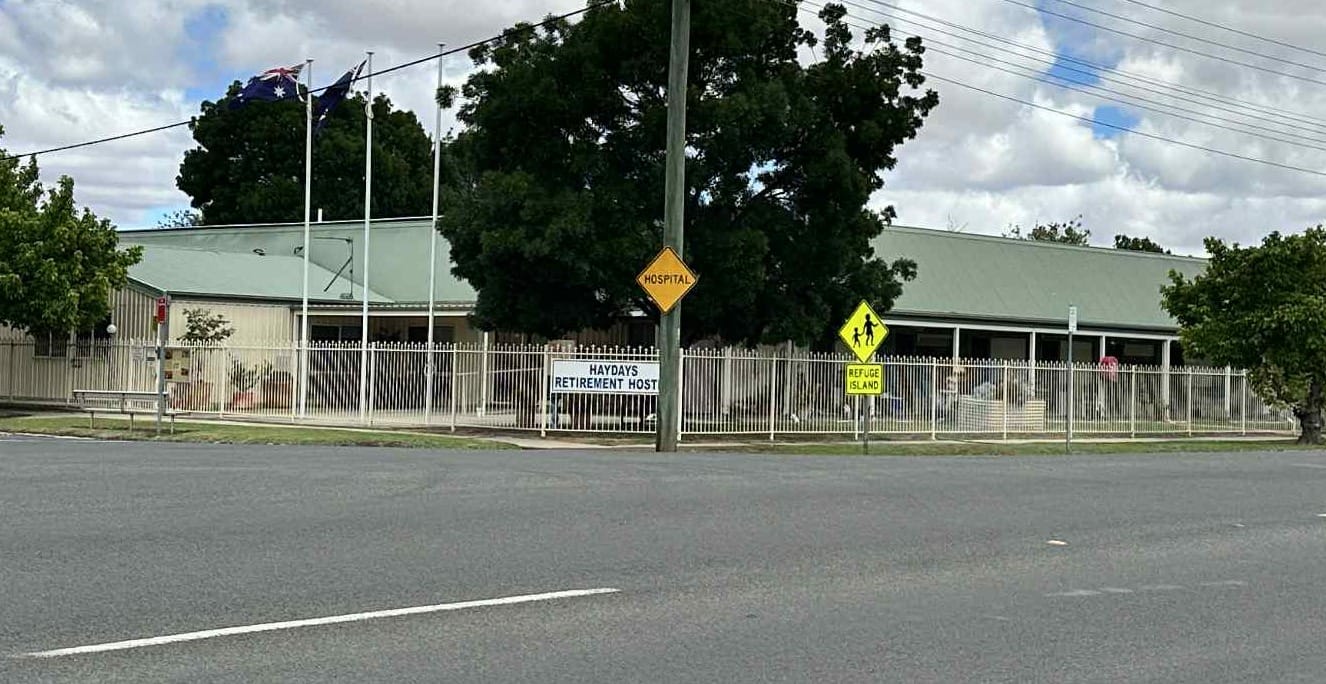
In 1968, something remarkable happened in Hay. A retirement centre opened its doors completely free of debt, built entirely through community fundraising and determination. The story of how Haydays came to be is a testament to what small country towns can achieve when they decide to look after their own.
It began in 1964 when 46 community minded people gathered at a public meeting with a simple goal: to create a place where elderly residents could live with dignity, security and companionship. A fundraising committee was formed on the spot, with Mayor RB Hornshaw elected as President. The honorary secretary was Mrs Elizabeth McFarland, with Mr R Goss taking on the role of honorary treasurer. Rounding out the committee were Reverend Fr J Kelly, Mr Archer Smith, Mr C Clift, Mr FV Vormister and Captain Hayward from the Salvation Army.
These weren't wealthy philanthropists or government bureaucrats. They were ordinary Hay residents who saw a need and decided to do something about it. What followed was four years of fundraising efforts that would become legendary in the town's history.
One of the most popular and successful fundraisers turned out to be a recipe book. Local supporters contributed their favourite recipes, and the collection was published and sold for two dollars per copy. The book was titled "Haydays Plains and Fancy", a clever play on words that combined the town's name with the classic cookbook style. The recipes must have been good because the book even made its way to Buckingham Palace. The thank you letter from Queen Elizabeth II is still on display, a source of pride that shows just how far the humble fundraising effort reached.
The proceeds from the recipe book were put to strategic use. The committee employed a professional fundraiser who raised an astonishing 35,000 dollars in just three weeks. The momentum kept building. At the opening ceremony in 1968, Member for Murrumbidgee Mr Al Grassby offered his congratulations and stated that the raising of 11,000 dollars in a single week would stand as a record for some time. He wasn't wrong. Even today, that kind of fundraising effort in a small country town would be remarkable.
As construction neared completion after four years of work, the committee needed a name for the new centre. They offered a cash prize for the most suitable suggestion. A local lad named Trevor Best came up with the winning entry, suggesting the centre be named Haydays after the recipe book that had kickstarted the whole venture. It was perfect. The name captured both the town and the golden years its residents would spend there.
On 2 July 1968, the Riverine Grazier's headline proclaimed "Haydays opened free of debt". The front page featured a photograph of the Honourable WC Wentworth, then Minister for Social Services, shaking hands with Mr Bill Ryan, chairman of the Haydays committee, as part of the opening ceremony. It was a moment of immense pride for everyone involved.
The centre that opened that day comprised ten single units and two double units, each thoughtfully designed with the residents' comfort and independence in mind. Every unit had a large bed sitting room and a modern kitchen complete with two cupboards, a refrigerator and electric stove. Two people shared a shower room and toilet, a common arrangement for the time that helped keep costs manageable. Each room came supplied with floor coverings, curtains, a bed of high standard, bedspread and pillows. Residents could bring whatever additional furniture they chose and were responsible for keeping their own units clean.
The cost per week began at seven dollars and fifty cents, which included a hot lunch. To put that in perspective, the average weekly wage for a male in New South Wales in 1968 was 66 dollars, making Haydays genuinely affordable for pensioners.
The heart of the centre was its large dining room where residents gathered for lunch and enjoyed morning and afternoon tea together. It was more than just a place to eat. The dining room became the social hub where friendships formed, cards were played, television was watched, and a genuine sense of community developed. The room was cooled in summer and heated in winter, ensuring year round comfort. A modern kitchen adjoined the dining room, and a good cook was engaged to prepare the meals.
At the opening ceremony, Minister Wentworth declared that the entire cost of development totalled 86,611 dollars and 54 cents. Remarkably, after all that fundraising effort, only 200 dollars remained outstanding, and that was for the communal television. Upon hearing this, the Riverine Grazier reported that the Highway Social Committee and Hay Pigeon Club immediately donated enough to cover the television purchase. Even at the finish line, the community was determined that Haydays would open completely debt free.
Mr Archer Smith spoke at the opening about his hopes for Haydays. He envisioned a sense of communal living where residents would enjoy security and peace. The committee, he promised, would make every effort to keep rules to a minimum. The admission age was set at 60 years for women and 65 for men, reflecting the different pension eligibility ages of the time. To apply for a room, potential residents needed to supply a medical certificate and two personal references.
As was customary at such occasions, trees were planted in the grounds of Haydays by the various dignitaries. The Grazier noted a moment that perfectly captured the relationship between country people and their visiting politicians. When the question of digging holes for the trees had been raised at a committee meeting, someone suggested that those planting the trees could dig the holes themselves. However, Mr Mick Beckwith volunteered for the task, sparing the dignitaries from manual labour. You've got to admire that bit of country cheek shown to the visiting politicians.
The following week, on 5 July 1968, the Riverine Grazier's front page featured a photograph of Haydays' first residents. Mrs E Hurle, Mrs DE Brown and Mrs EM Butcher were pictured with hostess VK Read, the pioneers of what would become a beloved institution in Hay. These women were the first to call Haydays home, the first to gather in that dining room for lunch, the first to experience the security and companionship that the community had worked so hard to provide.
The story of Haydays is about more than just bricks and mortar, fundraising totals and opening ceremonies. It's about what happens when a community decides that its elderly residents deserve better than loneliness and insecurity in their later years. It's about 46 people who showed up to a meeting in 1964 and refused to accept that nothing could be done. It's about recipe books that reached royalty, professional fundraisers who smashed records, and pigeon clubs that donated the last few dollars to buy a television.
Most of all, it's about the understanding that a community is measured by how it treats its most vulnerable members. The people of Hay in the 1960s understood this instinctively. They didn't wait for government programs or outside help. They rolled up their sleeves, contributed their recipes, donated their money, and built something that would serve their community for generations.
When those trees planted by the dignitaries grew tall, they stood as living monuments not to the politicians who planted them, but to the ordinary people of Hay who proved that extraordinary things are possible when a community comes together with a common purpose. Haydays opened free of debt because the people of Hay valued their elders enough to make it happen. That's a legacy worth remembering.