Recollections from a late icon: Rod McCully's Uardry memoirs

28 December 2025, 10:00 PM
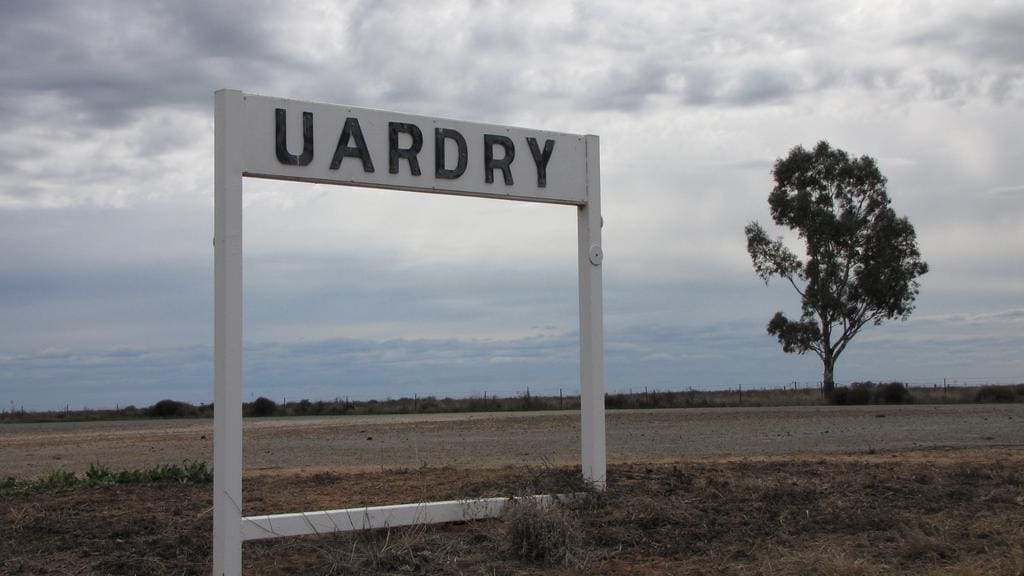
THE BREEDING PROGRAM
When I moved to Uardry my experience in breeding stud sheep was restricted to watching others do it, particularly at Oolambeyan where Pat Thomas and Ian Marwedel held the reins.
We did however implement some practices there that hadn’t been in place; the recording of the classing results of the progeny of individual sires. This not only gave a clear indication of how good or otherwise a sire was, but it told us just what the survival rate of his progeny was, and I can tell that over the years of doing this both at Oolambeyan and Uardry, we certainly got some surprises.
Pat Thomas had an unusual recording system in place which unfortunately had fallen into disuse when I got there. It was a stud book for breeding ewes, where all special stud ewes were recorded, and their breeding history was entered up each year. When I started to try to catch up, the records were over 10 years out of date, so in many ways it was a lost cause as most of the ewes had died. However I managed to get the books updated to the end of the fifties, but even then I wasn’t dealing with any live sheep. I think that was why the records had fallen into disuse, and also the fact that a breeder was five years old before her worth was really obvious. IE: Two years old when her first lamb was born, 3½ years old and joined again before the results of her first progeny were available, and so on. You really only had one more breeding year to make a decision based on her results.
However this recording made me think about the accepted way of breeding stud sheep - make a decision about which sires you wanted to use; run the special studs in on the desired date for joining, then select the ewes to join to a particular sire, and then justify why you did it.
Was it to breed the best with the best to try and breed that “gun sire” that everyone aims for, that most never do; but many will tell porkies about how good a certain sire was, but have little or no evidence to prove it because little is recorded; or were you going to corrective mate each ram to use his strengths, or alternatively, breed against his weaknesses? (and despite the rose-tinted glasses of most stud breeders, every sire had a fault of two) – just the nature of genetics.
But the bottom line which got at me more and more was the fact that we knew little or nothing about the ewe herself, and when you analyse it, the success or otherwise of the mating depended largely on how good a mother the ewe was. This was proven to me in spades when in 1980, ‘Nancy’, our Champion Strong Wool and Grand Champion Ewe in all the shows we entered her in including Dubbo, was mated to a very good heavyram who we had sold in Dubbo to Western Australia but had to come home to be shorn and readied for transport. (‘Nancy’ was bred by one of the two Pemcaw (Haddon Rig blood) rams purchased in 1978.)
“Nancy” wasn’t perfect, but nearly so. She was a little bare over her eyes, but that was all. But when she produced a ewe lamb that year, she produced a beauty, but she lost all the wool over her eyes, and her legs, and was a dead-set medium wool. In fact any classer looking at her would down-grade her to a Single stud ewe.
Her daughter “Nerissa” went on to become Grand Champion Strong Wool ewe at the Sydney Sheep Show in 1982! Really proved what I thought was the case.
It was during Nancy’s reign that I decided to change the way we were doing things. It wasn’t an idea borrowed from anyone else, but it fitted my thinking. I decided to grade all the Special Stud ewes into types: best Mediums, best Strongs, best Radicals (heaviest cutters, heaviest skins, odd faults), plainer Mediums, plainer Strongs. Thick Mediums, thick Strongs, and thinner-wooled sheep (mostly progeny from a Merryville ram bought in 1976 I think – very correct sheep with good wool but lower yielding).
This grading could not be perfect as we had no way of knowing how many lambs each ewe had borne, nor reared, nor what standard the progeny was – as was the case on most bigger studs. Thi problem disappeared as the graded maidens became older.
However when it came to the maiden Special ewes, it was a new ball game. They had been classed into the Specials in the previous November and joined as one mob to not the top Special Stud rams, but the next best, including any new young Special sires. (We avoided joining the young Special sires on their own in case they were shy breeders.) So the maidens almost had the best they could. The grading didn’t take place until the following May, about a week before they were shorn. This was the only time we saw them in full wool, unaffected by the ravages of motherhood.
That day became almost the “Holy of Holies” so far as breeding days went, certainly as important as the days the rams were joined. I made sure that I had nothing else to worry about; had the best jackeroo or two with me; and only my quiet old dog ‘Cash’, present in the earlier years. Later after I lost Cash it was still only one very quiet dog.
I graded the maidens the same way as the older ewes, using different coloured ear tags for each group. Then each year afterwards when we went through the breeders to cast out the old and infirm, I was again able to assess them on their type, and if there were any who had broken down (generally feet and backs, and occasionally discoloured wool) they were downgraded to Double Studs or sometimes cast out.
Then when it came to joining, the Specials were drafted into their various grades and joined to the appropriate sire. Obviously the top groups were joined to the top rams, but the rest were correctively mated. I always made sure that the maiden Specials, loined as one group, were joined to very good rams, and plenty of them!
Over the next seven years, it was noticeable that there were groups in the maiden grading system that became smaller, and in the case of the thinner woolled group, they disappeared, and the thicker and plainer groups reduced in numbers.
Ironically, it wasn’t until Charlie Massy stayed with us several times during his massive effort of writing “The Merino – the History” that the subject of how I personally bred the sheep came up, and I told him. To my surprise (and delight) he told me that I was doing more or less exactly what the doyen of Riverina breeders, Tom Culley of Wonga, did. That was a pleasing thing to know.
In addition to recording exactly what each Special stud sire, and the syndicates’, results were, we were able to assess the ‘survivability’ of each ram’s progeny ie how many of his lambs survived to classing. We got some horrible surprises and rams were culled because of it. I remember one 5.5 family ram only had a 47% survival rate. One of the better results was that the Maiden syndicate was well up with the better sire results. I also used to combine two singly-mated rams together for their last cycle, which caught up with ewes that didn’t mate in the first two cycles for whatever reason – it produced good results as well.
Speaking of families, the three families which were supposed to be the backbone of the stud, were the 5.5, 5.8. and 1.64 families. When I started at Uardry, there were very few Special stud sires from any of these mobs. The only 5.8 sire had been lent to a client, Brian Crawford from Harden, in place of a ram he bought at Dubbo a couple of years previously which turned out to have an undershot jaw! I requested the ram be returned, and when he arrived, to my disgust, he had an infected shoulder where the raddling harness he had had on forever had cut into the flesh. So he wasn’t much good for while. (Coincidently, one of my old Condo mates, Neil Wald, bought the Harden property) There were two 5.5 rams, one of whom we had to cull, but the other produced a few good sheep. The only 1.64 ram we had was a weedy chap born in the wettest of years, 1974, but he produced several good sons and grandsons who also produced good results.
Some notes on ram selection. There were inherent faults in the Uardry stock which whilst annoying, were accepted as part of a very good parcel. Tight horns and woolly faces were part of that, and bad feet at times.
When selecting the appropriate sires for one of our last Autumn lambings, probably 1983, I deliberately left out any ram whose horns were close, or whose feet were not as good as they should be. When I looked at what was left out, I wasn’t very impressed, so I rang Howard Holmes (classer) and said so. He came down from Dubbo immediately and we had a good look at what I meant, and his comment was – “Well, do you have to use these again?” I said no; not if he was prepared to select younger rams as sires, ie at 15 months of age. Howard had no objections to that, providing we kept an eye on them and removed rams that went wrong after their first joining (which very few did).
And so Uardry made a giant leap forward – most studs were doing the same thing, and the results were most noticeable. Some years later, our best Western Australian client, Buster Dawes from Yealering, WA, visited, and his first comment when he saw the Reserve rams in the ram shed was “You have certainly fixed up the heads,” and he was a long-time Uardry client.
So we started selecting two-tooths, even as Special stud sires, and in one year, we selected four – a 1.64 family, a 5.8 family, and two others, all named after Roman Caesars. One was called Nero, and he was a big brute, not a great head, and covered in loose skin. We mulled over his future for some time and my opinion was that he was either a Special, or a cull. Howard’s approach was join him separately, and see what happens. So we did. He bred these magnificent big plain ewes, which you could pick coming up the race – not the greatest woolled sheep but fitted the long stapled medium wool group in the Specials very well. Nero also bred our only Grand Champion ram at the Dubbo Sheep Show, although he should never have won it (but that’s another story).
During my time of breeding sheep at Uardry, we didn’t have one ram who dominated the stud – nor did I want to. There were too many long-term faults which I had come to know at Oolambeyan, that had to be removed, and we did. We no longer had a group of sale ram which were over developed; the heads were pretty good; the feet were certainly much better and as a consequence we had very few sheep on the stud with weak backs or discoloured wool. Also despite all the stories I had heard over the years about how good this ram or that ram was, I was never told how good their progeny was. That wasn’t to say they didn’t breed well, but there was no proof, and as I have said, there were too many inherent faults in the stud.
Another point of influence was weight-gain. The Uardry rams weren’t the biggest around, but weighed pretty well in comparison to her bloodlines as we found when we were selling wethers for the boat trade. (See the story on finances.) So I decided we should weigh the reserve rams when they were shorn after selection, and again when they came into the ramshed about eight months later, and then monthly, so we had an average weekly weight gain over twelve months when they were still growing. When it came to sire selection, this was taken into account and any ram whose weight gain was below the average of the group was flat out getting a look-in!
Incidently the foot problems were fixed almost by accident. We always toecut the young ewes before they were classed, until the year we had a massive rainfall and we just didn’t get around to it. I apologised to Howard, but he just said after classing, that we had done ourselves a marvellous favour, because we had been hiding a fault that need attending to. We also had to replace the former timber slatted bottom of the elevated classing race, which we did by filling the elevation with scrap steel from the tip, and then concreting it. The view of a sheep’s feet was so much clearer after that.
Nature had a very dominant way of helping if you let her. One January (1984 I think) we had a massive fall of rain – five or six inches I think – which produced a massive fly wave. We didn’t chase flyblown sheep; we just jetted everything on the place. So when it came to shearing, and casting out the old ewes, we changed the practice from casting-for-age, to casting for faults. Threw out anything that had been flyblown (not that many) but more importantly, anything with discoloured wool, which coincidentally, had front feet which weren’t perfect. Killed several birds with one stone!
The evidence of our success in removing weaknesses came to fruition in 1986 I think. Howard and I had decided we had built up the breeders enough (from 6,500 in 1978 to 8,500) to re-class the lot. Don Ewen by that time was the general manager, and oddly enough asked me when we were going to re-class all the breeders – which we had already decided. He demanded we were not to start until he was present, to which both Howard and I just shrugged our shoulders.
On the required day, we had over 3,000 breeders in the yards, and when Ewan arrived there were no formalities – he just said: “Howard I want you to get rid of all these wrinkly bastards!” Howard’s response was – “Well show me the sort you mean Don”.
Ewan walked through almost all the yards of ewes before he found one, and for the next two days Howard didn’t let up on him – there were so few of them and I think Ewan was harking back to his days at Goolgumbla (the 1970’s), when all the Uardry sheep were heavy and had quite a lot of skin.
So things were progressing pretty well and the standard of the sheep improved – rather more at the bottom level than the top. Our culling rate dropped in both the rams and the ewes, and because of better lambings, the breeder numbers continued to rise.
Then two disasters struck. The “board” decided to sack Howard in 1985, and then in 1987 they decided that I wasn’t to do the mating any more.
First things first. The only inkling I may have had about Ewan being after Howard was that he would often ask “how old Howard was?” then eventually at Dubbo in 1985, Ewan showed me the letter that Ian McKenzie (his predecessor) had written to Tom Lilburne in 1979, re-engaging him as a stud representative, (Lilburne had been sacked in Lew Bell’s day because he was interfering with management too much)
and to eventually take over from Howard Holmes. (I had agreed with the letter at the time). Ewan claimed that Lilburne had thrown this up as a reason why he should be classing, but in hindsight, I think Ewan just wanted to get rid of Howard for his own selfish reasons. This move upset us greatly, because Howard was more than a classer; he was our friend and remained so until he died in the 1990’s.
The mating change was more complex. Ewan said that Margaret Black wanted more major ribbons. It was true that we had not won a major one (in Dubbo) for three or four years, but we were doing OK in our regional shows. Rowand Jameson said that our specials weren’t dominating our sale teams like his did, which I proved wrong because one of the few records we had at Uardry were the old Sydney Ram Sale catalogues, which showed the breeding of all the team. Our Dubbo Sale teams in the main contained more specially bred rams than the Sydney teams did, so I rang him up and told him exactly that. ( I learnt many years later that Rowand was not consulted about this decision; he was just told, and being yes man, he agreed with it on the above basis). Another complaint was that I didn’t have one ram who was dominant. That was true because I was correctively mating, and that our syndicates were getting better results than the individuals. When he mentioned that, my memory reminded me of the number of times that I saw Ewan and Lilburne poring over the results recorded at classing, during a break. In other words, Lilburne was sowing the seed long before it happened. Some of the syndicates were getting good results, particularly the maidens and those which were the result of two singly joined mobs being put together for the last cycle of joining. No matter what I said, Mrs Black had made up her mind, (after some prompting I am sure) and that was that. I was very close to leaving Uardry because of this decision, but at the end of the day, the education of Sam was still being partly paid for by the company, which was something I couldn’t do myself. So we stuck it out. Ewan had a nasty habit of ringing me up to remind me to be present when Lilburne was doing the mating. That grated, as Lilburne immediately reverted to the old ways, and as a matter of fact, the Uardry show results, (apart from 1988 when we won the City of Dubbo trophy for the fourth time in nine years with a team of sheep that I bred, and became the first stud to win four times) did not improve, and it was twelve years before Uardry won the City of Dubbo again. He never asked me what the different coloured ear tags meant, nor the breeding of the sires, and I hated every minute of being present.
THE FINANCES
When I took on the job, all I knew of the financial situation was the little that Lew Bell told me – that rams sales were down, due to the flood years, footrot, fire and famine.
So when, after about three months, Ian McKenzie told me the truth, it came as a bit of a surprise, but not really. He told me that Uardry was losing $100k a year, and had a debt of $250k. Also that if I couldn’t turn it around within five years, the Blacks would sell it.
Apart from the above calamities mentioned, the root cause of the problem was that the previous owners sold 1500 breeders, and didn’t replace them with anything. I eventually found this out from Hugh Lydiard, the manager before Lew Bell. For several years up until about1970, a ewe flock known as the W.A. flock, had been put together specifically to breed rams suitable for the Western Australian clientele. They were plainer, tending to be bare-headed, and genuine strong woolled.
The strong wool market dipped badly in the early 1970’s so the previous owners decided that they had to be sold, which they were, for $5 each! In Hugh’s opinion, the decision was made by the Managing Director, John Bell, and Tom Lilburne the then marketing manger or some such. (The only information I found was that Lilburne made the sale and took the commission)
Uardry was under offer at the time to the Blacks but they were never told, so when they signed up there were 1500 breeders short of what they expected. This was about one quarter of Uardry’s capital at the time, and the previous owners had done nothing to make up for the lost income
Lew Bell wad doing his best to breed the numbers up, and had some success, but with footrot losses, and another 1500 breeders dying in the 1975 fires, in 1976 breeder numbers were still 6500.
So that was what I was faced with. It was already obvious to me that the property was understocked, so I rang Frank Warburton, the company secretary, and asked him if I could have enough money to buy wethers without question, to which he agreed. So away we went, buying young wethers, preferably with no more than two teeth up and mostly bare shorn; running them for a year, shearing them, fattening them and selling them to the boat trade.
All this was dependant on good seasons, which we had almost every year, and at one stage we had about 7000 wethers on the place – some coming, some growing, and some ready for the boats. We bought them all over the place – many weaners from Queensland, and two tooths from clients and from out west of the Darling. I remember one place west of White Cliffs we went to, we had to drive through a wheat crop to get to the property! We bought the SA blood wethers and then stopped at the pub in White Cliffs for something to eat. When Jum Dwyer (Elders Hay) – short, and stout, and me just plain big, walked in, quite a few patrons left the bar. The publican told us later that they thought we may have been Police, which was a frequent occurrence!
Something we learnt to our benefit was to weigh the wethers ready for sale. It proved to us that the Uardry type (Peppin) weighed just as much as the SA bloodlines. One day we had several mobs yarded for sale, and Peter McGregor had weighed a sample of each mob and written the weights on them with raddle and put them in a yard on their own, out of the way. The agent offered $25 for the apparently bigger SA mob; $22 for the Peppin mob (appeared smaller) and $20 for another mob which obviously weren’t as big. I told him we would take the $20, and the $25, but we also wanted $25 for the Peppins. He demurred on this so it was then that we revealed the weighed group, which showed the Peppins to be as heavy as the others. He didn’t laugh, but he smiled, and agreed with my request, and never questioned our requests again! (It was this exercise that convinced me to carry this weighing process into our breeding program.)
At the same time we tried to lamb in Autumn and Spring, with the emphasis on the latter, and from memory, we were over 7500 breeders by 1982. We were aided in this by Steve Phillips, Sheep and Wool officer at Deniliquin, who started a fertility group in Hay. I was straight into it as the Uardry records we had of lambings, which were very few, showed that Uardry very seldom averaged 90% from a Spring lambing. We had started wetting and drying each lambing, but all we did was join those dry ewes again – we weren’t chucking them out. So as a result of these group discussions, and with Ian McKenzie’s agreement, we sold off these dry ewes. However later when I wanted to cull out maiden ewes that didn’t rear a lamb after one joining (in Ewan’s time) I wasn’t allowed. But if they missed twice running, they were out. What Ewan didn’t know was that we kept the ‘second lambers’ separate, and lambed them separately, and tagged them if they reared a lamb. What we eventually found was that they only reared a lamb every second year, so we were right the first time. When we sold them (about 600) to the Starr family north of Carrathool, they got a much better result as they ran their stock a lot heavier than we did, so they got the fat right off them!
By 1983 we had caught up a fair way, so we dropped the Autumn lambing, which made management a lot simpler, and with our other bits and pieces, we had 100% of lambs in 1989, which was about as good as we were going to do until we threw out maiden ewes (about 15%) that didn’t rear a lamb at the first time. I doubt if that ever happened. The breeders had also grown from 6,500 to just under 9000 joined in 1989.
With the wethers, good seasons, improving wool prices, and improving ram sales in numbers and average prices, we turned the profitability around quite quickly and there was hardly any debt left in 1983, and from there on we made a lot of money.
THE IMPROVEMENTS
Even though I lived next door to Uardry four the four years prior, I had no idea of the state the improvements on the property. I just expected them to be in fair to good order as I had been used to on every other place I had worked on. So it was a real shock to find that the best condition to describe them was poor to fair.
This was no reflection on my immediate predecessors, as Lew Bell had to put up with floods, footrot, fires and the famine that followed. Hugh Lydiard wasn’t the manager long enough to have planned any expenses. I blame the previous owners as the 1950’s and 60’s had been pretty good financially, and they chose not to spend money apart from a new ram shed, and more irrigation. Nothing out on the run.
A bit of fencing had been done north of Elemang in the early 1950’s but that was it.. On my first tour of the place with Colin Gibson the assistant manager who had been in charge for the previous two months after Lew Bell left, I found all the cattle, except the Cobran Herefords, were in one paddock - about 250 of them, in Snake Camp, and they had completely wrecked the only ground tank, which was only about 2000 yards in size. In fact the water situation was very ordinary. None of the ground tanks were bigger then that, and they were all filled twice a year from the Wah Wah No2 channel system. As I was to find out very quickly, they ran very low in the summer before the Autumn/winter filling. As well, many of the bores were old wells in poor condition, with inadequate storage tanks. So we had to start a rebuilding program, which went for the next 12 years. After enquiring from Kevin Williams, the Wah Wah engineer, I found I could double the size of the existing ground tanks without incurring extra expense, and we could take the channel water outside the area we were paying water rates for (the Elemang country), and pay for the extra but we weren’t guaranteed fillings if for some reason the system didn’t have enough water. As Kevin said, that was extremely unlikely. So I put my plans to Ian McKenzie as it was going to cost a lot of money over time, and he came back to me with Margaret Black’s enthusiastic support. This was in 1979 and the surveying started, and any progress depended on what I saw through the theodolite. I was given a lot of confidence by Bob Weir of ‘Darcoola’, who had run water for many places west of Hay. He just said, “you can run water anywhere – you might have to dig the channels and dams a bit deeper, but you can put water exactly where you want it”. So I borrowed Bill Booth’s surveying gear and off we went. Over the next ten years, we took the water south from the No2 Channel, through two substantial ridges, (not without surveying errors – which were fixed) down the eastern side of the property to Hornimans paddock which joined the railway line, and along the way ran water west as per the natural fall into most paddocks and by 1989 we only had three paddocks north of the railway which didn’t have fresh water stored in them.
We also rerouted the drainage water off the small area of eastern irrigation into dams along the creek which ran south of the line, to the west. So by 1989 very few paddocks didn’t have fresh water in them.
The bores/wells were a different story. I think we lost five wells in 10 years when they either collapsed of the supply dried up. Some we replaced with bores, and we sank a couple of new bores, one of which was because we bought a paddock from Bill Booth which was just north of the line on the western side; 2500 acres in size with one well right in the middle. The paddock had been flogged badly by the people Bill Booth bought it from and there was a circle of bare ground about 500 metres in diameter around this single bore. We made it a policy not to carry more than one sheep to four acres during the winter months, and to remove all stock when the grass-seed appeared. After 10 years, the circle around the centre bore had reduced to under 100 metres. The new bore also serviced the 4000 acre Four Mile, which previously only had access to one bore in the north-east corner.
So in my opinion, the property was very badly watered before we started the improvements, and I could only put it down to the fact that the two long-term managers, Basil Clapham (1942-1951) and Rowand Jameson (1951-1971) were both Queensland trained and experienced, so the lack of water was normal.
Fencing was becoming a real problem. To keep the young rams out of the breeders or young ewes, we had to put wethers in between the sexes, or use the natural barrier of the railway line. There were no netting fences, other than the boundary. So after our finances improved we started a fencing program. By that time (1983) I had become friends with David (Irish) Melia through Golf, and he and his fencing mate, Tom Smith, started the program. The staff had renewed one fence line running east-west south of East Tank paddock, so we started there and went west to the boundary. We decided that getting good wooden strainer posts was possible, but as we had seen in the 70’s, you could lose a lot of good fencing in bushfires. So steel became the go. I was able to buy a deal of old railway line from Victoria which was a lot lighter guage than the NSW lines, so it was easier to work. We used that, and old bore casing (up to 4 inch) as strainers and running posts; the gates adjacent to the boundary were double 12’ for easy access for fire-breaking. Corner and strainer assembles were all welded steel, assembled in the workshop and carted on-site. All the fences had ringlock netting and a barb on top, and once we finished the first set, we just moved south and ran the next fence right across the property, thus providing another barrier. We settled on 10 kilometres each year, so by 1989 we had moved south of the railway line. From 1987 to ’89 we only did five kilometres annually, as the homestead rebuild took a lot of cash. ($350,000 over three years!!).
Yards were also a problem. The only cattle yards were the horse-yards at the homestead. As mentioned before we built the small set in East Tank, but the sheep yards were a real problem. They were OK for general usage, but all were in need of repair. The Elemang yards were an awful design; the Days Shed yards were only adequate for shearing or crutching as the sand had built up too much and sheep could easily jump fences, and as we had decided in 1979 to sell rams only from the main woolshed yards, they had to have a major revamp. Peter McGregor had a good design brain and he put together a master plan for the woolshed yards, which we stuck to by and large. Each year we would spend $1000 on pipe which in the early days meant one sling of 1 ¼” and one sling of ¾”, which actually went a fair way. By the time they were finished, in 1987, we had three selection races, a half-bugle drafting set-up, and plenty of room. We also built two sets of paddock yards out of redgum round-backs (from the various sleeper-cutters’ camps in the Uardry forest and the two reserve areas) and old rabbit netting. These were used mainly for lamb-marking and jetting when necessary, and were based on the design of the Oolambeyan paddock yards.
The rebuilding of the homestead became an absolute necessity in my book. I had been putting a few dollars into it early in the peace, but I eventually had to tell Mrs Black that any money I put into it was really a waste of time. She agreed to restore it in early 1986, and by 1989 we had spent in the region of $350,000 on it but overall we still made a profit. That is how well we were doing. During the rebuild, we lived in three rooms only – changing according to where all the work was occurring. The process was fairly simple. The building had to levelled up. After many years of the garden being irrigated and the water getting under the house, everything got out of wack. So the highest fireplace was found (in the dining room) and everything was jacked up to that level or as close as possible. In most cases the outside of the house got to within an inch of being level. All the old redgum stumps were removed and replaced with new redgum all cut from milled trees in the Uardry forest. There was only one different stump; one big box stump which Rowand Jameson took great pride in often telling us hw he had got Barty O’Donovan, store-keeper and carpenter from Carrathool to replace it under a billiard room door, in the late 1960’s. During the rebuild, when the bearers of that door were lifted into line, the box stump just fell apart, and was the only one that did! All the gum stumps to all intents looked very sound and came out in one piece, but when they were turned over, the heart wood had mostly gone and they looked like egg cups – but they had been in the ground since 1884 !!
It wasn’t easy for us. The architect from Sydney, Peter Freeman, was virtually a passenger costing us quite a lot of money. His contract was annual so it wasn’t renewed. Too many bad choices which I had to fix. Fortunately we had a great crew from Griffith, who turned up on Monday mornings early and went home every night, which cost us, but they refused to camp out. That was minor really because they were so good at their job that they were worth it. Freeman’s off-sider used to turn up occasionally but his decisions were so often wrong it was good to see the last of him. In the process of the rebuild we were able, with the agreement of Mrs Black, to redesign parts of the house pretty well back to where they were originally, and guests became pretty independent of use, which wasn’t the case beforehand. So at the end of the program we were very happy with what we had achieved – not that we were there long enough to enjoy it.
In summary, it was like another job for me. I had to be there every morning, and tried to be there late in the day before the troops left. I doubt to this day that Eweanor anyone else realised that.
Staff quarters were mostly old and had become inadequate. The jackeroos had a dining room attached to the main kitchen; it joined a lounge room and it was a short walk to the bedroom wing. There was also the disused ‘Dungeon’, next to the main office, which had a large room surrounded by bedrooms but was only gauzed and got filled with dust from the square, so had fallen into disuse. So when Ray and Elsa Warr retired from the 8 Mile in 1988, we moved their house to a site away from the square on the river, enlarged the ablution block in the middle of it, and moved the Dungeon as well and joined them together. This gave the 10 or so jackeroos pretty complete independence, and distance, from the homestead.
IRRIGATION
The Irrigation areas varied in standard and quality, due to their age. The eastern area started before 1883, as there was a channel which ran north-west to the Four Mile paddock, so a special culvert had to be put under the railway line when it was built at that time, There was also reference to the ‘lovely green paddocks’ around the homestead, written by the famed sheep classer Thomas Shaw, who was a good friend of Charles Mills. By the time I got to Uardry, the old diesel motors had been replaced by an electric motor, and that area had expanded, but was in need of renovations, which we started. Well drained contour paddocks were lasered within each bay, filling in the tow drains so that each bay drained completely; bad contours were flattened and lasered out into border-check lay-outs with mixed results as the old contour banks had been there so long and were almost impossible to eliminate. They required another laser after cropping, within each bay and that seemed to fix it. When we started, one paddock was under wheat as a donation to the Carrathool Jockey Club, who had run into Tax payment problems in 1971 after the club couldn’t race in 1969. More of that later. Most of the remade paddocks were planted to oats or wheat in their first year, but I soon worked out that we had to have yields of around 30 bags to the acre to be better off than if we bought the oats, and in good years, the oats we bought was of very good quality. Whilst Ian Mackenzie understood what I was on about, Ewan didn’t believe me and tried to make me grow our own. More about that later as well. On the eastern area we had no recycling of drainage water, so we eventually sunk several dams along a creek south of the railway line, then ran a channel along the edge of the creek, where we ran the drainage water, and could also pump direct from the river (as Charles Mills did), thus water-proofing everything south of the line.
The western irrigation, centred on the Redgate pump, was a major development in the 1960’s. It was all laid out by a surveyor named Fauchs, after whom one paddock was named. It was state of the art then with all the channels below ground and requiring a substantial amount of pumping to get the water up to useable levels. We couldn’t fix that overnight, so concentrated on rejuvenating the contour and/or converting it the border check. We also installed a recycling system, pumping drainage water back in a separate lasered channel from the western end to about the middle. We calculated that we returned about 25% of the water for reuse. We also changed the way we watered at the start of the season in the Autumn. Instead of filling one contour bay, then draining it into the next bay, we kept the water in each bay for at least 48 hours, and hardly had any drainage. This reduced substantially the amount of rewatering we had to do. The recycling also changed Illiliwa Dry paddock from a mess only good for cattle and cull rams, back into a good sheep paddock, as no drainage water got out there, and we had enlarged the ground tank in it which only had to be topped up annually.
The whole object of repairing the irrigation raised a few Black eyebrows, and the smart one, Nerrisa, was always asking questions as to why we were spending so much money. I was able to demonstrate very specifically in about 1985, the difference the better pastures were doing to the wool clip. By that time we had very good improved pasture of rye grass and clovers, which remained unstocked through the winter months, but as soon as the barley grass ran to seed – about end September or a bit later, we brought all the ewes and lambs onto this irrigated pasture out of the grass -seed. We had enough feed to run them at about eight ewes to the acre, and they stayed on the irrigation until their January crutching and lamb-shearing, and weaning, at which time the breeders went bush again, and the weaners followed as soon as the “silly season” – Christmas New Year holidays – and also the fire risk had decreased by mid-January. So I was able to demonstrate a better survival rate of weaner sheep, and more importantly financially, I had better wool prices. One year the Mungadal wool results fell off the back of a truck. They sold their wool at the same time as we did, and after we got the irrigation program going properly, out Vegetable Matter content in our wool was some 2-3% lower tat theirs – and our previous levels for that matter. It was also enabling us to increase the number of breeder we were carrying, and I told Nerrisa that my objective was 10,000 breeders. I think I got to 9,200 in 1989.
When we brought Arundel next door in 1988, not big but mostly irrigated land, she asked me-“how many now?: (meaning breeders), I said 15,000, to which she said “Thought so.” A very intelligent and smart young lady who should have taken over when Margaret died.
So with these figures I was able to convince Ewan that growing crops was not the right way to go. At least for Uardry.
THE OBJECTIVES
Ian Mackenzie gave me only three directions when I took over. Keep footrot out; get rid of the pigs; and fix Uardry’s Public Relations
Footrot was easy to keep under control due the amount of work Lew Bell had done since 1975 when it started, to the point where Uardry sheep were close to getting back into Western Australia. That happened after a final inspection by their nominated experts in the winter of 1979, so from then on we were able to offer rams at the Perth Ram Sales.
Pigs were a bit harder. They were quite bad on the northern (Elemang) end, and we had a couple of drives with our northern neighbours and reduced the problem a lot. We then found (winter of 1979) that they were coming in from Howlong on the eastern side into a contracted barley crop in the 10 Mile paddock. Late one afternoon I shot about ten of them as they raced towards the boundary. After telling Trevor Henwood of Howlong, we got on top of them to the point that the instruction was that if you saw a pig, you chased it until you got it. All soon appeared well, until one afternoon in 1980 I was returning from Hay at dusk, and I saw what I first thought were black sheep on the western end of the Redgate irrigation. On closer inspection, it was a sow with two litters with her, and they ran out through the drainage system into Illilawa Dry. The next morning it was all hands on deck – fairly risky really – but we got the lot and there were some big old pigs amongst them. So that was the end of wild pigs on Uardry.
Uardry’s public image took quite a lot longer to fix. Footrot leaving the place in rams and spreading in the inside country, (initially the buyers were not told apparently) the bushfires, for which Uardry unfairly got the blame, were the main two reasons for a bad public image. Coupled with that was the fact that I was pretty well an unknown quantity so far as major stud management was concerned. In fact, much later I discovered that one or two individuals spread a story that I was a good book-keeper first and foremost. They (Peter Matthews, Eurolie, and Jim Fay, Merriola, were the main instigators), but I didn’t know this and I could only work on being a good neighbour, involved in the district, and I set about sorting out the other problems as best I could.
I had to do a lot of travelling as many of our clients really knew nothing about Uardry and what our intentions were. We - Owen Capper – Queensland representative, and myself- started an oddesey through Queensland. I met up with Owen at the Blackall Show in early May and for the next three weeks we were only on bitumen roads when we crossed them. Time is too short to tell all the stories, but a couple have to be told.
Garth and Judy Davidson lived well west of Blackall, near Yaracka, We had stayed with Allan and Delice Clark at Boonooke North during the show, and moved to Davidson’s straight after that. The first thing Judy said to me was that she remembered me from the Armidale school, where she was a year behind me. Now that was in 1946-47, which was a pretty good effort to remember. Anyway Garth was on for a party, which consisted of pre-dinner drinks followed by lots of red wine at dinner. Then after dinner we adjourned into his billiard room, where he pulled the corks out of a bottle of scotch and a bottle of rum, and threw the corks out the window! Now I had known Garth quite well in his days at Uardry when I was at Oolambeyan, so I knew what to expect. Capper plaited his legs at about midnight and stumbled off to bed, but we batted on until about 2am – the standard of billiards by then was ordinary to say the least.
We finally parted outside his bedroom door and I toddled off; up on time as is expected, and into the kitchen where a rather cranky Judy asked me what I did to Garth, because he didn’t get to bed. She then started laughing as he told the rest – she woke up to hear Garth snoring, but not in bed! He was on his knees, still dressed, beside the bed sound asleep!
I can tell you that the next day wasn’t good.
After recovering at the Longreach show a few days later, we flew out to Richmond by charter plane, where we met up with our only two clients in that region, then flew on to Kilterry, the home of the Lord family who were our northern-most clients on the headwaters of the Flinders River, and north of the Rockhampton-Mt Isa railway line. They were two most intriguing days, to see how Uardry merinos survived in one of the hottest areas in Australia. They got the heaviest rams in terms of development that we had, and the progeny were pretty plain. We saw 10-year old ewes who still had a good covering of medium wool, which was an education. And we were the first people from Uardry to ever visit.
It was that night in the Longreach Club that we got a bit of a shock. Owen’s preferred pilot couldn’t take us out, but was very happy to see us returned safely. It turned out that the pilot who flew us out, ran out of furl on his previous trip out back!
That trip to Queensland taught me one very good lesson – our clients wanted to know what we were doing, and didn’t want any sugar-soaping.
(A prime example was Arthur Helps at Hillston
In other words, no rubbish. That trip, plus others, particularly locally, gave me the idea of contacting our clients on a regular basis, so I started a newsletter which jus told people what we were up to. For example, at the 1979 Riverine Field Days, we collected a batch of client’s wool for display, which we later sold and donated the proceeds to Legacy, which featured in that first edition with a photograph of me presenting a cheque to Jack Eason, President of Hay Legacy. What we were trying to do was show our clients that we were involved as much as we could be with our local region etc.. I tried to do two newletters each year, to anyone who had been a flock client in the previous three years, but in the Stud area, they got a newsletter if they had bought a ram in the past six years. I remember Raymond Taylor from Pooginook complaining to me some years later that he hadn’t received a newsletter for some time, to which I told him that it was time he bought another ram! Made no difference of course! The standard of the blurb was pretty ordinary for a start, but when I found that we couldn’t improve the standard in Hay with the Grazier, we had to go to Griffith, particularly as we wanted more and better photographs. All in all, a very worthwhile exercise, and one that over time was repeated by many other Riverina studs.
I found myself becoming more and more involved with the marketing of Uardry, which in the past had been done through show results, and reputation, alone. That had changed with the downturn in Uardry’s position, so a different approach was needed. The newsletters were a start. I then designed a car sticker, and got the art teacher at Hay WMH School to refine it into an oval shape, white with a black border, and an internal oval circle which enclosed a stylised map of Australia with Uardry in colonial style lettering over the map. They were produced in Tasmania and outlasted many of the vehicles they were placed on, although I saw one ten years later on a farm ute! Not to be outdone, Alec Morrison of FSF Boonoke, made up one which was a coloured map of the world, with F.S.F suitably imposed on it – this followed his production of a “newsletter” – more like a magazine – in full gloss colour. He did have the facilities of News Ltd, who owned Boonoke, to help!
I tried to do something different every couple of years if the money was available, and overtime produced a farmers’ notebook with the logo on it; Uardry ties of a similar style, and in 1989 to mark 125 years we had a Calculator made with a hologram of a ram’s head in it, and for the ladies, a manicure set. By that time the powers that be had decided on a new logo, which we put on staff jumpers and ties.
So far as ram selling was concerned, our promotion was varied. We started producing a catalogue of the entries for the Dubbo Ram Sales in 1982, which included a photograph of each ram, well made by the inimitable Max Stephens, formerly of the defunct Pastoral Review magazine; whatever figures we had on the individuals, including bodyweights and weight-gain figures, which was unusual. At the ram sales, we changed the way the sheep were exhibited, by firstly tying them up outside their pens so inspections could be made easier, but that got stopped by the authorities when most exhibitors started doing the same thing and therefore really clogging up the passages. So we tied them up inside their pens and took the gates off, which worked quite well. At night we made up a big pen and let he rams out into it so they could at least have some exercise. We fed them there and penned them up early the next morning. Not too popular with the organisers but the rams were getting a fair go.
So all these things, apart from whatever we did with the sheep, went towards fixing Uardry’s public relations. Other things that happened also contributed, but the above was what made the difference.
The show ring was, at least to the industry, relatively important. It was important to us as well as it was a barometer as to where our best sheep each year stood in the general standard, as they competed against the best the other studs had at that time. And it was also a public relations exercise and our clients liked to see us succeeding.
Our first year in the show ring was 1979, with an average team, and the results were average. I knew they were going to be because Gordon McMaster, a guest at lunch one Sunday, told me so, in front of many others, that they weren’t much good! Gordy’s imimitable style! However our Pen of Five Sale rams came third which was a relief in a way, and just before the sale, Howard Holmes rushed up and told me he was going to make my sale as he had $1000 to spend one ram for the King’s Claverton Stud at Cunnamulla! I think he bought the second-last ram of the Stud draft! Made our day as prices weren’t that hot.
Things changed from then on. I had already adopted the practice of drafting the ram weaners at about five months of age, and taking off the best 120 or so, just on the drafting gate. I selected the longest sheep, wide between the ears, and showing an obvious good skin. I also gave specially-bred rams a bit of leeway. Those tops were then run separately until classing some nine months later. They were given the best country available, generally in the Elemang area, and treated especially well. It was interesting that at general classing, where they were mixed in with all the other rams, how many of them ended up in the top (Reserve) group of rams. (They had a small brand on them so we were pretty sure of the result – something like 80% ended up in the Reserves.) This meant that the top young rams were getting the best of everything for their first two years of life, instead of in the past when they only got very special treatment from about 15 months of age. Consequently, from 1979 onwards, we at least gave Uardry a chance to compete, and compete we did.
At Dubbo in 1980, we didn’t quite ‘scoop the pool’, but very nearly. Won the City of Dubbo trophy for three rams and two ewes; Champion Medium wool ram; Champion Strong wool, and Grand Champion Ewe (Nancy); second or third in the Pen of Five Sale rams, and should have been up there with a very good strong wool ram, except that the judge from WA thought he was hocky, which he certainly wasn’t, and the judge copped it from his fellow judges and interested spectators, including Howard Holmes! The City of Dubbo win was special, as Uardry hadn’t won it before, and over the next eight years we won it three more times and so became the first stud to win this trophy four times, and that win was the sweetest as it was with the last drop os sheep that I bred. Incidentally it was another 12 years before Uardry won it again.
Not every year was as good as this, but we were up there all the time, competing mainly against Haddon Rig and Pooginook. Forbes Murdoch (HR Manager) rang me up as soon as he heard I was leaving Uardry, and asked “who was he going to compete with now?” (We had a very strong friendship – at the end of each Dubbo Rams Sales - which HR dominated – we were the last two to leave the bar, without fail!)
In 1983 due a decision to change the Dubbo Ram Sale date to suit clients better, there were two Dubbo Sheep Shows; March and October. We dominated these showx, and were the Most Successful Exhibitors on both occasions. So far as Dubbo was concerned, we then had some lean years until 1988 when we won the City of Dubbo, but having said that, we were always up there and competitive.
It was the same at the other shows we attended – Deniliquin, Jerilderie and Hay particularly, and Uardry held its own, but as these were generally short wool shows as opposed to Dubbo (full wool), we were at a disadvantage with our thicker-woolled sheep.
STUD SALES. We didn’t have very good prices for our top auction teams until about 1983 – prior to that the top sheep weren’t great, but I also felt that the industry was watching our progress with footrot, DUBBO AVERAGES INSERT HERE.
However we always sold everything, and even at sales like Melbourne and Goulburn we held our own amongst the Peppin studs. We never really cracked Perth – it was a tough gig and I always felt we were up against Elders as well as the South Australian studs’ However our big day came in 1988 when we held our first Foundation Sale. I had been working on it for some years and the idea of offering most of our old sale (CFA) ewes, and our young classed-out ewes, had been floating around in my mind for several years. WE always sold them privately at our prices, but we had a loose booking system whereby if a client put his name down for ewes, he joined the queue at the bottom and waited his turn. The bloke who wasn’t keen on this was West Australian millionaire John Roberts, the owner of the building firm Multiplex, and he was prepared to pay $300 a head for the best of our old ewes, but by the time he got that keen we were well on the way to organising the first Foundation Sale. Don Wean had been at me since 1983 to have an on-property Ram sale, but I resisted as we were picking up clients who were being forced through that system, to pay far more than their preferred price. One chap from Jerilderie came up and paid $2000 each for four or five rams which weren’t in the Dubbo squad - ie the seconds, and I felt we would lose him if he was forced to buy at auction, as he had been elsewhere. However the ewes were the catalyst. Unbeknown to Ewan our anyone else, I had been working quietly with Bob Ellis, Manager of Raby at Warren, and Allan Hayes, Manager of Merribbee north of Griffith, on buying particularly the old ewes. So we had three clients with money. McMaster stuck his bib in, coming over and having a look at the old ewes only in the paddock, and then telling me tat although he couldn’t be present and would have someone else (David Davies as it turned out) operating for him and on behalf of John Roberts.
The sale took a lot of organising and credit is due to Michael Elmes, our overseer, who managed the whole performance without a hitch, even though we had a real Riverina thunderstorm which delayed the start of the sale. It was a ripper and we had to cover the 75 rams who were penned up, with rolls of black plastic which worked!
We had a lunch beforehand at which David Asimus, former Chairman of the Wool Board opened proceedings for us, telling me in no uncertain terms that now he was no longer Chairman, he could say what he liked about exporting rams from Australia, and so he did. Totally against it! But that was no surprise and really there was no money much in it at all. I just plain resented the fact that others could try to dictate what the stud industry could or couldn’t do, and I always said that if we exported our environment, and some senior stud-masters, that would make a difference, but not the sale of rams.
Then the sale started – storms had cleared – and we offered the old ewes first.
Pen 1 – Merribee $600 per ewe in pens of 25; 2- John Roberts $500; 3 – Merribee $625 and so on. Peter McGregor had returned for the sale and was with an agent, who remarked after the first two pens that it had to be a set-up. Peter told him in no uncertain terms, that there would be no set-ups here. And there weren’t f course. The old ewe prices finally settled a bit and from Pen 15 onwards ranged from $150 to $90. The 706 sold averaged $236.
Then came the young ewes. Pen 31: Raby $800; 32 – Merribee $675 and so on, with the tail end ranged from $125 to $90,with the 484 sold averaging $313.
We offered 35 2-yr od rams which sold to $24,000and averaged $2297, and 40 1-yr olds sold to $3500 and averaged $1131.
The sale of the top ram was interesting. Russell Tomlinson from Mitchell, Queensland had seen the ram and we were aware he would go to $20,000 if necessary to get him. So when a bid came in above $20,000, there was a very surprised look on Tom Lilburne’s face. I wasn’t surprised – from the rail I knew that David Davies was bidding for John Roberts, and he just kept going until Tomlinson bid $24,000!
So it was one hell of a day. It exceeded even my expectations and grossed $440, 240.