From Extinct to Found: How a Smartphone Could Spark the Next Big Discovery in the Riverina

Krista Schade
30 January 2026, 7:00 AM
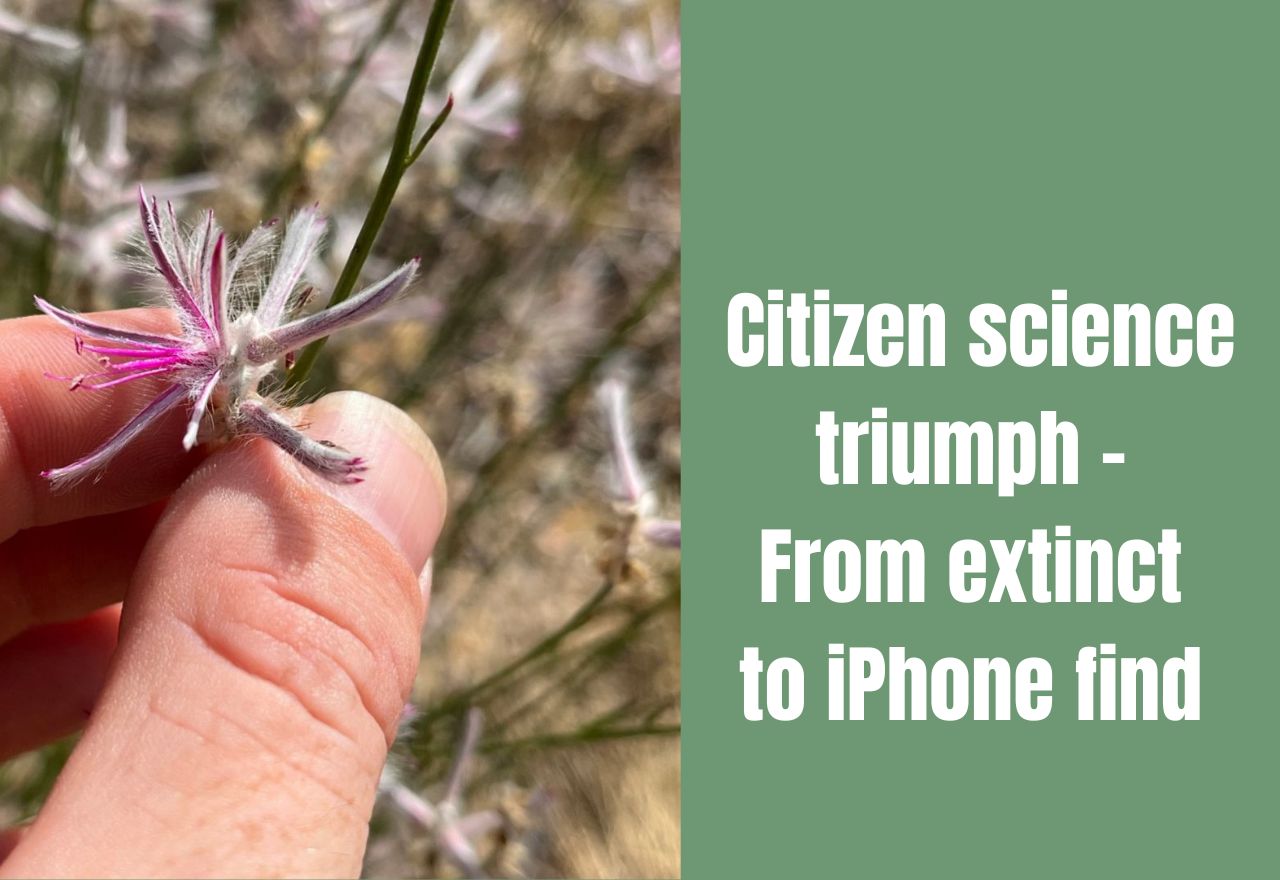 Image by Aaron Bean via UNSW
In Short
Citizen Science Success: A slender shrub (Ptilotus senarius) presumed extinct for nearly 60 years was rediscovered in Queensland via the iNaturalist app.
Local Potential: Experts believe similar "lost" species are likely hidden across private holdings in the Hay, Balranald, and Central Darling shires.
Privacy First: Landholders can contribute to scientific research using "obscured" GPS settings to protect the exact location of their property and assets.
A plant species long presumed extinct in the wild has been rediscovered in northern Queensland, sparking conversations about the untapped potential for similar finds across the vast landscapes of the New South Wales Riverina and Far West.
The rediscovery of Ptilotus senarius, a slender shrub from the Amaranthaceae family, was made possible not by a professional survey team, but by a horticulturalist with a smartphone and a keen eye. The plant had not been recorded since 1967 and was officially considered extinct until Aaron Bean uploaded photos of an unusual specimen to the citizen science platform iNaturalist in June 2025.
From the Gulf to the Western Plains
While this find occurred in Queensland’s Gilbert River region, the implications for the Back Country is significant.
Much like the northern Gulf country, our local districts consist of expansive private holdings and remote tracts of land that rarely see professional botanical surveys.
The use of digital platforms allows landholders and hobbyists in our corner of the state to contribute to national conservation efforts without the need for intrusive academic expeditions.
The Power of Local Observation
The identification was confirmed after a new specimen was collected from the private property where it was found. Researchers suggest that this success story highlights a shift in how biodiversity is monitored in regional areas.
Study lead author Thomas Mesaglio, from the UNSW School of Biological, Earth & Environmental Sciences, noted that such finds are just the beginning of the process.
“Rediscoveries offer that opportunity to conduct follow-up, targeted surveys and consistent long-term monitoring to give us a better understanding of exactly where and how these species are distributed across the landscape,” says Mesaglio.
For the Back Country, where the environment is often at the mercy of volatile climatic shifts, having a real-time database of local flora and fauna could prove vital for future land management and drought resilience planning.
Bridging the Gap on Private Land
One of the persistent challenges for conservationists is accessing the vast majority of Australian land that is held privately.
Mesaglio highlighted that iNaturalist is helping to bridge this gap between researchers and the people who actually live on the land.
“iNaturalist has especially become an invaluable tool for recording biodiversity on private property, which can often be difficult to access by professional researchers,” says Mesaglio.
As the Back Country continues to face scrutiny over biodiversity and land use, this rediscovery serves as a reminder that the next major scientific breakthrough could be sitting in a paddock in Balranald or along a dry creek bed in the Central Darling—waiting for a local with a camera to find it.
Back Country Guide: How to Spot a "Lost" Species on Your Property
The rediscovery of Ptilotus senarius in Queensland proves that you don't need a PhD to make a massive scientific discovery—you just need a smartphone and a bit of curiosity while out on the bike or checking fences.
If you’re living rurally, here is how you can use the iNaturalist app to help map our local biodiversity.
1. Get the Gear (It’s Free)
Download the App: Search for iNaturalist (look for the green bird logo) on the Apple App Store or Google Play.
Create an Account: You can sign up with an email or link it to your existing social accounts.
Join Local Projects: Once in the app, search for "Projects" nearby. You’ll often find local "BioBlitz" events or regional surveys run by groups like Murrumbidgee Landcare or Local Land Services.
2. Making a Quality Observation
The secret to a "Research Grade" identification is the quality of your photos. Scientists need to see more than just a pretty flower.
The "Wide Shot": Take a photo of the whole plant. Is it a tiny herb, a sprawling shrub, or a tall tree?
The Details: Get close-ups of the leaves (top and bottom), the flowers/seeds, and the bark or stem.
Use a Scale: Place your hat, a pocket knife, or even your thumb next to the plant so experts can judge its size.
Focus is Key: If your phone won't focus on a small flower, place your hand behind the plant to give the camera something solid to lock onto.
3. Privacy on the Station
One of the biggest concerns for landholders is privacy. You might find something rare, but you don't necessarily want the whole world knowing exactly where it is on your back block.
Geoprivacy Settings: When you upload a photo, you can set the location to "Obscured."
This places a "buffer" over your coordinates on the public map (usually a 20km x 20km box). The public sees the general area, but only trusted researchers can see the exact pin.
"Private" Mode: You can also set it to private, which hides the coordinates entirely from everyone but you.
4. What Happens Next?
Once you hit "Share," the iNaturalist AI will suggest what it thinks the plant is. But the real magic happens when the community steps in.
Expert Review: Real botanists and experienced hobbyists (like those mentioned in the Queensland find) review your photos.
Confirmation: If two or more people agree on the ID, your observation becomes "Research Grade" and is automatically shared with the Atlas of Living Australia, helping inform state and national conservation records.
COMMUNITY

NEWS