The eID Cost Gap: Why NSW Farmers Say the $2M Support Package Falls Short
Krista Schade
28 January 2026, 12:27 AM
eID Mandate NSW: Financial Burden Shifts to Producers
In Short
• Funding Shortfall: The NSW Government’s $2 million eID package excludes the cost of individual tags, leaving producers to cover ongoing tagging expenses for lambs and kids.
• Deadline Looming: Mandatory electronic identification for all sheep and farmed goats takes effect on January 1, 2025, yet only 22.4% of stock currently comply.
• Harmonisation Issues: Industry leaders are calling for "tag-free pathways" and better interstate cooperation to prevent the mandate from hindering stock movements to slaughter.
The countdown is on for sheep and goat producers across NSW to comply with new electronic identification (eID) mandates, but industry leaders warn that the financial burden is being unfairly shifted onto the paddock.
The NSW Government recently announced a $2 million package to provide discounts on eID equipment. However, the funding excludes the individual tags themselves, leaving producers to shoulder the ongoing costs of tagging lambs and farmed kids.
With less than a year until eID tags become mandatory for all sheep and farmed goats, the local agricultural sector faces a significant hurdle in transitioning to the new biosecurity framework.
Farmers Flag Financial Pressure
NSW Farmers’ President Xavier Martin expressed disappointment, stating that the state government had failed to extend necessary support for the tags.
“We wrote to the state government back in October to request an extension to this eID tag discount scheme, but our calls for investment to reduce the costs and imposts of this transition have been left unanswered, once again,” Mr Martin said.
The scale of the task for our region is highlighted by recent data showing that only 22.4 per cent of sheep and goats moving through the state's saleyards last year were equipped with eID tags. For producers in the western divisions, where flock numbers are significant, the cost of compliance is a growing concern.
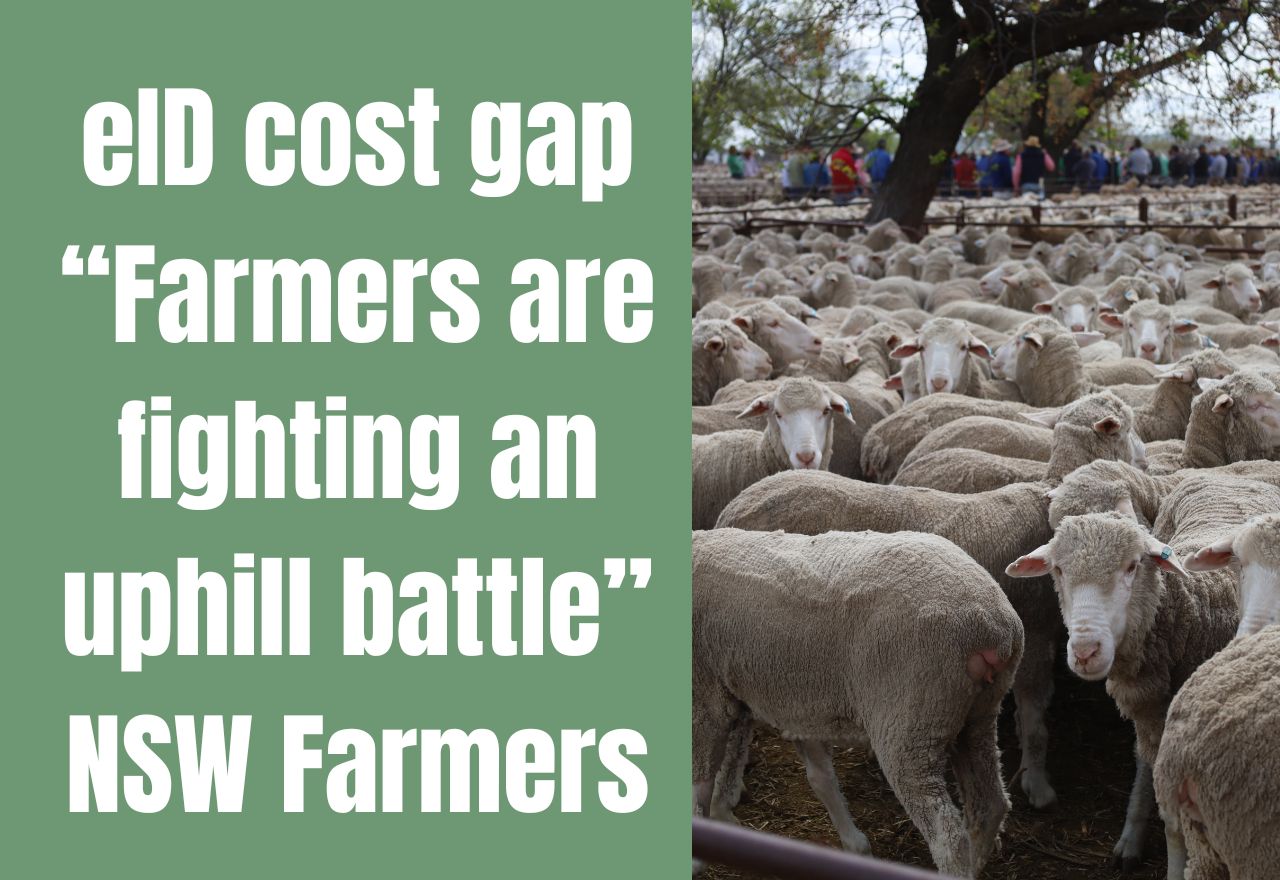
“We’ve got less than a year until eID tags are mandatory for all sheep and farmed goats, and as input costs outstrip inflation, farmers are fighting an uphill battle to front up for the costs of this government mandate,” Mr Martin added.
A Call for Harmonisation
The effectiveness of the traceability scheme relies not just on local compliance, but on how it integrates across state borders—a critical factor for producers in the Balranald and Central Darling areas who often move stock between jurisdictions.
Mr Martin argued that for the scheme to be successful, it requires "eID tag-free pathways" for sheep moving directly from their property of birth to slaughter, alongside better cooperation between states.
“This is supposed to be about improving Australia’s biosecurity systems, but unless we see jurisdictional harmonisation coupled with serious and continued investment for compliance, we have no confidence this scheme will succeed,” Mr Martin said.
As the deadline approaches, the gap between government policy and on-ground reality remains a point of contention for rural communities. NSW Farmers has indicated it will continue to lobby the government to address the funding shortfall for tags.
“For now, it’s back to Macquarie Street for NSW Farmers, where we’ll once again advocate for what’s really needed to move forward with this traceability mandate,” Mr Martin said.
“It’s clear that those in Parliament are not listening to those in the paddock, and that needs to change.”