Biosecurity Threats and Beef Tariffs: What the Looming "Twin Crisis" Means for the Back Country

Krista Schade
14 January 2026, 7:00 PM
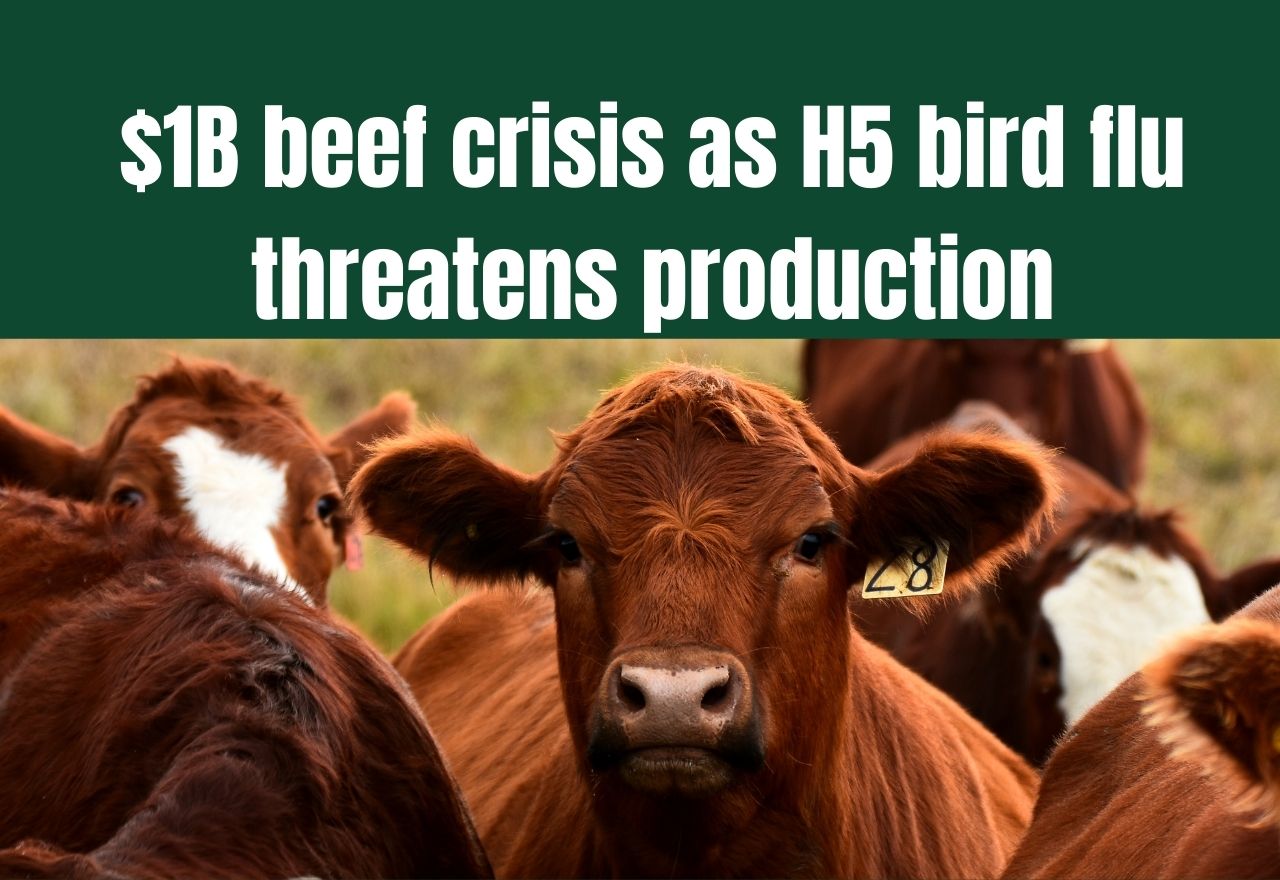
Local producers across the back country are facing a challenging start to 2026, as a combination of international trade barriers and a shifting biosecurity landscape threatens the backbone of the regional economy.
In Short
• The "Tariff Wall": A 55% tariff on Australian beef exports to China triggered on January 1 is expected to hit by August, potentially costing the economy $1 billion.
• H5N1 Alert: While Australia remains H5-free, authorities are monitoring returning Short-tailed Shearwaters and the risk of the virus jumping to dairy cattle.
• Local Impact: Producers face softening domestic prices as export demand is projected to drop by one-third.
The Australian livestock industry is currently navigating a turbulent period.
The pressure is coming from two fronts: the activation of significant Chinese trade restrictions on beef and the encroaching threat of the H5 High Pathogenicity Avian Influenza (HPAI) virus.
The Beef Quota "Trigger"
For the pastoralists of the Riverina and Far West, the most immediate financial concern is the 55 percent tariff on beef imports officially activated by China’s Ministry of Commerce on January 1.
While China frames the tariff as a global safeguard, the impact on Australian producers is disproportionate. Under the current agreement, once Australian exports hit a specific "trigger" volume for the year, the tariff jumps from near zero to 55 percent.
The quota for 2026 is set at approximately 205,000 tonnes—a figure significantly lower than the record volumes shipped in late 2025. Given that Australia exported over 295,000 tonnes to China in the first 11 months of last year, industry analysts expect the "tariff wall" to be hit as early as August or September. This could result in a $1 billion hit to the national economy and a projected one-third reduction in export volumes.
Member for Farrer and Leader of the Opposition, Sussan Ley MP, whose electorate encompasses a massive portion of our readership area, has called for urgent intervention.
“Australia will not accept a $1 billion hit to its bottom line. The Australian beef industry is an export powerhouse that anchors international trade for domestic commodities,” Ms Ley said.
“What the Prime Minister needs to do is step right up, call his counterparts... and make it very clear that Australia should not be included in any of these arrangements.
“The agricultural trade between ourselves and China has a long history, a long, successful history.”
Biosecurity: The H5 Threat
While trade wars simmer, biosecurity teams are looking to the skies. Australia remains the only continent free of the aggressive H5N1 (Clade 2.3.4.4b) strain of Avian Influenza, but authorities warn the buffer is being challenged daily.
The annual return of millions of Short-tailed Shearwaters to southern coastlines is being used as an early warning system. While the primary risk points are currently identified in Tasmania and Victoria, the potential for the virus to "jump" species—as seen in the United States where it moved into dairy cattle—has put the entire Australian livestock sector on high alert.
For the mixed farming and dairy operations within the Carrathool and Hay regions, the stakes are high.
The federal government has established a $100 million preparedness package and a cross-departmental HPAI Preparedness Taskforce to mitigate the risk to the $6 billion dairy export sector.
Local Impact
In the Hay and Central Darling shires, where the economy is inextricably linked to the price per kilo at the saleyards, these global shifts have local consequences.
A reduction in export demand often leads to a softening of domestic prices, affecting the bottom line of family-run stations from Ivanhoe to Balranald.
As the industry prepares for a potential "tariff wall" in the spring, the focus for local producers remains on high biosecurity standards and awaiting a diplomatic resolution to the trade impasse.
NEWS

SPORT

RURAL