Sitting Ducks: Can NSW learn from the North QLD’s war on feral pigs?

Krista Schade
28 January 2026, 12:36 AM
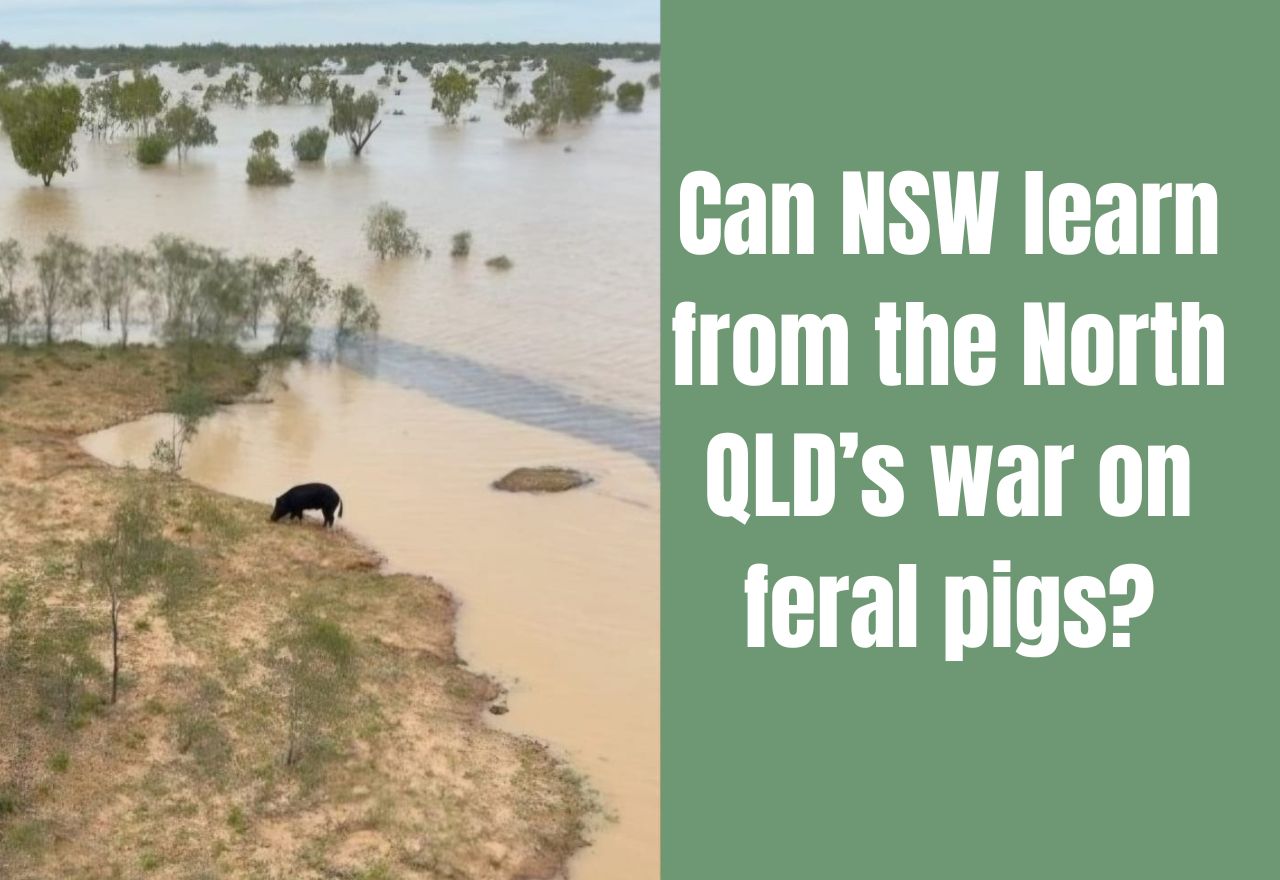 Image: Robbie Katter MP
Feral Pig Culling Strategy: Lessons for Western NSW from North QLD
In Short
• Tactical Advantage: Floodwaters have created "islands," trapping feral pigs in the open and providing a rare window for highly effective aerial culling.
• The ‘Sinkhole’ Threat: Landholders in the Riverina and Far West warn that private control efforts are being undermined by pests migrating from unmanaged crown lands and national parks.
• Policy Push: Regional MPs are calling for a unified approach, including potential bounties and aggressive cross-tenure coordination to prevent a total biosecurity disaster.
As floodwaters across North West Queensland transform the landscape into a frontline for massive aerial culling operations, landholders across the Western Riverina and Far West are being urged to look north.
The recent assault on feral populations in the Gulf country is providing a blueprint—and a warning—for communities in the Hay, Balranald, Carrathool, and Central Darling shires.
The Carpentaria Land Council Aboriginal Corporation (CLCAC) recently spearheaded a major culling operation across the Gulf country.
By using aerial marksmen to target pests stranded in hard-to-reach marshlands, the program has utilised the aftermath of flooding to thin out ballooning populations.
Queensland Member for Traeger, Robbie Katter, said the floods have created a rare tactical advantage for control.
“I was in a grazier’s chopper being shown around, and he made the clear observation that like the surviving cattle, wild pigs are corralling on the islands that have formed in the inland sea,” Mr Katter said.
“These pigs are sitting ducks and would be effectively controlled by a trained aerial shooter. Any funds spent now will pay off in spades once the flood waters go down.”
The Sinkhole Effect
For locals in the Riverina and Central Darling, the Queensland experience hits close to home. Feral pigs have shifted from a productivity nuisance to a multi-million dollar biosecurity threat, devastating lambing percentages and destroying critical water infrastructure across our local plains.
While Local Land Services (LLS) has recently bolstered aerial shooting programs in New South Wales, many landholders remain frustrated by what is known as the “sinkhole” effect.
This occurs when a proactive farmer clears their own run, only for a fresh wave of pigs to march back in from unmanaged crown lands or neighbouring reserves.
Independent Member for Murray, Helen Dalton, has been a vocal advocate for more aggressive action, arguing that the current ad hoc approach is failing the regions.
“I’ve been pushing for the NSW Government to impose a bounty on foxes and pigs,” Ms Dalton said. “Pigs are invading vineyards around Griffith, trekking in from neighbouring reserves. It’s a plague.”
National Parks Under Fire
Both Ms Dalton and Mr Katter have identified public lands and national parks as a primary source of the problem, describing them as “breeding grounds” for pests that eventually spill onto private property.
Mr Katter was blunt in his assessment, stating that these protected estates are being “turned into pig pens, weed nurseries and fire starters by the green push.”
To combat this, Ms Dalton believes the solution lies in direct financial incentives for ground control.
“When hunters see a cat in the bush they will shoot it... it’s almost a two-for-one deal [with a bounty],” she said. “We need to look at every option to slash these numbers once and for all."
A Unified Front
The message from both sides of the border is clear: coordination is the only way forward.
Without a unified front that bridges the gap between large-scale government aerial programs and boots-on-the-ground incentives for locals, the feral pig problem in the region is expected to persist.
As the North demonstrates, the best time to strike is when the landscape forces these pests into the open.
The question remains whether NSW can mirror that level of cross-border, cross-tenure coordination before the next breeding cycle takes hold.