Back Country Bulletin
News from the Back Country
Get it on the Apple StoreGet it on the Google Play Store
NewsSportRuralCommunityEat, Drink, Stay
Back Country Bulletin
Zoetis announces $100,000 donation to Beyond Blue to support mental health in rural Australia

13 December 2024, 1:00 AM

Zoetis has reached its goal of raising $100,000 for the Beyond Blue Support ServiceZoetis, the leading animal health business, raises funds to support mental health initiatives and reduce stigma around mental illness in rural and regional Australia. Zoetis has a long-standing commitment to supporting mental health in rural and regional communities, where accessing mental health care can often be challenging due to factors such as geographic isolation, stigma, and financial constraints.Zoetis started partnering with Beyond Blue in 2016, and since then, has raised $900,000 for Beyond Blue by donating $5 from each sale of the company’s livestock, pig, and poultry vaccines and drenches.“Zoetis works closely with rural Australia through interactions with the country’s farming community, agricultural stores, veterinarians and their families,” Lance Williams, Zoetis Senior Vice President, Australia and New Zealand, said. “We are proud to once again be supporting Beyond Blue and the important work they do.”The handover of the donation by Lance Williams, was attended by key figures including Beyond Blue Chair Linda Dessau AC CVO, former Governor of Victoria (2015-2023) and Commander of the Royal Victorian Order, and Georgie Harman, CEO of Beyond Blue. Also present were Fred Schwenke, Business Unit Director, Zoetis, Lauren Rowston, Business Unit Director, Zoetis, and Mark Willis Marketing Manager, Livestock at Zoetis.Factors such as inflation, cost-of-living pressures, climate change, and the lingering impacts of the COVID-19 pandemic have underscored the importance of mental health support, particularly for farmers and rural communities. The funds raised play a vital role in sustaining Beyond Blue’s 24/7 mental health support services, which include counselling, advice, and referrals. These services are essential for providing support to individuals in rural and regional areas who face additional barriers to accessing mental health care compared to their urban counterparts. To date, thanks to Zoetis’s donation, more than 15,500 people have been able to get the support they need through the service.“The partnership between Zoetis and Beyond Blue goes beyond financial contributions,” added Mr Williams. “It’s about making sure that no one in rural Australia feels alone in their struggle with mental health, and that help is readily available. We want to encourage early intervention and remind people that reaching out for support is a sign of strength, not weakness. This donation will help ensure that those living in regional areas have access to support when they need it most.”According to the recently released survey results from Beyond Blue, Australian Mental Health and Wellbeing Check 2024, people are delaying seeking help for their mental health, with nearly half of those surveyed (49 percent) waiting until they are very or extremely distressed before they sought mental health support. Top barriers to seeking help included affordability of treatment, shame/stigma and people thinking their problem wasn’t serious enough to seek support. Nearly half of all respondents – 46 percent – named financial pressure as a key factor in their distress. Housing affordability and personal relationship challenges were also identified as stress factors by 34 percent of respondents.Beyond Blue’s Support Service has proven to be a lifeline for many. Data shows that after contacting Beyond Blue, individuals often feel more understood, less distressed, and better equipped to manage their mental health challenges. This year’s donation from Zoetis will allow Beyond Blue to continue to be there for people in rural Australia, so they can access the support they need, whether it be via phone, webchat, or online forums.“We need to continue to lift the shroud of shame surrounding mental health conditions, so that more people reach out for support without waiting to reach crisis point,” says Derek Schoen, a Corowa farmer and Beyond Blue board member, highlighting the critical need for early intervention.“While rural Australians are known for their resilience, the pressures they face can take a toll on their mental health. It’s not always easy to ask for help, especially when you’re used to handling things on your own.“Partnerships like this one between Zoetis and Beyond Blue make it possible for people to seek help before problems grow.“Our message, when it comes to your mental health is don’t wait until things really get on top of you. Let people know how you’re feeling or check in with someone you’ve noticed changes in. The earlier the better. You’re not alone.”Beyond Blue Support Service provides 24/7 free counselling, advice and referrals via phone 1300 22 4636, webchat or email at https://www.beyondblue.org.au/get-support

Unearthing better ways to manage Kangaroos on farms

07 December 2024, 4:00 AM

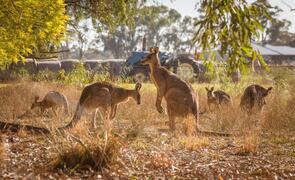
Researchers are looking to the people on the front line of dealing with the potential impact of kangaroo populations on rural production hoping to reveal solutions worth sharing.Although a major drawcard for tourism and playing a practical role in fertilising nutrient-poor soils and spreading seeds, kangaroos are not often welcome in our rural production landscapes, where they may impact farm productivity. Many farms across Australia seek to keep kangaroos out or shoot them as part of pest management. Now a University of Technology Sydney (UTS) research team is surveying commercial Australian farmers from across Queensland, New South Wales, the ACT, South Australia, and Victoria to find out and share how they manage kangaroos on their properties by participating in either an online survey or one-on-one interview. The research aims to gain a deeper understanding of the complexities surrounding the interactions between kangaroos and land management practices; learn about the diverse experiences and challenges farmers face; and ultimately unearth and share solutions for how farmers can manage kangaroos while running successful farms. “We want to learn more about the opinions of farmers towards kangaroos on their properties and the challenges faced,” said UTS TD School Associate Professor Daniel Ramp.“We hope to unearth new and novel approaches currently being used by farmers to manage kangaroo populations so that we can share these learnings.”The survey is aimed at commercial farmers – those who operate on a commercial scale and/or depend on their farming enterprise as a primary source of income and who have kangaroos on their farms. Get involved• An online survey available on this link• A one-on-one interview, register via this formFor more information on the project email [email protected]

Largest wool classing cohort in NSW graduates

04 December 2024, 7:00 PM

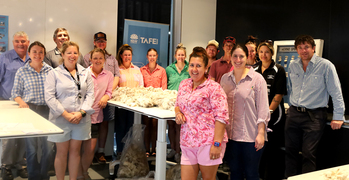
The largest enrolment of wool classing professionals in the state sat its final exam last week at Hay’s TAFE campus.The graduating class (back row from left) Stuart Murphy, Michael Donovan, Aaron Nevison, Bella McGrath, Sophie Nuske, Chole Deacon, Max Lacey, Tom Lugsdin, Sam Davis, Kiaya Linnett, Dave Allen. Front Emma McCrabb, Kayla Garner, Georgie Meddings, Rebecca Owen, Isabel Virgona. Taught by one of Australia’s leading classers, Hay’s Kayla Garner, 14 students from Hay, Ivanhoe, Booroorban, Broken Hill, Adelong and Trangie were vigorously assessed.The students commenced their training in February, under the expert guidance of Ms Garner, who was crowned Australian National Wool Handling Champion in 2013.Stuart Murphy, TAFE’s head teacher of agribusiness, travelled from Scone to undertake the assessment.(From left) Student Emma McCrabb and TAFE assessor Stuart Murphy, and Dave Allen and Kiaya Linnett during the final exam. Images: Kayla Garner.“I am here to ensure these students have fully met the requirements of the qualification,” Mr Murphy explained.“We want these students to be job ready, ready to walk into a career in an industry experiencing Australia wide shortages.“What’s great about this group is that many are wool growers themselves and are directly addressing this critical skills shortage.”Each student passed their assessment and is now a fully qualified wool classer.“Everyone passed with high distinction and I am very proud of their achievements,” Ms Garner said. “I’m excited to see where their future in wool takes them all.”

LLS warns of heat stress in animals

30 November 2024, 7:00 PM

Christmas is coming, and with it, hot weatherChristmas is fast approaching, and with it comes higher temperatures as we move into summer.Western Local Land Services is reminding livestock producers to be wary for heat stress and exhaustion affecting their animals.“As the weather warms up, livestock will have a harder time to maintain daily functions, just like us,” said Anja Sandring, District Veterinarian.“Landholders should look out for signs of heat stress in their animals, including open mouth breathing, shallow and rapid breathing, shade seeking, reduced feed intake and increased water intake, staggering, and potentially death.“Along with heat stress, we also often see Humpy Back Syndrome affect full wool Merino rams and heavy wethers and ewes, while we also tend to see increased intestinal worm burdens as the warmer weather is conducive to hatching and the development of larvae.“Heat stress can also influence fertility in ewes, with the increased temperatures potentially having an effect on hormones and egg and embryo quality.”If you’re mustering, handling and transporting livestock during the warmer months, it is essential to meet basic animal welfare standards, such as:move livestock during early morning or late afternoon when temperatures are coolerprovide sufficient shade and shelter for animals to rest and cool downensure you have sufficient feed available during the Christmas shut down period to maintain animals in healthy condition until markets reopen in the New Yeardraft off all animals suitable for sale via saleyards or directly to a processor before meatworks and saleyards close for the holidays.Another important consideration in hot weather is water consumption.“Livestock will also drink considerably more water in hotter weather, with cattle consuming up to 140 litres a day and sheep and goats up to 14 litres a day,” Anja said.“Remember, livestock avoid warm water so it’s important to provide shade and shelter for water resources, as well as stock.”If livestock producers have any concerns and are suspecting an emergency animal disease during the Christmas holiday shutdown period, please call the Emergency Animal Disease hotline on 1800 675 888 immediately.For further information and local advice about your livestock, speak with a Local Land Services District Veterinarian on 1300 795 299.

2025 Jan Cathcart scholarship open

23 November 2024, 10:00 PM

Applications are now open for the SunRice Group’s 2025 Jan Cathcart Memorial Scholarship, offering a unique professional experience pathway and opportunity to help shape the future of the Australian rice industry. The Scholarship, which was established in honour of Jan Cathcart’s remarkable 43-year career in the Australian rice industry, aims to empower and nurture the next generation of female leaders in agriculture. The esteemed Scholarship program is now in its 11th year and offers an exceptional opportunity for women involved in the Australian rice industry and its related agricultural networks to advance their education and careers. The recipient of the 2025 Jan Cathcart Memorial Scholarship will be granted up to $30,000 in financial assistance for tertiary study, alongside invaluable prospects for work experience and employment placement within the rice industry. The application window is open until Monday 9 December 2024, and the scholarship winner will be publicly announced in early 2025. SunRice Group Chairman, Mr Laurie Arthur, said the Scholarship plays an important role in developing talented women who are passionate about shaping the Australian rice industry. “Through the Jan Cathcart Scholarship, we continue to pay tribute to and celebrate Jan's legacy by nurturing the future of the rice industry. We've been empowering women for over a decade with both financial support and industry guidance, supporting their growth along the path Jan once trod," Mr Arthur said. "It’s been wonderful to see how past recipients have flourished within the SunRice Group and the wider Australian rice industry. They've forged a resilient alumnae network, which is a testament to the power of industry support and shared motivation.” Moulamein’s Hope Fitzpatrick was a 2024 joint winner of the prestigious scholarship. She is pictured above with fellow winner Ava Christie, from Albury. “Receiving the Jan Cathcart Scholarship is a true honour. Meeting other Scholarship recipients has been an inspiring experience, allowing me to connect with like-minded women who share similar passions and goals,” Ms Fitzpatrick said.. “Being part of this community and a supportive organisation offers invaluable opportunities for personal growth and networking, where I can learn from diverse perspectives and work toward making a meaningful impact in the future”

The Nationals pledge to fix agriculture on National Ag Day

18 November 2024, 10:00 PM

Federal Member for Parkes Mark Coulton recently met with The Nationals candidate for Parkes Jamie Chaffey together, they are pledging to fix 10 terrible Labor policies that are harming agriculture in the Parkes electorate on National Agriculture Day.Mr Coulton is passionate of the important role the agriculture industry plays, providing fresh food and fibre to households across the country and the world, regardless of where you live, it is something we rely on every day. “We're lucky to have the best farmers in the world right here in the Parkes electorate. Our farmers produce top quality food and fibre, all while being the most water efficient and innovative.“I want to thank all the incredible workers involved in our agriculture industry, from the farmers to the truck drivers, the agronomists and suppliers to the contractors and researchers.“The Nationals 100 per cent support our agricultural industry, but unfortunately, farmers are struggling to get food from paddock to plate in the Parkes electorate because of what Labor is doing to them. Just last week, Senate Estimates revealed the number of Pacific Australia Labour Mobility (PALM) workers in agriculture has fallen by more than 20 per cent, from 21,915 in July 2023 to 16,705 workers in September 2024, because Labor made the scheme unworkable." Mr Coulton said.Unfortunately, when supply goes down, prices go up, which is where families are feeling the punch, at the checkout. Mr Chaffey said "today should be a day of celebrating the wonderful agriculture industry, but our farmers are under siege.The Nationals, as part of a future Coalition Government, will fix 10 bad Labor policies. They plan to:Reinstate the live sheep export tradeBring back the Agriculture Visa and fix Labor’s PALM scheme messStop Labor’s changes to the Murray-Darling BasinIntroduce an import container levy, so our own farmers don’t pay for the biosecurity risk created by international competitorsReverse Labor’s cuts to regional infrastructureStop Labor’s truckie tax and vehicle efficiency standardCreate a mix of energy, rather than Labor’s all-renewables approach, which is destroying agricultural landScrap harmful emissions profiles, or Scope 3Stop Labor’s proposed taxes on superannuation, which will impact family farmsEnsure the 88-day backpacker work visa remains in place for the agriculture sector.

NSW Government launches Australia’s first operational Seasonal Drought Forecast

12 November 2024, 4:00 AM

The Minns Labor Government’s groundbreaking drought forecasting system made its debut in this month’s State Seasonal Update, published online.The NSW Government says it is committed to growing and protecting the state’s primary industries and assisting farmers prepare for and better understand drought is a key goal.They say their innovative online web-based tool will provide essential insights for farmers and other key agricultural stakeholders across NSW, allowing them to make informed decisions for drought preparedness, produce production and management.“The Minns Labor Government is committed to empowering NSW farmers with innovative technology and resources to tackle climate challenges, ensuring sustainable practices and food supplies for future generations," Minister for Agriculture Tara Moriarty said.“The launch of this seasonal drought forecast is a significant step forward in our ability to support farmers across NSW.“By providing timely information, we can help our agricultural community prepare for and respond to the challenges of drought.The new service will provide vital insights for farmers and other key agricultural stakeholders allowing them to make better informed decisions for drought preparedness and management.The forecast uses rainfall and temperature data from the Bureau of Meteorology’s seasonal forecast in the existing Enhanced Drought Information System (EDIS) to generate the most likely drought status for up to three months ahead. The drought forecast will be provided along with valuable information about the certainty of the forecast and its historical performance, allowing users to better anticipate and prepare for potential drought conditions.The drought forecast is underpinned by extensive scientific evaluation of its accuracy over the past 40 years of overlapping observations and model runs.Future enhancements to the forecast will include location-based information and interactive online tools for accessing data.The NSW Government remains committed to drought preparedness, by working with communities and our agricultural industry to safeguard the State against the effects of drought. View the operational Seasonal Drought Forecast.

NSW Farmers "Farmers left out to dry"

10 November 2024, 1:00 AM

A 22 per cent rise in rural water prices could drown farmers in debt and strip many farms of the water needed to produce food and fibre, the state’s peak farm body NSW Farmers has said.According to official documents issued today, WaterNSW has submitted a proposal to the state government to increase rural water prices by an average of 22 per cent each year from 2025 to 2030.NSW Farmers Water Taskforce Chair Richard Bootle said a 22 per cent increase in rural water prices would be catastrophic for the state’s farming communities, who needed the water to feed and clothe the nation.“Governments are buying up the water farmers need, and now, there’s a plan to push up the prices of what limited water’s left for them to use on farm,” Mr Bootle said.“The cost of other key inputs such as fertiliser has already skyrocketed to unprecedented levels, and amidst these huge pressures, we get slugged with this bill.“It’s not fair, it’s not feasible, and it’s certain to put a chokehold on farmers who rely on our precious natural water resources to grow the healthy plants and animals our consumers need.”Capping rural water prices at more sustainable levels was essential, Mr Bootle said, as well as implementing smarter solutions to water recovery throughout the Murray Darling Basin, if farming communities were to survive.“Buying up water, adding costly new regulations on water management and then charging farmers an arm and a leg for what’s left isn’t the way forward to managing our water,” Mr Bootle said.“As we begin to understand the full detail of what’s being proposed, it remains critical that we consider smarter solutions for sharing and recovering water costs, or else farmers and regions will not be able to keep their head above water."If any other service increased their prices this much, you would take your business elsewhere – but farmers only have one option and one way to get the vital resource that is our precious water, so they must be able to afford it.”

Farmers’ Federal Budget priorities show ag can help drive national productivity

09 November 2024, 10:00 PM

The National Farmers’ Federation has delivered 20 targeted investments in its 2025-26 Pre-Budget Submission to drive productivity growth, not only in the agricultural sector, but for the Australian economy.National Farmers' Federation (NFF) President David Jochinke said the Australian economy continued to navigate complex challenges from slowing productivity growth to ongoing cost-of-living pressures, while shifting global dynamics add further complications.“Families are grappling with rising costs, tight budgets and growing uncertainties. Australian farmers also share these burdens as productivity growth lags, input prices fluctuate, and market volatility squeezes margins,” Mr Jochinke said.“Yet we remain steadfastly optimistic about agriculture’s role in helping Australia address these challenges. With the right policy and investment settings, agriculture can help Australia overcome its challenges.“While strong economic policies are vital to our sector’s growth, the people driving agriculture are at the heart of everything we achieve. It’s why we’ve included an ask to boost farmer wellbeing following from the National Forum on Mental Health and Wellbeing in Agriculture the NFF hosted in March.”Key priorities include:$1 billion for improving freight supply chains, including roads and rail.Australia’s ability to compete in global markets depends on efficient and reliable transportation networks. Delays or inefficiencies in supply chains can result in increased costs and a loss of market share. This resilience is more important than ever, with an increasing occurrence of natural disasters and other disruptions due to climate change.$175 million for a farmworker accommodation investment package of incentives.Investing in farmworker accommodation supports the sector’s ability to attract and retain a skilled workforce, enhances productivity and safety, improves industry reputation, and contributes to the overall economic stability and growth of rural and regional communities.$150 million for climate-related research and development.This funding would support the development of robust baseline information, drive innovation in farming practices and technologies, build resilience against climate impacts, improve greenhouse gas accounting across the sector, and assist in the communication, adoption, and extension of these advancements.$36 million to extend the On Farm Connectivity Program to grow digital uptake.This successful program has helped accelerate the uptake of digital technologies to promote a more productive, safe, and sustainable agricultural industry.$25 million for a national, agricultural industry led approach to grow farmers’ wellbeing and prevent suicides.Farmers die of suicide at twice the rate of other working Australians. This equates to one farmer taking their own life every 10 days. Funding would support farmer-focused mental health education campaigns and an accessible farmer-friendly helpline.With an election on the horizon, the NFF is calling for collaboration between industry and leaders across the political spectrum to harness agriculture’s potential in tackling Australia’s economic and environmental challenges.“Just take a look at agriculture’s track record. We launched our 2030 Roadmap for the sector to reach $100 billion in farm gate output by 2030.“In the five years before we released the Roadmap the average annual output of the sector was $55 billion. For the five years after the report was launched, it is forecast to average $80 billion.“The growth of the sector is contributing to Australia’s productivity, competitiveness. We’ve created jobs and locked in a positive future for the nation’s children and grandchildren.“It is abundantly clear; strategic policy and targeted investment in Australian agriculture delivers benefits to all Australians, no matter where they live or what they do. 

Farmers fire up over invasive ant response: A risk to farming and the Aussie BBQ

07 November 2024, 10:00 PM

The National Farmers’ Federation warns that the Federal Government’s dismal response to the Red Imported Fire Ant Senate Inquiry Report will come back to bite.In the Government’s response to the Senate inquiry, it says it has confidence in the National Fire Ant Eradication Program (NFAEP) and its delivery, and is not committing funding beyond 2027. Instead, it is deferring to reviews in 2025 and another in 2026-27.NFF Sustainable Development and Climate Change Committee Chair Angus Atkinson said the response fell pitifully short of a problem that needed the kitchen sink thrown at it.“It appears the Government is underestimating this pest. Red fire ants pose a mammoth risk not only to farming, but to humans, animals, plants and the quintessential Aussie backyard barbecue,” Mr Atkinson said.“This isn’t just a farmer problem. This is an everyone problem. In the United States, urban homeowners spend millions each year controlling the ants in their homes, gardens and lawns.“If these ants keep marching, Australians can say goodbye to picnics in the park and backyard barbecues.“These ants are expert hitchhikers, jumping on vehicles or shipping containers.“They get their name from a sting that makes the body feel like it’s on fire, a painful sensation that can last up to an hour and is followed by itchy pustules.“They have no natural predator in Australia and have the potential to kill off plants and animals – both native and in agriculture.“Stings to cattle can result in blindness, swelling and suffocation, or in the worst case, multiple stings can cause death.”The NFF is calling for adequate funding to ensure eradication and strong leadership that cuts through bureaucracy.“It reiterates the need for risk creators to contribute to more biosecurity funding. This nasty pest first arrived in Australia via shipping cargo.“Eradication efforts are under strain and lack the resources necessary to prevent further spread. This response falls short of what’s required and we call on the Government to increase resourcing and commit to long-term funding.“It’s also a chance for the new Queensland Government to earn its stripes with agriculture, given the state’s important role in leading the nationally funded National Fire Ant Eradication Program and the Queensland Government Fire Ant Suppression Taskforce.”Read the NFF’s submission to the inquiry HERE.

Bumper cotton crop almost sold out

07 November 2024, 1:00 AM

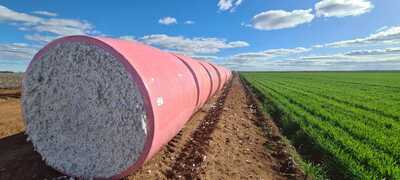
AUSTRALIA’S bumper 2023-24 cotton crop is nearly fully sold, with strong global demand despite persistent ongoing economic headwinds in some markets.China has returned as a key market for Australian cotton, taking a 30-percent share as of August 31, followed by Vietnam, India, Indonesia, and Bangladesh.According to Cotton Australia’s data platform, the 2023-24 season yielded just over 5.1 million bales, one of the largest on record.Australian Cotton Shippers Association chief executive officer Jules Willis said it was a great achievement for the industry to successfully move more than 5 million bales from another near-record crop year.“The cotton merchants have managed to sell most of our product during a season where Australia’s usual quality parameters were affected by wet weather at harvest, impacting colour and grade for a significant proportion of the crop,” Ms Willis told Grain Central.“There still remains a small volume of product going through the gin, and there’s continued interest from buyers.”Ms Willis said she expected the unsold cotton “to continue to be shipped over the November-March period”.China’s return as a significant buyer is notable, though its market share is now about half of what it was in 2019 prior to the soft ban period.Despite China’s softened demand due to economic conditions, Australian exports to the country remains strong.Ms Willis said the continued uptake of Australian cotton in other markets reflects the success of market diversification efforts made during China’s soft-ban period.“Australian cotton’s high quality continues to drive demand, even amidst shifting economic conditions and decreased global consumption of cotton-based fashion and homewares.”As well as reestablishing engagement within the Chinese market, Ms Willis said ACSA was considering its role in assisting the Australian Government’s negotiations with India.Australia signed an Economic Cooperation and Trade Agreement with India in 2022 and is now working on a more comprehensive agreement – the Comprehensive Economic Cooperation Agreement, or CECA.Currently, Australia can export 51,000 tonnes of cotton into India tariff free, with shipments beyond this incurring an 11pc import tariff.Figures show India imported just over 61,000t of Australian cotton in 2023, with around 10,000t attracting the 11pc tariff.Ms Willis said given India’s distance from Australia compared to other cotton markets, such as Indonesia and China, shipping costs were also a factor for buyers.“The shipping costs into India can be four times the price going into China.”She said these were “standard” considerations with international trade, but adding an 11pc tariff makes it more challenging.“We are committed to playing a role in supporting [the government] with their FTA [CECA] negotiations and we are engaging with the Government and industry to identify ways we can contribute to the bilateral relationships and help drive our two-way trade.”Ms Willis took up the role as ACSA’s inaugural CEO in July and is leading efforts to launch a new strategic plan for the association.The plan will be released next month and will provide a framework for the Association’s work over the coming five years.She said the plan will focus on three key strategic pillars, including: industry leadership and advocacy; communication and engagement, and marketing and promotion.“It will provide direction around the work we’re doing to ensure Australian cotton stays ahead of its competitors.”“We want to ensure people are aware of Australian cotton and it remains top of mind amongst our buyers.”This article first appeared on the Grain Central website graincentral.com.au.

Avoiding harvest fires is vital

05 November 2024, 4:00 AM

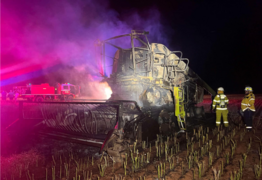
NSW Rural Fire Service (RFS) has issued warnings to harvesters and grain growers ahead of a dry, windy harvest season.The warning follows the recent total loss of faming equipment at Tabbita, near Griffith.Upon arrival, crews found a combine which had caught alight, unfortunately it was unable to be saved, but the fire was stopped from spreading by the efforts of RFS.Image: RFS Hanwood Brigade.In 2021/22, the RFS responded to 38 fires in NSW involving heavy equipment, of which 15 involved farming machinery such as tractors, harvesters and pickers. Those losses have substantial financial effects, plus additional impact of lost crops."It is your responsibility to limit the ignition and prevent the spread of fires from your property," a spokesperson said. "This includes fires that may start due to harvesting operations."The NSW RFS provides a number of tools to help farmers make the right decisions about harvesting operations that will reduce the risk of fires starting and spreading. These include Harvest Safety Alerts and the Grain Harvesting Guide.This year, a Harvest Safety Alert may be issued for your district when necessary. Harvest Safety Alerts provide a signal to farmers that they should be taking extra precautions during harvesting operations to prevent the ignition and spread of fire due to the prevailing weather conditions.These alerts replace Cease Harvests that were previously issued, and the decision to issue a harvest safety alert continues to be made locally.Harvest Safety Alerts will be promoted via local radio and the NSW RFS Website.If a Harvest Safety Alert is issued for your area you should:A very simple tool released by the RFS, the Grain Harvesting Guide, enables farmers to measure their local weather conditions and determine if they should continue or delay harvesting operations due to fire risks.The Grain Harvesting Guide has been adopted following its successful implementation by the South Australian Country Fire Association. Trialled across Southern NSW in collaboration with NSW Farmers and the Australian Customer Harvesters, it received very positive responses from farmers who supported its adoption more broadly.You can pick up a Grain Harvesting Guide Sticker from your local Fire Control Centre.

161-180 of 208
Back Country Bulletin
News from the Back Country

Get it on the Apple StoreGet it on the Google Play Store