Back Country Bulletin
News from the Back Country
Get it on the Apple StoreGet it on the Google Play Store
NewsSportRuralCommunityEat, Drink, Stay
Back Country Bulletin
NSW Farmers welcomes support to get transition to renewable energy right

03 November 2024, 1:00 AM

NSW Farmers has welcomed news that independent advice and dispute resolution services will soon be available to farming families directly impacted by the state’s renewable energy transition.Last week the NSW Government announced $1.3 million in funding had been awarded to the Energy & Water Ombudsman to provide independent advice and dispute resolution services to farmers and rural communities affected by renewable energy projects in NSW.NSW Farmers Energy Transition Taskforce Chair Reg Kidd said the support had come at a critical time for regional NSW as renewable energy projects continued to be approved at a rapid pace.“It’s good to see the government recognise the need for a fair, independent and effective avenue for rural families and farmers to address their issues with renewable developers, so we can get the right thing in the right place, built in the right way,” Mr Kidd said.“Listening to the community and getting them the support they need to navigate what has been an extremely stressful and confusing process is essential, and we thank the NSW Government for taking real action to address these issues.“It’s our hope the Ombudsman can work through these complex and competing land use priorities and deliver better outcomes for farmers and communities throughout NSW.”Preventing further pain caused by the renewable energy transition must be a priority for the NSW Government moving forward, Mr Kidd said, with many lessons to be learnt from communities already impacted by renewable energy projects.“We’ve seen what happens when there’s not support, consultation or meaningful engagement with the communities affected by renewable projects, and it’s encouraging to see the state government try to right some of the past wrongs in this space,” Mr Kidd said.“Systems must be in place to resolve the existing issues with our energy transition and prevent them from ever happening again – and NSW Farmers stands ready to help make this happen.”“We need new sources of power for our growing population, but there’s no doubt we need land to grow that food and fibre that feeds us too.”

Buyback petition still needs support

01 November 2024, 1:00 AM

“It (water buybacks) just rips the heart out of communities” Helen DaltonMember for Murray Helen Dalton (above) is celebrating the recent passing of her water register bill in the NSW Parliament, but says there is still a long way to go to protect farmers.Mrs Dalton wants the NSW Government to take a stand against the Federal Government’s move to take productive water from regions under the Murray-Darling Basin Plan using the water buyback scheme.A petition organised by Ms Dalton needs 10,000 signatures, and Ms Dalton said she’s got just over 5000 so far.“Water buybacks will destroy our communities,” the independent Member for Murray said.“10,000 signatures will bring on debate in NSW parliament. Rope in your mates and city cousins and ask them to help.”The petition calls for protections for regional and remote communities from the potential impacts of Commonwealth buybacks.It calls on the NSW Government to ensure that no water transfers occur without a detailed and transparent report into the expected impact of any Commonwealth buybacks, including the potential economic, social, cultural, and environmental consequences of water resources being diverted away from local communities.“We, the undersigned, are deeply concerned about the potential transfer of water resources from NSW's rural and remote communities to the Commonwealth,” the petition states. “We urge the NSW Government to ensure that no water transfers occur until a detailed and transparent report into the expected impact of any Commonwealth buybacks is conducted.” Ms Dalton says the report should assess the potential economic losses these communities may face if water resources are diverted, and evaluate the social and cultural importance of water to local communities, including indigenous communities, in supporting livelihoods, health, and cultural practices. She is calling for the report to assess the environmental implications of water transfers on local ecosystems, and biodiversity, and engage in transparent consultation with affected communities to address concerns regarding water management.Copies of the paper-based petition can be requested from Helen Dalton’s offices in Griffith (02 6962 6644) or Deniliquin (03 5881 7034) or by emailing [email protected]

Extra biosecurity risks to manage at harvest time

25 October 2024, 1:00 AM

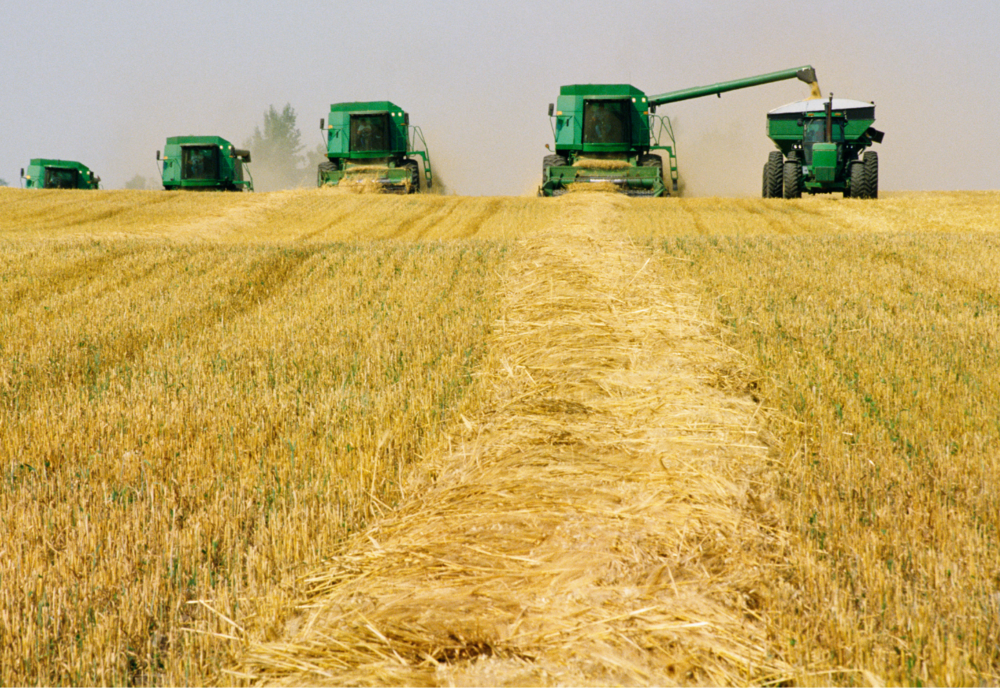
Harvest is a busy time of the year for the grain growers. The extra on-farm activity adds potential biosecurity risks. Extra people, vehicles, trucks and machinery movements, increase the risk of bringing in hitchhiking pests, weeds or disease. To reduce the risk of potentially major problems later, it is worth taking some time now to introduce some simple on-farm biosecurity measures before harvest starts. Local Land Services has released information to help growers reduce their risk. Farm gate • Minimise access points onto your property to better manage high-risk harvest movements and lock unused gates. • Put up visitor biosecurity signs at your entry points with a contact number for all visitors to report to (signs available from your nearest LLS office). • Create a property visitor log to record who, when, why and where. This is an essential record for tracing the origin and spread if a new pest incursion does occur. • Use signs to direct visitors to designated parking or reception areas. On farm • Conduct a visitor risk assessment before allowing entry into your production areas. Visitors can carry diseases, pests and weed seeds on their clothing, shoes and personal items. • Ask questions such as: have they recently been overseas or come from another property? • Provide cleaning facilities or decontamination foot baths for boots and request clean clothes to reduce the risks. • Provide a map of your property of roads and paddocks to allow the most direct route to be taken on formed roads to minimise exposure to production areas. • Ask all visitors to stay on established roads or tracks and monitor surrounding areas for signs of new pests or weeds. Come clean, go clean • Machinery, tools and equipment such as harvesters, chaser bins, mother bins and field bins can carry pests and weed seeds. Take particular care to inspect and clean them thoroughly, especially if they have been off farm, contracted, borrowed or purchased secondhand. • Wash, decontaminate and rinse all vehicles before allowing access to growing areas to avoid spreading weed seeds, soil diseases or pests to your production system. • Have a designated wash-down site, collect run-off in a sump or direct it away from production areas. Be vigilant in monitoring this area and control weeds before seed set. • Consider the risks posed by trucks coming onto your property to collect grain, especially if they have carried grain from other properties. Trucks should be empty and clean. Limit machine access to production areas only. Introducing these biosecurity measures are not expensive and anyone can do them. Invest the time to establish your biosecurity plan to reduce the risks of a new pest or weed incursion on your property, to avoid devastating impacts on production and profit. Biosecurity is everyone’s business and our joint responsibility. Working together to report usual sightings will help protect our farms, the environment and the economy from plant pests and diseases.Report anything unusual Report new sightings of new pests, diseases, weeds or anything unusual to the Exotic Plant and Pest Hotline on 1800 084 881.Reporting is a vital step in early detection to help control outbreaks of new pest and diseases when they occur.

Fears NSW farming land may be taken for Murray Darling Basin plan

17 October 2024, 10:00 PM

NSW landholders are fearful of government forcibly acquiring their land, according to one advocacy group.“These feelings have been exacerbated by a recently released draft discussion paper, followed by a series of meetings,” said Wakool River Association chair John Lolicato.Wakool River Association says the NSW Government may use compulsory acquisition of land to claim easements, to allow higher flow levels of environmental water to be delivered to South Australia under the Murray-Darling Basin Plan.Landholders have been highlighting for many years that the volumes of water being acquired and stored in upstream dams under the Basin Plan will not physically fit down the system without causing major disruption.Wakool River Association chair John Lolicato, a long-time advocate for a more common-sense approach to Basin Plan implementation, says recent meetings with NSW Government personnel have exacerbated landholder concerns.“We know that due to constraints such as the Barmah Choke and numerous other physical restrictions, the volumes proposed under the Basin Plan simply cannot be delivered downstream without causing flooding of private and public land. “While governments also know this indisputable fact, it’s an issue that has been ‘kicked down the road’ for many years.“Now, the NSW Government has prepared what it calls a draft Landholder Negotiation Regulation Scheme, with what’s called a ‘public exhibition process’ until October 27.“After attending one of their information sessions in Deniliquin, and reading the draft regulations, I think farmers should be more worried than ever,” Mr Lolicato said.He said it was disappointing the eight planned meetings over two days in Deniliquin appear to be designed to limit informed discussion and questions regarding the process and the associated Reconnecting River Country Program.“A better way would be to work collaboratively with our representative groups and hold public meetings so the people attending all hear the same answers and questions. “However, that may mean the authorities would have to answer some difficult questions, and their process is designed to avoid this.“Even the most basic data that is required by a landholder to make an informed decision regarding the negotiation process could not be provided. For example, on each landholding what are the proposed flows, including their height duration, frequency, extent and timing? “Without this information, how can a landholder decide what is in their best interest?”Mr Lolicato said the draft regulations make it clear that landholders have two options – negotiation or compulsory acquisition.“If the government undervalues a landholder’s property or the infrastructure required, and the landholder refuses to accept an inadequate offer, the Minister can step in and grab what they want.“Department officials at the meetings were unable or unwilling to answer genuine questions relating to realistic compensation packages for easements. When asked if compensation would be ‘event based’ or ‘one off’, it was clear there would be only one payment, regardless of ongoing potential damage or liability.“When asked about compensation if a crop was accidentally flooded by environmental flows, the answer was a distinct ‘no’ under the proposed legislation. So governments can ruin a farm business, negligently or accidentally, and there are no consequences.“That is not the Australian way. In effect, they’re holding a gun at our head,” Mr Lolicato said.And while the negotiation process is under control of the NSW Government, it was clear the MDBA’s proposed Constraints Roadmap could take over the decision-making regarding flow volumes and duration, thus absolving the NSW Government of responsibility.“Many aspects of the poorly designed and implemented Basin Plan have been of huge concern for the nation’s food and fibre producers for nearly two decades, and unfortunately the situation is getting worse, not better,” Mr Lolicato said.“In a nutshell, this latest legislation is designed to give the NSW Government the power to compulsorily acquire our land, and past experiences in any policy area tells us the landholder will not be fairly compensated.“Even worse, it will make the government immune from any liability or litigation if water is released and it causes damage.“The constraints issue has been the Basin Plan’s ‘elephant in the room’ for a long time. “This new draft process has the potential for governments to pick winners and losers and create more division within our regional communities. It undermines the social fabric that holds our communities together,” Mr Lolicato said.Submissions on the draft regulations can be made to the NSW Department of Water until 11.59pm on Sunday, October 27 2024.

TAFE Hay tackles rural skills shortage - from florist to wool classer

17 October 2024, 7:00 PM

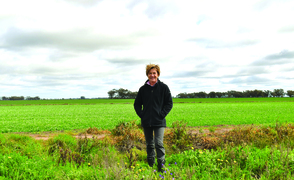
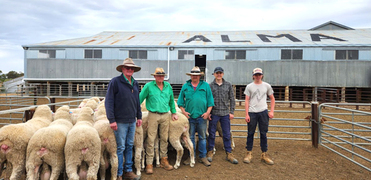
TAFE NSW Hay has helped a former florist raised in suburban Bathurst make an unlikely career pivot to wool classing, as the spring shearing season hits full swing.Rebecca Owen, 35, was trained at TAFE NSW as a florist and an aged care assistant-in-nursing in her 20s, before falling in love with the wool industry and moving to Hay.After taking a job as a roustabout in local sheds five years ago, Ms Owen this year turned to TAFE NSW Hay to take her career to the next level, enrolling in a Certificate IV in Wool Classing.It comes as demand surges for wool classers nationally as the shearing and lamb marking season ramps up.Hay is at the centre of what is regarded as one of the best Merino wool-growing regions in Australia, with 26 studs found on the Riverine Plains.“From the moment I stepped inside a wool shed, I’ve loved the idea of a career in wool,” Ms Owen (pictured above) said. “The energy, drive, ambition and physical side of the job is just addictive.”Ms Owen is currently working as wool handler for Willshear in Hay and hopes to use the practical skills and experience learned in her wool classing course to progress her career.“I want to eventually work as a wool classer but the course is giving me better skills and a deeper understanding of my current role as a wool handler,” she said. “My TAFE NSW wool classing teacher Kayla is a wonderful teacher and I truly believe if you learn from the best, you become the best.”Ms Owen is one of a growing number of “townies” – people from a non-rural background – turning to TAFE NSW to help them retrain to a career in ag.NSW Farmers workplace relations chair Chris Stillard said new data showing more students from non-farming backgrounds were studying agriculture at TAFE NSW was a positive for the industry.“TAFE NSW will play an important role in helping the industry have a skilled pipeline of workers into the future,” he said.Certificate IV in Wool Classing graduates can register with the Australian Wool Exchange to receive an Australian classer registration, allowing them to work as registered classes in shearing sheds across Australia.TAFE NSW Hay wool classing teacher Kayla Garner, who was crowned Australian National Wool Handling Champion in 2013 and has nearly 20 years of experience as a wool classer, said TAFE NSW graduates in the industry were in high demand.“The overwhelming majority of our wool graduates walk straight into jobs and the industry offers a great lifestyle and opportunity to earn good money,” Ms Garner said.Ms Garner said graduates typically found work as wool classers or wool brokers, assessing the quality of fleece or estimating its value and on-selling it.

MLA training opportunity for  red meat producers
MLA training opportunity for red meat producers

12 October 2024, 1:00 AM

Expressions of interest are now open for Meat & Livestock Australia’s renowned Ambassadors for the Red Meat Industry training program, with four workshops set to be held between November 2024 and May 2025.The program equips passionate people within the red meat industry with the confidence and skills to engage with people outside of agriculture. In addition, they also learn the skills required to tell their own authentic stories on why they love working in the Australian red meat industry.MLA Group Manager - Community Communications and Events Samantha Jamieson said there has been solid demand from the industry for the Ambassadors program.“The program is now in its fourth year, with 425 people from across Australia having received professional training in community engagement, communication through media and social media, and building trust with consumers,” Ms Jamieson said.“Since the program’s inception, we have been blown away by the amount of interest from people across the red meat supply chain who want to be able to effectively tell the great story of Australian red meat production.”MLA will deliver four Ambassadors workshops in the 2024-25 financial year:Brisbane: 27-28 November 2024, Melbourne: 5-6 March 2025, Sydney: 2-3 April 2025, Western Australia: 30 April-1 May 2025.Applications are made online at www.mla.com.au. Further information - Jack Johnston, MLA phone 0407 282 971, or email [email protected].

Five more shearing legends inducted into the Australian Shearers’ Hall of Fame

11 October 2024, 10:00 PM

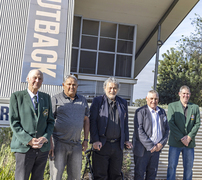
Shear Outback’s Sam Barnes (far left), master of ceremonies and fellow inductee (2019) David Lawrence with 2024 inductees Alan Williams of NSW, Peter Orcher (NSW), Peter Black from Western Australia, Brian Sullivan (NSW), Damien Boyle (WA), the first and only female and inductee Cathy Wendelborn from Quilpie QLD, who presented awards at Saturday evening’s gala event, and induction panel member Mark Baldwin.Another five shearing legends have been inducted into the Australian Shears’ Hall of Fame.The induction took place during the Festival of the Blades event last week, with a visit to Shear Outback on Sunday morning.The new inductees are Peter William Black, Damien Patrick Boyle, Peter William Orcher, Brian Anthony Sullivan and Alan Arthur Williams.These men represent the cream of the shearing industry as instructors, state champions and contractors.Peter Black has had a lifetime of involvement in the shearing industry as a shearer, trainer, advisor, judge and software development.Peter managed/coached the Australian Shearing and Wool Handling Team at three World Championships.Quick to apply technology to the betterment of shearing he developed the website shearingworld.com and also created the app LOJIK Shearing.Damien Boyle is an inspiration to the shearing industry with his competition shearing record which will be admired and stand alone in the Western Australia shearing industry for many years to come. At age 37, Damien had 22 years of competition shearing under his belt and has made the finals of 99 per cent of competitions he has entered.In 2003, 2005 and 2006 Damien won every Australian Open competition he entered, totalling 31 wins.Peter Orcher began his shearing career at age 17 and mainly shore in North Western New South Wales with narrow combs.Peter became a contractor, with his teams being in great demand due to the high standard he set and expected from his shearers and shed staff who on occasions were all indigenous.Brian Anthony Sullivan, known as ‘Sully’, is a left-handed master shearer always shearing with precision placement of blows.Brian has won eight State titles and 60 Open Shearing titles.As a shearer trainer for AWI, Brian is dedicated to support young learners training at shearing schools and in-shed training support. He is widely known for dropping in and assisting learners on the job.Alan Williams is a NSW State Champion (1965) and in 1970 won the Australian Strongwool Championship at the Melbourne Royal Show where he also reclaimed the NSW title.As a shearing instructor from 1973 at Echuca Technical College, Alan worked throughout the Riverina and Victoria and was very widely respected.A total of 53 legends have now been inducted at the Australian Shearers’ Hall of Fame since its was opened by Member for Riverina, Kay Hull and Patron Tim Fischer on Australia Day, 2002.

$15,550 paid for top Woodpark Poll ram

03 October 2024, 8:00 PM

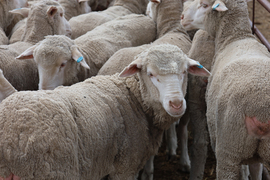
Woodpark Poll Merinos enjoyed a full clearance at their annual ram sale September 23.For the first time in two decades the Huggins family sale was held at Conargo Sports Ground, after traditionally selling at Jerilderie.All 150 rams on offer sold to an average of $3,110. The top price of $15,550 for Woodpark Poll 23-404, was paid by Grassy Creek Merinos, Reids Flat.Craig Wilson, Red Gum River Pastoral Company, purchased the ram on behalf of the Reid Flat stud.Woodpark Poll Merino stud principal Stephen Huggins said the day returned great results and exceeded expectations.The sale comes on the back of a successful showing at Hay Merino Sheep Show in June, taking ribbons for both the champion and reserve unhoused ewe. Woodpark Poll was named the most successful exhibitor in the unhoused section.Lily and Stephen Huggins with winning sheep at the Hay Merino Sheep Show in June 2024. Image: Krista SchadeThe second top-priced ram was, purchased by Bev and Ray Norman, Glenray Merino stud, Illabo, for $7200.Volume buyers included KP and LM Corbett, Ganmain, who secured 15 rams to an average price of $2,066, while Bungeeltap, Macedon, Vic, purchased 14 rams to a top of $4,600 to average $3,414.Repeat buyers PJ Dean Pastoral, Notus Downs, Longreach, purchased 10 rams to a top of $6,200 and average of $4,200. Victorian buyers McCorkell Pastoral, from Branxholme, bid on 10 rams, paying an average of $3,200.Closer to home, Weir Farming, based in Barmedman, purchased 11 rams to a top of $3,000 and an average of $2,220.

Invasive Species Council director warns of fire ant threat

29 September 2024, 5:01 AM

The Invasive Species Council Advocacy Director Jack Gough has posted a impassioned plea for Australians to take the fire ant threat seriously.Posting on LinkedIn Mr Gough blasted “fringe nutters” for spreading “bunch of disinformation and conspiracy theories spreading about fire ant baiting in Queensland, including some nutty, defamatory attacks on the Invasive Species Council and our staff.”According to Mr Gough fire ants are one of the worst invasive threats Australia faces. “On top of huge impacts on human health, infrastructure and farming, fire ants devastate wildlife,” he said. “They reduce local ants by 90 percent where they establish, threaten bee hives and attack and kill native wildlife including koalas, echidnas, platypus, turtles, frogs and ground-nesting birds.”Mr Gough said if fire ants aren't eradicated in south-east Queensland they'll spread to most of Australia. In his opinion eradication in Australia is still possible because of the availability of highly targeted baits which can completely remove fire ants from an area. “Success relies on three treatments per year for two years covering 100 per cent of an area.”Mr Gough is concerned that if fire ants aren't eradicated, people across Australia will take treatment into their own hands. “This means indiscriminate use of much harsher chemicals all over the place - including home 'treatments' like pouring petrol on nests. This will be an environmental disaster and a real chemical threat to the environment and communities.” he said.While The Invasive Species Council isn't involved in the baiting Mr Gough’s post contained a clear explanation of the process.“Australia’s fire ant eradication program mainly uses insect growth regulator baits, with extremely low levels of the active chemical ingredient, in broadcast treatments from helicopter and ground teams. “Fast-acting contact baits are also used in limited circumstance to spot-treat nests where human or animal health impacts from fire ants are a concern (lik a school or hospital).“The baits are small pieces of corn grit (1–3 mm) soaked in soybean oil mixed with a tiny amount of the insecticide - only 5 grams per kilogram of the active ingredient. “Over 1000 square metres just 200 grams of bait is applied containing only 1 gram of the active ingredient!“Insecticides used for growth regulator baits are Methoprene or Pyriproxyfen - widely used at higher levels in mosquito control, livestock feed additives. and domestic pet products. “The fire ants then forage for the baits, which prevent juvenile ants from growing, and colonies are destroyed over several months.“The treatments have very low toxicity in animals and the nature of the baits makes them unappealing to other insects. “They pose negligible risk of long-term persistence in the environment and are not even classified as 'poisons' because of their low toxicity.”The baiting program is not without risk, which Mr Gough addressed.“While baiting does also kill some native ant species in an area, once fire ants are removed native ants quickly repopulate,” he said.

NSW Farmers say audit proves cracks in Basin plan

25 September 2024, 9:45 PM

NSW Farmers have called for a freeze on water buybacks in the Murray Darling Basin as an independent audit exposes major flaws in federal water management. The audit, conducted by the Inspector-General of Water Compliance, found the Department of Climate Change, Energy, Environment and Water (DCCEEW) had failed on a number of counts to properly manage water for farms and communities in accordance with the Basin Plan. NSW Farmers Water Taskforce Chair Richard Bootle said the federal government’s failure to effectively manage conflicts of interest while handling Basin water was just one of the concerning findings of the audit released this week. “As the federal government owns and manages more and more water, their influence on water markets and management is getting murkier and murkier,” Mr Bootle said. “We have a government department who is supposedly setting and reforming the water market rules, while also being a major buyer in this multi-billion-dollar market – and yet they don’t even have the proper processes in place to prevent insider trading or manage conflicts of interest. “The risk that our precious water is being mismanaged is now very real, and we can’t stand by and let the lifeblood of our Basin farms and families get sucked away by poor management and poor process.” As the Murray Darling Basin prepares for the next wave of water buybacks, Mr Bootle urged the federal government to put a freeze on its water purchases until the findings of the audit were addressed. “This audit is the writing on the wall – buybacks are not only going to put a handbrake on farmers’ ability to produce food but are also opening up opportunities for misuse and mismanagement,” Mr Bootle said. “Time and time again, we have said water buybacks aren’t feasible or fair, and this is just further proof of the damage and destruction they will wreak on what is our nation’s largest freshwater resource. “There are smarter solutions to water recovery, and we need to explore these now or else farmers, towns and communities will feel the effects of a poorly executed Basin Plan for generations to come.” The Murray Darling Basin (Infographic: Murray Darling Basin Authority)

181-200 of 208
Back Country Bulletin
News from the Back Country

Get it on the Apple StoreGet it on the Google Play Store