Back Country Bulletin
News from the Back Country
Get it on the Apple StoreGet it on the Google Play Store
NewsSportRuralCommunityEat, Drink, Stay
Back Country Bulletin
Merrowie Aggregation hits the  market with a $200m price tag
Merrowie Aggregation hits the market with a $200m price tag

16 March 2025, 1:00 AM

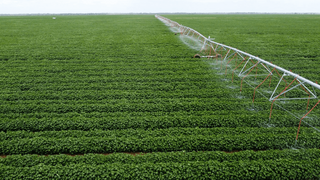
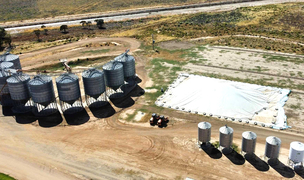
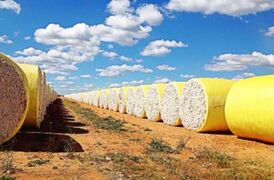
Merrowie, 15 kilometres west of Hillston, has hit the market, as its US owners MERS Global Investments LLC offers the cropping, grazing and horticulture property aggregation for sale. The sale is rumoured to fetch $200 million. The lands span 34,523 hectares (ha) across two properties and a grain handling facility – known as Merrowie (32,778ha), Sunland (1,738ha) and Merrowie Grain Facility (7ha). The sale also includes 35,938 megalitres of secure water entitlements, sourced from regulated water sources including Groundwater and the Lachlan River (both High Security and General Security). According to selling agents LAWD the aggregation produced more than 33,000 bales of cotton, 25,000 tonnes of winter crops, 18,000 tonnes of beetroot and sweet corn, and 290 bales of wool, in the 2023-24 financial year. The recently developed 450ha almond orchard will allow commercial almond production commence this year, with an additional 335ha earmarked for future almond and pistachio production, of which 250ha is already significantly developed in preparation for almond tree planting in 2025. The aggregation’s livestock enterprise is managed across 18,949ha of grazing land on Merrowie and includes a self-replacing Merino flock and Angus herd. The Merrowie Grain Facility, with a storage capacity for up to 32,100 tonnes of grain (cereals and pulse), including 5,400 tonnes of grain silo storage and 26,700 tonnes of bunker storage, as well as 260 tonnes of fertiliser storage. MERS Global Investments LLC bought Merrowie in April 2019, from Twynam Agricultural Group, which was founded in the 1970s by John Kahlbetzer Snr. The 2019 deals to acquire the three Lachlan Valley properties were the first to happen after Australia’s federal government began imposing stricter foreign investment regulations in association with agricultural and electricity assets. The rules, which have been in effect by Australia’s Foreign Investment Review Board (FIRB) ever since, state that any agricultural property with a valuation exceeding $15 million must be nationally advertised through a marketing campaign lasting 30 days to ensure equal opportunities for domestic buyers. The Merrowie and Sunland Aggregation is being offered for sale by Expressions of Interest closing 12pm (AEDT) Thursday 17 April 2025

Calls for feral pig bounty, but Invasive Species Council disagrees

13 March 2025, 4:00 AM

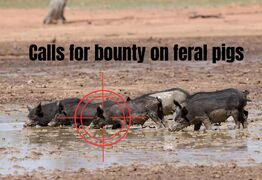
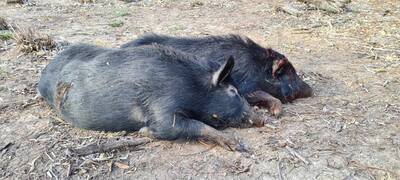
A joint operation between NSW Farmers Tottenham branch and the Australia Pig Doggers and Hunters Association (APDHA) has conducted a very successful feral pig bounty trial in the Tottenham area. The trial resulted in the removal of 1427 feral pigs from a 51,869-hectare area during January 2025.A trial was set up to investigate the impact of a bounty following the October 2024 NSW Farmers State Executive resolution “That the NSW State Government, through the LLS, initiate a feral pig bounty of $20 per pig. This is to incentivise professional and licenced recreational hunters to help dramatically reduce the feral pig population.”The trial was conducted by a group of local APDHA hunters who hunted as if a bounty was in force for the legal and humane destruction of feral pigs. The NSW Farmers Tottenham branch reported that many of the pigs eradicated were in the same area covered by a Local Land Services helicopter eradication program 14 months ago. They claim this highlights the need for ongoing hunting to prevent rapid repopulation.Lachlan Shire Mayor, John Medcalf OAM, who is himself a farmer from the Tottenham area, said pigs cause significant problems.“Feral pigs are an ongoing problem to farmers across the state,” Mr Medcalf. “They cost farmers through damaged crops and the taking of newborn lambs. “They also pose a significant biosecurity risk as carriers of diseases such as Foot and Mouth Disease.“A bounty would complement existing eradication programs by encouraging more consistent hunting of all sizes of pigs. “If we can remove young pigs before they breed it will put real pressure on feral pig populations and improve the effectiveness of other control methods” Mr Medcalf concluded.The Invasive Species Council of NSW disagrees, and has urged the NSW Government not to offer bounties to hunters.“Bounty hunters might be heroes on the big screen, but in the real world of feral animal control, they’re just a waste of taxpayers’ money,” Invasive Species Council Acting CEO Jack Gough said. “We’ve seen it time and again across the country – bounties just don’t work. Not only do they fail to deliver results, but they actually encourage hunters to spread feral animals further.“The research is clear and it shows bounties are ineffective because invasive species breed and spread too quickly. The schemes are also riddled with fraud and encourage inhumane and ineffective control methods. “I hope that Premier Minns and Agriculture Minister Tara Moriarty will listen to the science.“To truly tackle the problem of feral pigs, deer, foxes and cats, we need to invest in professional, coordinated, long-term, science-backed control methods, such as aerial shooting, baiting, trapping and fencing, which have been proven time and time again to achieve better results,” Mr Gough said.

Wildlife protection at the heart of road technology trials

12 March 2025, 7:00 PM

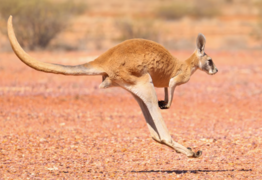
New technology trials to improve road safety of drivers and reduce wildlife vehicle strikes.Road engineers and safety experts are working with wildlife experts on two key trials.A trial of light-coloured pavement marking will test whether lighter pavement surfaces make it easier for drivers to avoid wildlife. This work will begin in April at the Future Mobility Testing and Research Centre in Cudal and will focus on a driver’s ability to see animals on existing and lighter road surfaces at varying vehicle speeds. Artificial Intelligence assisted animal detection systems linked to ‘smart’ roadside signage. A trial at a Transport for NSW facility at Yennora in Western Sydney will ‘train’ AI cameras to identify common wildlife including kangaroos and wombats and link that to smart road signage to warn drivers of the presence of animals on the road and roadside in real time. These trials are made possible by a $500,000 election commitment to investigate the use of emerging technologies as measures to reduce wildlife vehicle strikes. These initiatives complement existing measures being deployed to protect native wildlife and improve motorist safety travelling along some of the state’s busiest roads.  “Wildlife vehicle strike is a serious road safety issue, as well as impacting badly on our native fauna,” Minister for Roads John Graham said.“Protecting our native wildlife along busy transport corridors and areas with growing communities is a real challenge for the NSW Government and Transport for NSW. “We have committed to do more and I’m pleased that we’re making progress, implementing new protection measures and starting trials on emerging technologies. Minister for Regional Transport and Roads Jenny Aitchison said: “Wildlife vehicle strikes represent a significant road safety issue and pose a threat to our native fauna, which is why the Minns Labor Government is committed to implementing effective mitigation strategies. "With over 220,000 kilometres of public roads in NSW, our focus is on reducing animal strikes through collaboration with experts and community groups to safeguard both motorists and wildlife. "The upcoming trial at our Future Mobility Testing and Research Centre at Cudal near Orange will pave the way for safer roads and better outcomes for our wildlife." Member for Campbelltown Greg Warren said: “Appin Road is a key east-west transport corridor with growing communities along it, which creates a real challenge for protecting a healthy and active koala population. “A variety of measures are being used to redirect animals away from the roadway, including, underpasses, rope crossing, barriers and fences. "I understand the community concern and expectation around wildlife management. These measures will continue Transport's work to meet community standards when it comes to wildlife safety but also expectations around effective infrastructure to support these growing areas." BioNet data between 2013 -2024 shows kangaroos are the most reported mammal species involved in animal strikes across NSW, followed by wallabies, wombats then possums. Transport is proactively collaborating with the NSW Department of Climate Change, Energy, the Environment and Water NSW Koala Strategy to identify and prioritise koala vehicle hotspots on existing roads around the state that require intervention. A 2024 Wildlife Symposium brought together experts from Australia and around the world, including ecologists, technology specialists, transport agencies, NGOs, industry leaders, and community members. A summary of the symposium can be found here.

NSW releases What We Heard Report, on the draft flood plan for Murrumbidgee

12 March 2025, 4:00 AM

The report outlines the consultation process undertake, by NSW Department of Climate Change, Energy, the Environment and WaterThe New South Wales (NSW) Department of Climate Change, Energy, the Environment and Water has released their ‘What We Heard Report’, detailing community and stakeholder feedback on the draft Floodplain Management Plan (FMP) for the Murrumbidgee Valley. The draft FMP was open for public exhibition from August to September 2024, and received 30 submissions and 62 attendees at 36 individual appointments and three stakeholder group meetings. Meetings with stakeholders and individuals were held in Balranald, Hay, Darlington Point, Griffith and Wagga Wagga. The department met with First Nations groups and the NSW Irrigators’ Council and also held online and virtual consultation sessionsKey issues raised included concerns about having to get flood work approvals for existing flood works, particularly those constructed before December 1999, and uncertainty about the extent of the management zones. Feedback also highlighted the need for regulatory certainty regarding existing flood works owned and operated by irrigation corporations. The department is expected to refine the draft FMP based on the feedback received and submit it for approval to the Minister for Water and the Minister for the Environment. The final FMP is anticipated to commence on 1 July 2025.You can read the What We Heard Report HERE.

Have your say on updated water sharing plan wetland mapping

11 March 2025, 1:00 AM

“An opportunity to hear directly from people on the ground, many of whom have lived in the regions their entire lives” NSW Government.The NSW Government is updating specific wetlands in six regional draft water sharing plans, following important community feedback that has been critical in helping improve the mapping.“Now we are inviting people to view the revised maps and provide further input on the prescribed wetland areas before we finalise the water sharing plans later this year,” a spokesperson said.“We thank residents, landholders and stakeholder groups who shared their local knowledge and expertise over the past three months during community consultation for the Gwydir, Namoi-Peel, Macquarie/Wambuul-Bogan, Lachlan, Murrumbidgee and Barwon-Darling draft unregulated water sharing plans.“It gave us an opportunity to hear directly from people on the ground, many of whom have lived in the regions their entire lives, which has been invaluable in helping us make changes.“The updates on our website include mapped wetland areas limited to internationally significant Ramsar listed wetlands, those registered in the Directory of Important Wetlands of Australia, any wetlands already receiving protection in the current water sharing plans and wetlands identified as ecologically and/or culturally significant in previously exhibited floodplain management plans.” These plans are still subject to change through the public consultation period which closes at 11.59pm on 23 March 2025. People can also attend a webinar from 12.30-1.30pm on Wednesday 12 March 2025 to learn more. “This is a great example of how much we value community feedback and how crucial it is in helping us get our water sharing plans right,” NSW DCCEEW Executive Director of Water Planning Giselle Howard said.“While we recognise that some of the data that we used for the original wetlands’ maps had not been subjected to rigorous ground truthing, the feedback we received over the extended consultation period was invaluable in highlighting the nature and scale of potential impacts that this may cause to landholders. “As a result, we were able to fast-track changes to wetland maps and are now going back out to the community four weeks after the initial consultation closed to give everyone another chance to have their say.“We’ve gone the extra mile to ensure we provide opportunities for people to share feedback, and we thank everyone for being so proactive and generous with their time because it really does help us focus on making sure the information is accurate. “Now we’re keen to hear from as many residents, farmers, landholders and stakeholders as possible to ensure everyone understands the revised approach and the updated maps are appropriate before we release the final water sharing plans in July this year.” “We will carefully consider all feedback as we work towards finalising the plans by 1 July 2025,” the government spokesperson said.  “Water sharing plans are incredibly important tools for managing the regions’ water resources.”The government says draft plans include new protections for significant wetlands and are an important strategy in safeguarding these unique and important environmental assets, and the animals, plants and ecosystems that rely on them.     “We will also be revisiting the wetland maps in six additional plans that came into effect last year with additional community consultation scheduled for the second half of 2025.”These include the Intersecting Streams, Border Rivers, Castlereagh, Murray, Lower Murray Darling, and North Western unregulated water sharing plans. All water sharing plans are independently audited after the first five years to ensure they are working effectively and appropriately.    For more information, and to make a submission CLICK HERE

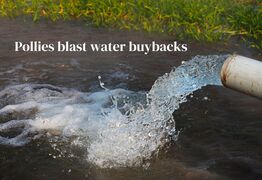
Water buybacks stir up local pollies

09 March 2025, 1:00 AM

Ley, Dalton & Milthorpe oppose water buybacksThe Member for Murray Helen Dalton and Member for Farrer Sussan Ley have both slammed the Albanese Government’s plans to rush through 100 gigalitres of new water buybacks in the lead to the next federal election.The buybacks are part of the federal government’s Restoring Our Rivers program, which has drawn criticism from both Members of Parliament.Independent Member for Murray Helen Dalton has labelled the federal government “sneaky” and “wasteful”. “The federal government is so desperate to get these new buybacks through, they are paying well above market value and wasting millions of taxpayer dollars in the process,” Ms Dalton said. Ms. Dalton also slammed the federal government’s attempts to avoid public scrutiny of the new buybacks. She claims the Department of Climate Change, Environment, Energy and Water “quietly” posted a notice online on February 24 saying it was seeking entitlements in the Southern Connected Basin. “What’s with the secrecy?” Ms Dalton asked. “Is the Albanese Government scared of people knowing what they are up to?” Ms. Dalton has again called on the NSW Government to actively oppose the federal buybacks. “Premier Chris Minns must take a stronger stand against the federal government,” Ms Dalton said. “He can’t stand by and watch as NSW rural communities are trashed by federal water policies.“Every gigalitre that’s taken from the system leads to increase suffering in rural communities.” Ms Ley called the move “sneaky and secretive.” “Water buybacks is a lazy, uncaring method of taking enormous amounts of water for the environment,” Ms Ley said.“If you want to divide farms, split communities, add to the nation’s debt level and stop growing Australian produce, then this is the way to go about it.“And it’s only happening because Anthony Albanese collaborated with the Greens and crossbenchers in late 2023, legislating for the removal of more water from farmers over a shorter period of time.   “The Coalition is committed to stopping Labor’s ideological destruction of prime agricultural land.“The Environment Minister must put a halt to this latest round of buybacks, and every single candidate at this election needs to be honest with their views on water policy, so voters in Farrer can have a say on their region’s future.”Independent candidate for Ley’s seat of Farrer Michelle Milthorpe agrees, saying buybacks are not a solution, and only deepen the divide between the environment and rural communities.“I am opposed to water buybacks because they continue this cycle of poor decision-making. We need to invest in better solutions, like on-farm efficiencies and the relaxation of river constraints,” Ms Milthorpe said.“This will ensure both environment and community needs are met without sacrificing one for the other.”

Merrowie Aggregation hits the market with a $200m price tag

04 March 2025, 12:17 AM

Expressions of Interest for the Hillston property close in April.Merrowie, 15 kilometres west of Hillston, has hit the market, as its US owners MERS Global Investments LLC offers the cropping, grazing and horticulture property aggregation for sale.The sale is rumored to fetch $200 million.The lands span 34,523 hectares (ha) across two properties and a grain handling facility – known as Merrowie (32,778ha), Sunland (1,738ha) and Merrowie Grain Facility (7ha). The sale also includes 35,938 megalitres of secure water entitlements, sourced from regulated water sources including Groundwater and the Lachlan River (both High Security and General Security).According to selling agents the aggregation produced more than 33,000 bales of cotton, 25,000 tonnes of winter crops, 18,000 tonnes of beetroot and sweet corn, and 290 bales of wool, in the 2023-24 financial year.The recently developed 450ha almond orchard will allow commercial almond production commence this year, with an additional 335ha earmarked for future almond and pistachio production, of which 250ha is already significantly developed in preparation for almond tree planting in 2025.The aggregation’s livestock enterprise is managed across 18,949ha of grazing land on Merrowie and includes a self-replacing Merino flock and Angus herd.The Merrowie Grain Facility, with a storage capacity for up to 32,100 tonnes of grain (cereals and pulse), including 5,400 tonnes of grain silo storage and 26,700 tonnes of bunker storage, as well as 260 tonnes of fertiliser storage.Mers Global Investments LLC bought Merrowie in April 2019, from Twynham Agricultural Group, which was founded in the 1970s by John Kahlbetzer Snr. The 2019 deals to acquire the three Lachlan Valley properties were the first to happen after Australia’s federal government began imposing stricter foreign investment regulations in association with agricultural and electricity assets.The rules, which have been in effect by Australia’s Foreign Investment Review Board (FIRB) ever since, state that any agricultural property with a valuation exceeding $15 million must be nationally advertised through a marketing campaign lasting 30 days to ensure equal opportunities for domestic buyers.The Merrowie and Sunland Aggregation is being offered for sale by Expressions of Interest closing 12pm (AEDT) Thursday 17 April 2025.

US/China Trade war could limit Australian wool prices

19 February 2025, 7:00 PM

Rural Bank has released its February insightsRural Bank analysts have released their February insights to various agricultural industries, and say the world is waiting to see what happens to the wool market, in the midst of tariff negotiations between the US and China.“A trade war between China and the US has the potential to seriously impact the Chinese economy, which would limit upside in wool prices in 2025,” said Bendigo Bank agricultural analyst Joe Boyle.Mr Boyle said the Australian wool market has firmed at the start of 2025 with prices adjusting to the weaker Australian Dollar. The AWEX EMI is up 61 cents since the Christmas recess.“Prices are forecast to be relatively steady with participants expected to take a cautious approach in the current trade environment,” Mr Boyle said.“The weaker Australian Dollar has been the main supporter of the market. The fine micron wools have all firmed since the recess, although to a lesser extent than the broader merino fleece types and the crossbred wools.”He also said the Australian lamb market is expected to be relatively steady in February. “The market will gain support from continued high processing rates, although strong supply of lambs and dry conditions in key growing areas will limit upside”.Lamb prices have eased to start 2025 after peaking just prior to the Christmas break. The National Trade Lamb Indicator (NTLI) reached above 900 c/kg in December but has eased back to around 770 c/kg. Even so, the NTLI remains 1.2 per cent higher than the five-year average.“Processing rates have continued at heightened levels in 2025. Sheep and lamb processing rates took only two full processing weeks to climb back above the 700 thousand-head combined slaughter mark. “There were reports that processors were well booked out in January, which has seen some weakness in prices.”“Mutton markets started 2025 with a bang but have since dropped to below pre-Christmas levels, to around 370 c/kg. This marks a 21.8 per cent increase year-on-year but still trails 20.3 per cent below the five-year average.”Fello analyst Rod Baker said he expects export demand for Australian wheat to pick up.“Competitive Australian pricing, tightening global wheat stocks and renewed buying interest from key markets drive stronger trade flows in the coming months,” Mr Baker said.The 2024/25 winter crop harvest is complete to a final production total of 57.7 million tonnes, which was higher than expected. Jointly, Western Australia and NSW accounted for 71 percent of total production. Big drops in production were seen South Australia and Victoria, which is at its lowest since the 2018/19 drought.

Hunting’s exclusion from ‘best practice’ pig control puts brakes on programs

19 February 2025, 4:00 AM

APDH says myth that hunting achieves nothing has been disproved by dataThe top-down approach to NSW feral pig management needs to be reversed if there is to be any hope of real progress in managing NSW worst agricultural pest, according to the Australian Pig Doggers and Hunters Association.National President Ned Makim said the relegation of landholders and hunters to commentators in the feral pig debate betrayed an ideological blockade that needed to be addressed if there was to be any hope of making progress.“There is this endless head scratching going on about what to do about feral pigs but whenever a change of focus is suggested, we hear the same old ‘not best practice’ dismissal which flies in the face of the evidence.”Mr Makim’s comments came with the release of the final report on the APDHA’s Great Australian Pig Hunt data collection exercise which suggests hunters killed 1.69 million pigs in NSW in 2024 from a national total of 5.38 million Australia wide.“Even if those estimates are divided in half, it still represents a massive reduction in pig numbers let alone their breeding potential and yet, hunting is still dismissed by the shot callers in the feral pig debate. “The issue as we see it is twofold: A feral pig management narrative that holds tight to the myth that hunting achieves nothing and belief that government agencies should be the starting point for all control planning.“We believe that’s upside down.”Mr Makim said the people with the most to lose from feral pigs in NSW were farmers, the people who know the most about feral pigs and their behaviour were hunters and the people with the resources to carry out very focused control measures were Local Lands Services staff.“Why isn’t NSW Farmers, for instance, the agency that drives this machine? Why wouldn’t the NSW farming community be given the authority to say this is the issue in this space at this time.“Hunters can offer advice and be involved in programs aimed at ongoing population suppression and LLS can bring millions of dollars to bear on targeted programs with the advice and guidance of the farming community.”Mr Makim said his comments should not be seen as a criticism of the LLS and its capabilities but a suggestion on the better deployment of those capabilities.“It’s time this debate was had and that many of the assumptions on feral pig management challenged.“Pigs outbreed our current level of adaptive planning. The model just isn’t working and the skills and potential of many in the public and private sector are being underused.”Mr Makim said exclusion of hunting from “best practice models” looked odd when the numbers of pigs killed by hunters were considered.“It starts to look like an ideological thing rather than a management model.“We understand the need for some sort of central co-ordination and we understand concerns about the welfare of the animals considered pests but those things can be managed better by involving the relevant parties and giving them a genuine voice.“The only mention of anything that sounds close to hunting is in relation to ‘ground shooting’ and the context is of that method as a clean-up, presumably after baiting, chopper shoots, trapping etc.“If you want to use a dog it most only ‘flush’ a pig to be shot.“We understand that some people don’t like dogs making contact with the pigs but the ‘flush’ limitation betrays a lack of understanding (based on a lack of consultation) on the use of dogs. We have asked for the word ‘bail’ to be added to best practice. That is the action in which a dog locates a pig and barks or stares at the pig to keep it contained so it can be shot. This is demonstrably a much better welfare outcome for the pig because the shot is taken at a still target.“So far all we have heard is crickets.“That one small change would open the door to greater, co-ordinated and managed hunter involvement in formal control programs and a great deal more dead pigs.“Why the delay? We need much faster movement on feral pig management issues and change to who is calling the shots.”Key findings from the 2024 Great Oz Pig Hunt survey:Estimated feral pigs killed by hunters Australia-wide between January 1, 2024 and December 31, 2024: 5,387,412Estimated economic input by hunters targeting pigs Australia-wide between January 1, 2024 and December 31, 2024: $326,882,615Estimated cost per pig to hunters Australia-wide between January 1, 2024 and December 31, 2024: $60.67Estimated average (pig) yield per month, per hunter Australia-wide between January 1, 2024 and December 31, 2024: 15.61Estimated average active pig hunters expressed as a percentage of potential pig hunters Australia-wide between January 1, 2024 and December 31, 2024: 21.73%

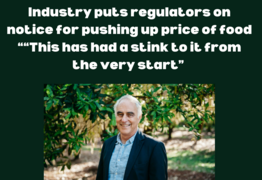
Industry puts regulators on notice for pushing up price of food

19 February 2025, 1:00 AM

“This has had a stink to it from the very start”, NFF Horticulture Council chair Jolyon BurnettNational Farmers Federation (NFF) Horticulture Council has today drawn a line in the sand, tasking national food safety regulators with taking a long hard look at themselves.Chair of the Council Jolyon Burnett has written to Commonwealth, State and Territory members of the Food Ministers’ Meeting, calling on them to instigate an independent review into the development and implementation of new food standards due to apply to fresh berries, leafy vegetables and melons from today.Primary production and processing (PPP) standards, created by Food Standards Australia New Zealand (FSANZ) and applied by relevant food regulatory agencies in each state and territory, are meant to strengthen food safety and traceability throughout the food supply chain.“This has had a stink to it from the very start, when the predecessor body to the Food Ministers’ Meeting kicked off this process without having first consulted industry, expressly counter to their own terms of reference,” said Mr Burnett.“Now, despite a commitment to creating nationally harmonised regulation, we have several states and territories not just departing from the model they’ve been handed but creating additional redtape, not for the purpose of improving food safety, but lining their own coffers.“It’s got more than a whiff of brazen revenue raising to it.“And at the centre sits the Food Ministers’ Meeting, charged with consulting closely with industry, arbitrating between the interests of several food safety stakeholders, and managing their own conflicts as both the creators and enforcers of food regulation.“As far as we can see, it is failing to meet all of these essential duties.“We are calling for an immediate and thorough independent review of its performance and its fitness as a governing body generally, with its role in developing and implementing new food standards for fresh berries, leafy vegetables and melons as a specific focus.“Most states and territories haven’t got the necessary legislation in place to put these standards into effect from today, despite having two and half years to prepare, and so we’re also calling for a 12-month extension where this is the case.“Consumers should not be concerned about the safety of their food but about its increasing cost.“States and territories, without any restriction or accountability, are piling on more redtape, which only returns to them new revenues, more headaches for growers, and more expensive food during a cost-of-living crisis.“Notwithstanding any review, we are also calling on each jurisdiction to align their implementation with the FSANZ standard, including providing for mutual recognition where growers are certified against existing voluntary food standards meeting global benchmarks.”About the Horticulture CouncilThe Council is the recognised peak body for forming policy and advocating on behalf of the national horticulture industry. Established in 2017, it now comprises 19 national commodity and state-based horticulture bodies.It is a member of the National Farmers’ Federation, free to establish and advance its own policy positions and responses issues impacting the horticulture industry.

1080 a lifeline for threatened animals

18 February 2025, 10:00 PM

The ‘Thin Green Line’: How 1080 Baiting Protects Native WildlifeAs the future of Australia’s most vulnerable species becomes ever more uncertain, the effective use of 1080 baiting remains critical to control one of their key threats: introduced predators – feral cats and foxes.Australia has some of the most unique wildlife and biodiversity in the world, but these two impressive predators have already snuffed out 32 native animal species and are helping to drive over 200 more to extinction.Together with the Centre for Invasive Species Solutions, the National Feral Cat and Fox Management Coordinator, Gillian Basnett, is sounding the alarm as misinformation surrounding sodium fluoroacetate (known as 1080) undermines its critical place as a lifeline for native species.“Effective 1080 baiting is the ‘thin green line’ that protects many of our threatened and other native species from extinction,” Ms Basnett said.“The facts around 1080 are clear: native animals have a higher tolerance to this toxin than introduced predators.“It’s important to remember that baits are not 100 per cent toxin and only authorised and properly trained operators are permitted to handle 1080 and prepare baits.“Each bait is carefully developed to contain the minimum amount of 1080 required for the target species, in this case a feral cat or fox,” Ms Basnett said.The Centre for Invasive Species Solutions’ CEO, Shauna Chadlowe, endorses the use of 1080, stating it is currently the best control tool available.He said along with advocating for best practice invasive species management using current methods, the Centre prioritises humaneness and is committed to collaborating with its partners to develop new and improved control tools. This article has been contributed by the Australian Rural and Regional News

Industry puts regulators on notice for pushing up price of food

16 February 2025, 1:00 AM

“This has had a stink to it from the very start” NFF Horticulture Council chair Jolyon BurnettNational Farmers Federation (NFF) Horticulture Council has today drawn a line in the sand, tasking national food safety regulators with taking a long hard look at themselves.Chair of the Council Jolyon Burnett has written to Commonwealth, State and Territory members of the Food Ministers’ Meeting, calling on them to instigate an independent review into the development and implementation of new food standards due to apply to fresh berries, leafy vegetables and melons from today.Primary production and processing (PPP) standards, created by Food Standards Australia New Zealand (FSANZ) and applied by relevant food regulatory agencies in each state and territory, are meant to strengthen food safety and traceability throughout the food supply chain.“This has had a stink to it from the very start, when the predecessor body to the Food Ministers’ Meeting kicked off this process without having first consulted industry, expressly counter to their own terms of reference,” said Mr Burnett.“Now, despite a commitment to creating nationally harmonised regulation, we have several states and territories not just departing from the model they’ve been handed but creating additional redtape, not for the purpose of improving food safety, but lining their own coffers.“It’s got more than a whiff of brazen revenue raising to it.“And at the centre sits the Food Ministers’ Meeting, charged with consulting closely with industry, arbitrating between the interests of several food safety stakeholders, and managing their own conflicts as both the creators and enforcers of food regulation.“As far as we can see, it is failing to meet all of these essential duties.“We are calling for an immediate and thorough independent review of its performance and its fitness as a governing body generally, with its role in developing and implementing new food standards for fresh berries, leafy vegetables and melons as a specific focus.“Most states and territories haven’t got the necessary legislation in place to put these standards into effect from today, despite having two and half years to prepare, and so we’re also calling for a 12-month extension where this is the case.“Consumers should not be concerned about the safety of their food but about its increasing cost.“States and territories, without any restriction or accountability, are piling on more redtape, which only returns to them new revenues, more headaches for growers, and more expensive food during a cost-of-living crisis.“Notwithstanding any review, we are also calling on each jurisdiction to align their implementation with the FSANZ standard, including providing for mutual recognition where growers are certified against existing voluntary food standards meeting global benchmarks.”About the Horticulture CouncilThe Council is the recognised peak body for forming policy and advocating on behalf of the national horticulture industry. Established in 2017, it now comprises 19 national commodity and state-based horticulture bodies.It is a member of the National Farmers’ Federation, free to establish and advance its own policy positions and responses issues impacting the horticulture industry.

New front-line weapon against mobile fire ants

15 February 2025, 10:00 PM

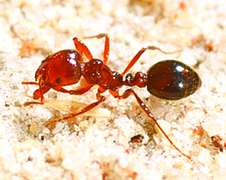
A tough new product has been launched in the fight against the potentially nationwide spread of the invasive Red Imported Fire Ants (RIFA), while one expert warns that care should be taken to minimise the risk to other species and the environment from all fire ant treatments.Autonomy’s RoadBlock Spider and Ant Automotive Treatment has been approved for automotive use by the Australian Pesticides and Veterinary Medicines Authority, (APVMA).1 Roadblock is designed for use on vehicles, machinery and loads that may unwittingly carry the aggressive insects from one infestation to put new locations at risk.Roadblock is a treatment that can be used by private individuals to help ensire they are not spreading these invasive pests. It complements fire ant treatments such as Sundew Professional Solutions ANTagonistPRO typically used for broad application by pest control professionals.Australian Rural & Regional News found out more about their treatments and current environmental concerns about fire ant treatments from Amanda Lintott, owner of RoadBlock Spider and Ant Automotive Treatment and David Priddy, CEO of Sundew Professional Solutions.According to Autonomy, RoadBlock is effective upon hitch-hiking pests within minutes of contact, and the all-Australian formulation also protects drivers and passengers against painful and distracting infestations and bites from the aggressive pests that can hurt adults, children and pet travellers.“Private and commercial drivers often won’t even know they have unwelcome guests aboard,” says Amanda.“It can be a nasty surprise.”RoadBlock is a commercial grade aerosol product specifically designed to treat and prevent ants in vehicles including cars, trucks, recreational vehicles, campers, 4WDs, fleets and heavy vehicles and agricultural machinery that can spread the pest.“RoadBlock is the only ready-to-use pest control product in Australia specifically approved for vehicles, and the latest approval will allow us to join the fight against the dangerous spread of fire ants. We can now assist drivers, travellers, and fleet owners who live or work in high risk areas to reduce the chances of further spreading beyond Queensland and Northern NSW,” says Amanda. Such instances of spreading pests have been headline news over the last 12 months in particular.Says Amanda, “RoadBlock is proven to kill RIFA within minutes of contact. It then gives lasting barrier protection to ensure these ultimate unwanted hitchhikers don’t form new colonies as they are spread interstate from thousands of existing infestation sites.”“With this new approval, RoadBlock users gain the extra comfort of knowing that a simple spray of their vehicle will not only be effective over a broad spectrum of pests but will specifically also kill and repel invasive fire ants in line with the requirements of the Biosecurity Act.”Under the Biosecurity Act 2014 (Qld), everyone – including individuals and organisations – has a general biosecurity obligation (GBO) to take all reasonable steps to prevent the spread of fire ants.Queenslanders are legally required to report suspected sightings of fire ants within 24 hours of their discovery, and, depending on the nest’s location, take action to treat the pest. Once reported, property or business owners may also be required to cease operations for a decontamination period.The National Fire Ant Eradication Program 10-year elimination plan involves an intensive and targeted eradication effort over South East Queensland, spanning from the Lockyer Valley in the west to Redlands in the east, Moreton Bay to the north and the Gold Coast to the south.The tiny (6mm long) but enormously destructive RIFA pest is capable of forming colonies in 99 per cent of mainland Australia and 80 per cent of Tasmania if left unchecked, or carried unwittingly, to new areas by vehicles and machinery that passes through contaminated areas. To date, multiple colonies have been found in Queensland and Northern NSW, but RIFA are quickly heading further south towards Victoria.“Left unchecked to travel our highways and byways, these little nasties can cause huge and painful damage to people, children, pets, stock, native fauna and fauna and, ultimately, the Australian economy. The Australia Institute research body estimates that RIFA will cost Australians more than $22bn by the 2040s if unchecked,” says Amanda. By comparison, the estimated cost of containing, then eradicating, the problem now is $3bn, which just serves to highlight the need to take prompt action.2The National Fire Ant Eradication Programme notes that – in addition to travelling within and upon vehicles – fire ants can also spread when people move:Materials such as soil, hay, mulch, manure, quarry products, turf and potted plants.Containers that have been used with organic materials, such potted plants and fertiliser.Dirty machinery that has been used to move restricted material (or material in which RIFA have established themselves undetected, including grass crops and other ground-covering crops).Image: AutonomyAll of which can be sprayed to help neutralise the latent threat.Amanda points out differences between RoadBlock and other treatments.“The specialised Australian formulation of RoadBlock Spider and Ant Automotive Treatment is stronger for longer than standard sprays. It is suitable for use on a wide range of vehicles, from cars, utes, and vans, right up to heavy machinery, trucks, and commercial vehicles that may come into contact with contaminated soils or are being used and stored outdoors in Australia’s harsh environments,” says Amanda, adding that RoadBlock has been rigorously formulated and tested for use under Australian conditions.RoadBlock differentiates itself from standard insect sprays as it has been tested and is safe to use on all typical automotive surfaces. It also features a commercial grade formulation, a 360 degree, straw nozzle and is also Australian owned and Australian made.The long nozzle applicator ensures the spray is directed precisely to problem areas – including mirrors, wheel arches and grilles, weather covers, water storages, battery bays, and any warm restful hollow spaces that appeal to insects.“Another major benefit of this type of application, is that you don’t have to fumigate the entire vehicle – you can just use small amounts in the key areas, to protect against new infestations.”In response to concerns that fire ant treatments can harm other species and the broader environment, Amanda pointed out to Australian Rural & Regional News that RoadBlock is designed specifically for vehicles and is not for application onto or into soil, so it does not act directly on the natural environment. Amanda says it only kills ants (fire ants or otherwise) if they are on or inside your vehicle. Further, the straw nozzle ensures precise targeting, allowing users to apply it exactly where needed—into cracks, crevices, and hard-to-reach spaces in vehicles. This improves effectiveness but also reduces overspray, minimises waste, and lowers the risk of affecting non-target species.Amanda stresssed that RoadBlock has been tested and is safe and effective on all typical automotive surfaces. It is Australian owned, Australian made and APVMA approved. This approval process involved extensive ground testing on fire ants on typical automotive surfaces. The testing was conducted in Brisbane.Australian Rural & Regional News also asked David Priddy, CEO of Sundew Professional Solutions, about concerns from the public that fire ant treatments damage the environment. In particular, Sumitomo’s Distance Plus treatment has been criticised recently.David responded that, “Firstly, all Red Imported Fire Ant (RIFA) treatments will kill other species, both ants and other animals, even if that is not their intended use, so it is important to be as targeted as possible to minimise the risks to other species, particularly natives.“This is a major reason that Sundew’s approach is focused on individual and direct nest fire ant treatment – hitting them at the source, without causing unnecessary additional environmental damage. We then only recommend our large area treatment for heavily infested areas, or areas where there aren’t any other species to kill – usually because RIFA have killed them already!“How the treatment is applied also makes a difference to the environmental impact it will have. Sumitomo’s Distance Plus is an ant bait that uses a matrix of corn grit infused with plant based oil to attract ants. The active ingredient, Pyriproxyfen, belongs to a group of chemicals known as insect growth regulator (IGR) and works by causing the reproductive queens to become sterile, so they can’t reproduce and expand their colonies, as well as stopping the ant larva from pupating within the nest. Pyriproxyfen doesn’t directly kill ants, they just eventually die of old age. This leads to one of the issues occurring presently in that bait is being supplied to homeowners who keep continually applying product into the environment expecting to see nest dying, but they’re not. It could take several months for a colony of RIFA to ‘naturally’ die as a result of IGR baits, and in the meantime multiple applications of product may inadvertently be being applied unnecessarily.“Corn grit style ant baits are attractive to all sorts of ants and non-target insects, as well as birds and other creatures, so is likely to harm unintended species.“RIFA treatments can also affect the soil quality of areas that are treated, and if it makes its way to waterways, they can have an impact on aquatic life too. Again, risk mitigation and minimisation are important here, and being as targeted as possible with RIFA treatment is the best way to minimise the effects.“It’s always a trade-off. RIFA are going to outcompete other animals, including native species, if left untreated. In some areas, we’ve opted to use a large area treatment because RIFA are the only species left alive in that location.“We’ve also had some large area treatment tests where we’ve seen native species return once the RIFA have been eliminated, which is exactly what we’d like to see.”This article has been contributed by the Australian Rural and Regional News
121-140 of 208
Back Country Bulletin
News from the Back Country

Get it on the Apple StoreGet it on the Google Play Store