Back Country Bulletin
News from the Back Country
Get it on the Apple StoreGet it on the Google Play Store
NewsSportRuralCommunityEat, Drink, Stay
Back Country Bulletin
$780 Million AFA Riverina Property Sale Collapses

23 April 2025, 11:00 PM

US investor group withdraws from deal to purchase iconic NSW farmland aggregationParties are remaining tight-lipped following reports of the $780 million deal to sell some of the Riverina's most well-known properties.In September 2023, Australian Food & Agriculture Co (AFA) advertised the sale of 13 farms, covering more than 225,405 hectares.The sale consists of three major freehold title land aggregations within the Deniliquin, Hay and Coonamble districts including Boonoke, Burrabogie, Wanganella and Wingadee stations.AFA agreed to terms last year with Agriculture and Natural Solutions Acquisition Corporation (ANSAC) with a sales price believed to be $780 million.ANSAC is a group of investors, including Bert Glover, founder of the Australian and US-owned specialist agricultural investment and development firm Impact Ag Partners, which has offices in Armidale in NSW and Montana in the US.In a document released to the US Securities and Exchange Commission on April 11, ANSAC announced the "termination" of the agreement by "mutual consent".In its own company report, released in March, ANSAC made reference to issues plaguing the deal."The parties are currently discussing the best path forward for the business combination in light of the increasingly volatile equity market conditions, including potentially mutually terminating the business combination agreement," the report said.The document also hinted at tariffs and trade barriers, and the potential of further deterioration of trade relations between Australia and the US, despite the Australian Government giving approval to the foreign sale in late 2024.It is thought AFA will again seek a buyer for the aggregation as a whole, rather than consider listing properties for sale separately.

$780 Million AFA Riverina Property Sale Collapses

23 April 2025, 11:00 PM

US investor group withdraws from deal to purchase iconic NSW farmland aggregationParties are remaining tight-lipped following reports of the $780 million deal to sell some of the Riverina's most well-known properties.In September 2023, Australian Food & Agriculture Co (AFA) advertised the sale of 13 farms, covering more than 225,405 hectares.The sale consists of three major freehold title land aggregations within the Deniliquin, Hay and Coonamble districts including Boonoke, Burrabogie, Wanganella and Wingadee stations.AFA agreed to terms last year with Agriculture and Natural Solutions Acquisition Corporation (ANSAC) with a sales price believed to be $780 million.ANSAC is a group of investors, including Bert Glover, founder of the Australian and US-owned specialist agricultural investment and development firm Impact Ag Partners, which has offices in Armidale in NSW and Montana in the US.In a document released to the US Securities and Exchange Commission on April 11, ANSAC announced the "termination" of the agreement by "mutual consent".In its own company report, released in March, ANSAC made reference to issues plaguing the deal."The parties are currently discussing the best path forward for the business combination in light of the increasingly volatile equity market conditions, including potentially mutually terminating the business combination agreement," the report said.The document also hinted at tariffs and trade barriers, and the potential of further deterioration of trade relations between Australia and the US, despite the Australian Government giving approval to the foreign sale in late 2024.It is thought AFA will again seek a buyer for the aggregation as a whole, rather than consider listing properties for sale separately.

AgConnex confirms purchase of Carrathool grain complex

20 April 2025, 11:00 PM

AgConnex has confirmed it is the successful purchaser of the Carrathool grain complex in the western Riverina. CEO Geoff Barker says the investment to purchase the site solidifies the company’s commitment to local growers and the broader Riverina region. “We’ve been operating the Carrathool complex under lease for the past couple of years, making some essential upgrades over the past 12-18 months for better traffic flow and safety for the most recent harvest.“With our purchase of the facility now official, we will accelerate our plans to further develop and modernise the site. “Our goal is to ensure the site fully meets the needs of our grower clients in the local area.”Headquartered in Griffith, AgConnex owns and operates three other grain receival and handling facilities across the Riverina at Benerembah, Coleambally and Wumbulgal. The Carrathool complex, located on the Sturt Highway between Hay and Darlington Point, currently has around 95,500 tonnes of combined grain silo and bunker storage on the 22.6 ha site. Receivals include durum, hard wheat and barley from across the region. Now that the purchase transaction is finalised, the AgConnex team will be re-engaging with growers and agribusiness operators local to the site. “We’ll be in contact with local producers to talk to them about our plans for the Carrathool site and gather their input on what we can do to best support their needs, now and into the future.“We are committed providing a seamless supply chain experience for grain growers in the area. “Investments like this are crucial to both our and our customers’ success. We’re looking forward to growing the opportunity for everyone.”

$500m sale of Kooba has local connection

17 April 2025, 8:00 PM

$500m Kooba sale to benefit Hay ginning operationsThe 30,000 acres Kooba farm aggregation has sold, for a rumoured $500 million. The property is best known as one of Australia’s largest cotton growing enterprises, however Kooba also grows irrigated crops, boasts almond orchards, and runs livestock. Australian Food and Fibre (AFF), owner of Hay’s cotton gin, will take ownership of Kooba, in a joint venture between Canadian-based agribusiness PSP Investments and the Robinson family.AFF will transfer the beneficial interest in the almond and apiary assets to Stahmann Webster, while the cotton, cropping and livestock operations will remain with AFF.An AFF spokesperson told The Riverine Grazier that staffing levels at the Kooba operations will remain stable.“The Kooba properties are run by best-in-class teams who will be joining AFF to continue their growth.“Kooba represents some of the best land in the Riverina and its assets are a natural fit with AFF and Stahmann Webster. Both the cotton and almond operations will expand and continue to thrive under specialist ownership.” The property was offered by owners Chris Corrigan and David Fitzsimons, following the 2022 sale of a large part of the aggregation – the Kooba Ag Hay portfolio - the Paterson family, for $63 million.Kooba was once part of the formerly ASX-listed Webster Ltd, once one of Australia's oldest and biggest farm investors. In a circular story, AFF managing director Mr Joe Robinson, was once a director of Websters Ltd. He was a director from 2016 to 2018 and oversaw the cotton operations in the Riverina prior to and during that time. 

Digby Lilburne joins Hay Plains Livestock team

16 April 2025, 8:00 PM

Hay Plains Livestock has announced an additional arm to the family business.“It is with great pride that Hay Plains Livestock add the services of D.R.L – Cattle Scanning to their business model,” Hay Plains Livestock principal Ed Lilburne said.Earlier in the year Digby Lilburne completed the nationally accredited ReproScan Cattle Pregnancy Testing Course through GOTAFE in Shepparton, Victoria.“Livestock grazing operations have many factors in their business that are out of their control,” Mr Lilburne said.  “Inflation, drought, feed costs and cattle markets. It is therefore more important than ever to make informed management decisions.   “Do you know the cost of an empty cow on your operation?”Mr Lilburne points out that empty animals continue to consume resources including feed, labour, and more.  “Each operation is different but one thing all operations have in common is that input prices are going up.  “An empty cow is not adding value to a grazing business.”Mr Lilburne said pregnancy testing early with an ultrasound unit makes pregnancy diagnosis a very simple, non-invasive, quick, and accurate method.   Paid Content: Please note that the preceding article was produced as paid content by an advertiser. If you are interested in exploring advertorial opportunities to connect with our engaged readership and share your message, we invite you to contact our team via email at [email protected] to discuss how we can help you achieve your marketing goals.

Election 2025 - Coalition pledges to make the agriculture industry a safer industry

12 April 2025, 8:00 PM

Leader of The Nationals David Littleproud said a future Coalition Government will provide $2.5 million over three years for farm safety, by supporting Farmsafe Australia and the delivery of the National Farm Safety Education Fund Strategy.  In a pledge in the lead up to the May 3 federal election, Mr Littleproud said he was proud to announce the critical funding, which would protect and save more lives on the farm, should the Coalition form government.“Agriculture consistently ranks as one of the most dangerous industries to work in,” Mr Littleproud said.“In 2024, 72 lives were lost and 133 serious injuries were recorded, which is more than double those recorded in 2023. “The Coalition supports the lives and livelihood of Australian farmers. We must protect the people who put food on the table and clothes on our back. The agriculture industry will only continue to grow if it is safe.” Mr Littleproud said the farm safety strategy will be delivered in "three crucial ways";Education and awareness to develop and disseminate educational materials on safety practices.Community engagement to facilitate conversations between farming families, industry and government, to ensure a coordinated effort. A national campaign across various media channels to promote farm safety.  Tasmanian beef farmer and Farmsafe Australia Chair Felicity Richards described the funding as “absolutely phenomenal”.“This funding will enable Farmsafe Australia to continue to build industry momentum and deliver campaigns and initiatives that embed safer practices in agriculture, which ultimately saves lives in our farming communities,” Mrs Richards said.“We know farmers are facing increasing pressure all the time, from weather events like droughts and floods, market pressures and other competing priorities that are often not within their control.“It’s so easy for farmers to say ‘I just have to get the job done’ but you can’t finish a job from a hospital bed. Safety has to be the first priority.“We need to build a culture of safety and the only way to do that is with sustained campaigns and impactful messages. We can’t do it without support, which is why this funding is so critically important.” Improving safety outcomes on farms will also help to address critical workforce shortages by attracting more workers to the industry, helping the agriculture industry achieve its goal of $100 billion by 2030.

Hay Inc rural education program launches its 11th year

10 April 2025, 8:00 PM

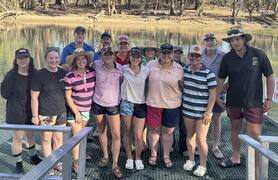
By Sandra Ireson – Hay IncThis year’s group is comprised of students from across Australia, with participants from Victoria, Queensland, New South Wales, South Australia, and Tasmania. Remarkably, nine of the group members are now working within the local district, contributing to the community’s agricultural industry. The first training week focused on refining the group’s sheep handling skills at Wyvern Station, Carrathool. Since its inception in 2014, TA Field Wyvern has been a valued supporter of the Hay Inc. Program. Wyvern hosted the group for three days, where expert sheep handling trainers Rhys Warren, Chris Bowman, Ed McFarland and Glen Walker shared their knowledge. Above: The Hay Inc group, near the Murrumbidgee River at Hay; Ashlee Trebilco, Sarah Henderson, Sheridan Venables, Lachlan Routley, Quinlan Madigan, Olivia Heinrich, Scarlett Wood Adelaide Robb, Stella La Porta, Isabel Mecham, Sarah Evans, Charlotte Fishburn, Clancy Harvey, Finn Stanley. Image: Hay IncAdditionally, Matt Ireson delivered a hands-on demonstration of sheep butchering, allowing participants to gain valuable practical experience. A special moment during the week was the presentation to Cheryl Hurst, recognising her invaluable support and assistance at Wyvern over the past 11 years. The Hay Inc. committee and students extended their heartfelt thanks for Cheryl’s contribution to the program’s success. In addition to sheep handling, the first week of training included sessions on workplace health and safety, delivered by Tocal and Rob Gibson from Croidon, Hay. Red Cross facilitated a Rural First Aid course, and Jacqui Crawford presented "Strength from the Land to the Mind," a talk focused on mental wellbeing. Tocal also conducted training on the safe operation of two-wheel and quad bikes, an essential skill for rural workers. Clancy Harvey and dog Rocky at the working dog training day. Image: Hay IncSusan Hanna provided an insightful presentation on employment paperwork, tax tips, superannuation and savings, ensuring participants are well-prepared for their careers in agriculture. The second training week, held in March, offered further hands-on experience, including working dog training and management at Shear Outback. Volunteers and Hay Working Dog Club members Ed McFarland and Geoff McDougall guided participants in developing essential skills for handling working dogs. Participants also attended a three-day shearing school at Paraway Participants also attended a three-day shearing school at Paraway "Steam Plains," delivered by Australian Wool Innovation (AWI), with a wool handling presentation by Hay Inc Alumni Emilia Browne.A new inclusion in the second week was the Farmer Flexibility session, hosted by Michelle Spence on the banks of the Murrumbidgee. The group enjoyed stretching and relaxation techniques after long days in the shearing shed, a perfect way to unwind. The final day of training focused on fence construction and maintenance at Shear Outback, with expert guidance from Sandy Symons, Tom Porter, Keith Bolitho and Duncan Fraser. Thanks to Kurt Woods Elders Hay and Waratah fencing for supplying the fencing materials. The Hay Inc. group will come together for their final training week in June, culminating in their graduation at the Hay Merino Sheep Show on Saturday, June 14. Since compiling a strategic plan in 2024 with input from over 30 community and industry members, Hay Inc. has acted on the outcomes and has recently received charity status and being accepted to become a registered charity with Deductible Gift Recipient (DGR) status, approved to hold the fundraising account with Foundation for Rural & Regional Renewal (FRRR) which enables Hay Inc deductible gift recent status.This is a significant step forward for the program, as it now allows rural communities to benefit from tax-deductible donations through accounts hosted by the FRRR. This milestone will enable donors to contribute to the program’s projects with added tax benefits. Additionally, Hay Inc. has been surveying its alumni to plan for a special event aimed at enhancing networking opportunities and strengthening connections within the community. The Hay Inc Committee is immensely grateful for the support of funding from key partners - Australian Wool Innovation, Rabo Client Council, TA Field, Engie, Transgrid, and Bullawah Wind Farm. Along with the contributions from volunteers and those who offer their facilities and livestock, they have all been essential in ensuring the ongoing success and growth of this vital rural education program. For more information, and details on how to make a tax-deductible donation to Hay Inc. contact Hay Inc Program Manager, Sandra Ireson, on 0439 938119, email [email protected] or visit www.hayinc.com.au 
Tariffs to affect Australian farmers and American consumers: NSW Farmer's Association

09 April 2025, 5:00 AM

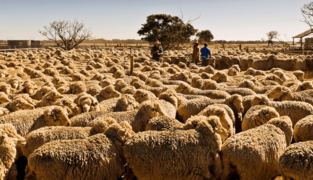
The imposition of tariffs by the Trump Administration is anticipated by NSW Farmers Association to affect Australian farmers and American consumers. NSW Farmers expressed disappointment over the 10 percent tariff on Australian exports but remains optimistic that this trade challenge can be resolved. NSW Farmers President Xavier Martin emphasized the long-standing and mutually beneficial relationship between Australia and the US, making the tariffs particularly disheartening for Australian farmers.The agricultural industry in Australia is expected to feel the consequences of these tariffs, with varying impacts across different commodities. The Red Meat Advisory Council (RMAC) highlighted the significant role of Australian beef in maintaining stable food supplies and prices in the United States, noting that it is used in over six billion hamburgers annually. RMAC estimated that the tariffs on Australian red meat could cost American consumers AU$600 million.NSW Farmers is actively collaborating with the Australian Government through the National Farmers’ Federation to advocate for free and open trade. Mr. Martin argued against a retaliatory approach with the US, stating that it would be unproductive. He pointed out the strong demand for high-quality Australian produce in major markets such as China ($3.9 billion), Japan ($2.6 billion), and Korea ($2.5 billion), along with promising growth opportunities in the Middle East and North Africa. In the short term, these tariffs may necessitate Australia focusing on investing in these alternative market opportunities, while Australian farmers continue their agricultural production.

 Farm safety alert: Side-by-side vehicle  deaths rise, despite safety features
Farm safety alert: Side-by-side vehicle deaths rise, despite safety features

07 April 2025, 8:00 PM

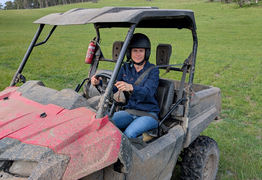
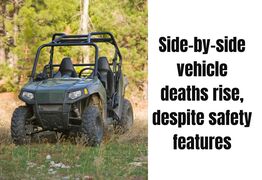
The Australian countryside has seen a disturbing trend emerge, with side-by-side vehicles (SSVs), also known as utility terrain vehicles (UTVs) or buggies, now representing the most significant danger on farms nationwide. This alarming development comes despite the introduction of stringent national safety standards for quad bikes (four-wheelers) in 2019, which prompted many farmers to switch to SSVs. While touted as a safer alternative, the statistics paint a grim picture. In 2024, 14 lives were lost in SSV-related accidents on farms across the country, a dramatic increase from the four deaths recorded in 2023. This surge in fatalities raises serious questions about the perceived safety of these vehicles, which are typically equipped with seatbelts and rollover protection cages. The rise in SSV popularity followed a period of heightened concern over quad bike safety. In 2019, national mandatory standards were introduced to address the high number of quad bike accidents, including requirements for stability testing, roll-over warning labels, and the mandatory fitting of Operator Protection Devices (OPDs). These standards aimed to mitigate the risk of serious injuries and fatalities associated with quad bike rollovers. However, the shift towards SSVs has not yielded the expected safety improvements. Instead, these vehicles, often seen as more stable and secure, are now contributing to an increasing number of tragic incidents. SafeWork NSW, the state's workplace safety regulator, has issued urgent warnings to farmers and rural workers, emphasising the importance of responsible SSV operation. Key safety recommendations include: Speed Management: Riders are urged to operate SSVs at speeds appropriate for the terrain and conditions. Excessive speed significantly increases the risk of rollovers and loss of control. Safety Equipment Utilisation: The mandatory use of seatbelts and other safety equipment is crucial. Despite being fitted with these features, many fatalities occur due to riders being ejected from the vehicle during crashes or being crushed under the vehicle in a rollover. Terrain Awareness: Understanding the terrain and potential hazards is vital. Uneven ground, steep slopes, and obstacles can all contribute to accidents. Regular Vehicle Maintenance: Ensuring that SSVs are properly maintained and in good working order is essential for safe operation. "The increase in SSV fatalities is deeply concerning," said a SafeWork NSW spokesperson. "While these vehicles offer certain safety features, they are not immune to accidents. "It's crucial for operators to understand the risks and take all necessary precautions." The common thread in both quad bike and SSV fatalities is the risk of rollovers and rider ejection. These incidents highlight the need for comprehensive safety training and a heightened awareness of the potential dangers associated with these vehicles. As the agricultural sector continues to rely on SSVs for various tasks, the focus must shift towards promoting responsible operation and reinforcing safety protocols. The lives lost serve as a stark reminder that even with safety features in place, vigilance and adherence to safety guidelines are paramount.

Rural matters: Stand up for Australia’s silent economic strength during this election

05 April 2025, 11:00 PM

NRHA is calls for a $1 billion National Rural Health FundWith the Federal Election set for May 3, it is crucial that all Members of Parliament and Senators prioritise the needs of rural Australia and step up to secure a healthier future for all Australians, says the National Rural Health Alliance (NRHA).According to NRHA, the 2025-26 Federal Budget fell disappointingly short of providing a tailored solution for rural health care. However, NRHA is hopeful that all parties would recognise the economic contribution of rural populations and address their health needs during election campaigns.“As the cost of living continues to rise, the disparities in healthcare funding and access for rural people are becoming more pronounced, making it vital for this election to focus on ensuring health equity for all Australians,” said NRHA Chief Executive Susi Tegen.Rural Australians make up 30 percent of Australia’s population, contributing significantly to Australia’s economy, and generating 70 percent of export income through industries, such as agriculture, minerals, tourism, retail, services, and manufacturing. They also account for 50 percent of the nation’s tourism income and provide 90 percent of the country’s food.Despite these enormous contributions, rural Australians receive $848 less per person per year - $6.55 billion in total - in healthcare funding compared to their urban counterparts. This gap translates to poorer health outcomes and earlier death due to reduced access to healthcare services.“We urge all Australians and the candidates who seek their votes to recognise and address the healthcare challenges and earlier deaths that persist in rural areas, ultimately impacting all Australians. We ask for their support to implement a National Rural Health Strategy to coordinate Commonwealth, State, and Territory policy, investment and service delivery. This will ensure grassroots-led, sustainable solutions for rural communities throughout the patient journey.“We have heard from individuals who must travel hundreds of kilometres to access basic care, as the services have disappeared, and no one seems to care. Clinicians, no matter which health profession, are working many hours on the ground, are burnt out and feel unsupported. The solutions have been provided for any government to take up the challenge to be more flexible and focus on equity and reflect that we are all Australians,” said Ms Tegen.NRHA is also calling for a $1 billion National Rural Health Fund, half of which is to support blended or block healthcare delivery payments for where there is no or little access for populations to healthcare.The other half would be put towards infrastructure for student, trainee or visiting clinician accommodation, outreach in infrastructure for service delivery, or for childcare. This would help address the critical shortage of healthcare professionals in rural regions.NRHA is a strong advocate of local rural health research, innovation and grassroots-led solutions and seeks funding for a Rural Health Innovation and Evidence Hub where anyone from anywhere can access information from other regions that have implemented great ideas and solutions, to learn, share and adapt the lessons and trials that have improved patient access, health and medical clinician training and research across rural Australia.“It is time for all political leaders to step up, commit to the 7.3 million rural people that they would implement long-term solutions, and ensure that no Australian, no matter what their postcode, is left behind when it comes to accessing quality health care,” said Ms Tegen.The National Rural Health Alliance (the Alliance) comprises 53 national organisations committed to improving the health and wellbeing of the over 7 million people in rural and remote Australia. Our diverse membership includes representation from health professional organisations, health service providers, health educators, the Aboriginal and Torres Strait Islander health sector and students.

Farm safety alert: Side-by-side vehicle deaths rise, despite safety features

03 April 2025, 1:00 AM

14 lives were lost in 2024The Australian countryside has seen a disturbing trend emerge, with side-by-side vehicles (SSVs), also known as utility terrain vehicles (UTVs) or buggies, now representing the most significant danger on farms nationwide. This alarming development comes despite the introduction of stringent national safety standards for quad bikes (four-wheelers) in 2019, which prompted many farmers to switch to SSVs.While touted as a safer alternative, the statistics paint a grim picture. In 2024, 14 lives were lost in SSV-related accidents on farms across the country, a dramatic increase from the four deaths recorded in 2023. This surge in fatalities raises serious questions about the perceived safety of these vehicles, which are typically equipped with seatbelts and rollover protection cages.The rise in SSV popularity followed a period of heightened concern over quad bike safety. In 2019, national mandatory standards were introduced to address the high number of quad bike accidents, including requirements for stability testing, roll-over warning labels, and the mandatory fitting of Operator Protection Devices (OPDs). These standards aimed to mitigate the risk of serious injuries and fatalities associated with quad bike rollovers.However, the shift towards SSVs has not yielded the expected safety improvements. Instead, these vehicles, often seen as more stable and secure, are now contributing to an increasing number of tragic incidents.SafeWork NSW, the state's workplace safety regulator, has issued urgent warnings to farmers and rural workers, emphasising the importance of responsible SSV operation. Key safety recommendations include:Speed Management: Riders are urged to operate SSVs at speeds appropriate for the terrain and conditions. Excessive speed significantly increases the risk of rollovers and loss of control.Safety Equipment Utilisation: The mandatory use of seatbelts and other safety equipment is crucial. Despite being fitted with these features, many fatalities occur due to riders being ejected from the vehicle during crashes or being crushed under the vehicle in a rollover.Terrain Awareness: Understanding the terrain and potential hazards is vital. Uneven ground, steep slopes, and obstacles can all contribute to accidents.Regular Vehicle Maintenance: Ensuring that SSVs are properly maintained and in good working order is essential for safe operation."The increase in SSV fatalities is deeply concerning," said a SafeWork NSW spokesperson. "While these vehicles offer certain safety features, they are not immune to accidents. It's crucial for operators to understand the risks and take all necessary precautions."The common thread in both quad bike and SSV fatalities is the risk of rollovers and rider ejection. These incidents highlight the need for comprehensive safety training and a heightened awareness of the potential dangers associated with these vehicles.As the agricultural sector continues to rely on SSVs for various tasks, the focus must shift towards promoting responsible operation and reinforcing safety protocols. The lives lost serve as a stark reminder that even with safety features in place, vigilance and adherence to safety guidelines are paramount.

Boosting Truck Safety

02 April 2025, 10:00 PM

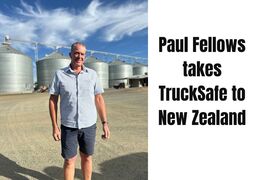
New System Aims to Make Roads Safer for EveryoneImagine driving on the highway, knowing the big trucks sharing the road are operating under the highest safety standards. That's the goal of a new system launched by TruckSafe, the Australian Trucking Association's safety program.Deniliquin-based Paul Fellows, of Fellows Transport is the chair of TruckSafe, and recently visited New Zealand to promote the life-saving program.“I signed by business up to TruckSafe back in 2001, and have not looked back,” Mr Fellows said.“In fact, I joined the board many years ago and was privileged to be voted in as chair in 2021.”Mr Fellows says the system is a “game changer” and makes roads safer for everyone.“It recognises the human factors of trucking businesses,” he said. “It’s grossly unfair if staff or owner operators are unaware of compliance or are not trained so this program marries safety and transport together.”According to Mr Fellows companies using TruckSafe have 50 per cent less catastrophic incidents. Currently the freight and trucking sector in New Zealand lacks an industry-wide compliance and safety system, which prompted Mr Fellows visit. The program will begin rolling out across Kiwi-based companies in coming months.TruckSafe was created back in 1996, when the government was worried about truck safety. Instead of just checking boxes to meet basic rules, TruckSafe claims to be a more flexible, risk-based system. This means companies can tailor their safety plans to fit their specific needs and the size of their operations, and the statistics quoted by Mr Fellows back up these claims.

Bush Fire Danger Period comes to a close

01 April 2025, 7:00 PM

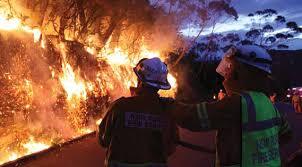
The Bush Fire Danger Period (BFDP) ended at midnight on March 31 for most of NSW. Fire agencies and land managers in these areas where the BFDP has ended will now turn their attention towards conducting hazard reduction works, which includes planned burning across many areas of the state where and when possible. Operational Officer MacKellar said all members of the public must still abide by the law when conducting their own hazard reduction burns. “From Tuesday April 1st, 2025, fire permits will no longer be required for the Narrandera, Leeton, Carrathool, Griffith, Hay and Murrumbidgee Local Government Areas,” Operational Officer MacKellar said. “Even though a fire permit is no longer required, residents must still notify their neighbours and the local fire authority 24 hours before burning. “Before lighting up, people should also check whether they need a Bush Fire Hazard Reduction Certificate and have sufficient equipment on hand to control and contain the fire to their property. “If fire services know about a planned burn, it can help prevent unnecessary responses from local firefighters when we know it is planned and controlled. “Despite these milder conditions, there is always the potential for fires to threaten life, property and the environment, if they are not managed correctly.” Operational Officer MacKellar said the local community should not become complacent to the danger of bush and grass fires, even with mild local conditions. “I urge all residents to take the threat of bush fire seriously and to prepare their families and home now,” Operational Officer MacKellar said. “Your local fire station or Fire Control Centre can provide advice on how to safely undertake hazard reduction work and how to best prepare yourself, your property and your family for the next bush fire season. “The first thing you should do is review your bush fire survival plan and discuss it with your household.” To notify of your intent to burn off, use the online burn notification tool at www.rfs.nsw.gov.au/notify.

Blue Green Algae alert issued

30 March 2025, 11:53 PM

Red Alerts for toxic blue-green algae in Back Country water suppliesWater NSW has issued a red alert for Lake Brewster Regulator C and the outlet channel, near Hillston, in the Carrathool Shire.The dominant toxic species is Raphidiopsis raciborskii, the same species in play in the red alerts reported at Lake Cargellico and orange alerts at Yanga Lake, near Balranald, in past weeks.Raphidiopsis raciborskii has the ability to affect the liver and kidneys in humans, as well as cause mild skin reactions upon exposure.A new Red Alert has been raised at Burrinjuck Dam due to high levels of potentially toxic blue-green algae, Microcystis. The Red Alert warning applies only to untreated water at the identified location and will remain in place until monitoring and test results confirm that the risk is sufficiently diminished. People should avoid consuming untreated water from this waterbody and prevent pets and livestock from drinking this water.People should avoid recreational activities such as swimming, water skiing, canoeing and any other activity that brings them into contact with this waterbody until the red alert warning is lifted.This type of algae, Microcystis, may produce chemicals that interfere with human and animal hormones.The ongoing orange Microcystis alert for the Lachlan/Kalare River at Booligal remains in place.For more information, visit WaterNSW Algae Alerts Map or WaterInsights. What do the colour coded alerts mean?Essentially, the system progresses from "low risk" (green) to "high risk" (red), with amber serving as a warning to be cautious.Green Alert: This indicates a low level of algae. The algae present are not considered a threat to recreational activities, livestock, or domestic use.Amber Alert: This signifies that algae are increasing. The water might have a green tint and an odor. While recreational use is still possible, caution is advised.The water is considered unsuitable for drinking without proper treatment, and may also be unsuitable for livestock.Red Alert: This is the most serious level, indicating a "bloom" condition.The water may appear very green, with visible clumps or scums of algae. The water is considered potentially toxic to humans and animals.Activities like swimming, drinking the water, and allowing livestock to drink it are strongly discouraged.It is also advised to not eat shellfish from these waters, and to take great care when consuming fish caught from these waters.

Hay Grains changes hands

26 March 2025, 10:00 PM

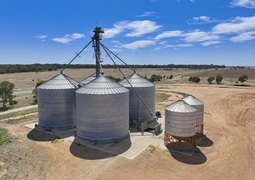
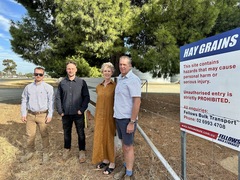
The storage facility at Hay will be operated by self-proclaimed ‘popcornologists’ Ian and James KondarovskiHay Grains storage facility in east Hay has changed hands, after JEK Rural Investments purchased the depot.Deniliquin-based Paul and Jenny Fellows have owned the business for the past seven years and say they have enjoyed their time as part of the business community.“Jenny and I have enjoyed our time with Hay Grains and the relationships we’ve made and loyalty we have seen from customers,” Paul Fellows told The Riverine Grazier.“We have had excellent service from local businesses such as Geoff Murphy Electrical and Crighton’s Engineering, and made many lovely friendships.“Hay really is a great town and we wish the Kondarovski family every success.”JEK Rural Investments is a partnership of the Kondarovski brothers, James and Ian, who, together with their father Janis and brother Eric, have a family history of innovation and expansion.The two brothers have expanded into Hay, to increase the storage of popcorn, processed at either the Darlington Point mill, or the companies founding plant in the Dandenong Ranges.“We need to expand the Darlington Point storage capacity,” Ian explained.“We need additional storage for our P1837 and 1756 varieties (of popcorn) and are keen to speak with farmers keen to grow.”Store brand popcorn in major supermarkets is the work of the Kondarovski family, as well as Movie Time branded hot buttered cinema popcorn. They also produce fairy floss and coloured, flavoured popcorn.James and Ian’s grandfather immigrated from Lathia, and as a young man their father Janis travelled in a van selling ready-to-eat popcorn store to store. In the beginning every kernel was popped at home.“We think he saw popcorn and thought ‘I can make that’ and so he did,” James said.Janis quickly expanded into supplying cinemas with product and equipment, bringing that buttery aroma to movie goers across the country. He even purchased Hoyts own popcorn business, which was struggling to turn a profit, selling to themselves.Passion for business obviously runs in the family. As the family in Australia expanding into popcorn warehouses across the country and into New Zealand, brother Eric has established packaging manufacturing in Shanghai, Los Angeles and El Salvador.The partnership between the Kondarovski brothers and Hay’s Nutrien branch, to raise funds for CanAssist will continue. Anyone needing weighbridge facilities can book in at Nurtien’s office on the Maude Road, with both businesses donating 100 per cent of fees to the Hay branch of CanAssist.Mr Fellows also confirmed that Fellows Transport operations would continue as usual.

Hay movement ban
Hay movement ban

26 March 2025, 4:00 AM

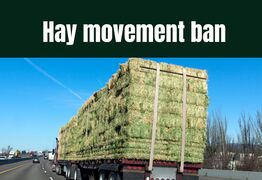
The movement of hay has been halted for a monthAs dry conditions continue, stock owners are reminded of the one-month ban on the movement of hay.The NSW Government has suspended the permit for hay moving from fire ant infested areas of south east Queensland into NSW, in the aftermath of ex Tropical Cyclone Alfred. The suspension is for one month, effective from Thursday, March 13, and has come about as the risk of mobile fire ant colonies being transported into NSW in known carrier materials may have increased.What to know before ordering or accepting feed or fodder:Know the source. Ask where the fodder has come from and what it is made up of.Check that it is allowed into NSW and the risks you may be exposed to. Some fodder movements are restricted to protect the biosecurity of our land, water, food and fibre production. Check whether the fodder you are receiving is legal and whether certification is needed by visiting the Department of Primary Industries (DPI) website.Keep a record of where you received fodder from and what it is made up of to help you trace any problems later.Check it carefully by looking it over. While some weeds, diseases and pests are hard to spot, others may be more obvious.If you see insects, snails, the consignment smells, the colour is not right, or there are other strange signs contact your Local Land Services office for advice.You should reject any fodder or feed that doesn’t meet NSW requirements or contact DPI with any questions.

101-120 of 208
Back Country Bulletin
News from the Back Country

Get it on the Apple StoreGet it on the Google Play Store