Back Country Bulletin
News from the Back Country
Get it on the Apple StoreGet it on the Google Play Store
NewsSportRuralCommunityEat, Drink, Stay
Back Country Bulletin
Don't wing it with powerlines: Essential Energy

04 July 2025, 11:00 PM

So, you're flying low over a paddock at dawn, the sun barely peeking over the horizon, when suddenly a powerline appears out of nowhere. For pilots across rural Australia, this scenario isn't just a nightmare—it's a very real danger that aerial markers help prevent every single day.Those bright orange spheres you see hanging from powerlines aren't just decorative—they're sophisticated safety devices that have prevented countless accidents across Australia. Jim Henderson, a veteran crop duster with thirty years' experience flying over the Riverina, puts it simply: "Those markers have saved my bacon more times than I can count. When you're flying at 150 feet in poor light, they're the difference between getting home to dinner and not getting home at all."The markers work by dramatically increasing the visibility of powerlines, particularly in challenging conditions. Whether it's the early morning mist that settles over irrigation channels, the dust kicked up during harvest season, or the glare of afternoon sun reflecting off metal roofing, aerial markers cut through the visual noise to give pilots that crucial extra warning.But it's not just about aviation safety. These markers serve multiple purposes across different industries, each one potentially saving lives and preventing costly damage to essential infrastructure.When the unexpected happensSarah Chen remembers the day her excavator operator nearly made contact with overhead lines while clearing a property boundary near Dubbo. "We'd been working that paddock for three days without incident," she recalls. "Then we moved to a new section, and suddenly there were these lines we hadn't noticed before. The bright markers caught Danny's eye just as he was about to extend the boom."That split-second warning prevented what could have been a catastrophic accident. Contact between heavy machinery and powerlines doesn't just risk electrocution—it can cause widespread power outages, damage expensive equipment, and result in significant environmental impact.The markers serve as a constant visual reminder for operators of cranes, excavators, and other tall machinery to maintain safe distances from powerlines. This is particularly important in rural areas where agricultural work often involves moving large equipment across properties with varying topography and infrastructure.Protecting our wildlife tooThe benefits extend beyond human safety. Dr. Rebecca Walsh, a wildlife ecologist working with Griffith University, explains how aerial markers double as bird diverters: "Large birds like eagles and bustards can struggle to see powerlines, particularly when they're focused on prey below. The markers create a visual barrier that helps them navigate around the lines rather than through them."This dual purpose makes aerial markers particularly valuable in areas where endangered species are present. The markers help maintain the delicate balance between essential infrastructure and wildlife conservation—something that's increasingly important as Australia works to protect its unique biodiversity.The technology behind the safetyModern aerial markers are far more sophisticated than they might appear. The spherical ball markers, typically orange or red for maximum visibility, are designed to withstand Australia's harsh weather conditions. From the cyclones of the north to the dust storms of the interior, these markers need to perform reliably year-round.Some installations now include LED lighting systems that automatically activate in low-light conditions, providing enhanced visibility during dawn and dusk operations. Solar-powered options are particularly popular in remote areas where grid power isn't available for marker lighting.The placement of markers follows strict guidelines developed by the Civil Aviation Safety Authority (CASA) and energy regulators. Strategic spacing ensures maximum effectiveness while minimising the number of markers needed—important both for cost efficiency and visual impact on the landscape.Community connectionsLocal contractors like Mitchell Thompson from Broken Hill Electrical Services understand the community impact of proper marker installation. "When we're putting up new lines or maintaining existing ones, the markers are just as important as the powerlines themselves," he explains. "We work with local pilots, farmers, and council to make sure everyone knows where the hazards are."This collaborative approach reflects the way rural communities work together to maintain safety standards. Local knowledge about flight paths, seasonal agricultural activities, and wildlife movements all inform decisions about where and how many markers to install.Looking aheadAs Australia's energy infrastructure continues to evolve, with new transmission lines supporting renewable energy projects and rural development, the role of aerial markers becomes even more critical. New technologies are being developed to improve marker effectiveness while reducing environmental impact.Some experimental markers now include radar reflectors to help aircraft navigation systems identify powerlines, while others use advanced materials that are more visible to both human eyes and bird vision. These innovations represent the ongoing commitment to improving safety standards across all sectors.The bottom lineAerial markers might seem like a simple solution, but they represent something much more significant: a commitment to safety that protects lives, infrastructure, and the environment. Whether you're a pilot navigating morning mist, a farmer moving machinery across paddocks, or simply someone who values reliable power supply, these markers play a crucial role in keeping our communities safe.For more information about powerline safety or to report concerns about unmarked lines, contact your local energy provider or the Australian Energy Market Operator. Remember, when it comes to powerlines, it's always better to be safe than sorry—and aerial markers are one of the most effective tools we have to ensure everyone gets home safely at the end of the day.If you're involved in aviation, agriculture, or construction work near powerlines, make sure you're familiar with current safety guidelines and reporting procedures. Your local energy provider can provide specific information about powerline locations and safety requirements in your area.
 Hay teeters on the edge of drought
Hay teeters on the edge of drought

04 July 2025, 8:00 PM

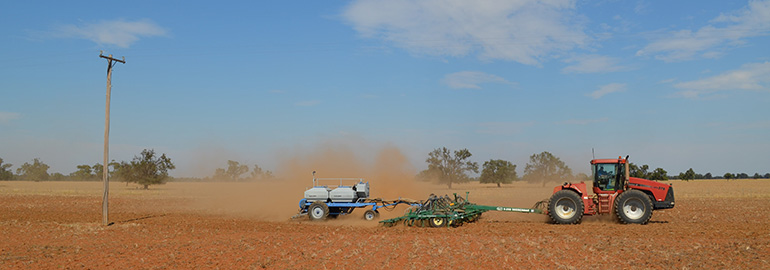
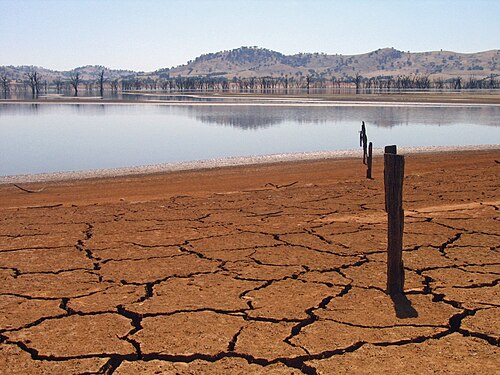
According to the NSW Department of Primary Industries (DPI) State Seasonal Update, drought conditions are likely to expand across parts of NSW by August. Despite recent rainfall, drought conditions are expected to continue in the south of the state in areas with longer-term rainfall deficits and further expand into western and central NSW. In the latest forecast, Hay township and areas north of Hay, including Ivanhoe, remain outside of drought declared areas. The majority of the rest of the Riverina, east of Hay is drought declared, and the forecast predicts worsening conditions for the far west, including Menindee, Broken Hill and White Cliffs. The DPI modelling predicts Balranald and Wentworth regions will slip further into drought. Since May, Balranald township has moved from the recovering category, into drought affected. According to DPI, the continued drought conditions are due to the likelihood that above median rainfall will not be enough to improve the underlying Plant Growth Index. In NSW, drought conditions are categorised using the Combined Drought Indicator (CDI), which assesses rainfall, soil water, and plant growth to determine drought status. The CDI categorises conditions as Non-Drought, Recovering, Drought Affected, Drought, and Intense Drought. A region is considered in "Drought" when any of the three CDI indicators falls below the fifth percentile. "Intense Drought" occurs when all three indicators are below the 5th percentile. "Drought Affected" indicates at least one indicator is below the 30th percentile, with a negative rainfall trend over the past 90 days.

New Murrumbidgee Valley Floodplain Management Plan Commences: What it Means for Carrathool, Hay & Balranald River Users

02 July 2025, 5:00 AM

The NSW Government has officially launched the Murrumbidgee Valley Floodplain Management Plan, a significant new tool set to guide water management in our region until June 2035. This plan is designed to manage rural flood works and their effects on water flows and connectivity downstream of Wagga Wagga, directly impacting river users and communities in areas like Carrathool, Hay, and Balranald.What is the Murrumbidgee Valley Floodplain Management Plan? At its core, the plan sets out the rules for applying for flood works within the declared floodplain. This includes various structures that can alter how water flows to or from a river, or how it moves during a flood. These works can include:• Roads• Channels• Dams• Levee banksThe plan is underpinned by the latest data and advanced hydraulic modelling, allowing for the coordination of what types of flood works can be constructed and where. The NSW Government says the overarching goal is to balance the needs of communities, landholders, and the environment, while also protecting vital cultural and heritage sites. Giselle Howard, NSW DCCEEW Executive Director of Water Planning, emphasised the plan's role in "responsible and effective rural floodplain management to help us sustain healthy communities and environments, now and in the future.” “It will play a pivotal role in guiding the Murrumbidgee Valley over the next decade".What Does This Mean for River Users in Carrathool, Hay, and Balranald? As communities situated downstream of Wagga Wagga in the Murrumbidgee Valley, the new management plan will have a direct bearing on water management in your local area.Here’s what you need to know:• Regulated Flood Works: Any new or modified rural flood works, such as channels for irrigation, protective levee banks, or farm dams, will now fall under the rules set out by this plan. This means that how and where these structures can be built will be carefully coordinated to ensure broader impacts on water flow are considered.• Impact on Water Flows and Connectivity: The plan specifically addresses the effects of flood works on flows and connectivity. For landholders and river users, this could mean more predictable water movements during both normal conditions and flood events, potentially improving water security and reducing adverse impacts.• Balancing Local Needs: The plan aims to balance the needs of landholders, local communities, and the environment. This suggests that future decisions on flood works will consider local agricultural practices, community safety, and the health of the river system crucial for local livelihoods.Community Input Was Key The NSW Government says development of the plan was not conducted in isolation. The Government held two rounds of public consultation in 2024, gathering valuable feedback from dozens of local landowners, residents, and stakeholders. Ms. Howard extended thanks to everyone who shared their "local knowledge, experience, expertise and feedback over the last year, which was critical to helping us finalise the plan."It is important to note that the Murrumbidgee Valley Floodplain Management Plan is unrelated to the Reconnecting River Country Program.

Toganmain woolshed celebrates 150 years

19 June 2025, 5:00 AM

Honouring the shearing legacy at ToganmainPoetry, bush music and a festive long table seating 180 guests on the board set the scene for the 150th anniversary celebrations of Toganmain woolshed on Saturday night.The weekend celebrated the sesquicentennial anniversary of the completion of the legendary woolshed which has weathered the elements for a century-and-a-half.Toganmain, between Darlington Point, Carrathool and Hay, ran 110 blade shearing stands at its peak, with 150 men needed for the shearing season.The last shearing took place in 2002 and the shed, shearer's quarters and other buildings started to fall into disrepair.Renowned heritage conservation architect, Peter Freeman (OAM) who is well-known in Hay through his involvement in the preservation works of Bishop's Lodge Historic House, and Graeme Nalder, owner of historic Mooloomoon at Moulamein, came to the rescue.They negotiated a lease of the 20-acre precinct in 2012 in a bid to save this important part of Australia's heritage.Two years later the Friends of Toganmain group was formed with a vision to preserve and restore the iconic woolshed.The following year a Master and Business Plan was prepared.Volunteers travel from throughout Australia for working bees, working long and hard to preserve the legendary Toganmain woolshed.A highlight of the weekend was the launch of a book by Lexie Keane, Toganmain Woolshed: Then and Now.A limited number of copies are available for purchase at The Riverine Grazier bookshop.Bill (Wig) Ryan has been a near neighbour of Toganmain all his life and shared some of his memories of the place during the 150th anniversary dinner inside the woolshed on Saturday night. He is pictured with Bronwyn and Gordon Turner.Shear Outback was represented by Board Chair, Sam Barnes and Administration Manager, Kathy Finn.Volunteer Dougie Newton practically lives at Toganmain and received a special mention on Saturday night for his dedication to the task of preserving the woolshed.Key organiser of the event, Christine Chirgwin.Woolgrowers, David and Andrew Davies inside the 150-year-old Toganmain shed.Former Hay residents, Kym and Jackie Hannaford returned to the district as part of the Friends of Toganmain group for the 150th anniversary celebrations over the weekend. With them inside the legendary Toganmain woolshed is fellow volunteer, Jenny Cooper.

Collinsville crowned supreme champion.

18 June 2025, 11:00 PM

The highly anticipated 73rd annual Hay Merino Sheep Show once again drew breeders, enthusiasts, and community members from across the region, transforming the Hay Showgrounds.South Australian stud Collinsville took home all the major awards, after judges crowned their stock as supreme ewe, and supreme ram, with the ram taking out the champion.Judges Steve Phillips, Cunningar, David Zouch, Crookwell, and Philip Russell, Katanning, Western Australia, awarded Collinsville Imperial 69 the Bob and Anne Rollinson Perpetual Trophy for grand champion ram and the Bill Lamb Perpetual Trophy for supreme champion.The stud was also named the Andrew Lockhart Memorial Award winner for most successful exhibitor.General Manager Tim Dalla said the grand champion ewe, Collinsville 554, will be offered for sale at the Bendigo ram sale.In the unhoused category, Hay's Woodpark Poll continued its winning streak, winning the champion ewe and most successful exhibitor, after claiming the title in 2023 and 2024.Results of the 2025 Hay Merino Sheep Show:FLOCK CATEGORYClass 1: 1st: Burrabogie, 2nd: Burrabogie, 3rd: Yeadon.Class 2: 1st: Piney Range, 2nd: Burrabogie, 3rd: Yeadon.Class 3: 1st: Piney Range, 2nd: Burrabogie, 3rd: Yeadon.Class 4: 1st: Piney Range, 2nd: Piney Range, 3rd: Des and Irene Ryan.Class 6: 1st: Piney Range, 2nd: Des and Irene Ryan, 3rd: Burrabogie.Class 7: Champion: Piney Range, Reserve: Piney Range.Supreme Champ Pen Flock Ewes: Champion: Piney Range. Reserve: Piney RangeClass 8: Champion: Piney Range, Reserve: Piney RangeClass 9: Champion: Piney Range, Reserve: Piney RangeClass 10: 1st: Burrabogie 2nd: YeadonUNHOUSED CATEGORYClass 11: 1st: Woodpark 2nd: WoodparkClass 12: 1st: Woodpark 2nd: WoodparkClass 13:1st: Woodpark 2nd: WoodparkChamp U/Housed Ewe: Champion: Woodpark Reserve: WoodparkClass 14: 1st: Poll Boonoke 2nd: Walgrove 3rd: GundarimbahMost Successful Exhibitor U/Housed: Champion: WoodparkOPEN STUD CATEGORYClass 15 RIV Wool Champ Hogget Ram: 1st: Boonoke 2nd: Vic - Terrick West 3rd: SA Colloundra NorthClass 16 Nutrien Ag Champ Ewe: Champion: CollinsvilleClass 17: 1st: Terrick West 2nd: Willandra Poll 3rd: BelbourieClass 18: 1st: Terrick West 2nd: Sandalwood Poll 3rd: WanganellaClass 19: 1st: Collandra North 2nd: Orrie Cowie 3rd: CollinsvilleClass 20: 1st: Terrick West 2nd: Towonga 3rd: GlendonaldClass 21: 1st: Orrie Cowie 2nd: RadnorChamp Med Wool March Ram: Champion: Collandra North, Reserve: Terrick WestClass 22: 1st: Greenfield's Karalee 2nd: Darriwell 3rd: Terrick WestClass 23: 1st: Terrick West 2nd: Belbourie 3rd: Greenfield KaraleeClass 24: 1st: Collinsville 2nd: Poll BoonokeChamp Strong Wool March Ram: Champion: Collinsville Reserve: Poll BoonokeElders Champ March Shorn Ram: Champion: Collandra North Reserve: Terrick WestClass 25: 1st: Willandra Poll 2nd: Willandra Poll 3rd: Terrick WestClass 26: 1st: Orrie Cowie 2nd: Willandra Poll 3rd: Terrick WestChamp Med Wool March Ewe: Champion: Willandra Reserve: Orrie CowieClass 27: 1st: Mulloorie 2nd: Collinsville 3rd: BelbourieChamp Strong Wool March Ewe: Champion: Mulloorie Reserve: CollinsvilleChamp March Shorn Ewe: Champion: Mulloorie Reserve: WillandraHOUSED STUD CATEGORYClass 29: 1st: Collinsville 2nd: Mulloorie 3rd: KerrilynClass 30: 1st: Oakbank 2nd: KerrilynChamp Strong Wool Ram: Champion: Collinsville Reserve: OakbankClass 31: 1st: Collinsville 2nd: Oakbank 3rd: RadnorClass 32: 1st: Collinsville 2nd: KerrilynChamp Strong Wool Ewe: Champion: Collinsville Reserve: CollinsvilleClass 33: 1st: Collinsville 2nd: Oakbank 3rd: OakbankClass 34: 1st: Collinsville 2nd: Mulloorie 3rd: KerrilynChamp Med Wool Ram: Champion: Collinsville Reserve: CollinsvilleClass 35: 1st: Collinsville 2nd: Oakbank 3rd: MulloorieClass 36: 1st: Collinsville 2nd: KerrilynChamp Med Wool Ewe: Champion: Collinsville Reserve: OakbankClass 37 Pen of Three Stud Rams: 1st: Oakbank 2nd: Collinsville 3rd: KerrilynClass 38 Neilson Mills Trophy: 1st: Oakbank 2nd: Collinsville 3rd: MulloorieGRAND PRIZESGrand Champ Ram: CollinsvilleGrand Champ Ewe: CollinsvilleSupreme Champ Ram or Ewe: CollinsvilleAndrew Lockhart Most Successful Exhibitor Stud: CollinsvilleOTHER AWARDSJunior Judging 15-25: 1st: Rosie Mahony 2nd: Angus Knox 3rd: Ashlee TrebilcoUnder 15s Junior Judging: 1st: Sam Frost 2nd: Tash Lucas 3rd: Harvey SchilgBlades Shearing 1st: Angus Munro 2nd: Tim Dalla 3rd: Allister Keller Encouragement: Tom Charlton2025 Ambassador: Ross Wells.

When a Teenager's Sharp Eyes Made All the Difference

17 June 2025, 5:00 AM

Dr Sarah Martin wasn't looking for snails when she started her Murray-Darling Water and Environment Research Program project in Wilcannia. Original Author Credit: Murray Darling Basin Authority (Kimberly reworked)The water was cool around their legs as the team of Barkandji researchers waded carefully toward the weir wall. They were following up on something that sounded almost too good to be true—a local teenager's claim that she'd spotted snails near the Wilcannia weir, snails that everyone thought had vanished from the Darling River years ago.What they found clinging to and hiding under the rocks was nothing short of remarkable: living, breathing Darling River snails, a species so rare it's listed as critically endangered. The discovery came from the most unlikely of sources—a casual comment during a research interview that could have easily been overlooked.Dr Sarah Martin wasn't looking for snails when she started her Murray-Darling Water and Environment Research Program project in Wilcannia. The archaeologist was there to collect oral histories about fish traps, documenting the First Nations' knowledge that's been passed down through Barkandji families for generations.Over the course of about 25 interviews with Barkandji elders and young people, she heard stories that painted a picture of dramatic change along the Darling River. People spoke about the different species that once lived in the waterways and how the river had transformed over their lifetimes.The older Barkandji people had clear memories of the snails. They recalled eating them, using them as bait, treating them as just another part of the river's bounty. But those same voices confirmed what scientists already suspected—the snails had disappeared many years ago, victims of habitat loss, changed water flows, and the relentless appetite of introduced carp.Even the mussels were gone now, locals explained. They'd vanished around 2018 to 2019, another casualty in the river's ongoing struggles.Then came the comment that changed everything. During one of Martin's interviews, a local Wilcannia teenager mentioned she'd seen snails near the weir. It was the kind of observation that could have been dismissed; after all, the experts were pretty sure the snails were locally extinct.But the team of Wilcannia Barkandji researchers who'd been working alongside Martin knew better than to ignore local knowledge. These were people who'd been recording and maintaining traditional stone fish traps, who understood the river in ways that academic studies couldn't capture.They decided to investigate, wading into the water with the kind of excitement that comes from hoping against hope that you might find something everyone thought was lost forever.The Darling River snail, Notopala sublineata, wasn't making itself easy to find. The team had to search carefully around and under the weir wall rocks, looking for creatures that had perfected the art of staying hidden.But they were there.  Living, breathing proof that sometimes species hang on in the most unlikely places, that local knowledge can reveal truths that formal surveys miss, and that hope can be found in the smallest of discoveries.The snails they found represent something much bigger than their modest size suggests. These creatures were once common and widespread throughout the entire Darling River system. Their decline since the 1960s tells the story of a river under pressure; habitat destroyed, water flows altered, introduced species disrupting ancient food webs.The discovery highlights something that researchers are finally beginning to fully appreciate: the irreplaceable value of working in genuine partnership with First Nations people. The Barkandji families around Wilcannia aren't just witnesses to environmental change; they're active participants in understanding and managing their Country."Locals are often the first to know what is happening in the Basin," Martin's research confirms. "They have the passion and skills to manage the environment sustainably." It's knowledge that's been passed down through families, refined through generations of careful observation and deep connection to Country.The teenager who spotted those snails near the weir wasn't conducting a formal survey or following a research protocol. She was simply paying attention to her environment in the way that local people do, noticing details that might escape outside observers rushing through for quick studies.The project's tagline, Rivers, for generations, captures something essential about this discovery. The Darling River snails that survived in their weir-wall refuge represent both the resilience of the Basin's riverine ecosystem and the importance of intergenerational knowledge.The older Barkandji people who remembered eating the snails provided crucial context about what the river used to support. The teenager who spotted them in their current hiding place provided the key to finding survivors. The researchers who took her observation seriously provided the scientific framework to understand what it all means.Together, they've created a moment of genuine hope in what's often a litany of environmental loss. The critically endangered snails clinging to the rocks near Wilcannia weir prove that sometimes, just sometimes, species find ways to hang on until someone notices they're still there.It's a reminder that the most important discoveries don't always come from expensive equipment or elaborate surveys. Sometimes they come from a teenager who knows her river well enough to spot something that doesn't quite belong, or in this case, something precious that absolutely does.

Feral bounty debate rages as hunting Bill introduced into NSW Parliament

05 June 2025, 5:00 AM

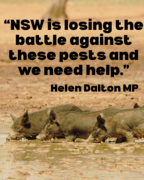
Proposed bounty system reignites tensions between hunters, conservationists and government amid rising feral animal impacts and parliamentary push for hunting reforms.NSW Premier Chris Minns has sparked debate around the introduction of a bounty on feral animals.Speaking on radio last week Mr Minns suggested that a system where shooters are paid a small fee for each feral animal killed could be a "novel way" to reduce their populations, which he believes have "taken over a lot of parks."He also indicated that it could encourage recreational shooters who might have been deterred by rising fuel and food costs.He cited Victoria's fox bounty scheme, which paid around $14-$15 per fox in 2022, as a potential model.The Australian Pig Doggers and Hunters Association (APDHA) said feral pigs are "a plague" and they support a bounty. The organisation recently partnered with NSW Farmers to trial a bounty scheme at TottenhamThe trial, conducted in January 2025, yielded 1,427 pigs from a 51,869ha trial site.Findings from the trial compared the $20 per snout bounty cost, to that of the Local Land Service eradication program, which APDHA calculated to $198 per pig."Theorists parroting 'best practice' models while ignoring hunters in the field are achieving almost nothing in the face of these numbers," an APDHA spokesperson said."Pig hunters killed an estimated 5.3 million pigs in Australia last year, up to 10 times the total of all 'best practice' programs.Member for Murray Helen Dalton welcomes the proposal."I've been pushing for the NSW Government to impose a bounty on foxes and pigs," Ms Dalton said."It also helps the feral cat problem which are a big threat to native species."When hunters see a cat in the bush they will shoot it, so it's almost a two-for-one deal."Ms Dalton said pigs are invading vineyards around Griffith, trekking in from neighbouring reserves."NSW is losing the battle against these pests and we need help."Recreational shooters should be allowed in National Parks," she said."Kangaroos are invading our farms, pushed out of the Parks by pigs, goats and foxes."If we place a bounty on ferals, then perhaps the kangaroos can go back to the Parks."NSW Farmers also welcomed the announcement that the Premier is open to consider a bounty."We know animal pests are expected to cause damages in excess of $489 million annually by next year," NSW Farmers president Xavier Martin said."That's a staggering amount of money, and that's why we welcome the Premier's approach to look at every option to slash the number of feral animals."We know there's going to need to be tight controls to ensure safety, uphold biosecurity and enforce authorisation, but NSW Farmers is prepared to work with government to get this right and solve this problem once and for all."Shooter, Fishers and Farmers (SFF) MP Robert Borsak introduced a bill into NSW Parliament last week.The Game and Feral Animal Control Amendment (Conservation Hunting) Bill 2025 will revise the management system for public-land hunting in NSW, introduce reforms including allowing licensed hunters to use suppressors, and recognise hunting as both a conservation tool and a cultural tradition.It is understood the SFF has the numbers to see the bill through."This is about balance," Mr Borsak said."It ensures hunting is well-managed, ethical and effective, it encourages participation on public and private land, benefiting our environment, economy and regional communities."Not everyone agrees with the proposed approach.The Invasive Species Council recently slammed the news, saying there is overwhelming evidence that it will waste taxpayers' money, and make no difference to the numbers of these invasive species."This is a dirty deal with the Shooters Party for votes and has nothing to do with good feral animal management," Invasive Species Council CEO Jack Gough said."Bounty hunters might be heroes on the big screen, but in the real world of feral animal control, they're just a waste of taxpayers' money."It's why (last year) Mr Minns promised a NSW Farmers conference that he would not introduce bounties and Agriculture Minister Tara Moriarty ruled them out in a statement to the ABC in January this year."It is why the NSW Natural Resource Commission did not recommend bounties in their recent comprehensive advice to the Premier on reforming invasive species management in NSW."

 Threatened species finding -  Winged Peppercress herb  found on Gunbar sandhills
Threatened species finding - Winged Peppercress herb found on Gunbar sandhills

28 May 2025, 8:00 PM

When Stacey and Ian Lugsdin undertook a Local Land Services project to fence off some of the remnant endangered sandhills on their properties at Warrendale and Nauru near Gunbar in 2018 and 2019, they had no idea the journey that they were about to undertake. Despite commencing fencing during the 2018/19 drought, the sites benefited almost immediately from the removal of the stock. Slowly, the old needlewood trees began to sucker, small green shoots appeared on ancient rosewood trees, and the ground cover of annual weeds moved slowly to perennial grasses. Some of the sites were direct seeded and once the rains came, small acacias and hopbushes began appearing in the seeding lines, a variety of saltbushes also appeared, and the old white Cypress pines began to seed. The first field day for the site was held in September, 2022. It was organised by Sally Ware from Riverina and Andrea Cashmere from Western Local Land Services to highlight the success of the original project. This day was well attended, and much discussion was had on site about the benefit of fencing off sandhills. The next field day was organised by Jenny Dwyer from Murrumbidgee Landcare in November 2024, as a two-day session to discuss a number of topics including a new program called Natural Capital. A field walk and discussion day was held at one of the Nauru sandhills. It was during this walk that participant and local landholder David Nevinson from Booroorban, spotted some small herbs that looked like the highly endangered or potentially extinct Winged Peppercress. Photos were taken and sent to a rangelands ecologist who confirmed the identification and assisted with the loading of the finding on the website NSW BioNet Atlas, which is the repository for such species sightings. Back at the Nauru sandhills, the site where the plants are located is lightly marked and GPS co-ordinates taken. The journey for the Lugsdins continues, as their sandhills regenerate more each year. In just six years, the fenced sandhills have started to change back to their pre-settlement status.

 Rust Fungus a tool in the fight against African  boxthorn, says CSIRO - trial sites needed
Rust Fungus a tool in the fight against African boxthorn, says CSIRO - trial sites needed

27 May 2025, 11:00 PM

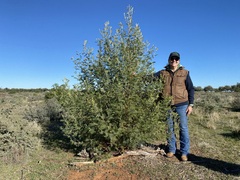
A tough, thorny weed called African boxthorn is causing major headaches for farmers and the environment across regional Australia, but a fungus is the latest tool being used in the fight. Originally from South Africa, the boxthorn grows into dense, tangled thickets that are nearly impossible to get through. Spread by birds and foxes, it pops up everywhere, making it a real threat to the environment and to primary production. Right now, the ways we try to eradicate the weed – like digging it up or spraying chemicals – can be pretty damaging to the land, especially in delicate natural areas, such as along waterways or among established native trees and plants. These methods are also costly, take a lot of effort and aren't a long-term fix for such a widespread problem. Enter the CSIRO’s Weed Management Systems Team. Dr Ben Gooden is a plant scientist and team leader, and he recently visited Hay to address the Riverina Local Land Services Rangeland Production Forum. Dr Gooden spoke about the success of the release of the rust fungus in the Hay, Booroorban and Deniliquin regions last year, including one site north of Carrathool, where the weed population has significantly declined. “In the long term, we predict this rust fungus will reduce the reproductive output and growth of African boxthorn under conditions supporting fungal growth,” Dr Gooden said. “This can help reduce further spread of the weed.” Dr Gooden explained that biocontrol agent release sites are still being sought. He invited interested stakeholders to submit expressions of interest to participate in the biocontrol release program by emailing [email protected]. The fungus was rigorously tested and is not able to reproduce on native plant species. It was deemed by regulators to be safe for release into the Australian environment in 2024. Once released, rust fungus causes yellowing of the leaves of the boxthorn, followed by the development of dark brown pustules that swell up and release fungal spores. These fungal spores then go on to infect nearby boxthorn plants. CSIRO says the fungus will take several years to establish.CSIRO highlights that the fungus will complement but not replace the need for traditional control tools, like herbicides. Dr Gooden explained that biocontrol is not a “silver bullet” and is another “tool in the toolbox”. Broader biocontrol benefits may only be apparent over years or even decades once the fungus is found far and wide across Australia.

IPART'S Water Pricing Decision a Win for Farmers, Food Security and Rural Communities

20 May 2025, 8:00 PM

Independent Member for Murray, Helen Dalton claims that IPART (Independent Pricing and Regulatory Tribunal) have conceded that farmers are important and have backed down on their proposed water rate hikes with a substantial reduction in what farmers will pay for water. “This issue has been cause for concern for primary producers for some time,” Ms. Dalton said. “IPART'S proposed exorbitant price increases would have priced farmers out of business and Aussie food off our shelves.” The Member for Murray said she has been a fierce advocate for opposing these rate hikes, holding meetings with Premier Chris Minns, Minister for Water Rose Jackson and consulting with numerous stakeholder organisations. “It goes to show that if you are persistent, great outcomes can be achieved,” Ms. Dalton said. “It’s not just meetings, I used Private Members Statements in parliament to implore IPART to reassess their water bill prices and the government to act, and it seems they listened.“They have acted in the best interests of rural and regional NSW and I consider that a massive win for everyone,” Ms Dalton added. “Although there will still be water rate increases, at least they won’t be 3% - 35% every year. IPART’S draft WaterNSW pricing determination proposes only a 1.9 percent in rural water bills in 2025 26 plus CPI, followed by CPI increases only in each of the following two years.” Next on the Member for Murray’s agenda is a face-to-face meeting with the newly elected Federal Water Minister Murray Watt to resolve problems in the Murray Darling Basin and sensible solutions to water buybacks. “I am offering Minister Watt the opportunity that the former Minister for Water Tanya Plibersek repeatedly declined,” Mrs. Dalton said. “The opportunity to visit us in the Southern Basin, listen to our needs and see first-hand what we do here.”

Australia's worst river rabbit: the not-so-glamorous life of the common carp

17 May 2025, 2:00 AM

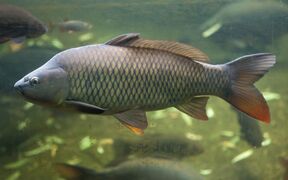
Alright, let's talk carp. If you've spent any time near Australian waterways, you've probably heard whispers, or maybe outright grumbles, about these slippery characters. Considered a serious introduced pest and often dubbed the "rabbits of the river," they've earned quite the reputation – and not the good kind.My grandfather was an avid fisherman, and whenever we would go fishing as a child, and he would catch a carp, he would throw it up on the riverbank or against a tree. Completely clueless as to the reality of the carp, I was always very curious as to why this was done. But now, it is pretty common knowledge the carp is a pest.So, where did these aquatic nuisances come from? Believe it or not, carp actually hail from the other side of the world, originally found stretching from eastern China all the way to eastern Europe, likely evolving in East Asia. Humans, being the helpful creatures they are, decided to spread them around a bit. The Chinese apparently domesticated them thousands of years ago, and the Romans helped them hop across Europe starting way back in the first century AD. Monks later got in on the act, raising them in ponds.Their journey to Australia in the 1800s was largely intentional. European acclimatization societies thought it would be a brilliant idea to introduce them as game fish, a potential food source, and for recreational fishing. Some also arrived accidentally, escaping from fish farms or aquariums. While early stocking attempts in places like Tasmania and Victoria in the 1850s didn't always stick, later introductions, particularly a strain known as the 'Boolara strain' from a Victorian fish farm in the late 1950s, proved far more successful – disastrously so, becoming a catalyst for massive expansion. Their spread was then helped along by major floods and various human actions like deliberate releases and transfers. Different European and even Japanese 'koi' strains have contributed to the genetic mix found here today.Now, why are they so hated? It boils down to their behaviour. Carp feed like what one source charmingly calls an "aquatic vacuum cleaner". They constantly stir up the bottom sediments in rivers and lakes. This isn't just messy; it has serious consequences. All that mud turns the water cloudy, a state known as turbidity, which reduces sunlight, harming aquatic plants. These plants aren't just scenery; they're critical food and shelter for native fish. On top of that, carp simply remove established aquatic plants, which can even lead to riverbanks eroding.But wait, there's more! With their populations booming – reaching an estimated 375 million after recent floods, making up a staggering 90 per cent of the total fish biomass in the Murray-Darling Basin – carp are also fierce competitors for food with native fish. They don't stop there; they'll also prey on the eggs, larvae, and juvenile native fish, adding insult to injury. This one-two punch of habitat destruction and direct impact has led to a serious decline in native fish populations and the overall degradation of freshwater ecosystems. They are even called the most ecologically damaging non-native species globally.Their impact isn't just ecological; it hits the wallet too. Recreational fishing suffers, tourism takes a hit, and water quality declines. Estimates put the annual cost of these impacts somewhere between a hefty $11.8 million and $500 million.Today, these unwelcome immigrants are found in virtually every state and territory except the Northern Territory. They dominate waterways across southeast Australia, particularly the massive Murray Darling Basin. Tasmania has fought a long battle and seems to have them functionally eradicated from key lakes after a 28-year program – a rare success story.Recognising the scale of the problem, carp are seen as a major threat. They have been nominated as a key threatening process in Victoria. Authorities are exploring various control methods, including assessing the feasibility of using a carp-specific virus as a biological control agent through the National Carp Control Plan. But for now, Australia's rivers are largely ruled by the vacuum-mouthed carp.

Question: What do Cultural Burns do?

15 May 2025, 8:00 PM

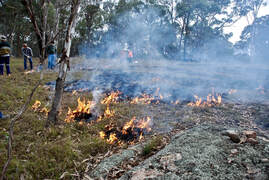
By Jenny DwyerBroaden your understanding of Cultural Burns to reduce exotic weed, promote native ground cover and increase drought tolerance.Hay Plains Landcare is excited to offer the opportunity for landholders and the community to learn more about Cultural Burning at a Cultural Burn Workshop on Tuesday and Wednesday, June 3 and 4, 2025, facilitated by Dean Freeman, Local Land Services, and the Wiradjuri Cultural Burn Team from Tumut.Cultural Burning, also known as Indigenous or Traditional Fire Management, is a land care practice used by Aboriginal and Torres Strait Islander peoples for tens of thousands of years. It involves the application of low-intensity, patchy fires at the right time of year, in the right places, and under the right conditions.These cool burns clear away exotic weeds and thick leaf litter, without damaging the soil or mature vegetation, creating space and light for native species to regenerate.Many native plant species are fire-adapted, meaning they have evolved to respond positively to this kind of disturbance and some even rely on it to germinate.Unlike hot, uncontrolled bushfires, Cultural Burns are designed to encourage biodiversity and help maintain open, grassy ecosystems that are dominated by our valued native species.In turn, landscapes with native groundcover will build drought tolerance by protecting the soil from erosion, retaining moisture, and reducing evaporation.Healthy ground cover will also improve the soil's organic matter and structure, allowing it to absorb and hold water more effectively which is essential in times of low rainfall."The Australian landscape has been modified by the use of Cultural Burning as a land management practice for many thousands of years by First Nations People," Hay Plains Landcare Chair Bert Matthews said."Science is increasingly understanding the merit of Cultural Burns to reduce wild fire risk and manage groundcover in all landscapes."We need to learn more about adapting traditional revegetation techniques to modern land management systems."This workshop is not only about achieving positive ecological outcomes, it will strengthen Cultural understanding, support intergenerational learning and preserve First Nations Heritage.All are very welcome to attend. Registrations essential: https://bit.ly/cultural-burnHay Landcare said this project is supported by FRRR, through funding from the Australian Government's Future Drought Fund, made possible by the NSW Landcare Enabling Program, a collaboration of Local Land Services and Landcare NSW supported by the NSW Government.

 Virtual fencing ban lifted in NSW, opening doors for farmers
Virtual fencing ban lifted in NSW, opening doors for farmers

07 May 2025, 11:00 PM

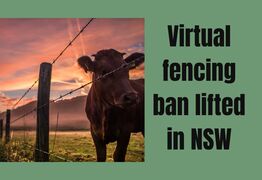
Farmers in New South Wales will soon be able to adopt virtual fencing and herding technology to enhance farm productivity, following a decision by the NSW Government to overturn a long-standing prohibition.The move brings NSW in line with other parts of Australia, as well as New Zealand and the United States, where the technology has been available for several years.“The NSW Government has listened to the farming industry and will work with both industry and animal welfare groups to ensure we get the right balance for delivering virtual fencing on farms,” NSW Minister for Agriculture, Tara Moriarty, said.“These changes seek to reduce costs for farming and to enable agile paddock formation across land holdings to meet the needs of farmers while also protecting the welfare of cattle.“The Government will now consider amendments to the POCTA (Prevention of Cruelty to Animals) Regulation and undertake consultation with key stakeholders, including industry and animal welfare organisations.”NSW Farmers has campaigned for change for some time.“With virtual fences, farmers can protect sensitive areas of the environment, reduce their fencing costs and even move livestock to safe areas in natural disasters without putting humans or animals at risk,” NSW Farmers Dairy Committee member Robert McIntosh said.  “Fencing off noxious weeds to be controlled and adjusting grazing spaces to make the best possible use of available pasture are all other possibilities for boosting farm productivity and sustainability using virtual fencing.“There’s no end to the advantages of this tool, and so there’s no reason we shouldn’t be out there using it.“Virtual fences are the way of the future for many farmers, and so we stand ready to help get this technology rolled out and in action across the state.“Technology has so many benefits to offer farmers, and we need to be making use of it if we want to feed the future,” Mr McIntosh said.The decision will have a direct benefit to farmers, who say they will be able to reduce time and money spent installing and maintaining physical fences, gates and stock grids.Virtual fencing is more resilient and flexible in the face of natural disasters such as fires and floods, as virtual fences are not physically damaged in the same way as traditional stock barriers.There is also the potential to reduce labour costs by automating tasks like fencing and moving animals which also improves pasture management.Halter, a leading provider of virtual fencing and herding solutions, has welcomed the announcement. "The NSW Government has responded to a groundswell of demand from farmers seeking this technology and the productivity gains it offers," said Halter spokesman Charlie Baker.Baker also acknowledged the role of New Zealand farmers in driving the adoption of virtual fencing. "Kiwi farmers have been at the forefront of virtual fencing for years, and their experience has been influential in bringing about this change in NSW."NSW has a substantial beef industry, with 4.4 million beef cattle, representing approximately 20 per cent of Australia’s total beef population. Historically, NSW farmers have been restricted from using virtual fencing due to outdated legislation.This policy shift is part of a broader trend towards the adoption of virtual fencing across Australia. In February, the South Australian Government also legislated to allow the technology, with regulations expected within 12 months. South Australia also has a significant agriculture sector, with over one million head of cattle.

Weight-loss drugs and our dinner plates: How they could re-shape farming

01 May 2025, 5:00 AM

A quiet revolution is brewing in the world of food, and it's not happening in the paddocks – it's in the pharmacies.New weight-loss drugs, like the much-talked-about Ozempic, are not only helping individuals shed pounds but are also prompting experts to consider a seismic shift in our food systems, potentially even more significant than the impacts of climate change.AgriFutures Australia, formerly known as the Rural Industries Research and Development Corporation (RIRDC), is an Australian statutory corporation established by the Australian Government in 1990.  Its primary goal is to fund research and development (R&D) that benefits Australian rural industries and communities. They aim to improve the profitability, productivity, competitiveness, and long-term sustainability of these industries.  An article from AgriFutures Australia evokeAG website, titled "What weight-loss drugs like Ozempic mean for food systems and farmers," delves into this fascinating intersection. Glucagon-like peptide 1 (GLP-1) receptor agonists like Ozempic or Wegovy work by mimicking a gut hormone that suppresses appetite and promotes feelings of fullness. This leads to reduced food intake, and as their use becomes more widespread, the implications for agriculture and our local food economies become increasingly apparent.According to evokeAG, a key concern is the potential for a significant decrease in overall food consumption. They cite predictions suggesting that in the United States, food demand could fall by as much as 10%. This is a sobering thought for local farmers who rely on consistent demand for their produce and livestock. "If GLP-1 drugs take off as many expect, total food consumption in the U.S. could fall by as much as 10%," the article states.Beyond just the quantity of food consumed, the type of food people eat could also undergo a transformation. The evokeAG article highlights that individuals using these medications often report a reduced desire for sugary and processed foods, gravitating instead towards healthier options like fruits, vegetables, and lean proteins. This shift in dietary preferences could be a boon for local growers specialising in fresh produce and those raising poultry or other lean meats. Conversely, there might be a decreased demand for commodities like beef and the grains that form the base of many processed foods.What does this mean for the familiar landscape of our rural community? Australian farmers might see fluctuating demands for their crops and livestock. For instance, the evokeAG article suggests that "farmers producing row crops like corn and soybeans, which are heavily used in processed foods, could see demand soften." This could put pressure on prices and potentially necessitate a diversification of crops or a shift towards supplying the increasing demand for fresh, whole foods.The article also touches on the potential for innovation within the food industry. As people prioritise healthier eating while on these medications, food companies might adapt by offering smaller portion sizes or reformulating products to be higher in protein and fibre. This could open up new avenues for local food producers who are nimble and can cater to these evolving consumer needs.The evokeAG piece also raises an interesting point about the environmental impact of GLP-1 medication use; A decrease in overall food consumption could lead to a reduction in greenhouse gas emissions often associated with intensive agriculture.The article highlights one fact - the rise of weight-loss drugs like Ozempic presents a complex web of challenges and opportunities for our local food systems and farmers. As the evokeAG article aptly points out, the ripple effects of these medications could reshape what we grow, what we eat, and even the environmental footprint of our food production.

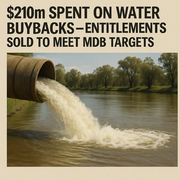
$210m spent on water buybacks - local entitlements sold to meet MDB targets

25 April 2025, 2:00 AM

Hazeldean, Budgewah and foreign-owned funds among latest Murray Darling Basin water sellersThe Australian Government has released figures pertaining to more than $89 million water purchasing contracts for the period March 1 to April 14.Total purchases over the past six week total $210 million.The Department of Climate Change, Energy, the Environment and Water (DCCEEW) Austender website lists only contract values awarded. No details have been released on the type and volume of water entitlements purchased.District water holders have taken advantage of the government buyback scheme, with local agricultural businesses Hazeldean, Budgewah Pastoral Co and M and T Mirabelli listed on the Austender website.Aqua Ceres Australis Water Fund is also listed as a business who has offloaded water entitlements in the latest round of buybacks, aimed as returning flows to rivers in the Murray Darling Basin.The Aqua Ceres Australia Water Offshore Fund LP is incorporated in the Cayman Islands and has directors in the US and Australia, including Wealthcheck director Sam Mitchell.In 2015 Mr Mitchell was the director of Rosella Sub TC, which received warning letters from the NSW Government after it ploughed up Aboriginal burial mounds and cleared native vegetation on Newmarket Station, west of Hay.Supplier Values (AUD):CW Anderson (Hazeldean) Pty Ltd $2,848,000.00CL Houston & Budgewah Pastoral Co Pty Ltd $1,649,713.00 amended (contract value $2,179,300.00)Budgewah Pastoral Co P/L & C Houston $641,052.00AQUA Ceres Australia Water Fund LP $630,300.00AQUA Ceres Australia Water Fund LP $455,000.00M & T Mirabelli $253,200.00CW Anderson (Hazeldean) Pty Ltd $172,700.00Source: Federal Austender contract database

81-100 of 208
Back Country Bulletin
News from the Back Country

Get it on the Apple StoreGet it on the Google Play Store