Back Country Bulletin
News from the Back Country
Get it on the Apple StoreGet it on the Google Play Store
NewsSportRuralCommunityEat, Drink, Stay
Back Country Bulletin
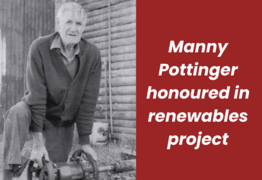
Blast from the Past: Manny Pottinger honoured in project naming

01 May 2025, 11:00 PM

Manny Pottinger, an icon of Conargo Shire and surrounding districts, has been honoured in a renewable energy project.Pottinger Wind Farm (Someva/AGL) was recently announced as one of the two projects which have been granted access under the South West Renewable Energy Zone Access Rights Scheme. This article was originally published in The Riverine Grazier to celebrate the naming after a district icon.The information used to create this article was sourced from the websites of Liesl Malan Landscape Artists, Edward River Council, and Someva website. Someva Renewables, a specialist renewable energy developer operating in Australia, has named its local project Pottinger Energy Park. Someva quotes on its website interesting views of the time windmills were new technology, ‘Without this vision to embrace a new technology of the time it would have been little short of murder to turn sheep loose into those paddocks’ - Terry McGoverne, the Wool Barons. It is a touching connection and acknowledgment of the area in which the project is occurring, to name their local project Pottinger after the Pottinger family and the district windmill prodigy Manny Pottinger, who, over two generations, installed and maintained windmills in the region from the early 1900s till 1982. Pottinger Park in Conargo provides a history of the windmill in the region and its importance to growing the Merino industry. The erection of this windmill was a project of Edward River Council. The importance of Manny Pottinger in supporting livelihoods in the region and how it will continue through the proposed Pottinger Energy Park. Manny’s real name was Lionel, but he preferred to go by Manny. A quiet, modest man who went about his business with a minimum of fuss, his windmill repair skills were known throughout the Riverina. Manny was working for the Falkiner family at Zara station when Les Falkiner said to him, ‘You want to get yourself a utility. I’ll keep you in work’. So, Manny bought a Chevrolet in 1927 for 205 pounds. He remained with the Falkiner family for 20 years before going out on his own. Manny started working on windmills in 1903, and continued to work on them almost until the day he died in 1986, at the age of 82. Manny’s great grandparents owned both the original Conargo Inn and the Billabong Hotel. In later years, his father closed the Conargo, and renamed the Billabong, The Conargo Hotel. The peppercorn trees on the site were planted over a hundred years ago by Manny’s mother Flora, outside the original Conargo Inn. Manny and Jean Pottinger were married in 1927. They lived in the house near the Conargo Church for 58 years. Manny and Jean were both widely known and respected. They quietly got on with what was needed. Jean cared for the church most of her life. Manny restored the Drop Log stables, where he and a mate had once earned a shilling a week for rounding up horses for the stage coach journey between Jerilderie and Deniliquin.

500 Shitbox drivers to head into the Back Country

30 April 2025, 8:00 PM

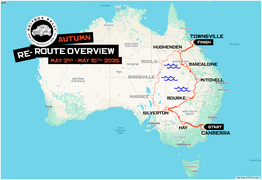
Teams of two will leave Canberra, ACT on Saturday 3rd May 2025 in the morning, then, after 7 days of driving over 3,600kms on dusty, mostly unsealed roads they will cross the finish line in Townsville, QLD. The 2025 Shitbox Rally will travel through Hay, Silverton and Bourke en route to Queensland.Cars must be worth $1,500 or less (hence the name of the rally), roadworthy, registered with no 4WD or AWD allowed, and teams need to raise a minimum of $5,000 to participate.Dress-up themes provide amusement, and the reward of making camp each night is an evening spent under the stars in rural and remote locations. While breakdowns are guaranteed, this challenges teams to work together to make the finish line after their adventure through the outback. The fundraising goal for Shitbox Rally 2025 – Autumn is set to $2.5 million with teams already hitting over $2 million. Box Rallies (Shitbox Rally, Mystery Box Rally and Lunchbox Rally) is the leading individual fundraiser for Cancer Council nationally generating over $54.4 million to Cancer research plus media awareness for Cancer Council. This helps the lives of millions of Australians who are facing their unknown journeys. James Freeman OAM, who founded Box Rallies after losing both of his parents to cancer within 12 months of each other said: “Shitbox Rally is not a race, but a reward for fundraising efforts and a chance to explore Australia. "The Rally draws teams from around the country to help achieve the extraordinary. Many have been affected by cancer in one way or another, whether it be family, friends, or themselves personally. "The rally not only wants to raise awareness and money for Cancer Council but also offers support and a friendly ear to those that have suffered or are suffering. "Teams not only pull together to help each other through the challenges associated with driving a $1,500 car on these remote outback tracks, but also help and support each other through openness, mateship and camaraderie from people who have gone through similar hardships with their own cancer stories. "Often fundraising and rallying for family members or friends affected by Cancer, this common experience unites each rally team to become a part of the larger Box Rallies family.” Learn moreOVERNIGHT STOP OVERS AND DATES Saturday 3rd May – Hay, NSW Sunday 4th May – Silverton, NSW Monday 5th May – Bourke, NSW Tuesday 6th May – Mitchell, QLD Wednesday 7th May – Barcaldine, QLD Thursday 8th May – Hughenden, QLDThe ShitBox Rally will return to Silverton, after visiting in 2024 (Image: Box Rallies)

Griffith council scores Safer Cities award

29 April 2025, 8:00 PM

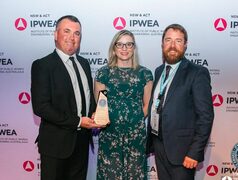
Griffith City Council has taken out the Diversity and Inclusion Award at the Institute of Public Works Engineering Australasia (IPWEA) Engineering Excellence Awards for its innovative delivery of the Safer Cities: Her Way project.Funded by Transport for NSW, the initiative aimed to improve perceptions of safety in public spaces around key transport hubs, with a focus on enhancing accessibility and comfort for women, girls and gender-diverse individuals.Council’s Urban Design Team engaged more than 150 community members through co-design sessions, walkshops, and artist-led workshops to shape the project’s vision and outcomes.The local engagement informed the delivery of several key works, including:Two new footbridges across Canal Street with improved landscaping, lighting, and connectivity;An upgraded community garden and park at Don Best Park, featuring new shelter, BBQ, and open space for residents of surrounding medium-density housing;Two smart bus shelters on Yambil Street and Banna Avenue;Nine large-scale public artworks throughout the precinct;Wayfinding signageGriffith City Council was commended for its end-to-end delivery model, managing community consultation internally and engaging local contractors for all infrastructure and construction works.Griffith Mayor, Doug Curran said he was proud that Council had been acknowledged for its efforts.“The recognition from IPWEA highlights the success of our collaborative approach with our community,” said Mayor Curran.“This project has transformed our CBD into a more inclusive, safe and vibrant place. I really want to once again thank all Council staff, community organisations, schools and community members that were involved in the project. It has improved the quality of our City,” he said.

Back Country Bulletin Launches Week-Long Supporter Drive

28 April 2025, 2:00 AM

Back Country Bulletin Launches Week-Long Supporter DriveThe team at Back Country Bulletin has kicked off a week-long campaign to rally community support for its ongoing mission of providing free, in-depth local news coverage. The digital news publication, which serves the underserved Balranald, Hay, Carrathool and Central Darling Shires, is urging readers to contribute financially to ensure the continued accessibility of its reporting."For one week, we're focusing on securing the financial support that allows us to deliver the news our community relies on," said editor and founder Krista Schade. "Our commitment is to keep our digital doors open to everyone, ensuring that access to vital local information isn't restricted by a paywall."DONATE HEREBack Country Bulletin emphasises the crucial role of community support in enabling its journalists to cover important local stories. "Independent journalism plays a vital role in keeping our community informed and holding those in positions of power accountable, now more than ever" Ms Schade explained. "Whether it's reporting on local council meetings, talking to candidates in the upcoming election, or highlighting the work our communities are doing, we strive to deliver news that matters."The publication's leadership stresses that every contribution, regardless of size, plays a significant role in sustaining its operations. "We've been heartened by the support we've received so far, since launching BCB last September" Ms Schade added, "We encourage those who value local news to contribute to this campaign. These funds directly support our ability to report thoroughly and accurately across the wide region of NSW that we serve." Back Country Bulletin's commitment to free access o news stems from a core belief that access to reliable information is a fundamental right. "We believe that everyone in our community deserves to be informed," Ms Schade stated. "This week's campaign is about ensuring we can continue to uphold that principle and keep our content freely available to all."The campaign will run for one week, Ending on Sunday May 4. Back Country Bulletin is encouraging readers to visit PressPatron to make a contribution and learn more about how their support makes a difference.Learn how Back Country Bulletin happened - watch the video here

Dean Incher Triumphs Again at 2025 Hay Working Dog Trials

24 April 2025, 5:00 AM

Incher and Hulk take out Open title at Shear Outback’s 14th annual championshipBY ALIX MCFARLANDAdaminaby trialler Dean Incher has continued his success on the plains taking out top honours at the 14th annual Shear Outback Hay Championship Yard Dog Trial on Saturday with Hulk.While Dean was placed in the Open event with Hulk in the past, his previous first place wins in 2019, 2022 and 2023 were with another of his top dogs Raffa, with whom he placed second this year.Last year's open winner Dale Thompson took out third place with Giles Creek Clay.A capacity 60 Open/Improver entries and 90 Novice/Beginner entries travelled from as far as South Australia to be tested by TA Field Wyvern Station wethers.Handlers and their dogs were met by a cool start and warmer, blustery conditions as the day progressed.Trialling started the minute adequate daylight was available and presentations were made just prior to sunset.Thank you to all of our competitors and congratulations to all of our winners.A big thank you to judges Matt Sherwood (Open/Improver) and Ben Wade (Novice/Beginner) who were impressed by both the standard of handling and sportsmanship.An exciting evolution saw live streaming and electronic scoring introduced this year. Thank you to Danny Ruben for bringing your expertise to us and to those who commentated.A big thank you also goes out to valuable sponsors, loyal supporters and hard working volunteers for contributing to another successful trial, and to the Hay Rodeo Club team for their yard work and delicious catering.Full Results:OPEN 1st - Dean Incher & Hulk - 185 2nd - Dean Incher & Raffa - 184 3rd - Dale Thompson & Giles Creek Clay - 183 4th - Sarah Lee & The Lee's Rock - 180 (Fastest time 5m 49s) 5th - Neale Taylor & Pat - 144IMPROVER 1st - Neale Taylor & Pat - 90 2nd - David Lee & The Lee's Zeus - 88 3rd - Herb Cooper & Axle - 87 Fastest time - Peter Fisk & Spider - 6m 6sNOVICE 1st - David Lees & The Lee's Zeus - 191 2nd - Sam Yates & Trump - 189 3rd - Fred Rains & Nina - 188 4th - Denis Mitchell & Jimmy - 178 5th - Kahlee O'Leary & Dude - 170 Fastest time - Peter Fisk & Spider - 3m 48sBEGINNER 1st - Audrey Martin & Rehea - 69 (Fastest time 5m 37s) 2nd - Grace Harrison & Shadow - 58 3rd - Grace Harrison & Rose - 442025 Hay Working Dog Trials winners circleBeginner winners Audrey Martin (right) with second and third place winner Grace Harrison.Opens category judges and place getters (from left) Jake Varena (6th), Dale Thompson (3rd), judge Matt Sherwood, winner and runner-up Dean Incher, Neale Taylor (5th) and Sarah Lees (4th and fastest time).Judge Matt Sherwood with Improver winners Neale Taylor (1st), David Lees (2nd), Herb Cooper (3rd) and Peter Fisk (fastest time).Novice/Beginner judge Ben Wade with Beginner event winner Audrey Martin. Audrey also achieved fastest time in the Beginner section.

Regional Housing Provider Urges Expansion of Build-To-Rent Scheme to Country Areas

23 April 2025, 8:00 PM

MASP calls for adaptable BTR housing solutions to meet regional affordability crisisThe Mallee Accommodation and Support Program (MASP) is calling on the Federal Government and property developers to adapt the Build-To-Rent (BTR) initiative for regional communities, in an effort to address the growing housing crisis outside metropolitan areas.MASP CEO Charmaine Calis believes the BTR model—where developers maintain ownership of properties while leasing them to tenants—could be modified to better suit the needs of country towns and regional centers."Incentives to provide housing solutions fit-for-purpose for regional living, not necessarily those larger scale apartment settings typically seen in metro areas, could go a long way to entice developers to look at affordable solutions in places like the Mallee," Mrs. Calis said.The Federal Government passed legislation in late 2024 requiring at least 10 percent of BTR developments to be dedicated to affordable housing.[MASP supports Built-To-Rent, calls for wider application] Additional regulations finalised in early April include a minimum tenancy of five years, with affordable tenancies defined as being available to people on moderate and low incomes.The regulations also specify that at least 20 percent of the affordable tenancies will be available to low-income earners where rents are capped below 74.9 percent of the market value or 30 percent of household income, whichever is lower.[REIA Build-to-Rent Report 2024 (PDF)]While BTR developments have proven successful overseas, they're relatively new to Australia and typically feature large-scale apartment complexes in urban settings—a model that may not translate directly to regional needs.The housing shortage in the region has reached critical levels. According to MASP, the Victorian Housing Register recorded over 500 applicants on the Priority Access List for the Mildura District alone as of December, with nearly 450 more on the Register of Interest."This would help alleviate the incredible stress on the system," Mrs. Calis said. "Something must be done."MASP has previously advocated for diverse housing solutions through its submission to the Victorian Legislative Assembly's inquiry into regional housing supply.[MASP Submission to the Inquiry into the Supply of Homes in Regional Victoria (PDF)] The organisation emphasised the importance of accommodating various living arrangements for different individuals and families seeking social and affordable housing."We welcome any measures that would help increase housing supply and cater for the most vulnerable in our community," Mrs. Calis added.As regional communities continue to grapple with housing affordability and availability, MASP's call for adaptable BTR models represents one potential pathway to addressing these persistent challenges.[Rent.com.au Regional Rental Market Snapshot]

Carrathool Jockey Club hosts another successful race day

23 April 2025, 2:00 AM

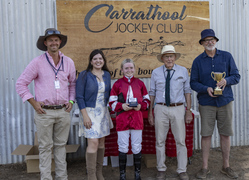
The race day was well supportedSix-year old Eamonn’s Memory won the 2025 Rivcott Carrathool Cup, att his years annual race day. The New Zealand gelding took home the $22,000 race winnings after the feature race. The winner was trained by Wangaratta’s Andrew Dale and ridden to victory by jockey Amy O’Driscoll, ahead of six-year-old mare Controversial Miss. In her first showing at Carrathool, O’Driscoll rode four of the six winners past the post. Full results: Race 1 (category one handicap) - First Minesite, second Soo Kiss Me. Race 2 (handicap) First Rockbarton Shout, second Crimosa. Race 3 (maiden handicap) First Hisako Lady, second Mollyullah Miss. Race 4 (handicap) First Trustthesheriff, second Noci Di Corro. Race 5 (open handicap) First Eamonn’s Memory, second Controversial Miss. Race 6 (class 2 handicap) First Calm Buckle, second Jackie Moon.Carrathool Cup presentation: (from left) Jockey Club president Hamish Armstrong, RivCott’s Emmy Robertson, jockey Amy O’Driscoll, Carrathool Jockey Club life member Bill Ryan and winning trainer and part-owner Andrew Dale. Eamonn’s Memory and jockey Amy O’Driscoll (far left) stuck to the rail to take out the 2025 Carrathool Cup.Pictured at the 2025 event are (from left) Ian and Emily Barber, Sandra and Matt Ireson, and Rob and Markeeta Gibson. Max Hillman, Drew Cameron, Pippa, Michelle, Rose, and Brent Millthorpe.Lottie Ryan with grandmotherMary Ryan.Top Harvey and Edwina Bright.Keeping up the family connection with the races (from left) Hedley Burns, Vicky Burns, David Burns and Brandon Burns.Carrathool Jockey Club life member Bill Ryan.Images: The Riverine Grazier 23 April 2025 /Margie McClelland.

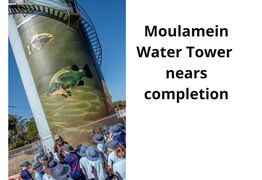
Moulamein Water Tower nears completion

18 April 2025, 2:00 AM

The Moulamein water tower is nearing completion and marks the fourth installation on the River Country Art Trail, which will eventually have five attractions.It is a self-contained art trail of large-scale public artworks, put in place by the Murray River Council with the aim of attracting visitors to the area boosting local communities as well as celebrate the region’s rich culture, history, and natural beauty.Murray River Council was able to access some $1.7 million in grants, and already there has been a noticeable uptake in tourist numbers in Moama, Mathoura and Barham that already have their water towers completed.The last installation will be a sculpture, located in Tooleybuc, due for commencement in September or October.Recently the site was visited by the Moulamein Public School students to view the progress and talk to the artist Heesco, asking many questions from how much paint he uses to does he get scared on the cherry picker.Murray River Council grants officer, Tiana Christie, said the idea of creating the art trail initiated in Barham with the Barham Water Tower Group who were very keen to have their tower painted and needed funds to do it so, it is an expensive undertaking.“Some funding opportunities came up that we put in for Barham as a stand-alone art piece and then there was also another one to do a larger scale tourism initiative, so that is where the River Country Art Trail originated,” Ms Christie said.“We looked to include as many towns across our footprint as we could, and we were lucky enough to get both those grants at the time.“It is designed to encourage people into visiting our towns and we are already starting to see that happening, just the amount of caravans and the amount of traction it has got on social media, people love it and it is something that is for all ages, art is for everyone so it is really exciting that we have something like this.“It is one of only a few full standalone art trails in the country that then make up the greater Australian art trail, so it’s unique and really good for our council.“We hope that it encourages people not to just pull up and stop on the side, but to also go and check out the cafés, the pubs and maybe stay a night.”Heesco is no stranger to painting silos and water towers, with this being his third water tower and having completed a further five silos previously. He came to Australia to study art from his childhood home of Mongolia and has set up home in Melbourne with a family and a reputation as one of the finest muralists in the country.

Youth Homelessness Matters Day – shining a light on homelessness among youth

17 April 2025, 2:00 AM

Nationwide, more than 43,000 children and young people under 25 presented to a homelessness service in 2023–24.Mallee Accommodation and Support Program (MASP) acknowledges tomorrow’s World Youth Homelessness Matters Day as a day to shine a light on the resilience of young people affected by or at risk of homelessness.Youth Homelessness Matters Day falls on the third Wednesday of April each year and was conceived in 1990 to raise awareness and public discussion about child and youth homelessness.MASP CEO Charmaine Calis said the day aligns closely with MASP’s work in the Mallee community as a leading homelessness service provider for young people.“Our staff work closely with young people facing homelessness each and every day,” she said.“Our Housing Access Workers see around 150 young people a year who are either without a roof over their head or facing that situation. “These are young people who are perhaps couch surfing with friends and relatives, looking to escape potentially violent homes, living in their cars or transitioning from place to place without somewhere to call home.”Nationwide, more than 43,000 children and young people under the age of 25 presented alone to a homelessness service in 2023–24.Of these young people, almost half experienced mental ill-health and over one third experienced domestic and family violence. The majority of these young people were in need of short or long-term accommodation and most were turned away due to a lack of capacity.Youth homelessness peak body Yfoundations has released a petition this year calling on state and federal governments to make ending youth homelessness a national priority by developing a targeted plan and funding the services needed to achieve this objective.“I call on the people of the Mallee and Far West NSW to sign this petition to make it known to Governments that the community wants real action to help solve our Youth Homelessness crisis,” Mrs Calis said.The petition can be signed at https://www.yfoundations.org.au/yhmd-petition/

Early education places available in Hillston

17 April 2025, 1:46 AM

Early education places are currently available in HillstonHay Children's Services (HCS) have places available in the Hillston Billy Lids sessions, in all age groups.HCS says the Early Learning Centre (Long Day Care) aims to support our community by providing a nurturing education and care environment for children aged 0-6 years. "Our Educators pride themselves on building strong relationships with children and families, ensuring that they can explore and develop in a safe and age-appropriate space. "We honour play-based programs to facilitate children reaching their milestones and develop their own identities."Throughout the day children will spend time with their key Educators in smaller groups of peers of a similar age. "This allows the Educators to design activities and spaces that honour each child’s individual stage of development."Hours and Session InformationLong day care:Monday to Friday (Excluding Public Holidays)50 weeks per year (closedown period Dec-Jan annually)8:15 am to 5:00pmHCS also provides a school holiday program (vacation care) during school holidays only.Monday to Friday (Excluding Public Holidays)8.15am – 5.00pmFeesStandard Day: $135.00 per sessionCasual Day: $135.00 per sessionVacation care: $65.00 per sessionHCS is a CCS Approved Service.This service is a recipient of funding under the NSW Department of Education’s Start Strong for Long Daycare Centres program and fee relief is available for families of eligible children. For further information in regards to fees, please see the HCS website or contact 02 6993 1757, opt 1   This is sponsored content. If you wish to discuss how you can spread your message across the Back Country Bulletin, contact us today. [email protected]

Registrations open for Rural Women’s Gathering

14 April 2025, 5:00 AM

Registrations are now open for the annual Rural Women’s Gathering to be held on Saturday, 25 October 2025 in Lismore.The NSW Government is investing $30,000 towards this event to encourage women from across regional, rural and remote NSW to get together, to connect and learn.Organised by Lismore Council with support from the Rural Women’s Network, the theme for this year’s program is ‘Connect to the Heart’. The Gathering, held at the Lismore Quadrangle, will showcase a diverse program that includes inspirational talks, entertainment, writing and AI workshops, music, arts, local businesses and catering and community vendors.“The Rural Women’s Gathering has a great history and is a staple of the Rural Women’s Network calendar. It’s a fantastic opportunity for women from regional, rural and remote New South Wales to make friends, find new connections, and learn from each other as well as expert guest speakers,” said Minister for Women, Jodie Harrison.“Each year brings something different, and I am excited to meet talented and exceptional women from across the state, embodying the essence of each of their country towns.“I encourage women from regional, rural and remote areas in New South Wales to show your support for regional women and the community in Lismore and come along to what is going to be an exciting event.”Keynote and guest speakers include:Keynote speaker: Shanna Whann, Founder and CEO of Sober in the Country, spokesperson, and 2022 Australia’s Local Hero.Guest speaker: Madeleine West, Partner of Safe on Social, Logie-nominated actor, bestselling author, and co-creator of the podcast Predatory.Master of Ceremony and speaker: Lissie Turner, CEO of The Prana Project, therapist, and advocate for change.Tickets are $85 for the program, including lunch at one of a selection of incredible Lismore eateries.“I look forward to welcoming the NSW Rural Women’s Gathering to Lismore, which plays an important role in regional communities. It is a privilege to host the Gathering and I am sure they will enjoy their time here,” said Lismore Mayor, Steve Krieg.“This is a wonderful opportunity for local women to network with like-minded women from other regional areas and share their experiences and skills.”A full weekend of activities has been planned from Friday 24 October to Sunday 26 October so that attendees can stay and enjoy Lismore for the whole weekend.Lismore (Bundjalung nation)is located in the Northern Rivers region of NSW, 45 minutes from Byron Bay and is surrounded by lush rainforest, national parks and has a rich indigenous history.This event will help boost the local tourism economy on the North Coast which has been affected by the impacts of ex-Tropical Cyclone Alfred and recent floods.The Rural Women’s Gathering has been held annually around different regional and rural towns in NSW for more than 30 years. It’s an opportunity for the host town to showcase the strength of their community, their region, culture, talent and attractions to women who attend from all corners of the state.To learn more about the Rural Women’s Gathering, order The NSW Rural Women’s Network: 30 Years Strong – A History of the Rural Women’s Gathering through the Rural Women’s Gathering webpage.Register for the Lismore Gathering now at: www.nsw.gov.au/women-nsw/rural-womens-network/rural-womens-gathering.

Be the hope the  community needs this year - Support The Salvation Army’s 61st Red Shield Appeal
Be the hope the community needs this year - Support The Salvation Army’s 61st Red Shield Appeal

13 April 2025, 5:00 AM

The Salvation Army in the Riverina is calling on the community to sign up for this year’s Red Shield Appeal, raising local funds to support people who are struggling most in our region. Across Australia the Salvos are aiming to raise $38 million for Australia’s largest and longest-running door-knock appeal, the 61st annual Red Shield Appeal. “The last few years have been incredibly tough for the hardest hit in our community, and for many that shows no sign of slowing down. We see so many people grappling with increased stress and uncertainty as everyday living has become unaffordable, leading to housing stress, financial hardship and an inability to get by. At the Salvos we are privileged to support those in our area experiencing hardship, but we cannot do this without the ongoing and loyal support of the community,” said The Salvation Army’s Major Gary Masters.  The funds raised locally for the Red Shield Appeal will stay in the local community and will be used to meet the specific needs faced by the most disadvantaged and vulnerable. Earlier this year, The Salvos released their Social Justice Stocktake; a survey which polled over 16,000 Australians and provided national, state and electoral reports highlighting the biggest issues faced by communities. Within New South Wales it was found that 68.8% of people identified the issue of housing affordability and homelessness as the top concern for the community, with the second being mental health (57.5%). “There is no better way to support your community than by donating or volunteering to the Red Shield Appeal this year, and we need you to partner with us to be the hope our community so desperately needs. We can’t do our work in the community without you,” said Major Gary Masters.  The Red Shield Appeal culminates in the Red Shield Weekend (May 24 and 25), and there are a number of ways to get involved throughout the month of May- volunteering by collecting at local shopping centres and other locations, door knocking, online fundraising, organising a collection at your workplace, school or sporting event and making a donation. Please reach out to your local Salvos to find out more about volunteering opportunities by visiting salvationarmy.org.au/red-shield-appeal  Across Australia last year, through The Salvation Army’s network of over 400 centres and 2,000 services in areas such as homelessness, family and domestic violence, youth, drug and alcohol rehabilitation, financial hardship and much more, the Salvos provided:Assistance to one person every 17 secondsMore than 1.76 million sessions of care to over 250,000 people in needOver 1.1 million bed nights to those who needed accommodationMore than 1.5 million meals to those who accessed our homelessness services. To donate or volunteer for The Salvation Army’s Red Shield Appeal or if you need support from the Salvos, visit salvationarmy.org.au or call 13 SALVOS. You can also donate at any Salvos Store. 

Rainbow on the Plains Announces 2025 Festival Theme: TRANSITION

11 April 2025, 11:00 PM

Super Early Bird Tickets Now Available!Hay, NSW – Rainbow on the Plains, the vibrant festival celebrating the LGBTQIA+ community, cultural diversity, and the spirit of inclusion, is thrilled to announce its theme for 2025: TRANSITION. This year, the festival honors the incredible resilience and journeys of our trans community, embracing the beauty of growth, transformation, and unity. Set to light up Hay once again, the Rainbow on the Plains promises an unforgettable weekend packed with dazzling events, joyful celebrations, and meaningful connections. Highlights include:Rainbow on the Greens: An all-ages event with entertainment for every generation with live performances, kid-friendly activities, and mouthwatering food from diverse vendors. Street Parade Extravaganza: A colorful display of creativity and cheer that will bring the streets alive. Engie Fair Day: Relax, shop, listen to some tunes and connect with friends in a welcoming space filled with local treasures. Saturday After Party: DJs, drag performers, and an electrifying nightlife experience you won’t want to miss. Annual Pride Cup: Sportsmanship, community spirit, and a shared love for inclusion take centre stage in this much-loved event. To mark the start of ticket sales, Super Early Bird tickets are now available for a limited time! This exclusive offer gives festival-goers the chance to secure their place at the most vibrant celebration of inclusivity, diversity, and community in Australia. People can get their tickets at www.rainbowontheplains.com.au The Rainbow on the Plains team invites people from across the country—and beyond—to join them in reflecting, celebrating, and transitioning together. Don’t miss out on this unforgettable experience, and stay tuned for future announcements on the artist lineup, it is sure to impress!

Blue Green Algae alert issued

30 March 2025, 11:53 PM

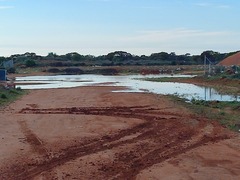
Red Alerts for toxic blue-green algae in Back Country water suppliesWater NSW has issued a red alert for Lake Brewster Regulator C and the outlet channel, near Hillston, in the Carrathool Shire.The dominant toxic species is Raphidiopsis raciborskii, the same species in play in the red alerts reported at Lake Cargellico and orange alerts at Yanga Lake, near Balranald, in past weeks.Raphidiopsis raciborskii has the ability to affect the liver and kidneys in humans, as well as cause mild skin reactions upon exposure.A new Red Alert has been raised at Burrinjuck Dam due to high levels of potentially toxic blue-green algae, Microcystis. The Red Alert warning applies only to untreated water at the identified location and will remain in place until monitoring and test results confirm that the risk is sufficiently diminished. People should avoid consuming untreated water from this waterbody and prevent pets and livestock from drinking this water.People should avoid recreational activities such as swimming, water skiing, canoeing and any other activity that brings them into contact with this waterbody until the red alert warning is lifted.This type of algae, Microcystis, may produce chemicals that interfere with human and animal hormones.The ongoing orange Microcystis alert for the Lachlan/Kalare River at Booligal remains in place.For more information, visit WaterNSW Algae Alerts Map or WaterInsights. What do the colour coded alerts mean?Essentially, the system progresses from "low risk" (green) to "high risk" (red), with amber serving as a warning to be cautious.Green Alert: This indicates a low level of algae. The algae present are not considered a threat to recreational activities, livestock, or domestic use.Amber Alert: This signifies that algae are increasing. The water might have a green tint and an odor. While recreational use is still possible, caution is advised.The water is considered unsuitable for drinking without proper treatment, and may also be unsuitable for livestock.Red Alert: This is the most serious level, indicating a "bloom" condition.The water may appear very green, with visible clumps or scums of algae. The water is considered potentially toxic to humans and animals.Activities like swimming, drinking the water, and allowing livestock to drink it are strongly discouraged.It is also advised to not eat shellfish from these waters, and to take great care when consuming fish caught from these waters.

Sport can bring community together

30 March 2025, 1:00 AM

Four national sport stars will be coming to Deniliquin next month, as part of a community policing event.By Zoe McMaughChief Inspector Michael Fuller said Murray River Police District is partnering with other local groups and organisations to host the sports clinic at Deniliquin Rotary Park on Saturday, April 12.It includes Deniliquin Neighbourhood Watch instigator and soccer coach Diego Sztejman, long-time rugby union advocate Tim Strong, Pastor Keith Waters from Ignite Life Church, and Pastor Mark Horan from the Sydney-based Impact Team.The guest sport stars come from the worlds of soccer, boxing and rugby.“We wanted to create an opportunity for conversation with young people and adults through sport, and the opportunity for them to hear from sporting legends who have faced challenges in their own lives as well as playing at the highest level,” Chief Insp Fuller said.“If it breaks down barriers with police, and gives people some things to consider as they make better choices, that’s the outcome we want. “We recognise there is a need for a conversation about youth and the support they need, and hope this event is an opportunity for further discussion and connection building between community, agencies and young people.”The guest stars secured for Deniliquin are:Charlie Tonga A former National Rugby League player for Canterbury and the Sydney Roosters. Also coached and represented Tonga in rugby.Gerry Gomez A former Australia’s National Soccer League player for Sydney City, Marconi, APIA-Leichhardt and Parramatta Eagles. He also represented the Australian B Socceroos in the 1985 world series club tournament.Solomon Haumono A former professional heavyweight division boxer who competed from 2004 to 2019 with a professional record of 24 wins (21 by knockout) and four losses. He also played successfully in the NRL and represented Tonga.Makayla Manu A Southern Districts rugby player who has played in the rugby 15s, 10s and 7s, represented the Sydney Roosters in the U19 2021 Tasha Gale Squad and had the privilege of being a part of the AUS 7 emerging squad.“Come along, meet some new people, learn some new skills and maybe even tackle the police in conversation or on the field,” Chief Insp Fuller said.“The day will kick off, literally, from 9am with soccer and rugby clinics.“It will be followed by a free barbecue lunch at Rotary Park about 12.30pm.“If you can’t make the sports event, the four visiting sporting legends will be speaking at the Ignite Life Church, at 249 Finley Rd, from 6pm that night.”

Are labels like autism and ADHD more constraining than liberating? A clinician argues diagnosis has gone too far

29 March 2025, 10:00 PM

By Nick Haslam, Professor of Psychology, The University of Melbourne, via The ConversationThe Anatomy of Melancholy was written more than 400 years ago, but Robert Burton’s masterpiece is strangely modern. Although it brims with quaint language and Latin quotes, it also resembles a medical textbook: a compendium of the symptoms, causes, prognoses and treatments of human misery.Take Burton’s discussion of “love-melancholy”. Its symptoms include leanness, loss of appetite, hollow eyes, fear, sorrow, disturbed sleep, suspicion, sighing, moaning, peevishness and pallor, “as one who trod with naked foot upon a snake”. It has dietary, climatic and astrological causes. Burton is not optimistic about recovery, but suggests “good counsel and persuasion” may help.Love-melancholy is no longer recognised as an illness, but Burton showed how it could be diagnosed. From Greek roots meaning “to know apart” or distinguish, diagnosis takes place in countless consulting rooms around the globe. In essence, this process of discerning illness from symptoms is no different from any other kind of categorisation, like identifying birds or car models.Diagnosis may be an everyday activity, but it is a contentious one. There has been a staggering rise in the prevalence of many medical conditions and the cultural attention we pay them. Diagnostic labels saturate our language, firehosed by social media. The stigma attached to some diagnoses, such as depression and attention deficit hyperactivity disorder, has waned to the point where many people actively seek and embrace them.But as diagnosis has risen in prominence, it has become a magnet for criticism. New diagnostic manuals are lashed for turning ordinary life problems into pathologies. Mental health professionals argue we should abandon diagnosis altogether, or replace its categories with spectra. Countless video clips on social media channels like TikTok peddle expansive and inaccurate definitions of illness, while others push back against self-diagnosis.Irish (and now UK-based) neurologist Suzanne O’Sullivan enters this battlefield with her timely book, The Age of Diagnosis. O’Sullivan is a seasoned clinician and science writer who has seen firsthand how the diagnostic landscape has changed. We have taken diagnosis too far, she argues, and our cultures, health systems and selves are suffering the consequences.Her perspective is a necessary one, complementing the concerns about overdiagnosis and “concept creep” raised by writers whose backgrounds are primarily in research and theory. As someone who works at the clinical frontline, and whose compassion for her patients is clear, O'Sullivan’s views cannot be written off as out of touch or uncaring.Overdiagnosis and medicalisationO’Sullivan’s case rests on two pivotal concepts: overdiagnosis and medicalisation. We might imagine that overdiagnosis occurs when diagnoses are made in the absence of illness, but O’Sullivan’s definition is more subtle. A condition is overdiagnosed, she writes, when the costs of the diagnosis outweigh its benefits.This definition draws attention away from knotty ontological questions about the boundaries of illness and towards the pragmatic question of whether diagnosis is helpful. “A diagnosis is supposed to lead to something,” O'Sullivan writes, and if it doesn’t lead to something good, it is unwarranted.Ideally, a diagnosis should deliver the benefits of effective treatment while doing no harm. In practice, many diagnoses carry stigma, undermine our sense of self and future, and have self-fulfilling negative (“nocebo”) effects. O’Sullivan argues we systematically underestimate the costs of diagnosis and overestimate its benefits. This is especially so for milder forms of illness, where the benefits of treatment are often minimal.Medicalisation is the tendency for concepts of illness to expand to encompass a widening range of human experience. New conditions can be invented and old ones stretched to include milder phenomena. Ordinary variations in human biology can be defined as disease risks, as in “predictive diagnosis”, when the likelihood of developing a condition is calculated based on genetic tests or other health information.Medicalisation leads us to see the world through the lens of pathology. By expanding concepts of illness into the zone of ordinary unhappiness, O'Sullivan argues, it fosters overdiagnosis.Attributing more to sicknessO’Sullivan believes overdiagnosis and medicalisation are rife. Rates of some diagnoses are rising, not due to declining population health or enhanced detection, she suggests. Instead, “borderline medical problems are becoming ironclad diagnoses”. “We are not getting sicker,” she writes, “we are attributing more to sickness.”This trend has several adverse consequences. Overdiagnosis leads to overtreatment. Because diagnoses are not inert labels, it can actively create illness and distress. It can waste resources and divert them from areas of greater need.Chapters of the book explore these themes in a range of health conditions, many psychiatric or neurological. They offer an informative combination of clinical case study, clearly articulated science, and sober reflection on social implications.A chapter on autism chronicles the steady expansion of this condition. Originally a severely disabling and vanishingly rare condition of childhood that disproportionately affected boys, it has become one that encompasses people with relatively benign challenges, she writes. Increasingly, it is diagnosed in adults and the sex ratio is gradually becoming more balanced.For O’Sullivan, these developments reflect “diagnostic creep” and questionable theorising. The autism phenotype has become overstretched, she argues: concepts such as “masking” allow people with relatively mild visible social impairments to be included. Many people find autism diagnoses validating, she argues, but evidence they produce benefits for everyday functioning is scarce. She also warns autistic identities may be stigmatised and self-limiting.Meanwhile, heterogeneous samples and shifting diagnostic sands make it well-nigh impossible for researchers to develop reliable, cumulative knowledge about autism. It has become a moving target: a paradigm case of philosopher Ian Hacking’s “looping effects”, by which our classifications influence the people they classify – and are then influenced by them.Critical of neurodiversitySimilar concerns are raised about attention deficit hyperactivity disorder (ADHD). Like autism, the diagnosis has increased rapidly and received many more adult and female cases. O’Sullivan notes the unavoidable subjective elements involved. All 18 “symptoms” must be judged to occur “often” to be considered present, a judgement known to vary between people. These symptoms must be appraised as “negatively impacting” social, academic or occupational activities, another intrinsically vague benchmark.O'Sullivan is critical of the “neurodiversity” view of ADHD, which holds that the condition is a form of difference to be celebrated rather than a disorder to be fixed. She denies that its essence is neurological and challenges the “biologising” focus on brain processes. That focus oversimplifies ADHD, overlooking its social and environmental determinants. “I am a psychologiser,” she announces, sceptical of biological reductionism.The recent trend for ADHD to be adopted as an identity also comes in for criticism. O’Sullivan sees this identity as more constraining than liberating. Viewing ADHD as an enduring and inbuilt aspect of one’s brain promotes passivity, and the bogus binary between the neurodivergent and the neurotypical creates an unhelpful “us versus them”, she writes.O'Sullivan acknowledges that many people find self-acceptance in the diagnosis. However, its additional benefits are unclear, she suggests, especially among relatively mild cases. For example, stimulant medication may not compensate for the adverse impacts of diagnostic labelling for children with less severe ADHD. Similarly, study accommodations such as extra time on tests have little effect on performance. In the absence of tangible benefits and the presence of potential costs, she argues, ADHD is likely to be overdiagnosed.Overscreening cancerAlthough many of the book’s examples scrutinise mental health, The Age of Diagnosis roams wider. O’Sullivan gives equal weight to Huntington’s disease, Lyme disease, long COVID and rare genetic conditions, among others. In these conditions, tensions often arise between advocacy groups and medical scientists. The former typically agitate for broader and sometimes questionable diagnoses. O’Sullivan makes no secret of where she stands:Scientific answers aren’t at the convenience of the majority opinion. Understanding patient experience is fundamental in setting research priorities, but scientific process must still be systematic, methodical, rigorous and open to any answer.In a powerful chapter on genetic screening for cancer, Sullivan finds it often fails to deliver health benefits but succeeds in pathologising normal biological variations. All screening tests have false positives, but these can be significantly more common than true positives. False positives are not cost-free and the benefits of accurate early detection are not straightforward.Positive tests can have damaging psychological and sometimes physical consequences, she writes. These include dread-filled time waiting for disease to manifest and unnecessary interventions. Some screening tests massively overestimate the likelihood that positive tests will develop into illness requiring treatment.Even if screening reduces progression to a particular fatal disease, it may not reduce deaths by all causes combined. O'Sullivan cites one meta-analysis showing that with the exception of large bowel cancer, cancer screening did not extend the lifespan at all. It is instructive that people who are properly apprised of the potential risks and benefits of screening often forego it, even when the benefits are relatively unambiguous.Fixing the diagnosis problemWhat to do? O’Sullivan is not one to wring hands. She offers a range of remedies, some directed at medical practice and some to the culture at large.From the standpoint of medicine, O’Sullivan’s key recommendation is to take overdiagnosis much more seriously. Greater scrutiny is required whenever definitions of disorders are loosened or new screening tests are developed. Deeper scepticism about the aggregate benefit for patients’ quality of life is also needed. More attention must be paid to the potential downsides of diagnosis.A more nuanced understanding of diagnosis itself is required. Often the problem is not diagnosis itself, but doing it too mechanically and taking it too literally. Diagnosis is a clinical art, not something decided by a superficial checklist or lab test.O’Sullivan makes an evidence-based case for the importance of clinical judgement, informed by intimate and holistic awareness of the patient’s life circumstances. That kind of awareness is the best done by generalists, endangered as they are in our age of specialists.Humanistic care is essential, but it is not enough. There is an urgent need to arrest the proliferation of diagnoses. O’Sullivan observes that patients increasingly present with multiple diagnostic labels, and discusses the poignant case of a young woman with nine.The problems this trend poses should be obvious. Multiple diagnoses draw in multiple specialists, call for different treatments, make the coordination of care a major challenge, and become all-absorbing for the patient. The stickiness of diagnostic labels means that conditions are added but rarely subtracted.Frequently the multiple diagnoses are not meaningfully distinct “co-morbid” ailments, but different expressions of a single underlying emotional disturbance, O'Sullivan suggests. Splintering this disturbance into a motley assortment of diagnoses fragments treatment. Like the fabled blind men who palpated different parts of an elephant, identifying it as a snake, spear, tree trunk, rope and wall, it also gets the ontology of the illness wrong.Changing the culture of diagnosisResponsibility for solving this problem should not fall on health professionals alone, however. It requires cultural change as well. Once upon a time we could blame the American Psychiatric Association’s Diagnostic and Statistical Manual of Mental Disorders (DSM) for medicalising experience and shrinking normality. But now inflationary trends in diagnosis are driven more by social media and well-meaning efforts to boost awareness.The DSM may have helped to create a diagnostic culture, but it is laypeople who are now stretching its concepts and bandying about illness labels to diagnose themselves and others. This change is often seen as a welcome democratisation of mental health, a belated recognition of the value of “lived experience”, and a form of resistance to the biomedical model. However, its effect has been to pathologise everyday life as much as to normalise mental ill health.The pitfalls of these expansive concepts are now well documented in the research literature. People who apply diagnostic labels to their depressed mood tend to deal with it ineffectively. Making anxiety central to one’s identity is linked to coping poorly with it. Those who define adversities as traumas are more likely to respond in post-traumatic ways to unpleasant experiences.Holding expansive concepts of mental illness leads people to self-diagnose at relatively low levels of distress. Applying diagnostic labels to mild or marginal cases of suffering leads people to think recovery is less likely and troubles less controllable. Findings such as these indicate that whatever benefits baggy diagnostic concepts may have, they also have a significant downside.A growing ‘dediagnosis’ movementThe realisation that rising awareness of and attention to mental illness may be backfiring is beginning to dawn. There is little evidence it is improving our mental health – which continues to decline globally as awareness grows, especially among the young. However, there is reason to worry it may be doing the opposite.A similar story might be told about other forms of illness. It is not hard to believe elevated concerns about risk and the medicalisation of normal losses of physical function can drive a joyless pursuit of perfect health and happiness.O’Sullivan is correct in diagnosing our “age of diagnosis” and she makes a strong case for moving beyond it. It is hard to say what a post-diagnostic age might look like and how the pendulum might be wrestled back. It will surely require significant reform on the part of health systems and a serious reckoning with the rise of screening tools.In this connection, it is gratifying to see an emerging movement for “dediagnosis” within medicine. It will have to be accompanied by a transformation in how the public thinks about diagnosis. O’Sullivan’s masterful book could help bring such an alliance into being.The Age of Diagnosis shows us how we got into our pathological predicament – and indicates how we might get out.
141-160 of 297
Back Country Bulletin
News from the Back Country

Get it on the Apple StoreGet it on the Google Play Store