Back Country Bulletin
News from the Back Country
Get it on the Apple StoreGet it on the Google Play Store
NewsSportRuralCommunityEat, Drink, Stay
Back Country Bulletin
Preserving Ancient Culture: The Baaka Cultural and Art Centre in Wilcannia

20 June 2025, 2:00 AM

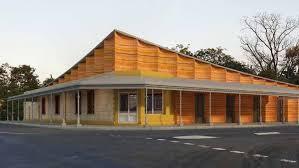
More than just a building, the Baaka Centre is a community-led revival of language, art, and cultural heritage, where Wilcannia’s stories continue to live and grow.In Wilcannia, where the Darling River winds through ancient country, something remarkable is taking shape. The Baaka Cultural and Art Centre isn’t just another building—it’s a bold move to preserve and celebrate the world’s oldest living culture. “Baaka” means “belonging to the river” in Barkintji, and this connection is the heartbeat of Wilcannia. The Paakantji people have called this place home for at least 60,000 years, making it one of the longest continuous links to country anywhere. Even the name “Wilcannia” means “where the river breaks its banks”—the river has always been more than water here; it’s the lifeblood of culture.The Centre is taking over the old Knox and Downs building, right in the heart of town. It’s not just a facelift—it’s a transformation. The Baaka Cultural and Art Centre will be a safe haven for Baakantji artifacts, language, and memories, making sure cultural knowledge is protected and passed on. But this place isn’t a museum frozen in time. It’s alive, with a language lab and a “keeping place” for cultural treasures, plus partnerships with local schools and researchers to keep traditions thriving. There’s also a dedicated art space for artists at every stage, so Baakantji creativity doesn’t just survive—it grows.The Centre will tell the whole story, not just the ancient traditions but also Wilcannia’s post-colonial heritage, exploring how Aboriginal and non-Aboriginal people have shared this land. Expect a mix of artefacts and modern art, painting a rich picture of Wilcannia’s past, present, and future.This isn’t a top-down government project—it’s powered by the community. The Baaka Cultural Centre Wilcannia Aboriginal Corporation is a not-for-profit, charity, and registered for tax-deductible gifts. Local ownership means the Centre truly reflects the needs and spirit of Wilcannia, while welcoming visitors from far and wide. With construction well underway, excitement is building. Soon, Wilcannia will have a cultural centre worthy of its legacy—a place where ancient wisdom meets fresh expression, and where the stories of the Baakantji people find new life. In a world where Indigenous cultures often fight to keep their identity, the Baaka Cultural and Art Centre stands as proof of resilience and creativity. It’s not just preserving the past; it’s shaping the future.

The Nurse Practitioner who's kicking goals

19 June 2025, 11:00 PM

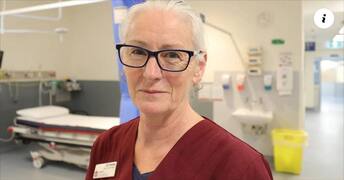
Michelle Cruse, Deniliquin Hospital's beloved Nurse Practitioner, has been recently named MLHD Nurse or Midwife of the Year.She's also a First Dan martial artist who rides a 1200 Harley Davidson Custom Sportster and is currently teaching herself banjo.Michelle is shy of publicity and genuinely thinks she's "really not that interesting." But after five minutes chatting with her, it becomes obvious that her amazing passion for her work and community is simply a by-product of the way she lives her very full and busy life."I just knew that I wanted to help people all along," Michelle says about her calling to nursing, which she felt from the age of four. "I routinely would wrap my teddies and dolls up in bandages and apply first aid."That childhood instinct has carried her through an extraordinary 41-year career that began in 1981 at Prince Henry Hospital in Sydney. She's witnessed incredible changes in healthcare, from caring for a polio patient in an iron lung to today's more education-focused approach to nursing."When I first enrolled as a nurse, learning was heavily clinically based, and I was exposed to so many different scenarios," she recalls. "I once cared for a polio patient in an iron lung, which was very sad, but that has stayed with me and left me knowing that my family was never going to not be vaccinated."Michelle's journey to becoming a Nurse Practitioner 11 years ago was what she calls "a happy accident." After one university told her she couldn't work and successfully study a PhD at the same time, she was, in her words, "incensed.""I had already studied to become a nurse, cared for my blended family of six children while working and completing further study to upgrade to a Bachelor of Nursing degree with First Class Honours and a Graduate Certificate in Critical Care," she explains with quiet determination.Being told no only made Michelle more determined to find a yes. Another university's forward-thinking course administrator really drilled down into her true motivations and dreams, discovering that whilst learning more was the motivator, her heart was always with patients in a hospital setting."I followed my heart and have not looked back since," she says.While juggling work, six children, study, and maintaining a household, you'd be forgiven for thinking Michelle's cup was full. But her hobbies reveal someone with what can only be described as supernatural powers for fitting life into life.When her children took up martial arts, Michelle decided to join them. "Their interest waned after a couple of years, but I was hooked, and went on to become a blackbelt and instructor." She's now a fully qualified First Dan blackbelt who somehow also found time to become an accomplished seamstress – "if you name it, I'll sew it" – and is currently teaching herself banjo because, as she puts it with a laugh, "it's way more fun than cooking!"Now that the kids are grown and there are only three dogs and her partner to consider, Michelle has more time for one of her favourite toys: that 1200 Harley Davidson Custom Sportster.Michelle's move to Deniliquin in 2021 from South Australia was motivated by her ever-present desire to be on the ground doing what she loves best. "I jumped at the opportunity to move to Deniliquin Hospital and support the community here as a Nurse Practitioner. The role initially was only for eight weeks, then another eight weeks, but by then I loved it so much my partner and I decided to stay.""I prefer rural or remote areas, and I feel that the country has just as much to offer as the city, with the only difference being the number of people and shops," she says. "Deniliquin is a beautiful friendly town with amazing gardens, where you see families out together doing fun things. Kids are riding bikes with their parents, at the pool, really enjoying family time."The lifestyle suits both Michelle and her partner, who trains assistance dogs, perfectly. "There's space for all of us to do what we all love best."Michelle's love for her job is evident in how quickly she's become a favourite amongst patients and community members. Her professionalism and care are often formally acknowledged by patients, who describe her as a true asset to Deniliquin Hospital with a rare way of working with people and team members."The Deniliquin Hospital is awesome, and in particular the emergency nursing and medical team is amazing," she says with genuine enthusiasm. "If I need anything at all I have the support to facilitate that with no dramas. The patients and community are so friendly, and I can see myself staying until I retire."When asked what she's most excited about, Michelle's answer reveals where her heart truly lies: "Getting a second full-time nurse practitioner at Deniliquin Hospital is the thing I'm looking forward to the most. They are like minded, passionate, both rural at heart, and will bounce off each other with the same level of enthusiasm."Michelle credits her approach to life to a quote she read in Reader's Digest when she was about 12 years old: "Be bold and mighty forces will come to your aid.""It has stuck with me all my life, and it is so true," she reflects.It's a philosophy that's clearly served her well. From that four-year-old bandaging teddies to today's MLHD Nurse or Midwife of the Year, Michelle has lived boldly indeed. Her message to everyone? Simply: "Just be kind."In accepting her award, Michelle recognised all her colleagues and expressed her love for the Deni community. The community's response on social media tells its own story – comment after comment expressing gratitude, admiration, and genuine affection for someone who's clearly made a profound difference in people's lives.As Christine Weathers put it: "Not even surprised! Who could compare? A well deserved recognition. Our lives were so impacted by your skills."Deniliquin is very lucky indeed to have Michelle Cruse – martial artist, Harley rider, banjo student, and above all, someone who's spent four decades proving that mighty forces really do come to the aid of those bold enough to follow their hearts in service of others.Sources: Rural Health Pro, "Michelle Cruse: Nurse Practitioner, Deniliquin Hospital," and Murrumbidgee Local Health District announcements.

Post script - the Civil War's William Henry Sheppard

15 June 2025, 5:00 AM

From Gettysburg to Greenham Park — uncover the forgotten life of Hay’s own Civil War soldier and his resilient wife Jane.As researched by American Civil War buff and former local Anthony, Mr Sheppard emigrated to Australia and settled in Hay.His obituary, published in The Riverine Grazier on October 12, 1934, rounds out his story."A very old resident of Hay and district who held a unique distinction in that he was probably the only survivor of the great American Civil War, residing in New South Wales at least, Mr. William Henry Sheppard, died early yesterday at the residence of Mrs. Jas. Whyte, his step-daughter, with whom he had resided for many years past.Mr. Sheppard was a native of the Northern States, and at the age of 16 years he joined up with the Northern army in the beginning of the deadly conflict between two sections of one people over the great slavery question of the day, and in which the Southern States sought to secede from the union.Sheppard was attached to the 142nd Pennsylvania Regiment, and fought under Generals Geo. McLelland, Ambrose Burnside and Joseph Hooker.He was present at the historic struggle of Gettysburg, where both the Union and the Confederate forces sustained very heavy casualties in a three days' battle, the Union forces having the satisfaction of holding the field.He also took part in the Battle of the Wilderness, under General Wadsworth, a cousin of Dr. J. W. Kennedy, formerly well known in Hay.At the Battle of Fredericksburg in 1862, Sheppard was wounded and lost three of his best pals in the army.He came to Australia in 1870, and to the Hay district in 1879, and he had resided here ever since, for many years following the calling of blacksmith in Hay and on district stations.He married a widow, Mrs. Guernsey, who died some thirty-three years ago.There was no family of the union.Deceased has a surviving sister, Mrs. Kate Manaham, of Iowa, U.S.A.Mr. Sheppard, who would have been ninety years of age next March had he lived, retained all his faculties right to the end, and being blessed with an excellent memory could tell many interesting stories of the Civil War and of the doings of the opposing armies in that bloody struggle.When the American fleet visited Sydney some years ago he undertook the trip, and basked in the shadow of "Old Glory" once more for a brief period.He also met a compatriot, Thos. Geo. Redmond, who had served in the same company.The two veterans regularly corresponded till Redmond's death a couple of years or so ago.It was claimed at the time of the re-union that there were only three Civil war participants then living in Australia, so that it is quite likely Mr. Sheppard was the last one.He was keenly interested in the land of his birth to the last.Latterly he had been failing, but had not been compelled to lay up.Yesterday morning Mrs. Whyte went to his room, and was told by Mr. Sheppard that he intended to get up.She advised him not to do so till the rain ceased.About a quarter of an hour she went back, and was shocked to find that he had passed away.The deputy coroner dispensed with an inquiry.The funeral took place this afternoon."Despite the claims made in the obituary, 60 American Civil War soldiers and nurses are buried in NSW, with many more laid to rest across the country.Life in HayIn Hay Mr Sheppard was known as "Harry" and lived in Simpson Street, according the estate notice, placed in The Grazier in July 1935. (See notice, at right)The property in Simpson Street was auctioned by Messrs. W. G. Butterworth and Co. In 1936, as the estate was finalised.Further searches of Grazier archives locates a court news item, published in 1886, which could be the very same William "Harry" Sheppard, as the dates align."Harry Sheppard, charged with attempting to rescue a prisoner last Tuesday, laughed very heartily as the evidence was given against him."In the middle of the cases Mr Threlkeld, who is not deficient in humour, albeit of a Scotch kind, remarked: 'You had better stop until the end of the case before you laugh.'"There was no laughter on Mr Sheppard's face when the case was over."According to The Grazier, Harry Sheppard was also fined in 1889 as a parent of a child not attending school, so we could assume this involved his step-children, the children of Mrs Guernsey.No stranger to the courts, Harry again appeared in the Grazier, in 1890 this time for a breach of the peace."At the Police Court this morning, before Mr John Andrew, J.P., Harry Sheppard was charged on summons with using insulting words to Fred Cherry, whereby a breach of the peace may have been occasioned."The accused did not deny using the words, and pleaded that he was under the influence of liquor at the time."Mr Cherry said that he did not wish a heavy penalty to be imposed, he only wanted to show that such language could not be used in the street with impunity."The accused was fined 10s and costs."If it is indeed the same William Henry "Harry" Sheppard he frequented the courts at Hay, sometimes over the ownership of a dog, sometimes for illegally occupying crown lands, and yet he is also noted among the subscribers who donated towards the building of the Hay Hospital.It seems Harry spent his final colourful days in good company in Hay, looked after by the daughter of his late wife.Jane Eagan / Guernsey / Sheppard - the wife of the Civil War soldierThe widow of Private Harry Sheppard has a notable life of her own, before she married the Civil War soldier.Jane (or perhaps even Mary Jane) Caldwell was born to Parents Thomas and Jane in August 1850, in Ayrshire, Scotland.Historic records show that in 1863 she wed Denis Egan and together they had three children - Bridget, Thomas and Ellen Jane.In 1873 she wed Thomas Guernsey, and bore five children - Ada Bertha, Martha Alice, Jane Elizabeth, a baby boy, who did not survive and Alice.In February 1880 a police report published in the Bendigo Advertiser reported that Jane had been charged with bigamy.Witnesses gave evidence that they had been present at the wedding of Jane and Denis Egan - Denis was present in the court, as was Jane's second husband Thomas Guernsey.Thomas stated to the Court that he knew Jane, but not Denis.The matter came before the Court when Jane sought treatment for a broken collar bone, telling the doctor that Denis had hit her, and broken her bone, for the second time.After being sent for sentencing on the bigamy charge, Thomas Guernsey was tried for the repeat assault on Jane, but was acquitted.Evidence was given that the injury occurred "not intentionally, and after great provocation."The charge against Thomas was dismissed, on the grounds it had been "wrongly brought."During the sentencing hearing, Jane's counsel argued that the charge caused no injury to society and was brought by a cruel and vindictive man, namely Thomas Guernsey.The pleas for mercy were heard. Jane was convicted but served no term of imprisonment.Melbourne newspaper, The Argus, reported on the case."Jane Guernsey, convicted of bigamy, was ordered to be imprisoned only until the rising of the Court, as his Honour considered she had suffered enough punishment for her offence."The prisoner, he said, had been treated in a most cruel and dastardly manner by her second husband (Guernsey), and the case was altogether a most exceptional one."How Jane came to believe she was free to wed a second time remains a mystery, and during the court case, it was simply stated that she had been deserted by Denis Egan.The Argus reported Jane had told Thomas after their marriage that she wished to leave him, as she discovered Denis was still alive, and they had lived apart for some time before the charge of bigamy arose.How Jane and her children then came to live in Hay is also unknown, but we assume her previous marriages were annulled by the time she wed Harry.Unfortunately for Jane, she and Sheppard also had their troubles.In 1898 The Hay Standard newspaper reported a serious assault on Jane, by then husband Harry.Jane required medical treatment for a very serious head wound, inflicted by Harry whilst he was intoxicated.Given her dubious choice of men, Jane appears to have been a kindhearted women.In 1900, as reported by The Riverine Grazier, Jane informed Police she had given shelter to a homeless boy, until her charity ran low, and she could no longer afford to feed him.The Court decided to send the child to an industrial school in Port Jackson.Jane's death notice, placed by her children in The Grazier in 1901, also gives an insight to her care of her brood."In loving remembrance of our dear mother, Jane Sheppard, who died August 3rd, 1901.Gone from our midst but not forgotten, Loving mother, thy image we keep, Never till life's end shall we forget thee, Shine in our hearts in the peace of thy sleep.Inserted by her loving daughters, A. A. and J. Guernsey."When Jane died she was aged just 51.She is buried at Hay Cemetery.Do you have a story to share?The Riverine Grazier is always keen to research the stories of this region of NSW, or speak to those who remember how our community landscape once looked.You can contact Kimberly ([email protected]) or Krista ([email protected]), give us a call on 02 6993 1002 or drop into 95 Lachlan Street.Special thanks once again to Anthony Bennett for his original story, which prompted this postscript, and was published last week.

From Balranald to the Deep: An Octopus Named for a Riverland Hero

10 June 2025, 11:00 PM

Deep in the southern ocean, a newly discovered species of octopus now bears the name of a woman from the small Riverina town of Balranald. Cirroteuthis kirrilyae, a ghostly-looking deep-sea creature, has been named in honour of Dr Kirrily Moore, a marine biologist whose career has quietly shaped our understanding of life beneath the waves.It’s a pretty special nod for someone who grew up a long way from the coast. Balranald, sitting on the banks of the Murrumbidgee in south-west NSW, is about as inland as it gets. But Kirrily Moore’s journey from river country to the ocean’s depths shows where a curious mind and a love of nature can take you.These days, Moore is the Invertebrate Zoology Collections Manager at the Tasmanian Museum and Art Gallery (TMAG). She looks after close to 300,000 preserved marine specimens—everything from sea jellies and anemones to strange deep-sea creatures most of us have never heard of. It’s detailed, often unglamorous work, but it’s absolutely vital for understanding Australia’s marine biodiversity.That brings us to the octopus. Cirroteuthis kirrilyae is part of a group known as cirrate octopuses, or more affectionately, dumbo octopuses—named for the little fins on the sides of their heads that flap like ears. For years, these southern specimens were mistaken for their Arctic relatives, but in 2025, researchers Dr Tristan Verhoeff and Dr Steve O’Shea confirmed what many suspected: Australia’s version was something different. A species all of its own.That might not sound like front-page news, but it’s a big deal in the world of taxonomy. It means that what scientists thought was one widely spread species is actually two, each adapted to its part of the world. And this one—well, it’s ours.Cirroteuthis kirrilyae is brilliantly adapted to life in the deep. It has a flexible internal shell that gives its big fins the support they need, and its long arms are joined by thin, webbed membranes that help it drift and glide through the water. It looks almost like it's flying. Down there in the dark, where sunlight doesn’t reach and the pressure’s intense, this little octopus hunts crustaceans and worms with quiet efficiency.The naming of the species is more than just a nice gesture. It reflects the huge amount of behind-the-scenes work done by scientists like Moore, who spend years cataloguing, preserving and analysing specimens. Taxonomy isn’t flashy, but it’s foundational. Without it, we wouldn’t even know how much life is out there, let alone how to protect it.Describing a new species takes patience and an eye for detail. You’ve got to compare specimens, check old records, and sometimes even dive into genetic data. It’s detective work, really—and Moore has been doing it for years. Her contributions have helped build one of the most important collections of Tasmanian marine life in the world.Having a species named after her is a well-deserved recognition, not just of her individual efforts but of the whole field of museum science. These collections act like time capsules, helping us understand changes in biodiversity, track species movements, and make discoveries like this one possible.And there’s something fitting about it too—a deep-sea species named after someone from the heart of inland Australia. It’s a reminder that you don’t have to grow up near the ocean to make a big impact on marine science. All you need is a healthy dose of curiosity and a willingness to follow it wherever it leads.So somewhere out there, beneath the cold, dark waves, Cirroteuthis kirrilyae is floating through the deep. It’s a quiet, graceful creature. And now, thanks to a woman from Balranald who never stopped asking questions, we know its name.

From Gettysburg to Hay: The Remarkable Journey of William H. Sheppard

08 June 2025, 5:00 AM

From Gettysburg to Hay: The Remarkable Journey of William H. SheppardInterred in Hay Cemetery is a gentleman named William H. Sheppard.How did this man come to his final resting place when he was one of the fighters in the American Civil War?Former local and author, Anthony Bennett tells the interesting tale.BY ANTHONY BENNETTCould a small south-western settlement have ties to a conflict 16,000 kilometres away? This is exactly how Hay, formerly Langs Crossing, connects to what some called 'The First Modern War'.The American Civil War (1861-1865) was fought primarily over states' rights, slavery and economic differences between the industrial North and the agricultural South.Wealthy plantation owners put profit ahead of human wellbeing.How did Hay develop a link to this bloody conflict? The war claimed over 700,000 lives. It was fundamentally caused by racism.The struggle continues to stir strong emotions in today's United States. How did our small community become connected to such a consequential historical event?Hay was half a world away from the fighting. It had a modest population of just 172 citizens. The colonies of Australasia contributed approximately 140 volunteers to the conflict.None of these volunteers came from Hay. The connection emerged after the war ended, when veterans returned home.Not all veterans went home. This is where we find William H. Sheppard's story. He served in Company H of the 142nd Pennsylvania Infantry Regiment from 1862 to 1866, remaining in military service after the conclusion of the war.His final resting place would be in our own Hay Cemetery. This creates our unique connection to one of history's most significant conflicts.The 142nd Pennsylvania: A Regiment's Bloody HistoryThe 142nd Pennsylvania Infantry was formed from counties in south-western Pennsylvania and north-western Maryland. They joined the Army of the Potomac against General Robert E. Lee's Army of Northern Virginia.The regiment's casualty rate was staggering. Of 935 enlistees, 809 became casualties. This 86 per cent rate highlights the war's devastating human toll.They fought in many famous engagements. These battles have become legendary in American military history.Their first major fight was at Fredericksburg, Virginia (12-15 December 1862). This Union defeat saw thousands of Federal soldiers fall against well-fortified Confederate positions.The 142nd next fought in the Chancellorsville Campaign (27 April-6 May 1863). This was another Confederate victory despite the South being heavily outnumbered.Sheppard's regiment participated in the Battle of Gettysburg (1-3 July 1863). Many historians consider this the Civil War's turning point.The Union victory at Gettysburg stopped General Lee's second northern invasion. It dealt a severe blow to Confederate morale and military prospects.As the conflict continued, the 142nd endured the Battle of the Wilderness (5-7 May 1864). This chaotic engagement occurred in dense woodland that neutralised Union advantages.Days later, they fought at Spotsylvania (8-12 May 1864). Some of the war's most savage fighting happened here. Soldiers engaged in hand-to-hand combat for 22 hours at the "Bloody Angle."The regiment participated in the Siege of Petersburg, Virginia (16 June 1864-2 April 1865). This prolonged campaign prefigured the trench warfare seen later in World War I.Finally, they took part in the Appomattox Campaign (28 March-9 April 1865). This led to the surrender of Lee's army on 9 April 1865.A Mysterious Journey to the AntipodesPrivate William H. Sheppard's post-war story remains vague. When did he come to Australia? What brought him to our shores?These questions lack clear answers. There is little official record of his arrival or early years in the colony.What would prompt a battle-hardened veteran to travel halfway around the world? Perhaps he sought escape from painful war memories.Maybe Australia's gold rushes attracted him. These continued to draw fortune-seekers throughout the 1860s and 1870s.Or possibly, like many immigrants, he wanted a fresh start. Australia was unburdened by the tensions dividing post-war America during Reconstruction.Whatever his reasons, Sheppard made his way to Australia. He eventually settled in our town of Hay.He lived out his remaining years as one of our community's more unusual residents. Details of his life in Hay remain sparse.We know with certainty that he passed away on 11 October 1934. His precise age at death is unknown. If Sheppard enlisted as a young man, he could very well have been in his 90's when he died in 1934.Considering his Civil War service, Mr Sheppard was likely in his 90s when he died. This shows impressive longevity for a survivor of history's bloodiest conflicts.He also endured the rigours of colonial Australian life. His resilience speaks to his remarkable character.Evidence in Our MidstWe have concrete evidence of Sheppard's presence in Hay. This comes in the form of burial records maintained by the shire.Hay Shire Council cemetery documents confirm his resting place. William Henry Sheppard is interred in Lot 18, Row AE of the Anglican section.This simple grave represents a tangible link between rural Australia and American history. The connection spans oceans, decades, and vastly different cultural contexts.Not Alone: Australasian Connections to the American Civil WarSheppard's story is unique to Hay. However, the broader Australian connection to the American Civil War deserves mention.Despite geographic isolation, approximately 140 men and women from Australasia participated. Some were expatriates already living in America when fighting began.Others were sailors who found themselves in American ports and enlisted. A smaller number travelled specifically to join the conflict.They were motivated by ideological convictions, adventure-seeking, or financial compensation. These volunteers predominantly fought for the Union.This reflected the British Empire's official neutrality but tacit Northern support. Their stories form a little-known chapter in our region's military history.They predate our more celebrated involvements in the Boer War and World War I. Yet they represent an important international dimension to Australian identity.The Civil War's Global ImpactThe American Civil War had significant international dimensions. It disrupted global cotton supplies, affecting textile industries worldwide.This included nascent operations in Australia. The conflict also stimulated demand for wool, benefiting Australian producers.Our wool helped fill the gap left by the American South's diminished production. Beyond economics, the war held important political implications.It influenced democracies and colonial societies globally. The Union victory represented a triumph for democratic governance.It established the primacy of federal authority over states' rights. These concepts would become relevant to Australia's own federation debates decades later.The emancipation of enslaved Americans resonated with humanitarian sentiments in Australia. Transportation of convicts had ended relatively recently in our own history.Questions about Aboriginal treatment were increasingly entering public consciousness. These parallels created ideological connections between our nations.Remembering Private SheppardPrivate Sheppard's journey from American battlefields to Hay reminds us how global events touch remote communities. He likely witnessed extraordinary historical moments.Perhaps he heard Lincoln's Gettysburg Address. Maybe he saw General Lee surrender at Appomattox Court House.He might have marched in the Grand Review of the Armies in Washington. He survived battles where thousands of his comrades fell.He endured harsh military campaigns. He emerged to begin life half a world away from his origins.What stories he might have told curious locals in Hay! Tales of charging across battlefields facing artillery fire.Stories of camaraderie among soldiers. Accounts of jubilation at war's end. Did he maintain connections with Pennsylvania veterans?Did he ever explain his journey to Australia? Did he find peace here that eluded him in post-war America?These questions may remain unanswered. Yet Sheppard's presence enriches our understanding of Hay's place in global history.His grave reminds us that personal journeys intersect with world events. These connections transcend borders and generations.A Living Historical ConnectionThe American Civil War remains one of history's most studied conflicts. Its causes and consequences continue shaping American society today.The war's legacy includes constitutional amendments abolishing slavery. It guaranteed equal protection under law.It prohibited racial discrimination in voting rights. Full realisation of these principles would require another century of struggle.For Hay, our connection to this momentous event comes through one man. Yet it represents something larger.It shows our community's place within global movements of peoples and ideas. Sheppard's journey from Pennsylvania to New South Wales is remarkable.It demonstrates how interconnected our world was, even in the 19th century. Our small town became part of a much larger historical narrative.As we pass the Anglican section of Hay Cemetery, we might spare a thought for William H. Sheppard. From Civil War battlefields to peaceful retirement in rural Australia. His story, though incomplete in our records, adds unique dimension to our town's heritage. It connects us to one of modern history's pivotal conflicts.The author would like to thank the staff of the Hay Shire Council for their assistance with cemetery records and local historical information.

Hillston’s Jennifer Rose honoured on the 2024 Hidden Treasures Honour Roll

05 June 2025, 2:00 AM

Hillston’s Jennifer Rose recognised for her decades of compassionate community service and volunteer leadership across the Western Riverina.Jennifer Rose, from Hillston has been announced as one of the NSW Government’s 2024 Hidden Treasures and named on the honour roll.“Jennifer Laurel Rose was the much-loved Community Health Sister for Hillston, Rankins Springs, Carrathool, Goolgowi and Merriwagga from 1970 until 2003 when she retired,” Ms Rose’s ciation reads.“She gave reassurance and practical advice to new mothers and to people of all ages. “In 1996 Jenny started a local branch of Can-Assist in Hillston as President then Secretary until October 2022. Jenny is now the Assistant President and Patient Liaison Officer. “Jenny also volunteered weekly hand and nail care sessions to frail-aged care residents in Hillston Hospital and Lachlan lodge for 19 years. “When the Hillston-Gunbar Parish of the Uniting Church in Australia could no longer support a ministry agent, Jenny became a volunteer lay leader in 2002. This is a multi-linked congregation including the towns of Hillston, Merriwagga, Goolgowi, and Gunbar. Jenny is still heavily involved in the church today, which offers regular worship services, the Sacraments, weddings and funerals.“Jenny initiated Family Church in the Park, supporting several churches, which is gaining popularity with the community. Jenny has been an advocate for pastoral and end of life care and supports families going through crises and difficult times. Jenny has delivered hundreds of funerals with a personal touch. “Jenny is greatly respected in her community for the love and care she has bestowed on numerous families over the years. “Jenny was chosen as the Murray Local Woman of the Year for 2024 for her tireless involvement in her community over the decades, and the difference she has made to many lives.”The Hidden Treasures Honour Roll is a recognition program that acknowledges the important volunteer roles women and girls play within NSW regional, rural and remote communities.All nomination stories to celebrate the extraordinary women who make up this year’s honour roll have been written by their nominators in their own words. Joint ministers The Hon Jodie Harrison MP and The Hon Tara Moriarty MLC paid thanks to the volunteers named on the 2024 roll. “As we celebrate the 2024 Hidden Treasures Honour Roll, we want to thank the incredible regional and rural women who give so much to their communities,” The ministers said. “This annual tribute is all about recognising the time and effort you dedicate to making a difference by volunteering in your communities. The resilience you have shown has kept your communities thriving. Your strength and spirit have shone through even in tough times. “The stories behind each nomination highlight just how important your work is. Each year, we are inspired by the nominations from your peers—fellow community members—which honour you and the vital role you play in their lives. “It is a pleasure to present the 2024 Hidden Treasures Honour Roll. The Honour Roll celebrates over 1,300 amazing women nominated since 2010. “Thank you for your hard work and the positive impact you make every day across NSW. Your contributions truly matter, and together, we are building stronger communities.” Mrs Rose joins other women from across the Back Country, who have been recognised as Hidden Treasures: Hay’s Phyllis Jones and Ellen Townsend (2011) Kym Wooding (2014 and 2015) and Coleen Houston OAM (2015), Hillston’s Patricia Johnson, Thelma Mitchell (2012), Betty Scanlon (2012 and 2016) and Louise Fisk, (2015), Menindee’s Daphne Biggs (2014), Wendy Anderson (2014) Penny Black (2021-2022) and Dana Brighenti (2023) from Rankins Springs, Ivanhoe’s Ellen Pippin (2016) and Claire Butler from Balranald (2020).Nominations for the Hidden Treasures Honour Roll 2025 are now open and will close Wednesday, 31 December 2025. Nominate here.

Australia's National Meat Pie Day

29 May 2025, 5:00 AM

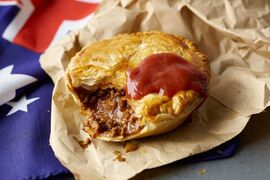
 June 1st, marks National Meat Pie Day here in Australia, a dedicated time to celebrate this absolute legend of a dish. It's not just any old meal, the meat pie is considered a national dish in our great country!The meat pie holds a truly significant place in Australian culture. Just how significant? Well, it's estimated that we Aussies munch our way through a whopping 270 million meat pies every single year! It's a staple at sporting events, a go-to for a quick feed, and generally just woven into the fabric of everyday life.Now, while we've well and truly adopted the meat pie as our own, giving it that quintessential Aussie flair, its story actually stretches back much, much further than Federation. The origins of the meat pie can be traced back to ancient times. Believe it or not, there's evidence suggesting early versions existed in places like ancient Egypt as far back as the Neolithic period, around 9500 BC! Early civilisations like the ancient Egyptians, Greeks, and Romans were experimenting with using pastry, often made from bread dough incorporating nuts, honey, and fruits, as a vessel for cooking and carrying meat. These weren't exactly the savoury delights we know today, and often the pastry wasn't even intended to be eaten!Fast forward to the Middle Ages, and the pie truly came into its own as an ingenious way to preserve meat. With no refrigeration or modern baking dishes, a tough pastry case was used both as a cooking container and a preserver. These were often called "coffins", made from very hard rye flour that could be up to seven inches thick and wrapped around the meat before baking. This incredibly robust casing could actually preserve the meat for up to a year!Interestingly, the rock-hard "coffin" pastry wasn't for everyone. It was typically given to the poor, or if you were wealthy, it was crumbled up in the kitchen and used to thicken soups. So, while today we see the pie as a bit of an egalitarian symbol, enjoyed by everyone from tradies to share traders, it was originally a food for the rich, simply because only the wealthy owned ovens. It wasn't until Victorian times that the pie really became street food and gained widespread popularity among all classes.So, how did this ancient, class-divided creation end up becoming such a beloved Australian culinary symbol? It boils down to practicality. When settlers arrived, all the necessary ingredients were readily at hand. Pies could only truly thrive in countries that had wheat and dairy or pork. Combine that with a focus firmly on meat, a low priority for vegetables, and the ability to make them from just about any kind of meat available, and you have the perfect settler food. The earliest pies brought over, those "coffins" or "coffyns", were savoury with tall, straight-sided crusts and sealed tops. Those without lids were known as "traps". The meat pie as we recognise it today, with its iconic pastry and savoury filling, likely evolved from these earlier forms, particularly with the arrival of British settlers in the 18th century.Today, we get to celebrate that evolution and our unique relationship with this delicious dish. So whether you grab one from your favourite local bakery, whip one up yourself, or just appreciate its place in our history and culture, take a moment this National Meat Pie Day to celebrate the humble, yet mighty, Aussie meat pie!

Let’s all celebrate National Cheese Day, June 4.

28 May 2025, 5:00 AM

From dairy delight to dopamine hit — why cheese lights up your brain and that's perfectly normal.National Cheese Day has rolled around again, and what a ripper of a reason to celebrate! It got us thinking about our favourite savoury delight and some bonkers stuff we've heard about it. You might have seen a story kicking about, maybe resurfacing on social media years after it first appeared, claiming scientists believe cheese triggers the same part of the brain as hard drugs. It's the sort of thing that gets shared, even years after it first made waves.This idea keeps popping up – something supposedly harmless like sugar, pornography, religion, sex, Facebook, music, or yes, cheese, being compared to drugs of abuse because they supposedly activate the same brain regions. Every week seems to bring a new "addiction" comparison. The Problem with Drug ComparisonsHowever, comparing anything pleasurable to hard drugs has some worrying implications. Drugs are often presented as bad – illegal, damaging, ruining lives, causing crime.The infamous 'This is your brain on drugs' campaign helped spread the notion that drugs damage your brain, which is often true. It's not a massive leap of logic, then, to suggest that anything having similar effects to drugs must also be bad. If you're worried about scoffing too much cheese, hearing it's similar to drug use might seem to back up your concerns.The Science Behind PleasureBut hold your horses! While those raising concerns might have good intentions, these "just like drugs" comparisons often show a fundamental misunderstanding of how the brain works.Anything that gives us pleasure activates the brain's mesolimbic reward pathway. This system is a deeply embedded area of the brain, basically responsible for reviewing what we're experiencing, deciding if it warrants a feeling of pleasure or reward, and supplying that feeling. Neurological processes here use dopamine, often labelled the pleasure chemical.This reward pathway is fundamental, and so many things connect to it and can activate it. Think of it like a central server for good feelings – loads of things plug into it.The opioid system, governed by endorphins, has potent effects on the reward pathway. Alcohol's pleasing effects involve interactions with endorphin-dependent processes. And that potential addictive nudge from cheese? That's down to casein, a protein found in much higher concentrations in cheese than milk. Casein activates the opioid system, inducing pleasure. This makes sense evolutionarily, the reward system encourages helpful behaviours. As newborns, we live on milk, and getting a bit of a high from it makes us more likely to drink it.Why the Comparison Falls ShortThe problem is, why do these crucial, ancient neurological processes get labelled as the bits drugs work on, as if that's their main job? Drugs are the interlopers here. Food and experiences activate the reward system through processes that evolved specifically for that purpose. Drugs, by contrast, stimulate these pathways directly or artificially, disrupting our natural checks and balances and potentially causing serious problems like addiction.Saying cheese is just like using drugs because it uses the same brain regions, is a bit like saying withdrawing money from your account is just like robbing a bank. The reality is far more nuanced. Yes, what we eat and do today is different from the past, and it's silly to say things are automatically safe. But labelling the reward-inducing parts of the brain as the drug bits is unfair, unhelpful, and pretty meaningless.You can write a thank-you card and a ransom note with the same pen, but the card won't make the recipient call the cops. Using your hand to stroke a baby doesn't mean it's the same as using it to wield an axe. Just because something uses the same brain regions that drugs work on doesn't mean they are just like drugs themselves. So, this National Cheese Day, enjoy that delicious cheese! It's activating ancient pathways that encourage good things, not turning you into a criminal mastermind trying to smuggle a wedge of Jarlsberg through customs.

Celebrating the Heart of Our Communities: National Volunteers Week is marked

26 May 2025, 5:00 AM

As Australia winds up National Volunteers Week celebrations, it's a timely moment to pause and acknowledge the extraordinary contribution millions of Australians make every single day. From providing emotional support to helping out with local clubs, volunteers are the backbone of our nation, giving generously of their time and skills.The sheer scale of volunteering in Australia is staggering. According to Volunteering Australia, in 2020 alone, over five million Australians formally volunteered through organisations, with an additional 6.676 million informally lending a hand. This collective effort isn't just about goodwill; it translates into a significant economic and social contribution, estimated to be around $290 billion annually. Whether it's running errands for a neighbour, providing transport, or simply offering a listening ear, these often-unseen acts of informal volunteering are crucial.But why do Australians volunteer? The reasons are as diverse as the volunteers themselves. Many are simply driven by a desire to help others (64 per cent) and contribute to their community's well-being. For others, it's about the personal satisfaction (57 per cent) and the feeling of doing something truly worthwhile (54 per cent). Volunteering offers a genuine sense of purpose and accomplishment, especially when contributing to a cause they deeply believe in.It's not just the community that benefits. Volunteering provides incredible opportunities for personal growth and development, allowing individuals to learn new skills, gain valuable experience, and build confidence. It's also a fantastic way to connect with like-minded people, build new friendships, and expand social circles. Beyond the personal skills and connections, volunteering has been linked to tangible health benefits, including reduced stress, lower blood pressure, and improved overall well-being.While the spirit of volunteering is strong, it's important to recognise the challenges some face. Busy schedules and other commitments mean time constraints can be a significant barrier. Others may face financial concerns or simply not be aware of available opportunities or feel they lack the necessary skills.Despite these hurdles, the spirit of giving remains a defining characteristic of the Australian character. As we observe National Volunteers Week, let's take a moment to thank the millions of volunteers whose dedication enriches our lives and strengthens our communities every single day. Their selfless work is truly invaluable.

Townsend Duryea - The award winning New York photographer who retired to Balranald

24 May 2025, 5:00 AM

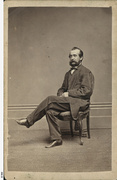
How did an award-winning photographer, with royal portraits forming part of his portfolio, find his way to live out his retirement at Balranald?Townsend Duryea, photographer, was born at Glencoe, Long Island, New York in 1823, a son of Hewlet and Ann Duryea.He was trained as a mining engineer and his experience in the art of photography reportedly dates from 1840.He arrived at Melbourne in 1852 at the time of the gold rush, but may have despaired of striking it rich, as around September 1853 he set up a partnership with Archibald McDonald as "Duryea and Macdonald, Daguerrean Artists" in Bourke Street, and sold their mining equipment.In 1855 he moved to Adelaide daguerreotype rooms at the corner of King William and Grenfell Streets.Later that year Townsend and his brother Sanford formed the partnership of Duryea Bros. They were the first photographers known to have worked outside Adelaide; by 1856 they had visited Auburn, Burra, Clare, Kapunda, Goolwa, Milang, Port Elliot and their near-by villages.In 1857 Duryea used experience gained in America as a shipbuilder to build the thirty-foot cutter 'Coquette'.Though the cutter was said to be for the River Murray trade, it was used mainly in racing; stakes in private challenges were sometimes £100 a side.Duryea was also interested in copper finds near Wallaroo, and by February 1861 a fine lode of copper had been cut on section 471, the property of "Mr Duryea and others." Within a few months the Duryea Mining Association owned fifteen mineral sections in the area.In 1863 Townsend dissolved the partnership with his brother. His studio was the most popular in Adelaide, patronised by governors, visiting dignitaries and Adelaide's leading citizens.As well as portraits he produced many views, including several notable panoramas of Adelaide.In 1867, Duryea was chosen as the official photographer in the royal visit of 1867. And on November 9 the Duke of Edinburgh posed at Duryea's studio for the first royal portraits made in Australia.He produced a bound booklet to present to His Royal Highness as a souvenir of his visit to Adelaide, and was rewarded with authority to use the slogan "By Royal Appointment".Duryea then accompanied the official party throughout the visit, travelling in a specially prepared photographer's van.By the early 1870s Duryea's panoramas, royal portraits and prizes won in Society of Arts photographic competitions had made him famous.The achievement for which Duryea is best remembered is his Panorama of December 1865. Taken from the "Albert Tower" of the Town Hall, Adelaide, it is composed of 14 photographs which Townsend made in the course of one day.In 1872 he photographed almost all the surviving old colonists and made their portraits into a large mosaic comprising some 675 cartes-de-visite.Described as 'short in build' he was extremely energetic, of 'vigorous mind and keen intelligence, his whole character bearing the impress of sterling integrity'.His career as a photographer was cut short when his studio and entire collection of 50,000 negatives were destroyed by fire on 18 April 1875.This loss was a serious blow to Duryea and historians alike, as the plates were the best record of early South Australian colonial life ever made.After the fire Duryea moved to the Riverina district of New South Wales and took up a selection near Yanga Lake, called Yanga Farm.He later moved to Parkside, Glen Emu, near Balranald, where he suffered a stroke then died on December 13, 1888, after falling from a buggy in which he was riding with his daughter.He is buried at Parkside near Balranald.Duryea was married twice in America: first to Madalina and second about 1852 to Elizabeth Mary Smith who accompanied him to Adelaide.In Adelaide on 22 May 1872 he married Catherine Elizabeth Friggins.Born in 1874 to Catherine and Townsend, Alfred Nixon Duryea settled in Balranald and had a large family.Next came Alice, and Catherine, who was born in Balranald and married Ernest Campbell in 1903.Arthur Duryea born in Balranald in 1879, died in Redfern in 1951.Walter Joseph Duryea died in Horsham, in Victoria in 1972.Several of Townsend Duryea's sons and grandsons became photographers.Obituary - Mr Townsend Duryea"It is with regret that we have to announce the death of Mr. Townsend Duryea, of Parkside, Glen Emu, which took place at his residence early on Thursday morning last.It appears that Mr. Duryea and his daughter drove over to Juanbung station on Wednesday forenoon, and while returning home the same afternoon the horse stumbled and fell, throwing the occupants out.Miss Duryea was stunned by the fall, but soon recovering got up, and under her father's instructions released the animal. Mr. Duryea was sitting down close to the wheel, not appearing to be much the worse; but by the time his daughter got the horse into the trap again and went to assist her father, who was paralysed, into the gig, he went off into a faint, and it was some time before his daughter could get him round again.However, when he had sufficiently recovered Miss Duryea got him into the trap, and they drove home. On getting inside the house Mr. Duryea, who was visibly very weak, again fainted, and remained in a very precarious state until 2.30 next morning, when death relieved him from his sufferings.Assistance was sent for to Sunnyside, where Mr. Pritchard, who has had considerable medical experience, was staying, but though that gentleman remained with him to the last he was unable to bring him round.Mr. Duryea was an old and much respected resident of this district, having come from Adelaide about 14 years ago, when he was in the photography business, and selected near Yanga Lake, what is now known as Yanga farm, on which property he was most successful in producing a good crop of hay even in the worst of seasons.About two years ago he took up a homestead lease on Glen Emu run, where he was residing at the time of his death.The deceased was 65 years of age, a son of the late Hewlet Duryea, of Glencoe, Long Island, where he was born.Mr. Duryea was one of the foundation members of the Balranald Lodge, and the oldest royal arch mason in this district, in which now only two remain.The deceased was a man of vigorous mind and keen intelligence, his whole character bearing the impress of sterling integrity."The Riverina Recorder (Balranald's newspaper), December 19, 1888.What are cartes-de-visite and daguerreotype rooms?Cartes-de-visite are small, calling card-sized photographs, typically black and white, that were popular in the mid-19th century. They were invented in 1854 by André Disdéri, who developed a method of producing multiple images on a single glass plate, making portrait photography more affordable and accessible.Daguerreotype rooms were the studios where early photographs, specifically daguerreotypes, were produced. These rooms housed the equipment and chemicals needed to create the unique, mirror-like images that were a hallmark of this early photographic process. Daguerreotype rooms were often found in cities and served as commercial establishments, attracting clients who desired portraits or likenesses of themselves or loved ones.

Vinnies calls for volunteers as national volunteer week highlights critical community support

22 May 2025, 5:00 AM

As Australia celebrates National Volunteer Week, the St Vincent de Paul Society NSW (Vinnies) has highlighted the extraordinary contribution of its volunteers while issuing an urgent call for more community members to join their ranks.The annual celebration comes as Vinnies reveals impressive figures from the West region, where dedicated members have supported 8,500 people over the past year, providing $775,000 in financial and material assistance to those most vulnerable in our communities."We're able to positively impact so many lives each year because of the dedication of our volunteers and members," said a Vinnies spokesperson. "Their commitment to supporting individuals experiencing disadvantage is the backbone of our organisation."Across NSW, Vinnies operates an extensive network of shops and support centres that rely heavily on volunteer efforts to address pressing social issues, including homelessness, poverty, and financial hardship.However, the charity has emphasised that more volunteers are urgently needed, particularly in Vinnies shops and support centres, to ensure they can continue to provide essential services to those facing challenges.A Multi-Faceted Approach to VolunteeringVinnies offers diverse volunteering opportunities that cater to different skills and availability. Their retail volunteering program is a significant contributor to the organisation's funding model, with volunteers performing crucial tasks such as sorting donations, assisting customers, and managing day-to-day operations.Community support services represent another vital area where volunteers make a difference, providing food assistance, financial aid, and support for those experiencing housing stress. These frontline volunteers deliver direct assistance and connect people with additional services when needed.At the parish level, Vinnies members work directly within local communities, offering immediate support to those experiencing financial difficulties by providing food, assistance with rent, and other essentials.Benefits Flow Both WaysWhile the impact on those receiving assistance is clear, volunteering also offers significant benefits to those who participate, providing opportunities to build skills, gain valuable experience, and forge meaningful connections within the community."Our volunteers often tell us they receive as much as they give," the spokesperson added. "The sense of purpose and community that comes from helping others is immeasurable."As National Volunteer Week continues, Vinnies is calling on Australians who can spare even a few hours each week to consider volunteering with the organisation, emphasising that each contribution, no matter how small, helps strengthen the safety net for our most vulnerable community members.Those interested in volunteering can contact their local Vinnies shop or visit the organisation's website for more information on how to get involved.National Volunteer Week runs from 19-25 May 2025 and recognises the vital contribution of Australia's nearly six million volunteers who donate their time and skills to support communities across the nation.Get Involved by visiting the Vinnies Volunteering Page at https://www.vinnies.org.au/nsw/get-involved/volunteering-nsw

Hay ICPA hosts Lunch by the Lake - photo gallery

21 May 2025, 8:00 PM

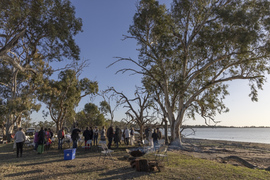
By Bec Bunyan - Hay ICPALast Sunday 18th May, Hay Branch of the Isolated Children's Parents Association (ICPA) held a member recognition lunch event on Lake Waljeers, hosted by President Michelle Spence. We managed to select the windiest day of Autumn for the occasion, but it didn't deter 46 attendees enjoying a delicious lunch and fabulous conversation under glorious sunny skies.Some easy background music, a few lucky door prizes and complimentary refreshments on arrival ensured the scene was set for a friendly and welcoming event. We wanted to focus on celebrating volunteering and the connecting of old and new members, and that's exactly what ensued. There wasn't a dry eye in sight as guest speaker Hannah Speers from Adelong generously shared her personal story and provided inspiration as she spoke about community spirit and what people can overcome with the support of others.  We took the opportunity to encourage new memberships by inviting people to join ICPA and by doing so attending the lunch free of charge. This resulted in 15 new (or returning re-joined) members for the branch whilst exposing them to information about ICPA through an address by Michelle, and casual chats with existing members. We were incredibly proud to receive some great feedback from attendees that were thankful for the opportunity to reconnect with ICPA, and we're excited to keep the momentum going off the back of this fantastic event. * A funding grant provided by BayWa r.e. Australia as part of the Bullawah Wind Farm development supported the event.Images: The Riverine Grazier / Margie McClelland

My toenails fell off, and my lungs arrived in an esky

16 May 2025, 11:00 PM

Picture this: you're being wheeled into an operating room on a bed, husband by your side. As you are saying your goodbyes, a medical team enters the area, armed with an esky. Your husband asks the team if there are lungs in there, and they say yes. Two organs which will soon be in your body. You're being wheeled in for a transplant, and the organs you will receive have been walked right past you on ice.This was Di Butler's experience.Di Butler is a well-known and respected Hay local. Tough, plain spoken and empathetic, nothing seems to ever get her down.Di originally came to Hay to live when she was 15. Before then, her family lived in Ivanhoe and other places within the region.When she finished school, she delved into a wide variety of employment positions."I have been a shop assistant, cleaning, and then I think the longest job I held was at Hay Hospital on the domestic staff," she said.Di met her husband in 1982, in the traditional country town manner; at the Caledonian Pub."We were quite young, he's about 18 months older than me," she said."We were together for a little while, then we got married. We were married for five years and then we had Matthew."After having Matthew, Di then went back to casual roles including some bar work and with home care.She began her journey in the world of education as a teacher's aide at Hay Public School, concluding her role when her health began to decline. She now happily works at Hay War Memorial High School as a School Learning Support Officer, and has for 13 years.The DeclineDi said it all began in a relatively short time frame."It was six years from the time I noticed the decline to the time I was diagnosed with Emphysema or COPD (Chronic Obstructive Pulmonary Disease)."It was six years after that when I received the transplant."They said to me the worst scenario would be me needing a transplant."Prior to that, I was told I likely only had two years to live if I didn't have the transplant."Receiving a basic death sentence is not something most of us will face."It's like someone kicks you in the guts. What little breath I had, I lost it," she said."He's a lovely doctor, but I wasn't prepared for him to tell me that."He then went on to tell me I was a good transplant candidate, and explained my options. So, I actually, as far as I'm concerned, he didn't do surgery, but he saved my life, by making me feel that I could get through it."It took Di two and a half hours to drive home from Griffith that day."I think I cried all the way home from Griffith. And I wrestled with the decision all the way home."When I got to the Elders building (on the outskirts of Hay), I thought, 'no, I'm not going to have it. I can't have it. It's just too much hassle. I can't do it; I haven't got the energy yet."I drove into my driveway, and Matthew was walking up from school."He had his uniform on, he had his backpack on his back."I got that light globe moment and I thought, 'You idiot. Of course you're going to have it. How can you leave him without a mother?'"Anyway, once I decided, I undertook the many tests needed, and was put on the list."Medical professionals told Di the average waiting time was about five months.However, because Di has a really unusual blood group and was the only one on the list at that time with that blood group, she might not have to wait that long.The CallWhen Di received the call, it was Good Friday; April 10, 2009.She received the call at 7pm, and the Flying Doctor came out for her. The ambulance picked her up and took her out to Hay airport."I was on that plane at 9.30pm and at the emergency department at the hospital in Sydney at 12 midnight," she recalled."I wasn't scared; I was only scared that I wouldn't get it."I just about jumped off the bed onto the trolley to take me to the theatre when they came to get me."By the time Di was to receive her transplant, things were quite bleak.She had a mere 13 per cent lung function, and weighed 53 kilos."My lips were blue; my fingernails were blue. Some of my toenails had lifted off, because there wasn't any oxygen getting to my feet. My gums were blue. So, I was a real picture of health," she said."I had the transplant and I had Matthew; that was what kept me going."The Struggle Before TransplantBoth before and after the transplant Di refused to be a patient in her own home.She got up every day, got dressed and did everything she was capable of."I couldn't do very much towards the end," she said."I couldn't even walk to my front gate without gasping for air."There wasn't actually any pain, but there's this heaviness in your chest. The surgeon told me what happens when you have emphysema."What happens is the lungs get really hard, like bricks. So, you're basically carrying two bricks around in your chest. I'd wake up exhausted. I slept with oxygen."I had to have oxygen on, otherwise, I'd die in my sleep."Di desperately wanted to be well for three things; Matthew's Year 12 graduation, his 18th birthday and a milestone birthday that December."I was well for all three. The night we were getting ready to go to his formal, I thought, I feel like Cinderella; going with the ball. It was great," she said.Recovery and New BeginningsDi spent three or four days in ICU, and 10 days in hospital altogether.Then she was moved down to units behind the hospital where she spent eight weeks.She had to go to the clinic every day except Wednesday.Blood tests and chest x-rays and various tests would be performed, and she'd see the doctor.She did that for eight weeks. She came home on the long weekend in June.Donald picked her up and she was home for four or five days.Then she flew back, and was only there for two weeks when they said she could come home.Di continued to go back regularly for checkups every fortnight or so.Then it was stretched out to two months and then three months.And then once COVID hit, they were only seeing the really urgent patients."I do a lot of observations at home, so I have to do my own blood pressure, temperature and a lung function test. If I can get 2.5 on that, I'm doing well. If that drops by 15 per cent, that's the danger number," she explained.Building Strength Through Determination"The daily exercise started when I was still in Sydney post-transplant," Di said."I would challenge myself every day. There was just a bit of a hill that you had to go up to get around to the front of the hospital."So, I might get a quarter of the way up and I'd have to stop."But it wasn't my lungs that stopped me, it was my legs; I had no muscle tone in my legs."So, the legs couldn't keep up with the lungs."I would work on it, and get a little further each day."On the day I got up the hill without stopping, I was overjoyed, and treated myself to an ice cream."Life After Transplant"I can eat anything I want, all recommended in moderation. Devon or something, I want processed meat, I can have some of that," Di shared."The only thing I can't eat and I don't like anyway is grapefruit, because the acidity interferes with the medication I take."I can still have a rum every now and then as long as I have a water with it. I can eat chocolate."I have to drink three litres of water a day to flush out the kidneys. That's all second nature now. A lot of people say to me, oh, you still take tablets?Yes, I do, and I will until the day I die."The Unseen Challenges"I've lost lots of friends who have had lung transplants. There were four of us who were all transplanted at or a few days apart, all within six days. We all knew each other and got along really well," she said."So out of the four, I'm the last one."The others had comorbidities which impacted their health."I was always positive. Always positive and the doctor had said to me, after I had my transplant, they said to me a positive attitude is 50 per cent towards your recovery," Di explained."I'm always positive because I told myself, I'm not going to do this unless it works."I'm not going to go through all this and have it fail; it's going to work. And it did."The other thing too that's in my favour is I don't live in a big community, I don't have a lot of people around me."Connection to Donor FamilyDi has sent letters to her donor family, through a third-party agency similar to the adoption communication process."I know it has been passed on, so I did one, nine months after my transplant.And I sent another about three months ago. I haven't had a response. I just know it's been passed on."And I probably won't do another letter, otherwise I feel like I'm harassing."Di would like to have known the donor's birthday to commemorate it, but respects the family's privacy. She participates in a Facebook group for donors and recipients to potentially connect."On the anniversary of my transplant, I always put up my details," she said."Maybe one day it might click for someone and say, yes, that could be our person."It's not something that takes up a lot of my time worrying about it."I just like to have a birthday so I could do something on their birthday. But I do that on the anniversary anyway."When asked what she would say given the opportunity to talk to her donor and the donor's family, Di responded, 'I'd probably be a blubbering idiot'."I write things in the letters, like due to the transplant I was able to see my son turn 18, 21 and 30; they're all really big things."I write that I never thought it would be possible to go back to full time work and here I am working full time for 13 years."Di was always open and honest with her son Matthew about her health, keeping him informed without making it overly dramatic."He said to me, Mum, you'll be right. And he said, they do transplants all the time. And he said, you'll be fine; he's a very smart kid," she said.At age 17, while she was in Sydney, Matthew stayed at home with the two cats, got himself ready for school, and could get things from the supermarket.A lovely family friend and her family had him over to have dinner with them every night.Di credits this as a maturing experience for Matthew.Living Life to the FullestDi has been making the most of her second chance at life.She recalls a conversation with one of her doctors, a professor and head of the transplant unit who has since passed away."One day, I said, 'Allen, I have to ask you something; how long do you think I'll live?' He slapped me on the knee, and he said, 'You know what? I reckon you might live until you die'."That's what he said. That's how I think of it; I'll live until I die," Di shared.Di will never be eligible for another lung transplant due to her age. She also says she would never take it anyway."I look at it like this; I've had such a good run, I would never expect to have another one," she said.Life is going well for Di now.In her usual full steam ahead manner, she has completed many items on her bucket list."I actually had a bucket list. So, I got myself a passport. I've been on a few cruises; to New Zealand, New Caledonia."Donald and I just had a two-week trip sort of over to the UK. It was pretty."We spent a week in Ireland and it was pretty full-on. I just renewed my passport so I'll find other places to go."When Di received her transplant, she was number 401, and received a badge for 401. These days, over 4,000 lung transplants alone have been completed in the 16 years since her operation.She was the first person in Hay to have a lung transplant, and has become a mentor for others facing similar circumstances."I can say whatever I like, but it's up to them. It's up to the person having it," Di explained."Everything might be good for me and has been good for me. But it might not be for them."Di has learnt that each transplant journey is different, with individual circumstances and comorbidities playing a major role in outcomes."I have come to realise how very important walking is, and I walk every day," Di said. "I absolutely love it, and it fast became second nature after my transplant."A Personal CauseDi implores people to strongly consider signing up to be an organ donor."I was amazed when I came home, and actually had my first outing," she said."I had three places to go to in the main street, which should have taken me half an hour. It took me two hours to get home."I had just so many people come up to me and say, I wasn't on the donor list, but you know what? I went and got on the donor list after hearing of your transplant. I was so touched by the support."But it is an amazing gift, to receive a second shot at life."If worst comes to worst, and that happens, through a horrible thing so many people are granted more life."Because I know when I was on the waiting list, there were more people waiting for a transplant than there were transplants available."There are more people waiting for a transplant than there are donors. So people died because there are no donors."Di recalls an experience which still makes her smile."They took me off down the anaesthetic bay and I was so excited. A few weeks later, I had to go back in and have a check on the lungs."The woman at the anaesthetic bay said to me, "I'll never forget you.' And I said, 'Why?' She said, 'You were so excited; didn't shut up. You couldn't wait."We get people in here that are terrified sort of at the last minute."Through her experiences, Di has become a powerful advocate for organ donation. She encourages everyone to register as an organ donor, emphasising how simple the process is."It is an amazing gift, to receive a second shot at life," Di said.And for Di Butler, that gift has been embraced with every fibre of her being.
1923 police strike and riots in Melbourne: The officer at the centre of it all moved to Hay

13 May 2025, 5:00 AM

The November 1923 riots in the centre of Melbourne were so violent and prolonged that it has found its way into the history books and Australian folklore.The police constable at the centre of the workplace dispute that resulted in the deaths of three people was never re-instated and instead moved with his family to Hay to become a night watchman and bore sinker.Constable William Thomas Brooks became a Victorian police officer in 1911, at a time when tensions about workplace conditions and equal pay were beginning to simmer.He served in the mounted police, then as a foot constable in Seymour, Prahran and South Yarra. Commended twice he was described as a supervisor and being “well conducted”.At the time the Victorian police force was understaffed and underpaid compared to police forces in other states. They operated in terrible conditions, and it was said that the police horses were better treated than the men themselves.Instead of negotiating with officers the chief commissioner of police instead set up a system of special supervisors who spied on and monitored officers. They quickly became hated by the force, who nicknamed them the ‘spooks’.A fierce campaigner for better conditions for several years, Brooks had once gathered the signatures of more than 700 officers, which made him wildly unpopular with the police force hierarchy. Despite a stellar career in licensing, with more than 800 prosecutions against the sly grog trade, Brooks advocacy meant his days were numbered.When Brooks and 16 colleague were dismissed from the better paid licensing squad jobs, and returned to the beat without reason or explanation, the strike began. 29 officers walked off the job on October 31, 1923, the eve of Melbourne’s Spring Racing Carnival.Victorian Premier Harry Lawson demanded a return to work after 24 hours, and when he was ignored, again appealed to the strikers after 48 hours, promising no penalty would be paid by the officers.None of Brooks’ demands were met, and so the strike continued, and Brooks and his colleagues toured police stations, rallying others to strike.For four days striking officers, supporters and police clashed in the streets of inner city Melbourne, swamping Flinders, Elizabeth and Swanston Streets.Police who chose not to strike were declared ‘scabs’ and subjected to attacks by frustrated strikers. The city boiled over as both sides set about recruiting the public for their cause.The Police deputised a total of 5,000 members of the public as volunteer special constables, hastily sworn in and identified with an armband stitched with the word ‘special.’ They were given an instruction booklet and baton, and when the batons ran out, were deputised and given and axe or broom handle as their only defence.The podcast ‘Forgotten Australia’ describes how police visited cinemas and theatres in the city, imploring men to join them in the fight against the strikers, who were also their fellow Melbournians.The strikers were joined by those with a grudge against police, or those simply seeking excitement, meaning the protests were destined to get out of hand.Shop fronts windows were smashed, either in the fighting, or deliberately while police were otherwise occupied and shops looted. A tram was even overturned, but tram staff managed to right the carriage, and ensure it’s safe passage out of the heaving city centre.On November 6, 1923 The Riverine Grazier ran the headlines “The Melbourne Police Strike. Numerous casualties and arrests. The Blackest Page in Melbourne’s History”“More than 200 people were injured in the street riots… The most darstedly crime was the murder of an ex-soldier within full view of scores of people.”The premier requested support from the armed forces, which was refused by army generals, as many of the striking police officers were returned servicemen from the Great War. Eventually the Commonwealth stepped in and troops from Adelaide marched into the city centre and restored order.In the aftermath of the strike and subsequent riots more than 630 policemen were discharged and two dismissed - including Brooks. This mass sacking accounted for more than a third of the entire Victorian Police Force at the time.It seems that despite being the officer at the centre of the original protest William Thomas Brooks did not take part in the rioting, but he was never re-instated and instead moved from Melbourne to Hay, NSW in 1923 or early 1924.He did not benefit, but the investigations and Royal Commission held after the strike led by Brooks saw almost immediate improvements in pay and conditions for Victorian police, and the establishment of a pension scheme before the end of 1923.He settled in the small town with his wife Mary Ethel Booth gaining work first as a water-boring contractor and then as a night watchman, using his police training to keep the town safe. His classified advertising in The Riverine Grazier lists the Brooks’ address as ‘Irrigation Area Hay.’A farmer’s daughter, Hay was Mary’s hometown and from their marriage in 1915, the couple went on to have seven children.Mary’s father, Thomas Clarence Booth, was born near Wagga Wagga, but moved to Hay and worked in Maclures, Meakes and Wheelers and Hay Cash Store. Turning to the land, Thomas took up land that became known as Old Rosevale and Eli Elwah.He built the original Rosevale homestead and lived there until selling to W Milliken in the late 1930s. His sweeping gardens and vegetable patch was well-known throughout the district.When the family made the decision to move, the congregation of St Paul’s held a farewell function, which was covered by the Grazier, who reported the many speakers each said the family would be missed.In July 1943 Brooks and his family moved to Ballarat, where he became the caretaker of St Patrick’s College, but died soon after, in November, at age 54.As reported in the Grazier, Brooks had promised the Archdeacon of St Paul’s “…that in six years he would come back to Hay if he was well and able, and if the position was vacant he would again take up his duties at the church.”Unfortunately William Thomas Brooks did not live to keep that promise. He was survived by Mary and three daughters.His obituary was published in The Riverine Grazier.“Fourteen years ago he commenced a service as nightwatchman, being engaged by most of the business houses of the town. He carried on in this capacity with considerable success, very little crime or robbery occurring in the town in that period.“His hobby was gardening and in addition to a fine vegetable garden at his house, he undertook, first of all as a memorial to his young son, the supervision of the gardens at the St. Paul's Pro-Cathedral.“This work was later carried on by him as an employee of the Parochial Council, and has been very much admired. He transformed a barren dusty church ground into a place of beauty, one of the show corners of the town, with lawns, trees, and shrubs.”

Eric McCullough: a life well lived, and a never-dying love

03 May 2025, 5:00 AM

Sometimes we don’t quite understand what treasures we have in our midst until we truly get to know them. Eric McCullough is one of these treasures. He was born in Warrnambool in 1933, and left there 70 odd years ago. His parents were dairy farmers, and he helped them every day after school. Eric and his brother are the only remaining siblings. He was 19 when he left Warrnambool, to commence employment with Permewan, Wright and Co, general merchants which had a wharf in Hay. The company had been trading since 1863, as carriers in Ballarat, and had branched out into the general merchant field. He was an internal auditor, and he completed his role in conjunction with another auditor, and they would audit half of the state each, and then swap stores the following year. They each had 32 branches to audit. “It was an interesting but difficult role, if things happened to go wrong, you weren’t the most popular person,” he said bemusedly. “Each store took one month to audit.” He stoically completed this role for six years, before realising that he was tired of living out of a suitcase, and applied for a permanent role. He was sent to Hay to be an accountant. In 1952, Eric commenced National Service in the Army. It was in Hay where he met a very lovely girl, his beloved Helen. Eric married Helen Keys on her parent’s wedding anniversary, in 1959. “It was so hot, 108 degrees,” he laughed. “It was somewhat different back then though; it did not get so humid.” Four months after their wedding, Eric was transferred to Traralgon, as merchandise manager. After a time, he was promoted to assistant manager. It was a big rural supplies store, also with gro ceries. His only child, Yvonne, was born in 1961 in Traralgon. “She was a tiny baby, and they were initially unsure if she was going to make it. Wonderfully, she did. “She was eight weeks premature, and two and a half pounds when born. She spent two months at the hospital. “It was after Yvonne was born that Helen became ill with a kidney disease, and spent weeks at Royal Melbourne Hospital. She never got over it, although she did go into remission for many years.”Eric remained in his role for five years, before transferring, to become Branch Manager for Rochester store. During that time, the company bought G and G, which included Maclure’s, and many other stores in New South Wales. After a time, he transferred to General Manager in Deniliquin, and during that time, all of the Permewan, Wright and Co. executives passed away. Their roles were assumed by executives of G and G. Many bad decisions made after this time weaken the company, and so much so, that it was purchased by the Libman family, from Melbourne. They proceeded to sell up and divide the company, for a huge profit. Eric was left without a job, so the couple returned to Hay. He joined Hay Hospital as Maintenance Supervisor. He remembers those times very fondly. “It was the best job I ever had,’ he said. Eric’s home is adorned with his shooting sashes and beautiful family photos that tell a tale of a life of love. “There were a lot of fun times. I had seven staff, and we all got in and got the job done. After 18 years of performing this role, he bought a farm, and decided to finish up paid work and look after the farm. Leaving the farm in his only daughter, Yvonne’s very capable hands, Eric and Helen took off in their new motorhome, and travelled all around Australia. “It was the most wonderful time,” Eric said. “We went everywhere, completely around Australia. Norfolk Island, and the Kimberleys and surrounding areas, which we truly loved. “There is so much to see.” After 61 years of blissful marriage, Eric sadly lost his love Helen in 2021. The loss is very raw. Eric has always been an avid, adept shooter. “I was never on a sporting team, as my job at the time was always moving, it was very hard to commit to anything. “Then by the time I had finished at Permewans, I was too old. “I had a big interest in shooting, right from more or less when I was a year old. “Shooting 22s. “Ammunition was impossible to get, Dad had to go to the police station and obtain a permit for one packet of ammunition a year. “Naturally, we were not allowed to waste bullets; you had to make every shot count. ‘So, we became proficient. “When I became old enough to work, I would buy a packet of shotgun cartridges whenever I could, and when they were available. “We would game shoot, ducks, quail and snipe. You can’t do that nowadays, of course.” When he first came to Hay, Eric was invited to join the Hay Gun Club, and he counts himself as very fortunate, and won a lot of prizes. Eric has, over the years, won a trophy in every state except for Tasmania, and that is because he has never been to Tasmania. Having represented Australia five times, on various teams, he has won approximately 300 champion sashes and medals over the years. He has represented Riverina seven times in total. He is a life member of the Club. “I still go to the Hay Gun Club, and regularly go away to shoot. “I was in a much higher grade when I was younger, but now I am more general handicap.” Eric always maintained an interest in Hay Lions and AFL. A steward at the Hay Show for over 30 years, he was made a life member of the Show Society. While Eric has always loved the show, he doesn’t get there any more, as there is a major shoot over in Broken Hill at the same time, and he goes there. Much younger in his presence than the story his birth certificate would tell, Eric agrees when asked if the secret to a long life is keeping busy, and on the go. “I love Hay, I have been here 46 years the second time around,” he said. He bought a new caravan after Helen passed as he couldn’t bear to use the same one. Little things such as this are silent indicators of his love, and depth of his mourning. He is heading off later this year for another trek to the places he loves most in Western Australia, and perhaps Queensland. “I am looking forward to just grabbing my gun and my rod, and going,’ he said. Yvonne visits three times a week, and she lives on the farm now, it is in very good hands.” He also treasures his grandchildren and great-grandchildren, and Eric is truly loved by all. Eric, it is no surprise why you are so highly regarded by every single person that knows you. Your humility, grace, and everything you are is just something to behold. Thank you for sharing your story.

Eric McCullough: a life well lived, and a never-dying love

03 May 2025, 5:00 AM

Sometimes we don’t quite understand what treasures we have in our midst until we truly get to know them. Eric McCullough is one of these treasures. He was born in Warrnambool in 1933, and left there 70 odd years ago. His parents were dairy farmers, and he helped them every day after school. Eric and his brother are the only remaining siblings. He was 19 when he left Warrnambool, to commence employment with Permewan, Wright and Co, general merchants which had a wharf in Hay. The company had been trading since 1863, as carriers in Ballarat, and had branched out into the general merchant field. He was an internal auditor, and he completed his role in conjunction with another auditor, and they would audit half of the state each, and then swap stores the following year. They each had 32 branches to audit. “It was an interesting but difficult role, if things happened to go wrong, you weren’t the most popular person,” he said bemusedly. “Each store took one month to audit.” He stoically completed this role for six years, before realising that he was tired of living out of a suitcase, and applied for a permanent role. He was sent to Hay to be an accountant. In 1952, Eric commenced National Service in the Army. It was in Hay where he met a very lovely girl, his beloved Helen. Eric married Helen Keys on her parent’s wedding anniversary, in 1959. “It was so hot, 108 degrees,” he laughed. “It was somewhat different back then though; it did not get so humid.” Four months after their wedding, Eric was transferred to Traralgon, as merchandise manager. After a time, he was promoted to assistant manager. It was a big rural supplies store, also with gro ceries. His only child, Yvonne, was born in 1961 in Traralgon. “She was a tiny baby, and they were initially unsure if she was going to make it. Wonderfully, she did. “She was eight weeks premature, and two and a half pounds when born. She spent two months at the hospital. “It was after Yvonne was born that Helen became ill with a kidney disease, and spent weeks at Royal Melbourne Hospital. She never got over it, although she did go into remission for many years.”Eric remained in his role for five years, before transferring, to become Branch Manager for Rochester store. During that time, the company bought G and G, which included Maclure’s, and many other stores in New South Wales. After a time, he transferred to General Manager in Deniliquin, and during that time, all of the Permewan, Wright and Co. executives passed away. Their roles were assumed by executives of G and G. Many bad decisions made after this time weaken the company, and so much so, that it was purchased by the Libman family, from Melbourne. They proceeded to sell up and divide the company, for a huge profit. Eric was left without a job, so the couple returned to Hay. He joined Hay Hospital as Maintenance Supervisor. He remembers those times very fondly. “It was the best job I ever had,’ he said. Eric’s home is adorned with his shooting sashes and beautiful family photos that tell a tale of a life of love. “There were a lot of fun times. I had seven staff, and we all got in and got the job done. After 18 years of performing this role, he bought a farm, and decided to finish up paid work and look after the farm. Leaving the farm in his only daughter, Yvonne’s very capable hands, Eric and Helen took off in their new motorhome, and travelled all around Australia. “It was the most wonderful time,” Eric said. “We went everywhere, completely around Australia. Norfolk Island, and the Kimberleys and surrounding areas, which we truly loved. “There is so much to see.” After 61 years of blissful marriage, Eric sadly lost his love Helen in 2021. The loss is very raw. Eric has always been an avid, adept shooter. “I was never on a sporting team, as my job at the time was always moving, it was very hard to commit to anything. “Then by the time I had finished at Permewans, I was too old. “I had a big interest in shooting, right from more or less when I was a year old. “Shooting 22s. “Ammunition was impossible to get, Dad had to go to the police station and obtain a permit for one packet of ammunition a year. “Naturally, we were not allowed to waste bullets; you had to make every shot count. ‘So, we became proficient. “When I became old enough to work, I would buy a packet of shotgun cartridges whenever I could, and when they were available. “We would game shoot, ducks, quail and snipe. You can’t do that nowadays, of course.” When he first came to Hay, Eric was invited to join the Hay Gun Club, and he counts himself as very fortunate, and won a lot of prizes. Eric has, over the years, won a trophy in every state except for Tasmania, and that is because he has never been to Tasmania. Having represented Australia five times, on various teams, he has won approximately 300 champion sashes and medals over the years. He has represented Riverina seven times in total. He is a life member of the Club. “I still go to the Hay Gun Club, and regularly go away to shoot. “I was in a much higher grade when I was younger, but now I am more general handicap.” Eric always maintained an interest in Hay Lions and AFL. A steward at the Hay Show for over 30 years, he was made a life member of the Show Society. While Eric has always loved the show, he doesn’t get there any more, as there is a major shoot over in Broken Hill at the same time, and he goes there. Much younger in his presence than the story his birth certificate would tell, Eric agrees when asked if the secret to a long life is keeping busy, and on the go. “I love Hay, I have been here 46 years the second time around,” he said. He bought a new caravan after Helen passed as he couldn’t bear to use the same one. Little things such as this are silent indicators of his love, and depth of his mourning. He is heading off later this year for another trek to the places he loves most in Western Australia, and perhaps Queensland. “I am looking forward to just grabbing my gun and my rod, and going,’ he said. Yvonne visits three times a week, and she lives on the farm now, it is in very good hands.” He also treasures his grandchildren and great-grandchildren, and Eric is truly loved by all. Eric, it is no surprise why you are so highly regarded by every single person that knows you. Your humility, grace, and everything you are is just something to behold. Thank you for sharing your story.

121-140 of 297
Back Country Bulletin
News from the Back Country

Get it on the Apple StoreGet it on the Google Play Store