Back Country Bulletin
News from the Back Country
Get it on the Apple StoreGet it on the Google Play Store
NewsSportRuralCommunityEat, Drink, Stay
Back Country Bulletin
Watering down protections no solution to workplace mental health crisis: Australians for Mental Health

23 March 2025, 4:00 AM

Watering down protections no solution to workplace mental health crisis: Australians for Mental Health  Australians for Mental Health is expressing its dismay over a planned watering down of workers compensation rights, amid a rise in workplace psychological injuries. The NSW government has released details about the alarming rise in workers compensation claims associated with psychological injury, and some concerning proposals that would make it harder for workers to seek redress for injuries sustained at work.  “Workplace mental health is in crisis. But instead of getting serious about enforcing the law and reducing needless harm to thousands of people, the Minns government is proposing to go soft on bosses who do the wrong thing,” the Executive Director of Australians for Mental Health Chris Gambian said. Mental ill-health affects so many Australians, and in New South Wales, we are going to see it become harder to get support. We don’t need to target the system that props people up who are struggling, we need to focus on eliminating the harm some workplaces are causing,” he said. Australians for Mental Health is advocating for governments to do more to help dismantle harmful workplace culture, and create environments that protect and nurture people’s mental wellbeing. “By making it harder to get compensation for a psychological injury, we will simply be abandoning people in a tough situation, while harmful workplaces remain unchanged. That’s not good enough,” Chris Gambian said.  "Australians spend a third of their lives at work and it is often the trigger for anxiety and depression, as well as exacerbating other mental health conditions."We need stronger protections against workplace stress and mandatory mental health training for all managers as a minimum. "But we also need to get serious about “normal” practices that are making people sick: like excessive overtime, bullying cultures, staff shortages and unrealistic workloads." Australians for Mental Health has vowed to fight any changes that will soften the risks for employers who do the wrong thing. I would urge the Premier to re-think his priorities. Going easy on irresponsible managers and bosses will only perpetuate poor workplace culture, and make it harder for people to escape them.”

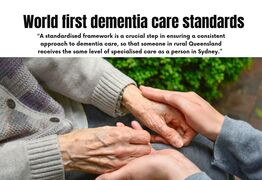
Dementia Training Australia Launches  World-First Standardised Framework for  Dementia Training
Dementia Training Australia Launches World-First Standardised Framework for Dementia Training

22 March 2025, 1:00 AM

After the Royal Commission into Aged Care, this free framework will establish new dementia training standards nationwide.Dementia Training Australia (DTA) has introduced Australia's first free National Dementia Education and Training Standards Framework aimed at improving outcomes for people living with dementia. This framework was developed in response to the Royal Commission into Aged Care, ensuring that aged-care services, healthcare workers, and first responders have access to high-quality, consistent training, no matter their location, economic position or stage of career. With the new Aged Care Act to take effect on 1 July 2025, aged care workers found negligent in their duties may face significant fines and penalties. With an expectation for improved care, now more than ever, those working with patients living with dementia must urgently assess their training levels and upskill where needed. The new Standards Framework offers a clear, structured approach that assists anyone supporting a person living with dementia in evaluating their existing knowledge, identifying gaps, and enhancing their skills. By setting a consistent national standard, this initiative ensures that every person working with individuals living with dementia possesses the expertise required to deliver high-quality, informed care. In a world first, this free framework not only addresses the dementia training needs of the aged and healthcare workforce but also extends its reach to the broader community, including family members caring for a person living with dementia. To further strengthen its impact, DTA will actively train organisations on these standards, ensuring they are well-equipped to implement best practices and enhance workforce capabilities. “The Standards Framework articulates in clear detail the reason why training is critically important for the delivery of quality care and support,” said Dr Isabelle Meyer, Executive Director of Dementia Training Australia. "Quality and consistency are key when it comes to training staff who care for people living with dementia. The Standards Framework not only sets clear expectations but also serves as a vital tool for recruiting the right people, maintaining high standards, and delivering quality dementia education and training,” Dr Meyer said. “This initiative underscores our commitment to accessibility, offering comprehensive, high-quality training at no cost. It provides a benchmark for excellence, ensuring consistent standards for the best possible care." “Access to services in regional and remote areas, where older people represent a larger proportion of the population, continues to pose a significant challenge. A standardised framework is a crucial step in ensuring a consistent approach to dementia care, so that someone in rural Queensland receives the same level of specialised care as a person in Sydney.” “This is a truly unique tool which will help anyone who comes into contact with people living with dementia. By mapping essential skills and knowledge required for quality dementia care, this critical self-assessment process will ultimately transform how we support people living with dementia, ensuring care that is both competent and compassionate,” she said. This framework was developed in response to the findings of the Royal Commission into Aged Care Quality and Safety, which highlighted critical gaps in dementia care training. The inquiry found that while over half of people living in residential aged care have a diagnosis of dementia, substandard care was common, with many aged care providers lacking the skills and capacity required to adequately care for people living with dementia. In addressing these concerns, the free DTA Standardised Framework includes: ● Nationally Standardised Training: A consistent approach to dementia care education for healthcare workers, nurses, first responders, and aged-care professionals at all stages of their careers. ● Comprehensive User Guides: Three user guides accompany the framework, ensuring organisations can navigate and implement the training effectively. ● Digital Support Tools: The Dementia Training Action Plan (DTAP) - an online tool housed on the framework’s landing page, which allows organisations and individuals to assess their current training levels and map out their progress.Dementia Training Australia is committed to making dementia care training accessible to all, ensuring that every facility and healthcare worker is equipped to provide the highest standard of care. The new framework represents a transformative step forward in improving dementia care nationwide.

Immediate support for families - free online program helps parents of kids with disability

21 March 2025, 10:00 PM

Triple P - Positive Parenting Program now onlineFamilies of children with disability facing long wait times for diagnosis and support can now access Stepping Stones Triple P Online - a free, evidence-based parenting program funded by the Australian Government that offers immediate, practical strategies to help children thrive and boost parental wellbeing.   Triple P International Country Director, Carol Markie-Dadds, said that approximately 1 in 13 children in Australia (an estimated 356,000 children aged 0 to 14) live with disability. The ongoing strain on the disability workforce, difficulties in accessing support, long wait times, and cost-of-living pressures, mean that children are missing out on critical early intervention support. Parents and carers are left feeling overwhelmed and isolated. “Early intervention in the form of parenting programs gives immediate support to families with disability by equipping parents and carers with the valuable tools and strategies needed to understand and respond to their child's needs and their own,” Ms Markie-Dadds said.  “Stepping Stones Triple P has been the subject of a large research trial across New South Wales, Victoria, and Queensland. The course was found to provide significant benefits to families with disability, including improved family relationships, reduced parental stress, increased parenting confidence, and improvements in children’s emotional and behavioural wellbeing.” Additionally, Ms Markie-Dadds said the program produces benefits for families with neurodiverse children, who have different thinking patterns to neurotypical children. "This includes children diagnosed with autism and ADHD,” she said.  “Childhood is a crucial stage of development for all young people, particularly so for children with disability and unique support needs. "Delays to accessing support early in a child’s life have a direct impact on the level of care and support a person with disability will require into adulthood.” “The mental health and wellbeing of carers is also at-risk - around twice as many parents of children with disability report moderate to high stress levels compared to parents without a child with disability.”  “When parents and carers feel confident and empowered to support their child with managing daily routines, building connections, and being independent, the entire family benefits,” Ms Markie-Dadds said. AEIOU Foundation Head of Research, Dr Kate Liley said, “With families of autistic children facing unique and heightened challenges, AEIOU welcomes initiatives that provided affordable, evidence-based support to parents to help them navigate these challenges.”  The online flexibility of Stepping Stones Triple P reduces having to attend in-person appointments, which can be impractical for parents and carers of children with disability due to caring responsibilities or those living in regional or remote areas. Brisbane mother-of-two, Rachel, did the program when her son was 3 years old, after being diagnosed with autism. “I did the course when Jason was young, and I still use the things I learned daily. It gives you confidence that stays with you for life. You always have this toolbox in the back of your mind to help you navigate parenting. Making the online program free for every family will mean so much to so many,” Rachel said. “There's a lot of stigma around doing a parenting course, but you do the course if you want to be given all the best information about child development in the most efficient way. There are many reasons to do the program and no reasons to not do it,” she said. Ms Markie-Dadds said Stepping Stone Triple P Online is based on 25 years of ongoing research with parents and practitioners. The program helps parents and carers to:   use positive, practical strategies to manage everyday life with more ease and confidence, like daily routines, socialising, mealtimes, communication, and family outings/car trips encourage their child’s independence and self-care skills, like teeth brushing and getting dressed  confidently respond to their child’s needs, behaviours and support their overall development and wellbeing learn strategies to look after themselves as a parent and feel less stressed in their parenting role communicate better with each other, including when their child has an alternate communication style build their child’s social skills to support them to grow relationships at home and in the community help the whole family adapt and enjoy life more! “Every child has their own individual qualities and abilities. Triple P encourages parents and carers to value their child’s strengths and abilities, encouraging confidence and the development of new skills,” Ms Markie-Dadds said. Carol added, “Parents and carers know their child best, so they can choose the tools that fit with their family’s values and needs. Even a small change can make a big difference.” Parents and carers who do Stepping Stones Triple P Online will join the more than 100,000 parents who have done the face-to-face program and the 490,000 parents and carers across Australia, and millions globally, who have benefited from Triple P’s broader suite of programs. Parents and carers can sign up for Stepping Stones Triple P Online now at: triplep-parenting.net.au   Stepping Stones Triple P Online is free in Australia, thanks to funding from the Australian Government Department of Health and Aged Care under the Parenting Education and Support Program. The funding supports free online courses from the Triple P – Positive Parenting Program for all parents and carers in Australia who have children under 12 years. 

 FRRR seeking new representatives
FRRR seeking new representatives

21 March 2025, 1:00 AM

FRRR (Foundation for Rural & Regional Renewal) is currently seeking expressions of interest from suitably qualified people from remote, rural and regional Australia to sit on one of three bodies that advise the FRRR Board. Two of the three are Program Advisory Committees seeking to refresh their membership and expand representation, while the third is a completely new Outback Advisory Board. Natalie Egleton, FRRR CEO, said that each of these bodies plays a critical role in the effective governance of the nearly $20 million that the Foundation, which is celebrating its 25th anniversary this year, awards annually. “While our staff do very thorough and detailed initial assessments of applications, for the most part it is the Program Advisory Committees that recommend where our scarce funds are allocated,” Ms Egleton said. “To ensure that we are directing grants where they are needed most, we have Program Advisory Committees comprising people with relevant lived experience sitting alongside FRRR Directors and our donor partners. Their insights and knowledge of the subject matter are critical to our decisions. “Right now, we are seeking people with experience or interest in mental health and community wellbeing to join our In a Good Place Program Advisory Committee, and people with experience in climate and energy transitions to join our Community Led Climate Solutions advisory committee,” Ms Egleton explained. FRRR is also establishing an Outback Advisory Board, whose remit will be to advise the Board more broadly on issues and opportunities in remote and outback Australia. “We have supported remote, rural and regional Australia for more than 25 years and it’s become apparent that remote, very remote and outback Australia has specific challenges and needs. To ensure that our granting and capacity building support, and our advocacy, fully reflect this uniqueness, the Board has decided to appoint and Outback Advisory Board. “Its remit will be to bring a national perspective, as well as local knowledge, to our granting programs, as well as to our advocacy activities, such as submissions to Senate inquiries and the development of policy and issues papers.” Ms Egleton said that while these roles are voluntary, FRRR aims to have a diversity in membership, so the Foundation will consider supporting successful applicants to address barriers to participation in these primarily virtual meetings.Detailed role descriptions, as well as Expression of Interest Forms are available on the Work With Us page on FRRR’s website. EOIs close 5pm AEDT on Friday 11 April 2025. 

Second case of JE likely contracted in the Riverina

10 March 2025, 4:00 AM

The deadly illness has already claimed one life this yearA Victorian resident has been confirmed as the second human case of the potentially deadly Japanese encephalitis (JE).Authorities say this person was exposed to the virus while in the Riverina region of NSW, on the Murray River.The confirmed case comes not long after the first JE death this. NSW Health reported in February that a man in his 70s from northern Sydney died after battling the virus for several weeks. He was also infected while holidaying in the Riverina, and is the third person to lose their life to JE, since it was first detected in May 2022.Health authorities are reminding Back Country residents that a free vaccination is available for people aged two months or older who live or routinely work in several local government areas, including Carrathool, Hay, Balranald and Central Darling Shire.JE is a rare virus, similar to dengue and yellow fever, which is spread by mosquito bites and causes swelling in the brain. The fatality rate of those with severe JE can be as high as 30 per cent.If you are eligible for a free JEV vaccine, speak to your General Practitioner (GP), pharmacist or Aboriginal Medical Service about getting vaccinated today.NSW Health says residents should make an appointment with their GP, pharmacist or Aboriginal Medical Service and let them know it is for the Japanese encephalitis vaccine as they may require a few days' notice to order the vaccine.

Letter to the Ed – Time to get the job done

07 March 2025, 10:00 PM

Dear Madam,In response to the letters that have been sent to regional newspapers of Farrer from Jacqueline Dunn and Senator Holly Hughes, I would like to clarify a few things: Firstly, I am an Independent candidate for Farrer. The narrative that a teal party even exists is the narrative of the major parties to distract voters from the fact that independents exist because they are not doing their job. Secondly, I have made my position clear multiple times on social media and in person, that I won’t be suggesting preferences other than to vote for me first, and to number every box according to the preference of the voter. It is a democratic right of voters to be able to choose their own preference. Regarding who I will support in the event of a balanced (“hung”) parliament, I will vote for the people of Farrer, I will vote for policy that ensures the sustainability of regional Australia. It is another scare-mongering myth by major parties that independents have to pick a sideThe side of the independent is always with the electorate. The ability for a balanced parliament to robustly debate policy is a positive position for the Australian people that might frighten some party members. It’s time we stepped away from the oppositional and divisive nature that currently characterises politics in this country, and start getting the work done. Michelle Milthorpe, Independent candidate for FarrerLetters to the Editor will be accepted at any time by emailing [email protected]. Please note: We reserve the right to edit, in line with the prociples of the Australian Press Council, or for grammar and brevity.

Language of Light documentary portrays leading photographers

05 March 2025, 4:00 AM

Everyone has got a song that belongs in their heart, photography is my song“Everyone has got a song that belongs in their heart, photography is my song” words by Emmanuel Santos, one of 7 Australian photographers featured in this extraordinary documentary “Language of Light” now streaming on SBS on demand. Each episode delves into the life’s work of a particular photographer, following their journey of photography and a diversity of life experiences that ignited and shaped their passion and resultant career. The landscape of the back country and its people is a source of great inspiration for many a photographer in this region. “Language of Light” is a must-see for you and anyone who recognizes elements around them that they feel drawn to follow. This documentary tells the stories of photographers but its message is intended for everyone…….Is it something you see on your daily walks, in the people you meet or something that perhaps is invisible but can be felt? These sparks that ignite us ……like fireflies that move and capture our attention and awe……pay attention for they can be a catalyst that illuminates the way to the next stepping stone. This series inspires and encourages us to ask ourselves “what is that spark that makes me feel alive?” It is often very simple and has been there right in front of you the whole time…..just for fun, follow it and see what unfurls……Learn more: https://www.sbs.com.au/ondemand/tv-series/language-of-light“Language of Light” is produced and directed by Fiona Cochrane. Cinematographer is Mark Street, editor is Chris Cochrane-Friedrich, with sound by David Muir.

Funding awarded to 24 projects about dementia

28 February 2025, 1:00 AM

Dementia Australia Research Foundation, Australia's largest non-government funder of dementia research, today announced $3.7 million in research funding as part of the 2024 grant round.The funding was awarded to 24 projects, including one exploring if viruses can be used to deliver critical genes to boost the brain's defences against Alzheimer's disease as well as improving the quality of eyecare for people living with dementia in residential aged care.University of Wollongong researcher Dr Simon Maksour has been awarded the Race Against Dementia-Dementia Australia Research Foundation Post-doctoral Fellowship worth over $700,000 over five years, for a project that aims to enhance the brain's inbuilt defence mechanism against Alzheimer's disease."In Alzheimer's disease, microglia, the brain's immune cells, do not function normally and this contributes to disease progression," Dr Maksour said."With this project we will use technology called adeno-associated virus vectors, to deliver crucial genes to abnormally functioning microglia to see if we can restore them to a healthy state opening up new avenues for the treatment of Alzheimer's disease.Monash University researcher at the National Centre for Healthy Ageing Dr Marianne Coleman received a Henry Brodaty Mid-Career Research Fellowship worth $400,000 to improve the quality of eye care provided to people living with dementia in residential aged care facilities."We know that people living in residential aged care are more likely to be living with untreated vision loss," Dr Coleman said. "We also know that untreated vision loss is a risk factor for dementia as well as increasing the risk of falls or developing delirium".By working with experts in eye care and aged care, as well as with people with living experience of dementia, we will develop an eye care pathway and implementation plan to help residential aged care facilities deliver high quality eye care for everyone."Dementia Australia Research Foundation Chair Professor Graeme Samuel AC congratulated the 2024 grant recipients."There are an estimated 433,300 Australians living with dementia and it is increasingly being understood as the public health, disability and aged care challenge facing Australia," Professor Samuel said."The diversity and range of projects selected, from those focused on supporting timely diagnosis and support, to research to improve the quality of care, shows we have a very exciting future for dementia research."Dementia Australia CEO Professor Tanya Buchanan said the Dementia Australia Research Foundation's work wouldn't be possible without the generous support of donors."All funding for Dementia Australia Research Foundation is donated by members of the public and by private and philanthropic organisations," Professor Buchanan said.The Dementia Australia Research Foundation acknowledges the generosity of donors who contribute each and every year to support dementia research and the grants program.Since the Dementia Grants Program started in 2000, over $35 million in funding has supported more than 400 projects.The Dementia Australia Research Foundation is the research arm of Dementia Australia, which provides funding to support new and emerging dementia researchers.Dementia Australia is the source of trusted information, education and services for the estimated more than 433,000 Australians living with dementia, and the more than 1.7 million people involved in their care. We advocate for positive change and support vital research. We are here to support people impacted by dementia, and to enable them to live as well as possible. No matter how you are impacted by dementia or who you are, we are here for you.For support, please contact the National Dementia Helpline on 1800 100 500. An interpreter service is available. The National Dementia Helpline is funded by the Australian Government. People looking for information can also visit dementia.org.au Race Against Dementia was established by world champion racing driver, Sir Jackie Stewart, OBE after his wife, Helen, was diagnosed with frontotemporal dementia. The charity raises funds to support researchers across the globe to find cures for dementia. Along with funding their researchers receive training inspired by the high-performance mentality found in Formula 1. Race Against Dementia is an official charity partner of Formula 1.If this story has prompted any questions or concerns, please call the National Dementia Helpline 1800 100 500 (24 hours, 7 days a week) or visit dementia.org.au.

Neil John Nisbet
Neil John Nisbet

15 February 2025, 4:00 AM

Neil John’s Memories of Hay Neil-John Nisbet is a man who epitomises the spirit of Hay. Happy, humble, and involved in so much, he is a man who makes things happen and is the glue that holds a lot together. He was born in Hay, in the old maternity unit, then vet, and has lived here all his life. Born in 1962, he has many fond memories of growing up in Hay and the way life used to be. With father, Neil Nisbet, and mother, Wilma Curtis, both coming from two of the largest Hay families, family gatherings and get-togethers were always huge, lively and bustling events. Christmas and backyard cricket were treasured times, with the games becoming very intense as they all vied for victory. Going to school, Neil John had three friends who all lived on the same block: Keith Martin, Robbie Parker and Peter Pearson. They would all walk to school together, gradually running into other East Hay children on the way, the walking group growing as they made their way. An essential stop on the way to school was the Pink Shop. There, dear friend Jocelyn Yousef, Calvert at that time, lived, and her parents ran the general store. The kids would stock up on lollies, hiding them in their SOS or Throaties packets. The school rule was that lollies were not allowed, but cough lollies were. Other children who would join the trek to school were the Prochilos, Schneiders, Camp Bells, Harveys, Bowens and the Hydes. They would, after their Pink Shop stop, pick up Jocelyn and then David Smith. “They were really good times,” Neil-John recalled. Some 40 years later, these friendships are going strong. After the recent reunion with Jocelyn and the others from Neil-John’s schooling days, Jocelyn could not extol Neil-John’s virtues enough.She was so grateful for the reunion he organised. Neil-John is modest and says that it was easy. “All it took was a phone call or message, and 90 per cent of people said yes, of course,” he said. “I organised our school reunion a couple of years back. It was such fun, looking people up and finding out where they live now, what they’ve been up to, and catching up.” Neil-John says the common ground they all share growing up and going to school in Hay and their idyllic childhood is what maintained their bonds. “It’s a hard thing to get out of your blood, Hay,” he said. “Jocelyn and Mark Baird haven’t lived in Hay for 40 years or so but still call Hay home. It’s a beautiful thing.” The children always used to take the ‘mickey’, but there was never any malice there. They all got along well. “We were all born and raised here, and had a great life, there are many places to call home that are worse than Hay,” Neil-John said. “If it was so bad, people wouldn’t be here, wouldn’t make it their lifelong home.” After school and on Tuesday and Thursday nights after training, Neil-John and his friends would make a point of learning where all the teachers’ houses were so they could rock their roofs. “It was all a part of the fun; I think every generation does that; it’s a passed-down bit of mischief,” Neil-John chuckled. “There was plenty of mischief, but not much trouble, we always knew that if something went wrong, if we messed up, we needed to own up and apologise. “Another mischievous pastime was putting potatoes up exhaust pipes, tying string onto door knockers, and pulling it so it knocked the door, and letting it go when someone came to answer the door.” All the children had push bikes and knew that if they were not home by the time the street lights came on, there would be no dinner waiting for them. “If we weren’t home by then and were driving around for some reason, we had little generators attached to the bikes to operate the headlight,” Neil-John said. The closest river bend in East Hay was MadMan’s Bend, so this was the popular hangout for the East Hay kids. “In those days, it was a lot sandier and a really good beach,” he said. “We were always either riding our bikes or swimming at Madman’s. “We would swim across to the other side of the river. Over there was the Drake, which was a big old log, if you could dive under the log and make it to the other side, that meant you had made it in your age group.” The children would ride their bikes up and down the Dippers, and it wasn’t an uncommon sight to have 20 to 30 children all down there playing at the one time. Neil-John had two good horses and would take them down to Madman’s, where the children would climb on them and use them as diving boards. As they grew older, they graduated to motorbikes. “The general rule was, if you stayed off the roads, and just rode on tracks, and stayed out of the way of the police, they would leave you alone,” Neil-John recalled. As high school started, the children began to move out of their territory, suddenly awakening to the fact that there was more to life than East Hay, and as Neil-John puts it, sometimes crossed the main street after school. “We would also get as far as Sandy Point and Bushy Bend,” he said. “There would always be a track you could cross to get to the other river bends without ever having to ride on a main road. Sometimes it was tricky, but we did it.” They would also take part in towing old car bonnets around, and three or four children would jump on them and see if they could stay on. “Sometimes they would get hot because of the friction,” he laughed. “Sometimes it would be on grass and slide everywhere, and kids would roll into fences, nobody ever got hurt.” Something that would also get you a big name and credibility amongst peer groups was if you could get brave enough to walk through the cemetery at night, and that was something he shared with his daughters. “We used to drive through there at night, and I would kick the door; the girls were used to it, but it would put a scare through their mates,” he laughed. “It was always a bit of fun, something passed down. I always told them that it was ok to have a bit of fun and mischief, but if it got out of hand, to own up and apologise, like back in my day.” He got into Rugby League at a young age, six years. “It was a funny story, how I got into football,” Neil-John recalled. “My cousin Cyril Curtis and in coaching League Tag, initially,” he said. “We were walking to soccer training, and we saw a huge group of kids having a kick, and we thought oh there’s the soccer, from then on, I was hooked.” Jock McRae was a coach that influenced Neil John when he was young. “He was a big Scot and the de-facto of Roma Beissel,” he said. “He was an institution in the Hay Magpies. “He had a favourite saying, “If I can catch you, I’ll kick your backside,” and that inspired us to run, to never be caught by him. “We would travel away on the bus every Saturday, teams never travelled to Hay back then. And we would get a little rowdy, but never to the point where it got out of hand. “The only adults would be the bus driver and the coach, and we knew that if things got out of hand, that we would get a kick. We knew the rules, and knew how far we could push it.”Back in the day when Neil-John started his football career, there was a coach named Ron Hunt, and he was quite big also. He bought two buses out of his own money, to take the children away to football. Ron decided to do this so that the children would have the opportunity. In return, the children would sell raffle tickets for 10 cents each, and that would be their fare over to the games. “Ron’s team was the team to be in if you could, as when his team won, they would be taken to get an ice cream afterwards,” he chuckled. “I was lucky enough to be on his team one season. “We learned a lot being around these influential people, ones who taught us good values and respect.” In those days, there was often only the people who coached or an event that attended these events, with parents busy working sun up to sun set, and completing necessary home duties. It was part and parcel of the times, and kids knew to go there and straight home and also knew the old rule of being home by the time the street lights came on. “In those days, people looked out for each other, and everyone knew everyone,” he recalled. “We always had heaps of friends and older cousins around. “Anyway, half the time, if we got into mischief, our parents would know all about it before we came home. “The old bush telegraph is not a bad thing at all.” A well-known fact about Neil-John is that he bleeds black and white, the Magpies, his club, where he has always wanted to be. In a long-time passionate involvement with the club, and highlights that include coaching four premiership sides and playing in seven premier ship sides, the biggest highlight for him was coaching his two daughters, Courtney and Kristin. “The girls were the only reason I got involved,” he said. “We had played mixed touch games together before, and I was glad to be a part of something that kept them involved in the club. I see no difference between women and men playing sport. “I have always been passionate about them having a crack and believed if they wanted to have a go, they should have a go.” Neil-John was 45 when he decided to conclude his playing career. “I hate to say this, but Shayne Kennedy ended my playing career,” he said with a laugh. “We were playing Darlington Point at their home ground, and Shayne was playing for them. I had already had the same rib cartilage injury seven times before, and Shayne hit that. “When I was going off the field, I said to him that I would be back, but once I actually got off, I was in that much pain I decided that if I could not get back on, that it was time.” It was not an emotional decision for Neil-John, though, as he never gave up his association with the Magpies. “I had played since six and coached from age 16, so I still had the ties, he said. “If I had stopped playing cold turkey and had nothing to do with the club, it might have been emotional down the line. I just knew it was time to stop playing and time to focus on helping other people.” Neil-John enjoys coaching immensely and only gets frustrated when he feels as though someone isn’t giving their all. “You don’t have to be the best; you just have to give your best,” he said. “Anyone who coaches would agree, people are volunteering their time and just want to see that effort reflected back, they don’t want to feel as though they are wasting their time.” Neil-John’s first job out of school was as an apprentice panel beater at Martin and Ashleys, which later amalgamated with Royce Curtis Motors. “I used to do some odd jobs to make a little pocket money, to buy motorbikes, but I started out doing that quite late, at 15, whereas a lot of my friends were doing odd jobs at age 12,” Neil John said. He met his wife, Yvonne, at school and went out for a while, but they broke up, as often happens with school romances. However, they got back together a year later and have been together ever since. The couple were married in 1986 when Neil-John was 24. Neil-John worked at Royce Curtis Motors for eight years before moving on to Kim Thompson’s Smash Repairs. He stayed there for 30 years, a big commitment, in Neil-John’s usual fashion. He is still a massive part of Magpies life, and a Hay institution. We as a town are so lucky to have dedicated, faithful people such as Neil-John enriching so much of Hay life.
A toast to love: Wine set to take top spot as most popular Valentine’s gift

14 February 2025, 4:00 AM

Australia Post has revealed its top ten picks for the most popular Valentine’s Day gifts this year, and it seems the way to an Aussie’s heart is through wineBased on 2024 delivery data from Australia Post, wine deliveries saw the largest increase in the lead up to V-Day, with some cellar doors seeing a spike of up to 7000%, with Australians predicted to wine, not dine, their loved ones this year - or drown their single sorrows. Along with enjoying a nice glass of vino, Australia Post predicts the top ten picks for the most loved-up V-Day gifts this year will be: Wine Fashion clothing Lingerie Skincare Romantic novels Craft sets Health and wellbeingJewellery Music Hampers  Over 10 million parcels are expected to be delivered nationally in the two weeks leading up to Valentine’s Day this year. However, for a lucky few, their love will burn extra hot when they receive a firefighter calendar following last year’s delivery boom for these products, with a surge of over 500%. Where is the love? Across Australia, only one state can claim the title of the country’s love capital, and this year Cupid’s arrow is expected to hit the Northern Territory, taking the crown as the most romantic state according to last year’s data. Inspired by their deep red deserts and pink sunsets, Territorians were left swooning on Valentine’s Day as parcel deliveries spiked by 25% in the two weeks prior. Tasmania and Queensland came in second and third place for most romantic states, seeing an 8% and 7% increase respectively. Meanwhile over in Western Australia, couples will have a lot of making up to do this year as the least loved up state saw an unusual 2% decrease in parcel deliveries in the lead up to Valentine’s Day last year, leaving many lovers out in the cold.  Australia Post Executive General Manager Parcel, Post and eCommerce Services Gary Starr said the nation’s love for Valentine’s Day continues to reach new, thoughtful heights. “This is one of our favourite dates in the calendar at Australia Post, and we are expecting another busy delivery period in the lead up to Valentine’s Day. “We love how Valentine’s Day gifts continue to evolve as customer habits shift, and that romantics might be more inclined to share a glass of wine with their loved one this year, or surprise them with their favourite romantic novel. “For gifts that require an element of surprise, we remind customers to consider directing gifts to their nearest Parcel Locker,” he said. Most loved-up states – full list  NT – 26% increase in parcel deliveries in the two weeks to Valentine’s Day 2024TAS – 8% increase SA – 7% increase QLD – 6% increase ACT – 5% increase NSW – 4% increase VIC – 3% increase WA – 2% decrease 

It is Red Feb!
It is Red Feb!

12 February 2025, 7:00 PM

This February, Heart Research Australia invite you to wear RED for someone close to your heart.February. A month synonymous with romance, chocolates, and… hearts. We’re not talking about Valentines – we’re talking about the literal, beating heart – that deserves our most profound attention. Heart Research Australia are inviting you to wear red in Feb. It's a time to not only focus on our own cardiovascular health but also to consider how we can better support those we love who are living with heart disease.Heart disease is still Australia’s leading cause of death and affects families and communities around the country. You can get involved simply by wearing red and donating. Nearly every Australian adult (99%) has at least one risk factor for heart disease.These include not eating enough fruits and vegetables, being inactive, smoking daily, being overweight or obese, having uncontrolled high blood pressure, or having diabetes. (1)The great news is that you can take charge of most of these risks!Take Control of These Risks:SmokingHigh CholesterolHigh Blood PressureInactivityDiabetesOverweight/ObesityUnhealthy DietRisks You Can't Change (but can discuss with your doctor):Age: Risk increases as you get older.Gender: Men generally have a higher risk, which women catch up to after menopause.Ethnic Background: Certain backgrounds (e.g., Indian subcontinent) carry increased risk. Aboriginal and Torres Strait Islander people also have higher risk due to lifestyle factors.Family History: A family history of cardiovascular disease means you should discuss your risk with your doctor.Heart Research Australia supports Professor Gemma Figtree's research to understand why heart disease is increasingly affecting people with no traditional risk factors. These vital findings will improve early heart disease detection beyond current risk assessments and pave the way for personalized prevention strategies.You can show your support and raise vital research funds by hosting a fundraiser or wearing red this February.Find out more HEREPlease note: This article is not medical advice: if you have any concerns, please see a doctor. 

161-180 of 297
Back Country Bulletin
News from the Back Country

Get it on the Apple StoreGet it on the Google Play Store