Back Country Bulletin
News from the Back Country
Get it on the Apple StoreGet it on the Google Play Store
NewsSportRuralCommunityEat, Drink, Stay
Back Country Bulletin
$5 million in latest round of recreational fishing grants now open

10 November 2024, 4:00 AM

The Minns Labor Government has opened the next round of Recreational Fishing Trust Grants, with $5 million available for fishing clubs, community groups and other organisations to run projects which improve and promote recreational fishing in their local area.For the first time, applicants in this round will be able to access the $2 million recreational fishing small infrastructure grants program announced by the NSW Government in August.This program will make it easier for local fishing clubs, community groups and other organisations to apply for funding for projects such as fishing platforms, fish cleaning tables, fishing access tracks, kayak launching platforms and other fishing facilities.Applicants are encouraged to contact dedicated Department staff to discuss their ideas and for assistance in applying your small infrastructure grants.As well as small infrastructure, funding is also available to promote participation in the sport and the mental health and well-being benefits of fishing, such as for free fishing events, fishing workshops, come and try fishing days, fishing for therapy initiatives, and the development of educational material to promote sustainable and responsible fishing practices.Grants are available for both large projects valued at more than $10,000 in funding and small projects involving less than $10,000.Applications will be open until 18 December 2024.“We want to make fishing accessible, enjoyable and safe for everyone, Minister for Agriculture and Regional NSW, Tara Moriarty said."By streamlining the grant application process, we aim to provide every fishing group with a greater chance to secure funding for projects that improve the fishing experience in their local communities.“The $2 million infrastructure grants program will ensure more of the licence fees collected from recreational fishers are invested back into the infrastructure we know fishers want, such as fishing platforms, fish cleaning tables and other fishing facilities."This is an excellent example of how funds generated by the NSW Recreational Fishing Licence Fee are reinvested into projects that directly support the recreational fishing community.“If you have an idea on how to improve your local fishing spot or make fishing even better for your local community, I encourage you to contact our dedicated DPIRD staff to discuss your ideas.”Following the recent review of the Recreational Fishing Trust, the NSW Government will continue to provide greater support to the NSW recreational fishing community by:Strengthening communications with all fishers and organisations to encourage them to apply for grants to improve fishing in their local areas.Providing more support for applicants to discuss ideas for projects and assist with developing their applications through the dedicated Recreational Fishing Trust grants assistance phoneline.Making the grant application process clearer and simpler, so groups have the best opportunity to receive funding, including streamlining the application form.This round of funding follows the recent announcements of some $20 million in grants and program funding from the Recreational Fishing Trust to enhance recreational fishing across the State.Funding guidelines and online application form HERE   or you can email [email protected] or call the dedicated Recreational Fishing Trust phoneline on 02 4424 7428.

Financial assistance available for Far West NSW residents impacted by power outage

09 November 2024, 7:00 PM

Far West NSW residents and businesses are now able to claim for financial assistance.People are encouraged to apply via the Service NSW website and mobile apps, with easy-to-use instructions available.Eligible adults will receive a single, one-off payment of $200 to help provide some financial relief for expenses following the severe storm which collapsed seven transmission towers which serviced the area.Small-to-medium business owners can claim a one-off payment of $400.“Communities across the Far West who have been affected by this power outage will welcome this assistance and I look forward to it being delivered as quickly as possible," Member for Barwon Roy Butler said.“I have been working closely with the Minns Labor Government to ensure support is in place and the opening of these grants is another step forward for the recovery of the region.”To be eligible for the Power Outage Support Grant, an individual’s primary place of residence, or a business’s principal place of operation, must be within the impacted Local Government Areas of Broken Hill, Central Darling and the Unincorporated Area, which covers the north west corner of NSW.Businesses with an active ABN at the time of the outage and fewer than 200 employees as of October 17 will be eligible to apply. Around 1,200 small-to-medium businesses are eligible for the grants.For grants for individuals, apply through the Service NSW app or visit: https://www.service.nsw.gov.au/transaction/support-for-far-west-residents.For the business grants, apply through the Service NSW Business Bureau app or visit: https://www.service.nsw.gov.au/transaction/support-for-far-west-business.To make a claim, please jump online and follow the easy-to-use instructions.While applications cannot be made over the phone, people can call Service NSW on 13 77 88 if they need assistance with making an application online or using the app.If people need additional assistance, they can visit the Service NSW service centre at 115 Bagot St Broken Hill or the Recovery Assistance Point at 329-331 Blende St Broken Hill between 9am and 6pm.Once an application has been approved, residents and business owners can expect to see the one-off payments in their bank account within a few days.Applications close on 31 March 2025.The NSW Government’s Power Outage Support Grants come in addition to the Commonwealth Disaster Recovery Allowance, which provides up to 13 weeks of income support for eligible workers and sole traders who have experienced loss of income as a result of the storms and outage."This region has gone through a major disruption, with households and businesses hit hard," Premier of New South Wales Chris Minns said."This money will go some of the way to easing the impact. We urge locals and businesses to access this support, with the Service NSW app or website being the easiest ways to apply.“The grants are available from Thursday, and we encourage local residents and business to jump online and make the application," Minister for Western NSW and Minister for Agriculture Tara Moriarty said.“These Power Outage Support Grants are the latest in a range of actions the government has taken in the weeks since a severe storm cut power to the Far West region of NSW and we thank everyone from around the state who have worked with us to help households affected.”

Local history - Midwives of the district

09 November 2024, 4:00 AM

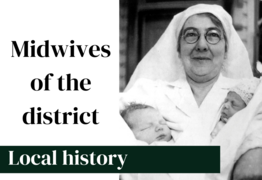
Prior to the establishment of hospitals in the Hay Area, many women birthed alone on the outlying stations. In fact, between 1859 and 1867, twenty-one births were recorded as having no midwife present. Stations included “Illiliwah”, “Burrabogie”, “Gelam”, “Nimmie”, “Toganmain”, “Yunbarren”, “Eli Elwah”, “Benduck”, “Boonara”, “Mungadal” and “Cuba”. One mother died giving birth to twins in 1862. After that time midwives were recorded in the birth records. The second midwife on the Hay list with the most births is Lucille Drucilla Myers (nee Simpson), who had attended 38 births by the middle of the 1870s. She died aged 50 years at “Groongal” Station on June 19, 1879. Mary Anne Pendergast attended 15 women and Mary Perkinson 11. The Riverine Grazier of 29 June 1881 carried and advertisement for a Mrs Binney of Lachlan Street a ladies ‘monthly nurse’. When Mrs Elizabeth Lonergan of Carrathool died in July 1956 the paper described her as a ‘midwife of days gone by, to locals”. There is also a record of a Mrs Cole who worked as a midwife in the Lang Street area. She is remembered for a near fatal mistake in which a baby boy nearly bled to death because she had not tied the cord properly. Mrs George Thompson who lived at Mossgiel Government Tank for many years was the district’s bush nurse. As well as doing general nursing and attending to deaths, she is known to have assisted many babies into the world. A Chinese man Ah-Pack grew vegetables at Mossgiel Tank though his wife lived in Hay to rear and school their twenty-two children. The last of this family were twins and Mrs Ah-Pack died at their births. The babies survived and the older girls of the family took over rearing all of the children. In Hay in the pre-registration days there was maternity hospital conducted by ‘Granny’ Oxley. Featured in the architecture were the gauzed doors of rooms which allowed for a breeze without insects in the patient’s rooms and labour ward. Granny Oxley also attended home births. Between 1910 and 1928 there were a number of private hospitals (in Hay). A four-bed hospital for medical surgical and lying-in patients was located in Orson Street. The licensees were Johanna Fawcette in 1910, followed by Lucy Janet Shelley from 1913 until 1916. ‘Dean Cottage’ in Murray Street provided personal care for one lying-in woman under licensee Margaret Morrison from 1910 until 1921. Margaret died on December 19, 1921. There was a two-bed hospital for maternity cases in Church Street with Elizabeth Hargrave in charge from 1910 to 1924, followed by Catherine Slattery in 1924. ‘Gel-Rowie’ private hospital in Hatty Street under licensee Mary Love Stewart provided care for three confining women between 1911 and 1917. Rose Boyle was licensee from 1911 to 1922 and Elizabeth Harris was residential manager of a private hospital in Orson Street for two lying-in patients. The Red Cross Society had a maternity home in Church Street, registered initially for nine patients then increased to ten beds. It was conducted first by Amy Varcoe (1921 – 1922). Alice Glandfield was then the licensee. Rose Sweeny was listed as residential manager and it was noted she completed three years training at St. Vincent’s Hospital, Sydney and six months at the Women’s Hospital. The home remained in operation until 1927. The hospital was discontinued but the building remained. Mary Lou Gardam writes: “I actually live in the former nursing home in Lachlan Street, Hay. It was the Red Cross Nursing Home from about 1929 to 1947, then became the maternity unit of the hospital until the current building was built in about 1936. So most births in Hay between 1930 and 1963 took place in what is now our kitchen! There is some physical evidence of the former use in worn door jams and cast-iron newborn cots which remained but little else. The back part of the house which included nurse’s quarters, burnt down about 1980.” ‘Langside private hospital in Lang Street, South Hay accommodated three lying-in patients and was conducted by Alice Alberta Baird from 1922. In Booligal Elizabeth Giddins (nee Le Lievre) delivered 24 babies. Her own infant daughter died on 18 March 1877 and the cause was recorded as ‘thrush and suppuration of the Naris’ (nasal infection). She was considered to be the only ‘real doctor’ at Booligal attending “many a mother near and far, when they gave birth to their children.” (ED: Elizabeth Giddins was one of nine children and only daughter of Pierre Le Lievre and wife Elizabeth Marie, who immigrated to the Deniliquin area from Jersey in the Channel Islands between England and France. Elizabeth Giddins married Robert Samuel Giddins in 1848 in Booligal. Her father Pierre died at 47 and is buried in Deniliquin, however her mother lived until age 73. She and Elizabeth’s brothers are buried in various parts of Victoria. Elizabeth and Robert had two living children Walter and Jane, born at Hay. Elizabeth passed away in 1927 aged 75 and is buried in Dorrigo. Robert is buried in Booligal, but also has a headstone beside Elizbeth in Dorrigo cemetery. Walter’s son Warrick is the father of Hay residents Rodney Giddins and Amanda Curtis, nee Giddins.) During 1894 Letitia Bassett who was employed by Mrs Massie, licensee of the Adelaide Camp “a few miles down from Booligal” gave birth. Her baby was either born dead or died soon after birth. Mrs Giddins was sent for, and she took the tiny body back to her home where Dr Watt saw it. An inquest was held the following month at which Mrs Bassett was acquitted of responsibility for the infant’s death. In the course of providing her evidence Mrs Giddins said she was the only nurse in Booligal, and she had nursed people for the past 20 years. During the early years of settlement before the hospital was erected, practically all maternity cases were treated at home by a midwife. The first white child born in the Balranald district is believed to be Clara, the daughter of Thomas Darcy of Boyong. She was born about 1846. William Russell, son of John Russell, who was the Registrar of Births, Deaths and Marriages in Balranald in 1862, was the first white boy born in the settlement. In Balranald, as well as Matron Murphy’s ‘Bougainvillea’, Marie Dalton conducted a private lying-in hospital (one bed) in Ballindalla Street from 1911 to 1915. ‘Sunnyside’ private hospital for two maternity cases was located in River Street from 1911 to 1926. Margaret Dunn was the licensee. Francis J Cameron was licensee at ‘Elton House’ in Church Street Balranald from 1916 to 1917. ‘Elton House’ was licensed for three beds. Euston bush nurse and midwife Muriel Goldsbro, born in 1895, would try to bring the pregnant women into Balranald Hospital for delivery. She worked in the area in the early part of the twentieth century. Muriel was remembered as “one tough, colourful lady.” Matron Sweeney, the Digger's QueenMatron Sweeny - Image: Hay Historical SocietyMatron Rose Sweeney went on to become a nursing and midwifery legend in Hay, delivering more 2700 babies before retiring. In her obituary Matron Sweeney was praised “Many times Matron Sweeney would sit beside an expectant mother through days of labour, and rest by her side at night, in order to be at hand when her help was needed.” Fiercely patriotic, Matron served in France just behind the front line, not long after completing her training at St Vincent’s Hospital. She arrived in Hay on Armistice Day in 1921 to take charge of the maternity hospital established initially at Hay Gaol, before it moved to the building on the corner of Lachlan and Cadell Streets. The hospital ran on charity and donations, staffed with a skeleton crew of dedicated nurses. “Matron Sweeney was one of those rare people who love to work hard, and to play hard. Apart from her nursing, which was her life, no one loved to get out among her friends better than Matron Sweeney and no one more loved a party — but she was always ready on the instant to return to duty.” Image: Hay Historic Society Excerpt from ‘Riverina Midwives from the Mountains to the Plains’ by Mavis Gaff-Smith

ICPA perseverance pays off to change school enrolment policy

06 November 2024, 7:00 PM

The public schools fee waiver of $6000 per year for the child of a Temporary Skilled Worker visa holder in Rural, Regional and Remote NSW is warmly welcomed by the NSW Isolated Children’s Parents’ Association (ICPA-NSW.) “ICPA-NSW often deals with nuanced issues that have a ripple effect across the broader community. One such issue is the Temporary Skilled Worker Shortage Visas (482 Visas),” ICPA-NSW president Tanya Mitchell said. “People may ask what these visas could possibly have to do with education, however, some of our members told us that they sponsor 482 visa holders to fill the workforce gap in regional/remote NSW and those workers were required to pay $6000 per child per year for Public School Fees. “For a 482 Visa holder sponsored to work in rural/remote NSW, with multiple children, public school fees of $6,000 each child, per year, adds up to a big expense and sometimes leaves them no choice but to enrol children into a cheaper option at a religious school that may not align with their own cultural or religious beliefs.” Hay ICPA branch president Michele Spence congratulated the state branch on their successful outcome.“We are incredibly pleased to see NSW to come into line with other states and allow children of these families to access government education,” Ms Spence said.“Thankfully the Catholic school system has been welcoming these students into their school, but in other towns this is not an option. “Access to a broader range of education is a great outcome for families with cost effective options now available.“This issue has also affected families and communities more broadly with cases of 482 visa holders not able to seek sponsored employment in some rural areas, or moving elsewhere and even sending their children away to be educated.“We believe communities can be strengthened through education, and supporting people to live, work and thrive in rural settings is often closely linked to children within a family.”Above: Members of the Hay ICPA branch at the 2021 state conference held in Hay. From left: Carol Huggins, Alison McLean, Sandra Ireson, president Michelle Spence, Caroline Booth, Sally Loveridge, Pip Ryan and Bill Ryan.Image: ICPA-NSWBalranald ICPA branch Secretary Kathleen Harris also applauds the decision.“The change of policy shows good faith and support in all facets focusing on inclusivity for students and their families, she told The Riverine Grazier. “The Balranald ICPA Branch believes this initiative is a positive step in the right direction encouraging student enrolment in schools with the change of enrolment policy that include the fees associated with international student enrolments. “We’ve seen this to be positive for the local workforces and families that support and populate many towns including those of rural communities. “This change of policy is a supportive movement going forward especially in cross border communities allowing families more choices in employment, health and education and will allow NSW to align with Queensland and Victoria.” ICPA-NSW said former rule was also a disincentive for a visa applicant to be sponsored in NSW, because public school fees for 482 visa holders had already been waived by the Queensland and Victorian State Education Departments. “We thank the NSW Department of Education and the Deputy Premier and Minister for Education and Early Learning Prue Car for recognising this as an equity issue and waiving the fees.“Every child deserves access to an education and apart from the fact that we desperately need skilled workers in the regions because of dwindling numbers in the bush, small public schools, bus runs.“Even the local P and Cs need to have the benefit of more residents in their communities, with the added bonus of cultural experiences that new families bring.” ICPA-NSW delegates recently held meetings in Sydney to highlight the myriad of issues affecting access to education and also meets regularly online with the NSW Department of Education officials.In May, the organisation wrote to Minister Car, after a member in the Riverina area was advised that their visa employee was not eligible for a fee waiver. Ms Mitchell said that as a trusted voluntary advocacy group it was pleasing to see the partnerships with the Department of Education playing out in a policy change.The NSW policy now reads: "All students on a temporary resident visa will now be able to enrol in their local school, based on their residential address. Enrolment fees will be waived for families that are regional holders of Temporary Skills Shortage visas (subclass 482) residing outside Greater Sydney and Wollongong."“More student enrolments mean more staff which equals more benefits to the community,” Ms Harris said. “With education equity being the focus of the ICPA, at branch level we support the positive action of this policy change which focuses on inclusion, community expansion and employment retention alongside education equity. “A world with education leads to a world with wisdom.”“ICPA welcomes new members who are interested in supporting an organisation that can really make a difference for rural and remote families,” Ms Spence said. Families in the Hay area can contact [email protected]

MASP addresses the elephant in the room

04 November 2024, 4:00 AM

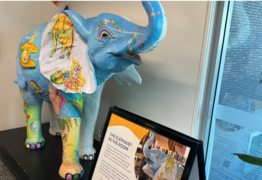
MASP addresses the elephant in the roomFamily Violence is often something people struggle to talk about.MASP and other local community organisations want to see that changed – which is why they are supporting Women’s Health Loddon Mallee’s “The Elephant in the Room” project.The Elephant in the Room project features words and drawings by women victim survivors of family violence on a fibreglass elephant.One side focuses on the damage caused by family violence, the other side highlights the hope, strength, and resilience of women recovering from abuse.You may have already seen the Elephant around town in other community spaces, however for the short term it will be located at MASP’s Pine Avenue service centre.“Our staff see the impacts of family and domestic violence every day and the significant impact this has on those within our communities. This elephant encourages discussion and education on something that has long been considered a private issue – bringing it to the light,” MASP Acting CEO Charmaine Calis said.“When we work together to build an awareness and understanding of how to stop violence before it starts we will see the change needed to stop violence before it starts – which is why MASP is proud to be on board with this project”.If you or someone you know needs help or further information and support call 1800 RESPECT or 1800 737 732 or see the resources in the emergency contacts tab of BCB News.

An act of repaying kindness raises $73,000 for Country Hope

03 November 2024, 10:00 PM

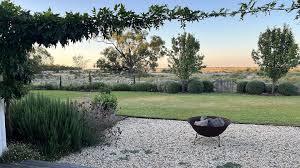
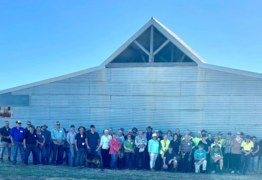
A simple act by Marcus and Cass Hooke to return the support they received while their son Jack was going through his childhood cancer journey, turned into a sell-out charity event which raised $73,000 for Country Hope.Cass and Marcus Hooke with their children, Sybil and Jack pictured at their garden event. Images: Margie McClelland Appropriately named Outback Gardens, the event last Saturday drew garden enthusiasts from throughout New South Wales and Victoria for a day of learning, sharing and inspiration in Cass’ beautiful country garden on the Hay Plains.Cass mostly single-handedly orchestrated the entire event, from planning and securing speakers and sponsors and organising a massive raffle which resulted in 4873 tickets sold, to turning their woolshed into an event centre which oozed style and country hospitality.Country Hope Fundraising and Events Coordinator, Simon Barton with Cass Hooke.The day was hosted by Chloe Thomson from Bean There Dug That. Guest speakers included Ashley James (Ashley James Gardens), Karen Daniel (Wren's flower farm & Wren's florista), Keith Edwards (KE Landscape Consultant), Sarah Curray (Majors Mulch), Joel Barnett (InStyle Gardens) and former Hay local, Colleen Southwell (The Garden Curator). This was followed by a selection of workshops to attend and a variety of gardening stalls.Also attending was Country Hope Fundraising and Events Coordinator, Simon Barton who spoke emotionally about his role which enables emotional and financial support to country families who have a child diagnosed with cancer or other life-threatening illnesses. In thanking everyone for their support and donations to help families get through incredibly challenging times, Cass Hooke also shared their personal journey when young Jack was diagnosed with childhood cancer.“This is beyond all I had ever hoped to achieve to pay forward the pure kindness my family has received,” she said.Country Hope is Riverina-based and supports families throughout Wagga Wagga, Albury/Wodonga, Griffith, Hay, Dubbo and surrounding areas. The day concluded with a stroll around Cass Hooke's private garden.

Love in a shoe box: the amazing Edie Lewis

02 November 2024, 1:01 AM

From Moulamein to the world - Eadie brings Christmas cheer to kidsAbove: Edie and her husband Graham have spent so much of their lives quietly helping the world around them, not expecting or looking for praise or accolades, just doing what they do. Edie sat down with Kimberly Grabham to share her life story, that will feature in future publications. Image: Kimberly Grabham.Edie Lewis was born in Moulamein. Throughout her life, she has impacted on so many levels, a quiet little angel just silently touching the lives of others. For many years, Edie has given Christmas to children in a shoe box. Having undertaken this for many years, this will be her last year. As hard as it is to believe, she is coming up to 80, and has well deserved the break and time for herself. Providing needy children in challenged countries with a Christmas, and quite often their only present on Christmas day, is a beautiful thing which transcends religion and one’s beliefs. Samaritan’s Purse is the organisation behind Operation Christmas Child. Samaritan’s Purse is a non-profit, Christian organisation providing emergency relief and development assistance to suffering people around the world. Samaritan’s Purse is meeting the physical needs of victims of war, famine, natural disaster, poverty and disease with the aim of demonstrating God’s love and sharing the good news of Jesus Christ. The aid and assistance are given without regard to the race, creed, gender, religion, or ethnicity of the beneficiaries. Operation Christmas Child is a project of Samaritan’s Purse. It is a hands-on way to bless children in need across the world by filling shoeboxes with toys, hygiene items, school supplies, and fun gifts. “We collect the boxes and distribute them in the name of Jesus Christ to children living in vulnerable situations,” Edie said. “The mission of Operation Christmas Child is to provide God’s love in a tangible way to children in need around the world, and together with the local church worldwide, to share the good news of Jesus Christ.” Edie and her husband Graham have boxed, with the help of wonderful volunteers from around the region, hundreds of shoe boxes which Edie aims to get to Sunrise Orphanage in Cambodia. They have also raised $2,500 towards freight costs, as it costs $12.50 per box to get the shoe boxes to their destination. If you are unable to pack your own shoe box, you can still bless a child around the world without leaving your home. You can give boys and girls a tangible expression of God’s love through a gift-filled shoebox packed from your computer or mobile device. Learn More

Nutrien Ag Solutions Community Grants Program delivers $250k

30 October 2024, 1:00 AM

Nutrien Ag Solutions delivers $250,000 into regional Australian communitiesNutrien Ag Solutions and FRRR (Foundation for Rural & Regional Renewal) have today announced the 59 recipients of the 2024 Nutrien Ag Solutions Community Grants Program, with over $1 million invested in remote, rural or regional communities through the program over the past four years.The 2024 not-for-profit (NFP) recipients will receive a share of $250,000 for projects that will contribute to the success, vibrancy and wellbeing of their communities. Grants have been awarded in every state and each of the projects supported will receive up to $5,000.Successful projects in the Back Country include:• Toganmain Woolshed Precinct (Coleambally) for sub division fencing to protect the historic Toganmain Woolshed from roaming cattle and improve safety for volunteers and visitors.• Red Dust and Paddy Melons Community Gallery (Hillston) to support vibrancy by contributing to the restoration of the gallery building.• Wanaaring P&C Association's library project to install an air conditioner in the school library.• Tilpa Community Committee's garden project, to purchase a lawn mower to help maintain the village's only park.• Support to Hay Services Club, to improve community facilities with audio visual technology to support local events, community meeting and educational workshops.This is the fourth round of the annual Nutrien Ag Solutions Community Grants program, which aims to strengthen resilience and sustainability and contribute toward long-term positive social and environmental outcomes.Mady Muirhead, Corporate Affairs Advisor at Nutrien Ag Solutions, said that it’s wonderful to be able to support so many of the places where the Nutrien staff live and work.“The nature of our business means that most of our staff live and work in small communities across remote, rural and regional Australia. We love seeing our branch staff making sure that their community know about the grants, and we often find that they also get involved in projects like working bees or events. By supporting the grassroots organisations that are the heartbeat of these communities, we know that we are contributing to the success, wellbeing and vibrancy of these places that our people call home,” Ms Muirhead said.FRRR’s Place Portfolio Lead, Jill Karena, said that the partnership with Nutrien Ag Solutions means that community groups, especially in smaller, more remote locations, can access the funding they need to create vibrant and sustainable communities.“Small rural communities – especially those with fewer than 500 people - find it hard to raise the funds to deliver key activities, so we are grateful for our partnership with Nutrien Ag Solutions, as it means that we can help local not for profit groups in these communities to continue to function and deliver critical services and activities.“Like all of us, these volunteer-led organisations are also feeling the increases in the cost of living, so we’re pleased that a significant tranche of funding has gone toward helping to sustain local community organisations and to host events that both bring the community together and raise vital funds for key local projects.“As in previous rounds, the most common requests were for funding to support infrastructure and equipment. Many community facilities, which are critical to sustaining social cohesion, are deteriorating as government funding declines, so these grants will help to maintain and enhance these important local meeting places and help create vibrant, resilient communities,” Ms Karena said.

Old mobile phones providing a lifeline for domestic violence victims

25 October 2024, 7:00 PM

Devastatingly, new data from domestic violence support charity shows demand for help is showing no signs of slowing down, with a 29 per cent increase in people helped by their services since this time last year.In this digitally dependent society, sadly technology is often used to control and manipulate victims of domestic violence, with mobile phones commonly misused by perpetrators for tracking via spyware or location services.1 In fact, shockingly, over half (57 per cent) of DV victims report their phones and text messages are checked without their consent ‘all the time’.3Almost every Australian relies on a smartphone in everyday life, from phone calls and text messages to health tracking and digital payments. Being without access to a safe, private smartphone makes it increasingly challenging for victims of domestic violence to break the cycle of abuse. In fact, over two in three (70 per cent) women who experienced abuse had never separated from a violent partner, often due to financial dependency and a lack of independence because of coercive control.As a domestic violence survivor, Lauren recalls, “I eventually realised that my abuser was monitoring my emails, text messages and social media accounts. He once told me he had put cameras in the house so he would know if I had anyone there. I was certain he was tracking me. He knew where I was all the time.”Domestic violence affects a staggering one in four (27 per cent) Australian women and one in eight (12 per cent) Australian men.1 Ashton Wood, Founder and CEO of not-for-profit DV Safe Phone says the provision of a safe smartphone is not simply a means of communication but an essential lifeline to help DV victims break the cycle and exit an abusive relationship safely.With over 22.3 million redundant mobile phones gathering dust in drawers and cupboards, ending up in landfill4, DV Safe Phone is on a mission to give them, and DV victims, a new life by supplying them to domestic violence agencies across Australia.Ashton Wood says, “Since we began, we have repaired, repurposed and gifted over 10,000 mobile phones to domestic violence victims through our agency partners (DV agencies, police stations, hospitals and safe houses) across the country.”Lauren adds; “Receiving a DV Safe Phone would have made an enormous difference to me in both the lead up to exiting the relationship and the aftermath. Cutting off his controlling tools was vital, and a protected phone would have helped me regain some agency and move forward safely.”“While DV Safe Phone has already provided support to over 10,000 people, we’re actively seeking the support of businesses to partner with, who can supply unused technology to increase our capabilities. For every phone we distribute, a victim gains a crucial tool to reach out for help, connect with loved ones, and take steps towards rebuilding their life,” Ashton adds.Participation from businesses helps to open conversations in the workplace and helps break down the barriers that often prevent survivors from seeking help, showing them that they are not alone. It also allows for a broader conversation on how workplaces can offer support and resources to those in need.Ashton continues; “One way to support DV victims is to encourage your workplace to actually talk about it. Organisations by law now need to have a domestic violence policy and provide leave to staff experiencing domestic violence. By participating in the 16 Days of Activism and donating old phones to DV Safe Phone, businesses can help to ensure that every call for help is heard, and not only that, but it can also be a starting point for discussing domestic violence support in a compassionate and non-triggering manner in the workplace.”Businesses can make a real impact this 16 Days of Activism against Gender-based Violence (25 November – 10 December). DV Safe Phone, is encouraging individuals to speak to decision makers at their workplace to champion safety and awareness for domestic violence victims and taking the opportunity to fulfil ESG commitments, while creating a safe place for understanding and support for domestic violence in the workplace.To find out more about how individuals and workplaces can get involved, head to https://dvsafephone.org/.This story appeared on Australian Rural & Regional News on October 3, 2024. Back Country Bulletin (BCB) contributes to ARR.News.About the citations1. https://www.sciencedirect.com/science/article/pii/S26662817220016402.https://www.aihw.gov.au/family-domestic-and-sexual-violence/types-of-violence/family-domestic-violence3.https://wesnet.org.au/wp-content/uploads/sites/3/2020/11/Wesnet-2020-2nd-National-Survey-Report-72pp-A4-FINAL.pdf4.https://telconews.com.au/story/vodafone-encourages-australians-to-recycle-unused-mobile-devices5.https://www.anrows.org.au/publication/attitudes-matter-the-2021-national-community-attitudes-towards-violence-against-women-survey-ncas-findings-for-australia/read/6.https://www.statista.com/statistics/321477/smartphone-user-penetration-in-australia/

Counselling support for farmers and their families

24 October 2024, 4:00 AM

Louise Fraser addressed the recent open day at Hay Multipurpose Service (Hay Hospital) and spoke about the Farming Community Counselling Service.The main role of the Farming Community Counselling Service is to provide one on one professional support or counselling to farmers, their families and the wider agricultural community including people who work in agriculture and rural communities.The counselling service is structured and time limited depending on the person’s needs and situation. “We meet in flexible spaces,” Ms Fraser said. “We meet in parks or places away from where the stress is impacting people.”The service is designed to support psychological resilience - by developing practical coping mechanisms with regard to the psychological impacts of working on farms or in agriculture. It helps people navigate the impacts of droughts and other stressors. Farming Community Counsellors can also link clients into relevant services dependent on the individual and their needs. This could include the Rural Financial Counselling Service, GP’s, Specialist Mental Health or support services. “If counselling doesn’t suit, we’re great at checking in through a phone call, email or popping by and saying Hi!” a spokesperson said. “Farmers, their families, the wider agricultural sector and communities are facing tremendous pressures. “Farmers often have to find off farm work as they may not have the full support of the farm itself. “Many factors that influence the farms viability are out of the farmer’s control.”The counselling service is free and confidential. Referrals can be made by the individual by calling the FCC intake line on 0436 811 692.

SES forms network for women in the service

18 October 2024, 1:00 AM

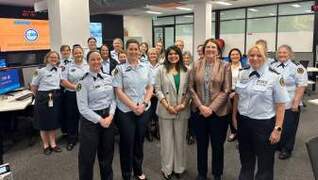
SES forms network for women in the serviceA new network of women in emergency management and response has been formed within the NSW State Emergency Service (SES) to share experiences and inspire the next generation. The NSW SES Women’s Network was launched earlier this month and will empower and connect women in the Service. Inspired by former commissioner Carlene York APM, the network will foster meaningful connections, inspire engagement, and empower the development of women across the organisation, both staff and volunteers. NSW SES Acting Commissioner Debbie Platz APM said it was through conversations with female members about their achievements, challenges and experiences that the network was born. “We wanted to create a space where women in the NSW SES can connect, share their stories, and feel empowered to grow and succeed,” Acting Commissioner Platz said. “By establishing the Women’s Network, we are ensuring that women have the support they need, not only to develop their skills, but to thrive and succeed in every role within the SES.” NSW Parliamentary Secretary for Emergency Services, Charishma Kaliyanda MP, said opportunities like the Women’s Network would benefit communities across the state. “This will provide like-minded women with a place where they can both contribute to, and benefit from, association with others within the SES,” Ms Kaliyanda said. “Women coming together to support and upskill each other will not only benefit the NSW SES, it will also assist in building more resilient communities across the state.” The Women’s Network is structured to ensure all areas of the SES are represented and includes 17 members representing each zone and the state headquarters, regardless of skill level or position. The Network’s executive committee is led by Chair, Joanna Limpic, who will build momentum and engage women across the Service over the next 12 months. Acting Commissioner Platz said the Network would improve access to development and training, including mentorship to help improve the pathways and participation of women within the Service. “The Women’s Network is a pivotal step towards creating an inclusive environment where women can excel within emergency management and response,” Acting Commissioner Platz said. “We are committed to ensuring every woman in the SES, no matter her role, feels connected, supported, and has access to opportunities for growth.”

Five more shearing legends inducted into the Australian Shearers’ Hall of Fame

11 October 2024, 10:00 PM

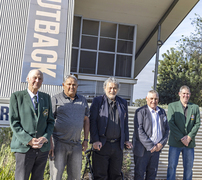
Shear Outback’s Sam Barnes (far left), master of ceremonies and fellow inductee (2019) David Lawrence with 2024 inductees Alan Williams of NSW, Peter Orcher (NSW), Peter Black from Western Australia, Brian Sullivan (NSW), Damien Boyle (WA), the first and only female and inductee Cathy Wendelborn from Quilpie QLD, who presented awards at Saturday evening’s gala event, and induction panel member Mark Baldwin.Another five shearing legends have been inducted into the Australian Shears’ Hall of Fame.The induction took place during the Festival of the Blades event last week, with a visit to Shear Outback on Sunday morning.The new inductees are Peter William Black, Damien Patrick Boyle, Peter William Orcher, Brian Anthony Sullivan and Alan Arthur Williams.These men represent the cream of the shearing industry as instructors, state champions and contractors.Peter Black has had a lifetime of involvement in the shearing industry as a shearer, trainer, advisor, judge and software development.Peter managed/coached the Australian Shearing and Wool Handling Team at three World Championships.Quick to apply technology to the betterment of shearing he developed the website shearingworld.com and also created the app LOJIK Shearing.Damien Boyle is an inspiration to the shearing industry with his competition shearing record which will be admired and stand alone in the Western Australia shearing industry for many years to come. At age 37, Damien had 22 years of competition shearing under his belt and has made the finals of 99 per cent of competitions he has entered.In 2003, 2005 and 2006 Damien won every Australian Open competition he entered, totalling 31 wins.Peter Orcher began his shearing career at age 17 and mainly shore in North Western New South Wales with narrow combs.Peter became a contractor, with his teams being in great demand due to the high standard he set and expected from his shearers and shed staff who on occasions were all indigenous.Brian Anthony Sullivan, known as ‘Sully’, is a left-handed master shearer always shearing with precision placement of blows.Brian has won eight State titles and 60 Open Shearing titles.As a shearer trainer for AWI, Brian is dedicated to support young learners training at shearing schools and in-shed training support. He is widely known for dropping in and assisting learners on the job.Alan Williams is a NSW State Champion (1965) and in 1970 won the Australian Strongwool Championship at the Melbourne Royal Show where he also reclaimed the NSW title.As a shearing instructor from 1973 at Echuca Technical College, Alan worked throughout the Riverina and Victoria and was very widely respected.A total of 53 legends have now been inducted at the Australian Shearers’ Hall of Fame since its was opened by Member for Riverina, Kay Hull and Patron Tim Fischer on Australia Day, 2002.

Remembering William Jackson - The youngest Australian to be awarded the Victoria Cross

11 October 2024, 4:00 AM

Images above: (Left) The Victoria Cross. Image courtesy Arghya1999. Right: Private John William Alexander Jackson of Gunbar is the youngest recipient of the Victoria Cross, Australia’s highest war time honour. Image: Australian War MemorialJohn William Alexander Jackson was born on 13 September 1897 on 'Glengower' Station at Gunbar. On February 15, 1915 William Jackson enlisted in the Australian lnfantry Forces in the first group of volunteers from Gunbar. William was just 17 years old, at the time of his enlistment.On August 20 he was landed at Gallipoli and fought at Kaiakij Aghala (Hill 60). On April 10, 1916 Jackson's division took over a forward position in the eastern Armentieres section of the Western Front. On the night of 25 June 1916 the events took place which won the Victoria Cross for the young 18-year-old soldier from Gunbar.His commendation read;“(Private Jackson) was returning from a successful raid, when several members of the party were seriously wounded by shell fire in No Man's Land. Private Jackson returned safely, handed over a prisoner, and immediately went back under the heaviest shell fire, and assisted in bringing in a wounded man. He went out again, and assisted a sergeant to bring in another wounded man. Then a shell blew off Jackson's arm, and rendered the sergeant unconscious.Private Jackson returned to the trenches, obtained assistance, and went out to look for two wounded comrades. His work was always marked by the greatest coolness and bravery. He set a splendid example of pluck and determination.”William Jackson remains the youngest Australian to be awarded the Victoria Cross and his was the first VC to be won by an Australian on the Western Front.The Grazier of September 22, 1916 reported the award.“Private William Jackson is the oldest son of Mr John Jackson, of Gunbar. He was born on the 13th September, 1897, at Glengower, Gunbar, and is consequently not quite 19 years of age. His mother's maiden name was Adelaide Ann McFarlane, and she, too, was a native of Gunbar, where the young soldier spent all his life, prior to enlisting. His father is a native of Sydney. Mrs Jackson, his mother, died about eleven years ago. The young hero's full name is John William Alexander Jackson, but he was always known as Wm. Jackson. Both his father's and his mother's people are well known about Gunbar, and the district can fairly lay claim to the recipient of the greatest of all military honors as a district boy. Private Jackson is a fine specimen of the Australian youth, physically, and prior to volunteering, he had a local reputation for strength and reckless daring.”The Town celebrated his return with a crowd of cheering locals awaiting his disembarkment at Hay Railway Station. Private Jackson was taken in the Mayor’s motor car to the first of a series of events held in his honor. He dined at Tattersall’s hotel as the guest of Council and various local dignatories and members of his family, before a reception at Federal Hall.One speaker is recorded as saying “Bill was not looking for a VC that night; he was looking for a cobber.” Private William had continued to venture into No Man’s Land even after receiving his own injury.The postwar years were hard on this brave man. After a variety of jobs, he moved to Melbourne in 1953. He died in the Repatriation Hospital, Heidelberg, aged 61.

Kids step in to help protect a Hay Plains icon - the Plains-wanderer

10 October 2024, 4:00 AM

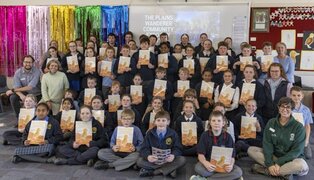
Above: Student and teachers from both primary schools, with Taronga Zoo’s Kelly Pfeiffer, and the magazine they produced. Students from Hay schools, St Mary's Primary School and Hay Public School, together with their Year 10 mentors from Hay War Memorial High School have just spent the last six months immersed in another successful program to highlight the plight of our local and elusive, native bird, the Plains-wanderer.The Plains-wanderer is an extremely endangered species that inhabits the vast Hay Plains. At only around 15cm tall and almost flightless, the Plains-wanderer is vulnerable to many predators such as birds of prey, foxes and cats.The students were extremely fortunate to attend a habitat day at Gayini, west of Maude where they learnt about the preservation and care of the Plains-wanderer through regular programs such as fox baiting, maintaining an appropriate environment and regenerative planting of vegetation. The students also met 'Molly' a scent dog owned by David Parker of the NSW Department of Primary Industries, who is able to successfully follow the scent of the Plains-wanderer during the tracking part of the captive breeding and release program.The students then embarked on a two-night excursion to Taronga Western Plains Dubbo Zoo where they stayed in tents at 'Billabong Ranch' in the middle of the zoo.Morning wake up calls were heralded by the roars of the lions nearby and the trumpeting of the elephants. The students spent the day at the Education Centre learning about ways to protect the Plains-wanderer and other vulnerable native creatures from introduced predators such as the domestic cat. Ideas were sought from the students on how to keep pet cats entertained whilst held in cages away from native creatures.The students then visited the quarantined sanctuary of the zoo where the habitat cages held the Plains-wanderer as part of the captive breeding program which aims to return Plains-wanderers to their native habitat. Students leant about the program and the importance of awareness in local communities of the plight of the Plains-wanderer.After their wonderful excursion to Dubbo, the children returned to Hay where they worked with their mentors in groups to design 'catios' - enclosed cages where cats could be securely kept so that the Plains-wanderers could be protected.The students also worked to create a joint magazine full of information including stories, letters, poems, word searches, crosswords, quizzes, dot the dots and poetry designed to educate, entertain and cause awareness of our special little bird. Artwork was also completed with thanks to the generous time of Mr Chris McClelland and Mrs Sarah Cannon.The program culminated in an expo held last Tuesday in the St Mary's hall where the schools came together to launch their magazine, share their ideas and designs for their proposed catios as well as promote care and awareness of the Plains-wanderer.All schools would like to thank Kelly Pfeiffer (pictured above with local students and teachers) and the keepers and educators from Taronga Western Plains Zoo Dubbo, Jade Auldist from Riverina Local Land Services, Jenny Dwyer from Hay Landcare, Jamie and Samantha Woods and Nari Nari Tribal Council, Dyson's Bus Services, David Parker and sponsors BayWa r.e for their support in this program.

Homebush Hotel - a tree change decision leads to Australia Day party

09 October 2024, 4:00 AM

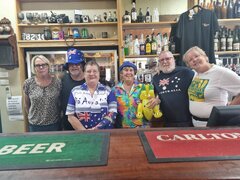
Pictured is the stalwart crew at the Homebush Hotel, Vicky Barnes, Jim and Gail Quick, Donna McDonald (Relief Manager), and Jim and Janet Redman. Vicky is a helpful local, and Terry and Janet Redman are Jim’s sister and brother in law who came visiting from Queensland, fell in love with the place, and now make regular trips.When Jim and Gail Quick drove up to the Homebush Hotel site in the middle of 2023, Gail figured that this treechange would be something to which she would have to become accustomed. A week later, however, she knew she never wanted to leave. The couple are the managers of the pub.“The local community is so amazing,” Gail said. “They just rally around, join in the fun and are always helping. We recently had a trivia night and were delighted when some 100 people turned up, although we didn’t expect it. Because we didn’t expect so many, it was only Jim and I working at the time, so the locals jumped behind the bar and gave us a hand, we could not ask for better people around here.”Jim and Gail organised the event, which was nothing short of terrific. Featuring throng throwing, Yabbie races, stockman’s races, a dunk machine, lamington eating contest, warm beer and cold pie eating, stock whipping demonstrations, and so much fun throughout the day, it was an event to remember.Young and old were having the time of their lives out at Homebush on Australia Day, and that is really what it’s all about, getting together, having fun, and that treasured sense of community.Below: Showing off their Australia Day tattoos are Callen Bruton, Helen Ferguson, and Janet Redman. Helen was getting everyone in on the spirit, visiting different tables and assisting to apply tattoos. Below: On either side of Gail are highly valued volunteer cooks, Natalie Hussey and Travis Linnett. The pair had the children in tow, who were having a blast with the water guns Gail had given all the children.

261-280 of 299
Back Country Bulletin
News from the Back Country

Get it on the Apple StoreGet it on the Google Play Store