From Battlefield to Bedrock: How a gold pan saved a soldier’s life

Kimberly Grabham
03 March 2026, 7:00 PM
In Short
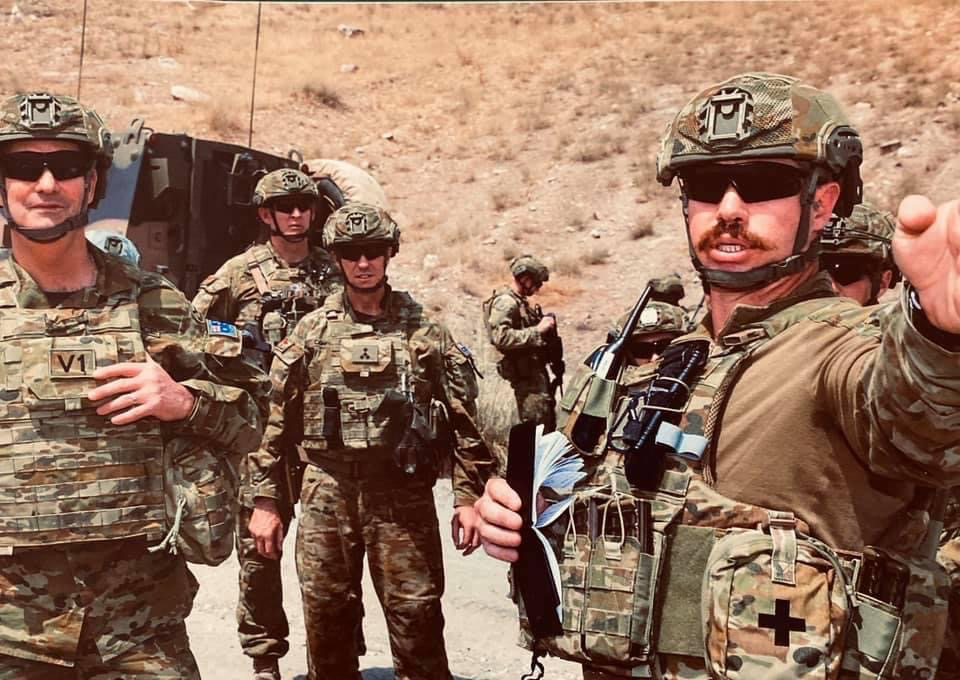
- Local Hero: Born and raised in Hay, Heath Wall rose from a carpentry apprentice to a Major in the Australian Army, serving as a pilot and an operational leader in Afghanistan.
- Survival & Recovery: After sustaining life-threatening injuries in theatre and being revived twice, Heath was diagnosed with severe PTSD and a rare conversion disorder.
- Battlefield to Bedrock: Heath founded a community initiative using gold prospecting and the "peace of the bush" to provide mental health support and purpose for struggling veterans.
There is a certain kind of quiet that settles over the bush in the early morning, before the world has fully woken up.
The kind of quiet Heath Wall has learnt to sit inside, feet in a cold Victorian creek, pan in hand, listening for something most people would miss entirely.
It is not gold he is really listening for, though he finds that too. It is himself. Heath Wall grew up in Hay, the third son of Les and Sue Wall, in a family who knew everyone and was known by everyone, the way only small country towns allow.
He played footy on the same fields, walked the same streets, sat in the same classrooms as a generation of kids who would go on to live ordinary lives.
Older brothers Damien and Nathan, younger sister Hayley; a big, close family, the kind where mum and dad are still on the phone every single day, no matter how far life has taken you from home. Heath still makes those calls. Some anchors, the important ones, hold.
After finishing school he completed a carpentry apprenticeship, worked for himself, then spent time as a leading hand concreter for his brother Nathan up in Casino.
Along the way, quietly and entirely on his own initiative, he enrolled through TAFE and studied two and three unit mathematics, not because he needed them for anything he was already doing, but because he had decided he wanted to fly. For the army.
The only thing standing between Heath and the cockpit was his academic record, and Heath Wall is not a man who accepts that something standing in his way gets to stay there. He joined the army at twenty-nine.
At the officer selection board, the panel called him a rough diamond.
He took it as a compliment. Only four of twenty-four candidates were selected. Heath was one of them. The army elected him to undertake the full eighteen-month Royal Military College course at Duntroon before he could fly, to prove the academic and leadership credentials to match the grit they could already see.
He put his life on hold and went.
Those 18 months stripped him down and rebuilt him from the ground up, broken and reassembled by people younger than him, the ego of a decade of civilian self-employment packed into a box under the bed.
By the time he graduated as a Lieutenant, he was a platoon commander responsible for thirty-three men.
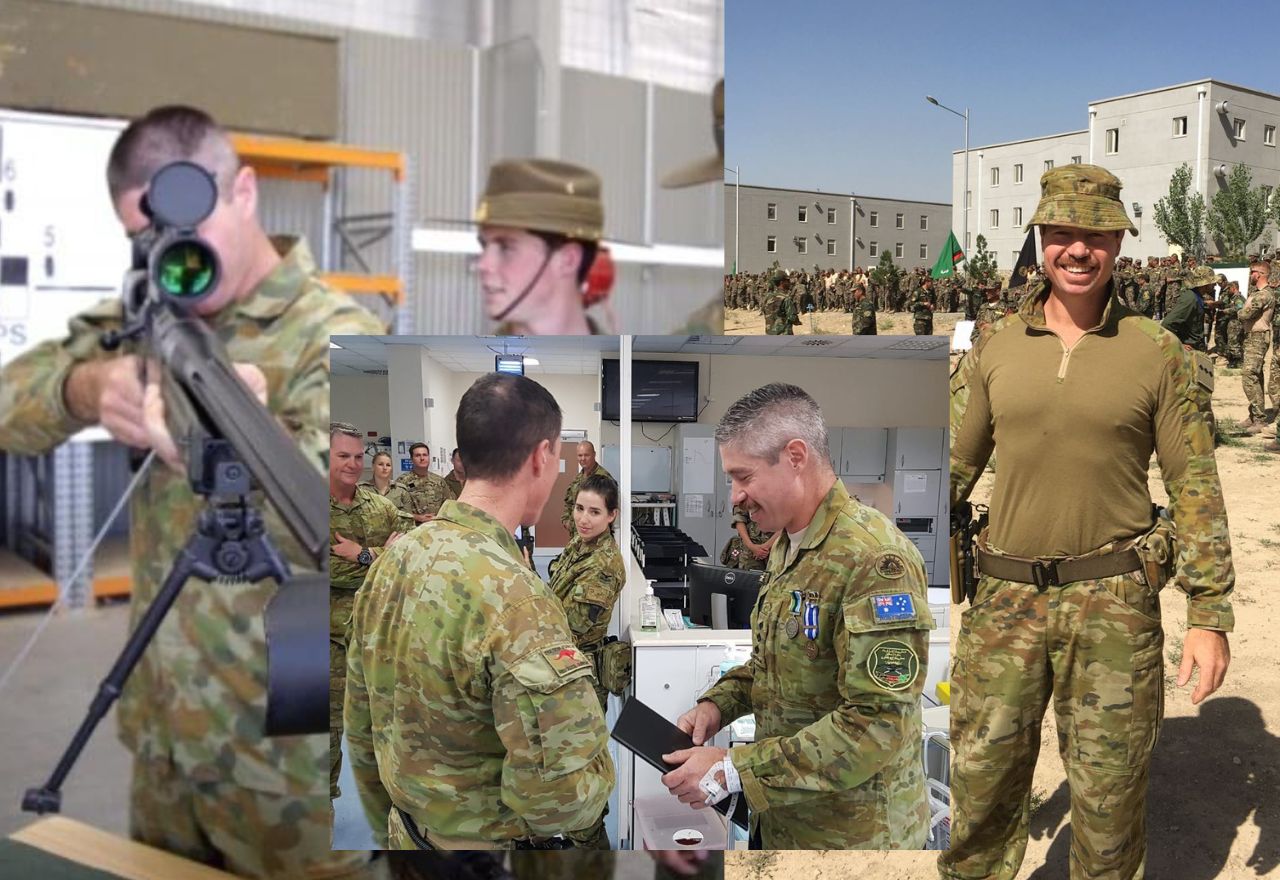
He earned his wings in 2011 after completing both fixed wing and helicopter training. He flew for two years.
Then the computerised MRH-90 arrived, a fly-by-wire aircraft that demanded a different relationship with flying than the one he had spent years building.
His instructors described him as a hands and feet pilot, which in military aviation is both an observation and a kind of compliment.
He stepped back from flying and moved into operational leadership, eventually becoming one of only a handful of aviation officers in the country to earn a cross rifles badge, qualifying across the full suite of range weapons and becoming a firearms trainer.
A machine built the way he’d asked to be built. Then the deployments started. Papua New Guinea first. A last-minute pull from an Iraq deployment. Then Afghanistan, nine months on warlike service as part of Operation Highroad, training Afghan National Army officers fifty kilometres west of Kabul in a compound two hundred metres long and a hundred wide, housing Australians, Germans, Turks, and the quiet arithmetic of daily threat.
They were shot at every day.
IEDs were a constant calculation of every route. Many of the Afghan officers they were training were working the middle ground between the coalition and the Taliban, trying to survive the way everyone was trying to survive. Heath did not blame them for it.
One afternoon on the ranges, scanning the snow-capped mountains, he saw a glint and two figures running under a fence line.
He reported it, tracked it, filed it away. A week or so later, they were engaged.
Heath was injured. He will tell you the facts the way a man describes weather, but the facts themselves are staggering. He died in the medevac helicopter. They brought him back.
In the Bagram hospital a thirteen-millimetre tube ran into his chest cavity keeping his crushed lungs inflated, his heart bruised against his sternum. He was in ICU for a week and a half, awake the entire time.
He was in good spirits, by his own account.
There is a video of him doing a Tim Tam slam in the hospital bed, Danish nurses around him, his wife Kim on the phone from home.
He does not quite remember recording it.
The phone was still connected to Kim when he pulled the chest tube out in his excitement and went into cardiac arrest.
Kim was speaking to his commanding officer in the moments Heath was on the table with CPR running. They brought him back a second time. When they told him he was going to Germany, he refused. He said if he was going anywhere, he was going home.
He waited several more days of pain for a critical care team to fly from Adelaide.
Then he was loaded onto a C-130 with approximately four hundred other Australians waiting for a way out of Kabul.
He was on a stretcher at the front.
They all gave him high fives as they boarded. He still gets handshakes from men who were on that flight, men who remember. He always asks who they are. He always means it. Back in Australia, surgeons removed part of his lung and fused the rest to his rib cage. They worked on his neck and spine.
He has since had three or four spinal operations. A titanium cage sits around the upper portion of his spine.
He is now facing another operation through the throat because the cage is wearing into the bone beneath it. He was medically discharged after twelve years of service.
Two days later, a promotion letter arrived.
Congratulations, Major Wall.
He still cannot quite find the words for how that landed. Research into the experiences of Australian veterans paints a confronting picture of what follows the uniform.
PTSD rates among ex-serving personnel sit at nearly three times the general population average, and close to half of those transitioning out of military service become psychologically symptomatic during that period. For those who saw sustained combat, the risk is higher again. The transition from military to civilian life is not a return to ordinary existence. For many, it is the most dangerous period of all. Heath did not believe he had PTSD. He will say this plainly, without embarrassment, because he knows exactly how many others are thinking the same thing right now. He kept working, kept pushing, told himself and everyone around him that he was fine. He started waking up outside, down the street, in positions he could not explain, with no memory of how he’d got there.
He lost his temper with a young soldier over something small and knew the anger was not about the soldier.
His commanding officer, a man who had served in the same theatre, came in to check on him and was mid-conversation when Heath went into a seizure.
He was eventually diagnosed with severe PTSD, severe depression, and severe conversion disorder with convulsions, a condition so rare in its presentation that he was only the second person in Australia to be formally diagnosed with it.
His body, deprived of its ability to genuinely fight or flee, had to learn to shut down entirely. For four years he had daily tonic-clonic seizures.
He had three young children, then four.
His wife Kim cooked dinner one evening standing over him on the kitchen floor while his service dog Zeus sat watch, a puppy himself, wide-eyed and steady.
Kim stepped around her husband and fed the kids. DVA denied his initial claim.
His records, they said, were sealed under special operations classification and could not be accessed for fifty years.
He told them they would be hearing from his lawyer. The decision was overturned within twenty-four hours. He does not say this with triumph. He says it with exhaustion.
How is it possible to move that quickly when they choose to, and yet the ordinary business of supporting a broken soldier takes years? He still does not receive a service pension. He lives on incapacity payments.
Kim is studying to become a teacher.
His youngest son, who recently turned eight, has two inoperable brain tumours and neurofibromatosis type one.
Heath left for Afghanistan when this boy was three days old. He came home when the boy was nine months. The ripple effect of one man’s service through one family is enormous, and almost entirely invisible to the structures meant to support it. He went to a very dark place. He tried to end it twice. The second time he was in the shed, halfway through it, when he kicked a box off a shelf and a card from his son Cooper fell out at his feet. It said, ‘I can’t wait for you to get home, Dad. I love you, miss you’. He broke down entirely on the floor.
The next morning he booked in to see the psychiatrist he still sees every week. His psychiatrist said he looked like a man of 70 when he first walked in.
He has since told Heath he could write an academic thesis on his recovery. Heath says he is just stubborn. He says this as though stubbornness is a small and ordinary thing, rather than the thing that kept him alive. He has lost seven mates in Australia to suicide since coming home. He lost three overseas. Seven at home. Three in theatre.
There is a Japanese art form called kintsugi, the practice of repairing broken pottery with gold, filling the cracks until they become the most beautiful part of the piece.
The philosophy is that something broken and repaired is not lesser for having been broken. The fractures are the history. The gold is the proof of survival.
Heath Wall is kintsugi. So, in their own ways, are the men and women he is trying to reach.
What brought him back to himself was gold prospecting. It had always been part of him, an avid panner long before the army, always drawn to the bush, always interested in what the ground held. Kim could see that getting back into something he loved was the only lever that might work. She drove him out to a paddock near Warwick when he was still at his worst, still not safe alone, and watched him walk around looking at rocks.
He studied geology formally.
He took courses in rock formation and mineral identification.
He started going out four or five days a week. He began to understand what the prospecting was actually doing for him, and it was not really about the gold. It was about having his feet in cold water.
It was about being grounded in country that did not ask anything of him. It was about the particular combination of peace, purpose and gentle reward that the bush provides to people whose nervous systems have been running on combat settings for years.
Veterans, he has observed, tend to need the same things when they come out the other side. Peace and quiet. The bush. Running water. People who understand without needing things explained.
Prospecting delivers all of it, and then, at the end of a long day with boots soaked and muscles spent, it delivers a small gleam of gold at the bottom of a pan that says the effort was worth something. Prospecting saved his life. He will say this plainly. He is trying to do that for others. He started a Facebook page called Battlefield to Bedrock, and quietly, the way things do when they are genuinely useful, it found its people.
Veterans who needed an excuse to get outside. Men and women who needed someone at the creek who understood the particular darkness without having it described. He is also designing the tools to make that access easier, lightweight sluice boxes that can be carried with one hand, set up in minutes, built for people whose bodies carry the physical cost of service.
He is writing a young adult novel built around the qualities of two of his closest mates, distilled into a single character.
He is fifty-two thousand words into a DVA application he is writing himself.
He is, at forty-six, building something.
Battlefield to Bedrock is, at its heart, a love letter to other veterans.
It says there is life after combat. The indescribable struggle can be navigated.
The darkness does not have to be the end of the story.
It takes just as much bravery, perhaps more, to stay, and to find your place in the world on the other side of service, as it ever did to serve.
He misses those men.
He misses the whole specific texture of military life; not the uniform, not the rank, not the ceremonies.
The people. The ones who could read a look and know exactly where his head was at.
The dark humour, the piss-taking, the shared silence that said more than words ever could.
The camaraderie of people who became family without trying, and the particular hole that never quite fills when that world is gone.
He goes to the Anzac Day service every year.
It wrecks him every time. He goes anyway.
He has wondered, publicly and quietly, whether talking about all of this actually helps.
Not in a cynical way, in an honest one.
He knows what it feels like to become the thing everyone around you is being careful about, to feel the sorry eyes and the eggshell walking.
He knows the three-way noise of it, the past pressing in with its faces and moments and decisions that cannot be undone, the present requiring you to act normal and steady, the future asking how long you carry this and what it turns you into.
His answer, arrived at slowly and with some cost, is that talking does not make the weight disappear. It does not bring mates back or silence the memories. But it does one thing. It reminds you that what you are carrying mattered.
That the bonds were real. That the weight exists because the connection did. Heath Wall is not talking for sympathy. He is not asking for sorry looks. He is building a creek-side community of people who are still here because someone showed them the water, and who are now showing someone else.
He was once a rough diamond.
He still is. He always will be.
The difference now is that the rough edges are the best part; the kintsugi gold in the cracks, the proof of what was broken and what endured, shining in the pan at the end of a long day in the bush.
There is life on the other side. Battlefield to Bedrock is the evidence.
If you or someone you know is struggling, contact Lifeline on 13 11 14 or Open Arms Veterans and Families Counselling on 1800 011 046.
https://www.facebook.com/profile.php?id=61574345487152 is Heath's Facebook page, Battlefield to Bedrock. He is based near Yackandandah in Victoria.
NEWS

SPORT
COMMUNITY

RURAL