From Menindee to Immortal - Frank McMillan

Krista Schade
27 February 2026, 7:00 PM
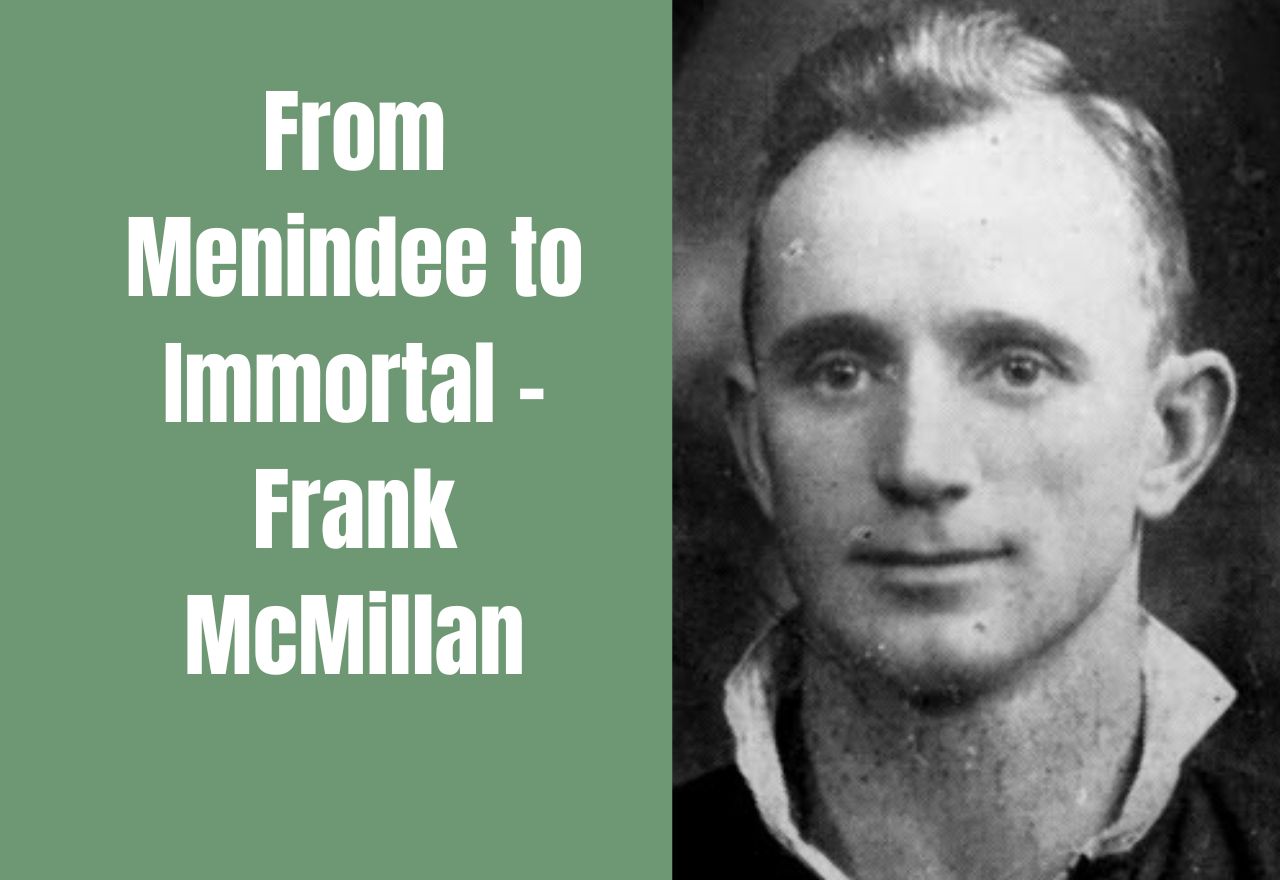
From Menindee to Immortal: How ‘Skinny’ McMillan Revolutionised Rugby League
In Short
The Innovator: Known as the first running fullback, McMillan revolutionised the game by injecting himself into the attack, moving away from the traditional defensive-only role.
Bush Roots to Global Stages: Born in Menindee, NSW, he rose to captain the Kangaroos and even played in the match that introduced rugby league to France.
Dual-Club Legend: A Hall of Famer who won premierships with Western Suburbs and later became the foundation coach of the Parramatta Eels in 1947.
Frank ‘Skinny’ McMillan was an Australian rugby league footballer and coach. He was a full-back for the Australian national team and played in nine Tests between 1929 and 1934, two as captain.
In 2008 McMillan named amongst the nation's finest players of the game, when he became the 19th inductee into the National Rugby League Hall of Fame.
McMillan was born in Menindee, in the far west of NSW but his father's employment as a Police Officer ensured that the family moved to different locations in the State. The family eventually settled at Parramatta and as a school boy, Frank represented NSW Schools against Queensland Schools in soccer, but it was rugby league that Frank settled on. He played his junior rugby league with the Parramatta Endeavours Club from 1917 until 1920. Other members of the Parramatta Endeavours team included future Wests First Grade players, Joseph Drew, and Joshua Plumb.
He was graded with the Western Suburbs Magpies in 1921. He played fourteen seasons of first grade rugby league all with Wests, aside from the 1925 season which he spent playing for the Balmain Tigers.
During McMillan's long career Wests were premiers in season 1930 and 1934 and runners-up in 1932. He was captain-coach of Wests in season 1934.
He made his New South Wales representative debut in 1922 and 12 years later he was still the state's preferred fullback. He made 22 New South Wales appearances.
His debut national selection was for the 1929–30 Kangaroo tour of Great Britain. He played in four Tests and 22 minor tour matches. He was the first Australian international representative to come from the Parramatta juniors.
In 1932 he played in all three Tests of the domestic Ashes series.
For the 1933–34 Kangaroo tour of Great Britain McMillan was named as captain-coach, captaining the side in the two Tests and in 19 minor tour matches including a demonstration match in Paris which introduced rugby league football to France.
Frank McMillan is listed on the Australian Players Register as Kangaroo No. 154
Accolades and playing style
McMillan's opposing captain and fullback for the 1933 series was British rugby league legend Jim Sullivan. Both players ended their representative careers in the third Test at Swinton. Some critics rated McMillan's performances as superior to those of the extraordinary Sullivan.
Whiticker's reference suggests that McMillan revolutionised Australian fullback play and quotes rugby league scribe Tom Goodman.
“McMillan began the era of the running fullback. If not the pioneer of attacking play, then certainly the most exciting crowds had seen. He would make daring bursts from his own goal-line, he exploited the scissors move with team-mates, he used the punt sparingly but skillfully, and although he is not rated in the same heights as Churchill, as a fullback, whose defence equalled his brilliant attack, he made many gallant tackles of big men.”
According to the NRL McMillan modernised the role of the fullback.
“Apart from having the usual fullback qualities of sure defence, safe hands and a kicking game, McMillan injected himself into the attack more than any previous player in that position, thus establishing a blueprint for his successors.”
In September 2004 McMillan was named at fullback in the Western Suburbs Magpies team of the century. In February 2008, McMillan was named in the list of Australia's 100 Greatest Players (1908–2007) which was commissioned by the NRL and ARL to celebrate the code's centenary year in Australia.
Post playing
He coached Western Suburbs in 1936, and again in 1945. In 1947 he was the foundation coach of the newly introduced Parramatta Eels.
Frank McMillan passed away on Boxing Day, December 26, 1966, not long after his 67th birthday.
SPORT

COMMUNITY

NEWS