The Burning Truth: How a Drover’s Tragedy Created "The Black Stump"

Krista Schade
04 February 2026, 7:00 PM
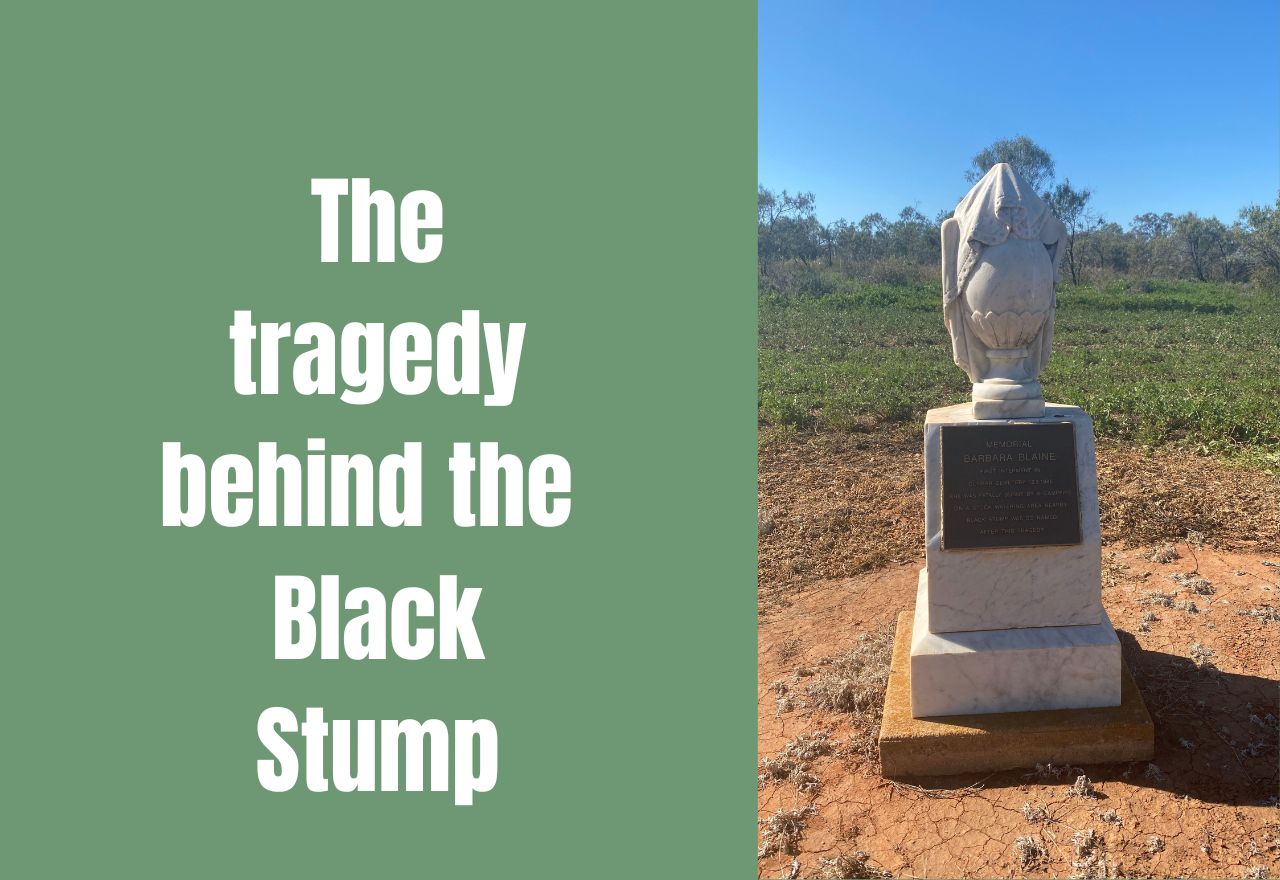
“Looked just like a black stump”
In Short
- The Origin of an Icon: The phrase "Beyond the Black Stump" traces back to the 1886 death of Barbara Blain, whose dress caught fire while her husband was away from camp.
- A Gruesome Epitaph: The term was coined after her husband, James Blain, starkly described her remains as looking like a "black stump."
- A Place in History: Barbara was the first person buried at Gunbar Cemetery; today, her legacy lives on through the Black Stump Hotel and a memorial in Merriwagga.
Barbara Blaine was what many would term an unassuming woman - a drover’s wife - and yet her death had an impact on the region around the township of Merriwagga and the village of Gunbar.
Local legend has it that in 1886 Barbara and her husband camped at a spot 10 miles (16 kilometres) west of where Merriwagga was later developed and gazetted in 1924.
The area was widely used as an overnight camp by those moving stock from the north, to river steamers on the Murrumbidgee River or the rail head at Carrathool.
After setting up camp Barbara’s husband James set off - without newspaper records to accurately set history, some stories claim James was looking for feed for his animals, while other versions claim he was searching for lost stock.
Regardless of the reason, he left the camp and while he was absent, tragedy struck.
Barabara’s voluminous dress must have brushed the campfire flames, because it caught fire and burned the woman to death.
When James arrived back at the camp his wife was long dead.
It is said that when asked about his wife's death Blain explained, with a dry matter-of-factness, that when he found her she "looked just like a black stump".
The gruesome tale was so often repeated that the term "black stump" became a location description.
In the years that have followed it has expanded to become an image of distance, isolation and hardship, and most commonly occurred in expressions like "beyond the black stump" and "this side of the black stump".
After the town of Merriwagga was established, the first hotel was built two years later in 1926, and was called The Black Stump Hotel, a nod to the legend of Barbara Blain.
A memorial to Barbara sits across the road from the Hotel at Merriwagga, but she also has a place in the history of the now abandoned village of Gunbar.
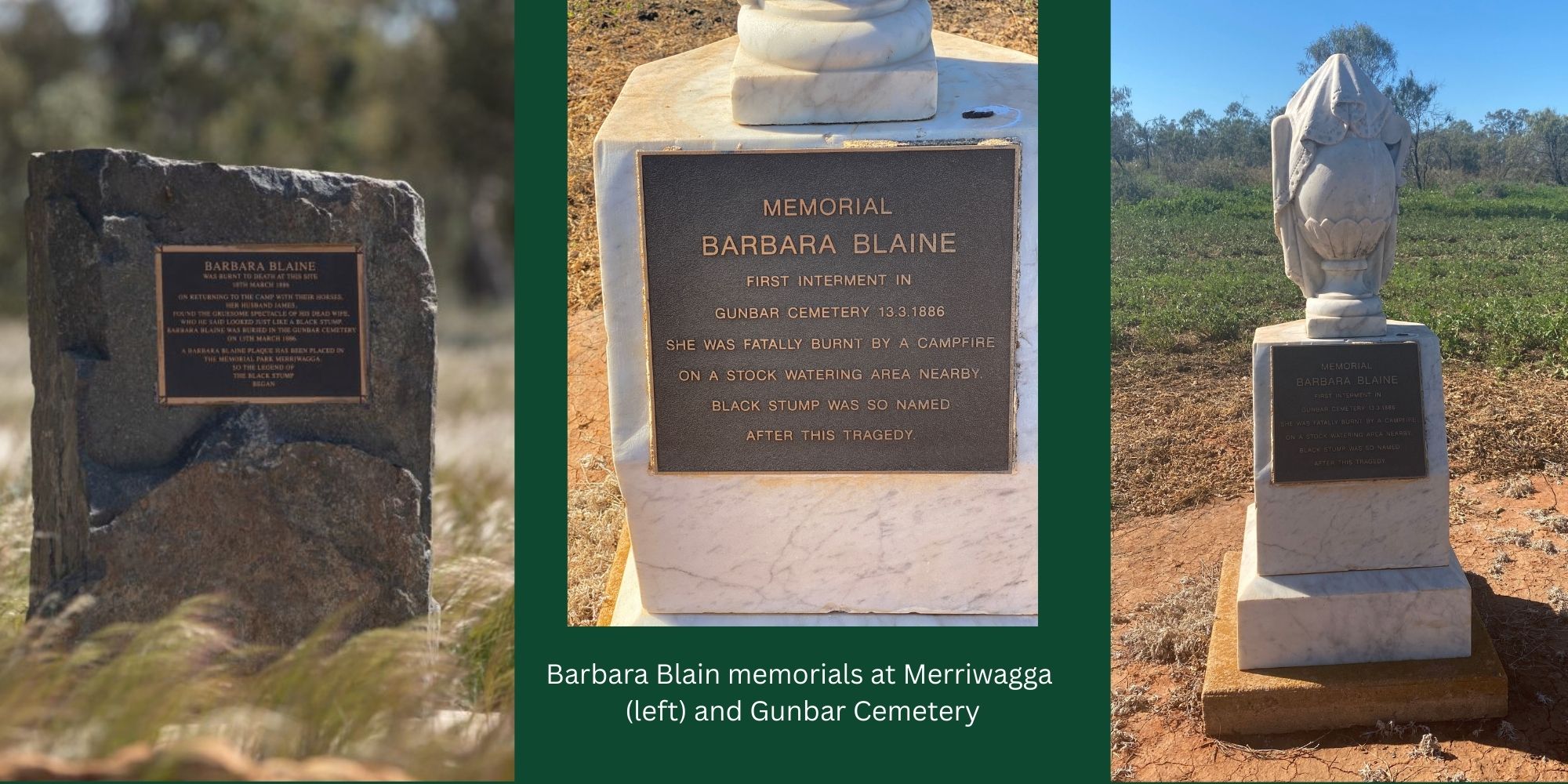
Following her death in March 1886, Barbara became the first person to be buried at Gunbar Cemetery, the closest to where she met her demise.
After her burial the Gunbar cemetery was officially dedicated in 1887.
The land on the eastern side of the Gunbar Cemetery was surveyed for the planned Gunbar Township, but it did not expand due to the lack of water.
A small number of residential homes were built in this area however, including the first Gunbar Church.
The land three kilometres south of the Cemetery known as South Gunbar became a thriving township because shallow water was located in an old riverbed.
The water was found to be of high quality and a Chinese market garden was established to the western end of this township.
The Gunbar Pioneer Memorial Church still stands today, beside the Mid Western Highway.
The Gunbar Cemetery is still up on the hill, on the original site where it was surveyed in the 1800's.
COMMUNITY

RURAL