Back Country Bulletin
News from the Back Country
Get it on the Apple StoreGet it on the Google Play Store
Visit HayVisit BalranaldVisit Outback NSWYour local MemberEat, Drink, StayEmergency Contacts
Back Country Bulletin

News


Three earthquakes in 30 hours - rumbles in the Back Country

06 January 2025, 3:56 AM

Three earthquakes in less than 30 hours struck the Back Country late last week.The rumbles began with a 2.6-magnatude quake, which struck just before midnight on Friday January 3. This was followed by a followed by a larger 4.1-magnitude quake at 2.50pm on Saturday afternoon and a 3.3-magnitude tremor at 5.30am Sunday morning.The first quake was located very close to the outback city of Broken Hill, with the next two measured further east, towards Menindee and Wilcannia. It was recorded at a depth of three kilometres underground, while the next two, while larger in magnitude, were 10 kilometres below the surface. Geoscience Australia senior seismologist Phil Cummins told the ABC there is no reason to believe the three quakes are related, but the service will continue to monitor the region.More detailed scientific monitoring will be required to understand what caused the events.What causes earthquakes in Australia?Australia experiences earthquakes because of its geological position and the movement of the Australian tectonic plate: Tectonic plate movementThe Australian plate is the fastest moving continental land mass on Earth, moving northeast at about 7 centimetres per year. It's colliding with the Pacific plate to the north and east, and the Eurasian plate to the northwest. This collision generates compressive stress in the Australian continent, which builds up over time. When rocks deep underground break and move along a fault line, this stress is suddenly released, causing an earthquake. Intraplate earthquakesAustralia is located in the centre of a tectonic plate, so earthquakes are less common than in other places where plates meet. These earthquakes are called intraplate earthquakes, and they're generally less predictable than earthquakes that occur at plate boundaries. Old fault linesAustralia is an ancient continent with old fault lines that can cause earthquakes. Australia experiences about 80 earthquakes of magnitude 3 or larger each year, but most are small. The largest recorded earthquake in Australia was in 1988, when a magnitude 6.6 earthquake struck Tennant Creek.Ongoing researchIn December, Geoscience Australia released the first update to the National Seismic Hazard Assessment since 2018, identifying Darwin and the eastern highlands through into Latrobe Valley as areas where there is a higher risk of strong ground shaking.The National Seismic Hazard Assessment defines the level of earthquake ground shaking across Australia that has a given chance of being exceeded in a specific time period. Knowing how the ground shaking hazard varies across Australia allows emergency managers, government agencies and the engineering sector to prepare for, and respond to, earthquakes in Australia.Senior Seismologist Dr Trevor Allen said the new assessment is based on updated data, models, and insights, collected from field surveys and earthquake catalogues, as well as from people who have felt an earthquake.

LG Minister flags changes to council meeting rules

06 January 2025, 1:30 AM

NSW Minister for Local Government, Ron Hoenig, has announced changes to the way council meetings are conducted to ensure greater transparency and increase community confidence in council decision making.“Council meetings are where a council’s most important decisions should be made,” said Minister Hoenig.“It concerns me that these decisions are increasingly being made behind closed doors in private briefings, locking out the community and protecting councils from public scrutiny.“As a former Mayor, I want to see all councils conducting their business in an open and public forum, where communities can engage with their council on issues that directly affect them.“The current Model Meeting Code has become unwieldly and is prone to drawing the general manager into political disputes which should be left to elected councillors to resolve.“These changes are part of the government’s commitment to restoring public trust in local government which has been eroded by years of neglect and a cultural shift towards secrecy over public service.”All councils are required to adopt a code of meeting practice based on the Model Meeting Code issued by the Office of Local Government.The Government has now released a consultation draft of amendments to the Model Meeting Code for public comment.The changes aim to simplify the Model Meeting Code and ensure councillors are making decisions in the full view of the communities they are elected to represent.They also aim to increase the dignity of the council chamber and remove the general manager’s involvement in council politics.Key changes, some of which have been recommended by the Independent Commission Against Corruption (ICAC) include:preventing councils from holding private councillor briefing sessions;requiring information considered at closed meetings to be made public after it ceases to be confidential;requiring councils to give reasons when making decisions on planning matters that depart from staff recommendations;de-politicising the role of the general manager by removing the requirement for them to prepare reports on councillors’ notices of motion;expanding the powers of the mayor to expel councillors from meetings for acts of disorder;requiring councillors to stand when the mayor enters and when addressing the meeting.Changes to the Model Meeting Code were flagged in a discussion paper outlining the government’s proposed reforms to the councillor code of conduct system.Submissions will be accepted until Friday, 28 February 2025. Learn more and provide feedback HERE.

Let's go for a walk
Let's go for a walk

05 January 2025, 7:00 PM

Walking is a simple, accessible form of exercise that offers numerous health benefits, from reducing the risk of chronic diseases to improving mental well-being. It's the unsung hero of the exercising world, the all rounder.By incorporating a few strategic tweaks to your walk, you can transform your daily walks into even more powerful health-boosting activities.Embrace Interval Walking: Instead of maintaining a steady pace, alternate between periods of brisk walking and slower recovery periods. This interval training approach has been shown to improve cardiovascular fitness, blood sugar control, and body composition more effectively than walking at a constant speed.Pick Up the Pace: Walking at a faster pace, ideally at least five kilometers per hour, has been linked to a lower risk of death from various causes, including heart disease and cancer.A brisk pace also contributes to better heart health and weight management. To gauge your ideal pace, aim for a speed where you're breathing harder but can still hold a conversation.Add Weight for Strength: Wearing a weighted vest or backpack during your walks adds resistance, forcing your muscles to work harder and resulting in increased strength and calorie burn. Start gradually with a weight of about 5 per cent of your body weight and increase it as you get stronger.Make sure the weight is evenly distributed and maintain good posture while walking.Conquer Hills and Stairs: As hard as it is to find a hill in this area, walking uphill or climbing stairs engages different muscle groups, particularly in your legs and glutes, leading to increased strength and calorie expenditure. Downhill walking also enhances muscle function and balance.Practice Mindful Walking: Engage all your senses during your walks by paying attention to your movements, breath, and surroundings. This mindful approach can reduce stress levels, improve mood, and enhance overall mental health.To maximize the benefits of your enhanced walks and ensure safety, remember to:●Warm up with a few minutes of easy walking and cool down by slowing your pace and stretching.●Wear comfortable, supportive shoes to prevent injuries.●Stay hydrated, especially during longer walks or in hot weather.●Listen to your body and take breaks when needed. Consult a doctor if you experience persistent pain or discomfort.●Gradually increase the intensity of your walks, whether you're adding weight, tackling hills, or increasing your speed, to allow your body to adapt.By implementing these simple adjustments, you can elevate your daily walks from a simple stroll to a powerful tool for enhancing your physical and mental well-being.

The history of the Freemasons in Hay

05 January 2025, 4:00 AM

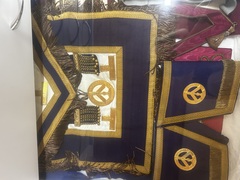
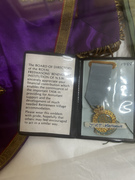
This is the second and final instalment of the article detailing the history of the Freemasons in Hay. “The earliest document from the archives of out Lodge is a letter written by Mr Peter Tyson of ‘Corrong’ dated December 26, 1871, in answer to a circular letter from the Reverend Samuel Alexander Hamilton, Presbyterian Minister at Hay, who ultimately became the first worshipful master of the Infant Lodge Murrumbidgee,”Alex C.W. Welsh writes in his condensed version of the original History of Lodge Murrumbidgee, 37, Hay U.G.L. N.S.W. “We next find on April 22 1872, Anno Lucis 5876 the Provincial G.M. of N.S.W. Scottish Constitution, sent our well-beloved Brother, P.M. Donald Cameron, S.C., Deniliquin to open and consecrate a new Lodge of Freemasons at Hay and install the first office bearers. “The new Lodge met at an adjourned meeting of Freemasons held at Mr Read’s office, Lachlan Street Hay on April 8, 1872. “The chief officers were W.M. Rev. S.A. Hamilton, S.W. Alfred Tartakover, J.W. Allen Lakeman. “The second regular meeting was held at Tattersall’s Hotel May 13, 1872 when a dispensation having been received from Sydney to open a lodge. The W.M. opened the lodge in the first degree.” George Henry Harrison was initiated in 1883 and remained a subscribing member until his death, April 25, 1931. He lived to become Father of the Lodge. His two sons, George H. Harrison Jnr, and Fred A. Harrison were P.M.s in the Hay Lodge. Another well-known local family, the Johnsons, were also members of the Lodge. R.W. Brother John Johnson P.G.S.W was a P.M. from 1890 until 1892. John Johnson installed his younger son, Gavin, to the W.M. of the Lodge on the 50th anniversary of his own initiation. John Johnson’s service to the community was recognised by His Majesty the King, who awarded on him the O.B.E. (Officer of the Order of the British Empire). Another well-known citizen of Hay, Henry Barkly Maclure, was initiated in the lodge October 5, 1892 and during 1903-05 was the 22nd master. “His work in the lodge was nothing short of excellent,” writes Mr Welsh. “For years he was Hay’s most prominent citizen. He donated the sum of 2,000 pounds to form a scholarship at Hay War Memorial High School in the memory of his son Gordon who was killed in World War One. “It was largely through Brother Johnson’s instrumentality and that of W. Brother H.B. Maclure, James Glandfield, James Houston, L.E. Pennman, and I.C. Ellis, that the idea of Hay War Memorial High School was conceived and successfully carried out.” The first Masonic Lodge, or Temple was located in Lachlan Street. It sat where the Commercial Hotel is now. Established in 1872, the first hall was established by the then Mayor William Sabine. The 50th anniversary of the lodge was in 1922, and they celebrated by refurbishing the hall at a cost of 500 pounds. A centenary installation of the Lodge Murrumbidgee was held on September 2, 1972. There were 48 members of the Lodge Murrumbidgee, 73 visitors and a Grand Lodge delegation of 21. Members of the Hay Lodge served in World War One, with Jack Tyson killed in action. In World War Two, Edward S. Whitteron died while a prisoner of war. A memorial plaque was erected in the lodge to remember these fallen members. The second craft lodge was built in 1878, and was located on the corner of Pine and Moppett Street. It was built in 1878 and used by both the Masons and the community until 1988 and finally the demise of the building came in 1989 when it burnt down. In later years the hall was used for school plays, functions, parties and balls.It was demolished by Nerida Reid’s brother, Colin Barnes, who owned it. People purchased parts of the hall in which they were interested, including the throne chairs, entrance, and archway. Over the 100 years of the lodge running there was said to have been over 200 masons, From postmasters to local police. Mr Welsh lists the members in the abridged version of the Lodge’s history. Some recognisable names over the Lodge’s time were W.M. Sprowell Whitteron, holding Grand Lodge Rank from 1951-1952. W.M. John Kirkcaldy Johnston, son of John Johnston and brother of Gavin. Gavin Johnston was believed to be the youngest W.M. of the lodge, holding the rank from 1941/42. W.M. Herbert Farlow, a dairy farmer and returned soldier of the Great War, held the rank from 1947-48. In 1958-59 Clifford L. Farlow, ex P.O.W. form Japan, initiated renovations to the temple. Other notable surnames include Brunker, Thomas, Gibson, Matthews, Clarke, Houston, Whitehead, Milliken and Tyson. In 1945, W.M. A.B. Cox was installed into the rank by W.B. Liver. This officer was a keen jeweller and his jewels were worn by district past members. Mr W.C.P. Schade acted as I.P.M at the Centenary of installation of Lodge Murrumbidgee, which took place on September 2, 1972. "Mr Schade took that role on for the coming year. He was the son of the Master of the Diamond Jubilee year. "Brother Edward James Legge, S.W. Master elect spoke at the Centenary celebrations in 1972. “Freemasonry, far from being a secret society, did have a secret which was making men live better lives in a spirit of brotherly love,” he said. “It uplifts society through its high moral teachings which seek to elevate the thoughts of mankind. Freemasons are taught the brotherhood of God and man; they are obligated to live by the Volume of the Sacred Law, to be good citizens and obey the law of the land.” Freemasons appear to have admirably lofty ideals. An organisation with a positive mindset, the society may have earnt a dubious reputation due to the secretive nature, but the good works and ideals of the organisation deserve praise and congratulations.

Part one of the history of the Freemasons in Hay

04 January 2025, 4:00 AM

This is the first installment of the history of the Freemasons in Hay.All information of the history of Freemasons in Hay was taken from the condensed version of the original History of Lodge Murrumbidgee, 37, Hay U.G.L. N.S.W. was written by Alex C.W. Welsh. Masonic Lodge and Freemasons appear to be somewhat contentious issues. Designed to be a secret club or society of sorts, people get upset when it is spoken about noting the intended secrecy of the orders. Freemasonry is the world's oldest fraternal organisation. Its members include politicians, scientists, engineers, writers, inventors, and philosophers. Freemasons are known for their: • White aprons. • Arcane symbols.• Secret handshake. • Handshakes, words, and signs that indicate Masonic status. Freemasonry is a secular movement that's open to men of any race or faith. Its members swear an oath not to subvert the peace and good order of society. So, what do the Freemasons actually do? Australian Freemasons have raised millions of dollars for causes such as the Pacific tsunami, medical research, and the aged. The Freemasons Foundation provides grants, scholarships, and bursaries to charities. They are involved in local fundraising and international relief efforts. They have placed the foundation stones for many prominent buildings in Australia, including the Melbourne Court House and Melbourne Hospital. Freemasons organise functions for families, such as picnics and lunches. The organisation helps each other improve through mentoring and setting a good example. They are treated like family members by their fellow members. Freemasons develop leadership skills that can be used in their jobs and communities. It is an international movement with over six million members worldwide. Its values are non-denominational and ethical, and it's based on respect for all people. Why was the culture of secrecy built? Freemasons have been persecuted at times in history, such as by the Nazis, and have gone underground to survive. Some suspect that Freemasons are secretive to conceal how they help each other in business and the workplace. Freemasons often don't speak about their rituals to outsiders, and seen as strange by some as a result.Freemasonry has been shrouded in mystery and secrecy for the entirety of its existence. The use of secrecy as a metaphor; Freemasonry is modelled after medieval stonemasons, who used secret words and symbols to protect their work and recognise each other. Popular movies and books, like The Da Vinci Code, have depicted the Freemasons in an unflattering light.It is important for all aspects of history to be recorded and remembered, before all trace of them is lost. Freemasons pursue their personal development by working towards the betterment of all humanity through widespread community involvement offering support at all levels from local fundraising to international relief efforts. For Freemasons, there are four important values that help define their path through life: Integrity, Friendship, Respect and Service. In Australia, Robert Menzies, Donald Bradman, Charles Kingsford Smith and Weary Dunlop are just a few names from the long list of notable Freemasons. The Square and Compasses (or, more correctly, a square and a set of compasses joined) is the single most identifiable symbol of Freemasonry. Both the square and compasses are architect's tools and are used in Masonic ritual as emblems to teach symbolic lessons. When reading the history of the Freemasons in Hay, I was a little baffled with the many abbreviations of positions withing the organisation. There appears to be many varied positions. M∴ C∴:Middle Chamber M∴ E∴: Most Eminent or Most Excellent M∴ E∴ G∴ H∴ P∴:Most Excellent Grand High Priest M∴ E∴ G∴ M∴:Most Eminent Grand Master (of Knights Templar) M∴ E∴ M∴:Most Excellent Master.M∴ E∴ Z∴:Most Excellent Zerubbabel M∴ K∴ G∴:Maurer Kunst Geselle, which is German for Fellow Craft M∴ L∴:Maurer Lehrling, which is German for Entered Apprentice M∴ L∴:Mère Loge, which is French for Mother Lodge M∴ M∴:Master Mason.M∴ P∴ S∴:Most Puissant Sovereign M∴ W∴:Most Worshipful M∴ W∴ G∴ M∴:Most Worshipful Grand Master or Most Worthy Grand Matron M∴ W∴ G∴ P∴:Most Worthy Grand Patron M∴ W∴ M∴:Most Wise Master M∴ W∴ S∴:Most Wise Sovereign.G.C.– Grand Chapter; Grand Council; Grand Cross; Grand Commander; Grand Chaplain; Grand Conclave; Grand Conductor; Grand Chancellor. G∴ C∴ G∴ – Grand Captain General; Grand Captain of the Guard. G ∴ C∴ H∴ – Grand Captain of the Host; Grand Chapter of Heredom. Freemasonry has three ceremonial degrees: Entered Apprentice, Fellow Craft, and Master Mason. There are additional degrees for Master Masons, but no degree higher than Master Mason. A candidate is brought into the lodge, blindfolded, taken through various stops, where questions are asked and answers given. He is brought to an altar, asked to recite an oath, and then given instructions about the fraternity, given a mentor to guide him in the learning his lessons. A condensed version of the original History of Lodge Murrumbidgee, 37, Hay U.G.L. N.S.W. was written by Alex C.W. Welsh. This was written so it could be printed in a souvenir program for the 75th anniversary of Lodge Murrumbidgee, which took place on October 16, 1947. I was lucky enough to read through this at the Hay Gaol Museum, where it is stored with other memorabilia.

Essential Energy hit milestones on more resilient power solutions in the Far West

04 January 2025, 1:00 AM

Essential Energy has hit key milestones in its ongoing program of works to deliver a more resilient and reliable power supply to the communities outside of Broken Hill. Projects that began in 2023 in Ivanhoe and Tibooburra have reached a few milestones that will provide the community with a backup supply of electricity, when needed. A generator has been successfully commissioned in Ivanhoe that can provide power to the community during an unplanned outage, with a battery storage system to be installed in 2026. The Tibooburra community has also had a generator installed that can provide a backup power supply, with a microgrid to be built to further improve reliability in 2025. There are also plans to provide more power resilience to Packsaddle and Milparinka, which involve installing battery storage to work with existing solar installations at the Packsaddle Roadhouse and Milparinka Hotel next year. Although the impact of the October 2024 storm that took out the electricity transmission line into the Broken Hill region highlighted the need for these types of projects, Essential Energy has been working on these projects for well over 12 months. As increasingly volatile climate conditions heavily impact the electricity grid, it can become more vulnerable along the long spans of powerlines. The energy transition is providing the solar and storage technology to build microgrids that can provide a backup source of electricity until the main lines can be restored. Essential Energy is committed to delivering solutions for the Far West communities that provide off-grid power supply in the event of an unplanned outage.

Coulton, Chaffey and McKenzie renewed the push to progress inland rail

03 January 2025, 10:00 PM

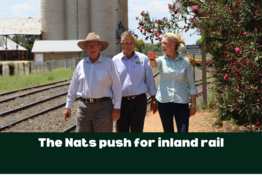
There’s a renewed push for the Inland Rail project to be completed, following meetings with key stakeholders in the Parkes electorate. Shadow Minister for Infrastructure, Transport and Regional Development Bridget McKenzie joined Federal Member for Parkes Mark Coulton and The Nationals candidate for Parkes Jamie Chaffey in Narromine, Dubbo and Moree recently.The trio met with Narromine Shire Council, Fardell’s Heavy Haulage in Dubbo and Moree Plains Shire Council to discuss the need to resume work on the Inland Rail in the Narromine to Narrabri and Narrabri to North Star sections.“Inland Rail has not been immune to the Labor Government’s cuts and delays,” Senator McKenzie said.“This nation-building project has the potential to unlock enormous social and economic opportunities, not only in towns like Narromine and Moree, but right along the 1,600-kilometre corridor.“That’s why we want to see it built as soon as possible. We are committed as a Coalition, with The Nationals at the centre, to get this transformational project finished all the way from Beveridge to Brisbane.“Mark has been a fantastic champion of the Inland Rail project right from the start and it’s been great hearing from communities in his patch about just how critical it is that we get on with the job.”Federal Member for Parkes Mark Coulton said the trip was a great opportunity to reinforce to Senator McKenzie the importance of Inland Rail in the Parkes electorate.“We’ve heard loud and clear from stakeholders and councils along the alignment the absolute need to get this project back up and running as soon as possible, particularly following the bumper harvest we’ve just had,” Mr Coulton said.“I know local contractors and businesses who invested in equipment to take advantage of the construction boom are now having to sell up and get jobs elsewhere just to make ends meet since the work has effectively dried up in my electorate.“Rail brings wealth to a community. When completed, the Inland Rail will connect towns like Narromine and Moree to every capital city in Australia and every port. “It will create enormous freight efficiencies, help to reduce emissions by taking trucks off the road, create jobs, stimulate business and economic activity in the regions and provide greater access to ports for our farmers and miners, ultimately reducing prices at the checkout for every Australian.“The sooner this project gets back on track, the sooner communities in the Parkes electorate can reap the rewards.”The Nationals candidate for Parkes Jamie Chaffey said he’s committed to taking up the fight to ensure the Inland Rail can be completed in full.“Mark and The Nationals have been committed to the Inland Rail project for years,” Mr Chaffey said.“When the Coalition was in government, construction was well underway until Labor came into power and put a halt on work in New South Wales. “Inland Rail goes through a large chunk of the Parkes electorate, and I want to reassure those communities that it’s the number one infrastructure priority for me as the candidate in the upcoming federal election.“If the Coalition is returned to government at the next election, Inland Rail is 100 per cent go, unlike Labor’s go slow.”

Interesting facts to start off the new year

03 January 2025, 7:00 PM

It may be just me, but learning interesting but questionably useful facts sends me down a rabbit hole and can burn up a lot of time. Get in on the fun for five minutes.Let's start with something small but mighty: ants! Did you know these tiny creatures don't have lungs? Instead, they breathe through spiracles, which are tiny openings on their bodies. Talk about efficient breathing!Speaking of tiny, let's talk signatures! Turns out, the size of your John Hancock might reveal something about your personality. A study suggests that men with larger signatures tend to be more socially bold, while women with bigger signatures might have some narcissistic tendencies. Who knew your signature could be so revealing?Now, for a fact that's out of this world: Australia is wider than the moon! Yep, you read that right. The moon's diameter is about 3,400 km, but Australia stretches almost 4,000 km from east to west. That's one seriously big country!While we're on the topic of size, did you know that a horse can actually generate way more than one horsepower? Studies have shown that a horse at its peak can produce a whopping 18,000 watts, which is about 24 horsepower! That's some serious muscle power!Animals can actually be allergic to humans? It turns out they can be allergic to our dander, those pesky dead skin cells we shed everywhere. And just like us, their allergic reactions can range from skin irritation to breathing problems. So, next time you're sneezing around your furry friend, they might be suffering too!And while we're on the topic of animals, let's shatter another myth! Pigs can't actually look up at the sky! Their anatomy just doesn't allow for it. Their spine and neck muscles limit their head movement, so they're stuck looking straight ahead or down. Poor pigs!From pigs to crocodiles, these reptiles have a strange quirk too: they can't stick their tongues out! Their tongue is held in place by a membrane on the roof of their mouth. So, no funny faces from these guys!Speaking of limitations, human teeth are the only part of our bodies that can't heal themselves. That's because our teeth are coated in enamel, which is not a living tissue. So, take good care of those pearly whites!Let's move on to something a bit more romantic. The actors who voiced Mickey and Minnie Mouse were actually married in real life! Russi Taylor (Minnie) and Wayne Allwine (Mickey) tied the knot in 1991. Talk about a fairytale ending!And if you're ever near a blue whale, you might be able to hear its heartbeat from over two miles away! These gentle giants have hearts that weigh around 180kg! That's one powerful pump!Now, for a fact that will make you crave a snack: it's almost impossible to eat too much sugar from fresh fruit! That's because fruit also contains a lot of fiber and water, which slow down digestion and make you feel full. So, go ahead and enjoy that fruit salad!And while you're at it, throw in some avocado! Believe it or not, avocados are technically a fruit, not a vegetable. They're considered a single-seeded berry. Who knew?!Let's travel to Europe for our next fact. The iconic Eiffel Tower was actually originally designed for Barcelona! However, the city rejected it, deeming it too ugly. Thank goodness Gustave Eiffel had a backup plan and pitched it to Paris, where it became one of the most famous landmarks in the world!And speaking of the Eiffel Tower, this metal giant can actually grow taller during the summer!5 The iron structure expands in the heat due to thermal expansion. The particles gain kinetic energy and take up more space, making the tower up to 15 cm taller!Finally, let's end with a toast! Did you know the Ancient Romans used to drop a piece of toast into their wine for good health? This tradition is believed to be the origin of the phrase "raise a toast"!And that's just the tip of the iceberg! There are so many more incredible facts out there waiting to be discovered. So keep your curiosity alive, and who knows what other mind-blowing information you'll stumble upon!

Diary of a word nerd

03 January 2025, 4:00 AM

● Wildpinkler: This word literally translates to "wild peer," and it's a hilarious way to describe someone who pees outdoors!● Handschuhe: This word translates to "hand shoe," which makes sense if you think about it–a shoe dresses your feet, just like gloves dress your hands!● Eselsbrücke: This word literally translates to "donkey bridge," and it's a shortcut for remembering something, like a mnemonic device.● Stinktier: This word literally translates to "stink animal," which is a very appropriate name for a skunk!● Zungenbrecher: This word translates to "tongue breaker", and it refers to words that are difficult to pronounce.● Drahtesel: This word translates to "wire donkey," and it refers to an old, rusty bike.●Wasserhahn: This word translates to "water rooster," but it actually refers to a water tap.● Scheinwerfer: This word translates to "shine thrower," but it actually refers to headlights.● Schattenparker: This word translates to "shadow parker," and it's used to describe men who park their cars in the shade to prevent the interior from heating up, which is seen as unmanly.●Sitzfleisch: This word translates to "sit meat," but it actually refers to someone who has the ability to endure any situation because they have a lot of "seat meat" (buttocks).● Lebensmüde: This word translates to "life tired," and it can describe someone who is feeling restless, dissatisfied with life, or depressed. However, it can also mean breaking away from the monotony of everyday life by going on an adventure.● Fremdschämen: This word translates to "exterior shame," and it describes the feeling of being ashamed of someone else's foolish behavior.● Schnapsidee: This word translates to "booze idea," and it refers to an idea that is stupid, unwise, and pointless, the kind of idea that someone would come up with when they're drunk.● Weichei: This word translates to "soft egg," and it's another word for a coward or someone who is weak-minded and doesn't stand up for what's right.● Leben ist kein Ponyhof: This phrase translates to "life is no pony farm," and it means that life can be challenging.● Kummerspeck: This word translates to "grief bacon," and it refers to excess weight that is gained from emotional overeating.● Jetzt haben wir den Salat: This phrase translates to "now we have the salad," and it's used to express that something has been seriously messed up.● Kabelsalat: This word translates to "cable salad," and it's a classy way to say that something is a mess, especially when it comes to computer-related issues.● Das Blaue vom Himmel versprechen: This phrase translates to "the blue promise from the sky," and it refers to a promise that can't be fulfilled, something so exaggerated that it's clear it could never happen.● Leben wie Gott in Frankreich: This phrase translates to "live like God in France," and it means to live in luxury.● Luftschloss: This word translates to "air castle," and it refers to an idea that is unlikely to come true, like a pipe dream.● Klappe zu, Affe tot: This phrase translates to "close the lid, the monkey is dead," and it simply means "that's the end."● Treppenwitz: This word translates to "staircase joke," and it refers to a witty comment that only occurs to you once the moment has passed.● Innerer Schweinehund: This word translates to "inner pig dog," and it's the little voice in your head that tells you to be lazy.

The humble earworm
The humble earworm

02 January 2025, 4:00 AM

Let’s look into why songs get stuck in your headI will be at work listening to the radio, and in the opening notes of a song, I will lament; this song is going to get stuck in my head. Ah, the humble earworm; our little musical companion on perpetual repeat.The word earworm comes from the German word Ohrwurm, which means a musical itch.Iconic band Queen's 'We Will Rock You', 'Bohemian Rhapsody' and 'We Are the Champions' have been identified as very popular earworms.There are particular tuneful features that make a song more likely to become an earworm.Aspects include if the piece is repetitive, if there is a longer duration of certain notes, if intervals between the notes are smaller.What usually invites a song to live rent free in my head for the next day or more usually is the annoyance value of the piece, if it has weird words, or if it elicits a certain nostalgia.Over time, my most noted earworms are ‘Billy, don’t be a Hero’, ‘The Man Who Shot Liberty Valance,’ a slew of Justin Bieber songs, and other tunes which I can either sing in my head annoyingly enunciating words, or out loud at home, annoying my children.It’s been discovered 90 percent of people experience this phenomenon, and for about a third of them, it’s annoying. An earworm is a looped segment of music that’s usually about 20 seconds long which inevitably comes into your awareness and keeps playing on repeat. Also, songs which activate an emotion, or songs associated with a particular memory, can often be the ones that get stuck in your head. This is entirely true for me; the annoying songs and songs from childhood are signing the imaginary lease for my brain.Connections in our brains involving these regions get “stuck,” resulting in an automatic playing out of musical memories. Some research suggests that people who have difficulty with working memory, like those suffering from attention-deficit disorder, may experience earworms less, while people with obsessive-compulsive disorder, where there are these loops that play over involuntarily in their heads, may be more prone to earworms.It’s also important to remember that music is universal across all cultures. Music, including some pre-verbal or simple aspects of it, is involved in our prehistory and our evolution in terms of things like changes of pitch that are necessary for communicating emotion, or just communicating in general. And music was used together with rhyming before the written word in many cultures to help people remember oral histories. Our brains evolved to remember these associations and these snippets.To get rid of an earworm you can try distraction, engaging in another thing that will require the use of some of these brain regions and circuits and functions so that you’re taking them literally in another direction. Others advocate more of a mindfulness approach —just let it play out and try not to focus on it too much. And then some suggest playing actual music, because you can replace what has been stuck in your head with something else.

Stop putting it off
Stop putting it off

01 January 2025, 7:00 PM

When I was younger, I had myself hands down convinced I had all the time in the world to do things. Now I am a little older, life is short isn't just the old cliché I heard older people saying - it's reality.Sometimes, we leave things for special occasions - "I'll see my family at Christmas," "I'll quit smoking as my New Year's Resolution," or "I'll start riding my bike to work instead of driving my car, after the Christmas break in January."Apply it to whatever you want; have you ever felt as though we save things, push them away to a time in the future which feels better, but are really avoiding?Just do it now.Pot calling the kettle black here, I am the first to put up my hand and admit. Road to hell paved with good intentions could be another way of describing myself.But, we all do this, and so many guilt trip themselves. I am sure we can all relate to these reasons, I myself can relate to more than one. ●The Perfectionist's Fear: These individuals strive for perfection, leading to difficulty in completing tasks due to their constant desire to refine and improve them.●The Dreamer's Lack of Action: Dreamers have great ideas but struggle to take the necessary actions to achieve them.●The Overwhelmed Avoider: Individuals in this category avoid tasks or projects that seem too complex or challenging, fearing failure.●The Busy Bee Who Lacks Prioritization: These individuals appear constantly busy but lack the ability to prioritize work effectively, resulting in scattered efforts and low output.●The Distraction Prone: This group is easily distracted by external stimuli such as cell phones, the internet, or other people, leading to decreased motivation and productivity.The good news is that it is never too late to change and become a proactive and accomplished individual. The article highlights three key steps to break free from procrastination:34●Step 1: Write Down Your Goal and List out the Actions You Should Take: Begin by identifying your most important goal, the one you constantly think about but haven't actively pursued. Write it down and then list the actions necessary to achieve it, including tasks, habits to develop, and skills to learn.45 The article uses learning a new language as an example and lists several actions necessary to achieve that goal.56 The first step is always the most challenging, but remember that even the longest journey begins with a single step.●Step 2: Pick a date to shift you from Motion to action: Set a deadline for achieving your goal and mark it on your calendar.7 To increase accountability, share your goal and deadline with friends or family. The psychological pressure of not wanting to appear like a failure can motivate you to take action and persevere.8●Step 3: Set a schedule for your actions: Break down your goal into smaller actions and create a schedule for completing them. Consistency is key to success, so stick to your schedule as much as possible. The article suggests utilizing a weekly planning chart to track actions and their designated time slots.Taking action is crucial for achieving goals and transforming your life. Define your desires, create a plan, and take immediate action.To maintain motivation and productivity, consider rewarding yourself for reaching milestones along the way.By following these steps, you can overcome procrastination and turn your dreams into a reality.Now I know a very smart, motivated person who writes EVERYTHING into their planner, anything she needs to remember to do, right down to check out undies sale next Wednesday - because then she does not have to think about it then.Anything she needs to remember, such as "When did I have my flu shot?" she puts into Google Keep - this is a feature of Google which is like an online notebook, complete with search bar so you can flick back through your notes without the pain of having to do that physically.Therefore, she is organised without the hassle and pressure of trying to remember what she does not need to remember.Myself, leave everything in my head and end up forgetting 75 per cent of things, or guilt tripping myself into remembering (often quite late), something needs to be done.So, long story short, I am getting my life together, lets all do it together.

Tupra's battle of the shears part one

01 January 2025, 4:00 AM

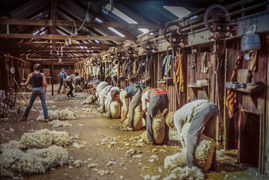
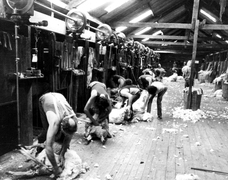
Former manager of ‘Tupra Station’, near Oxley Chris McClelland sat down with The Riverine Grazier journalist Kimberly Grabham and delved into the union unrest that reached our region.In 1983, another industrial disruption loomed in the shearing industry, when the Australian Worker’s Union (AWU) decided to ban the use of wide combs. The old shearing comb has ten teeth and shearers, supported by graziers, wanted to shear with a wider 13 tooth comb for a greater productivity. The union hierarchy said no.Those three extra teeth caused great disruption to the wool industry, and ultimately broke the back of the AWU in the bush.Nevertheless, the union has served a legitimate purpose in the early days of our history in seeking better conditions for workers until absolute power and politics went to its head. In the 1970s, a lot of pastoral development was taking place in Western Australia, and a huge rise in sheep numbers occurred. Unemployment was escalating, and many workers without a union dominated background sought employment in the shearing industry. Still, there were not enough Australian shearers, and many New Zealand shearers began crossing the Tasman, bringing their experimental wide combs, and adapting them to the tougher Merino sheep. They were not members of the AWU, and although they were breaking industrial law, the union had no jurisdiction over them. Australian shearers could see the advantages of using wider combs, and because many union members could be fined and their equipment confiscated under the Union Rule 123, many people simply became non-union. The concerned AWU realised they were losing members and turned a blind eye to the use of wide gear by Australian shearers in WA and the wide comb issue simmered for a number of years. In 1981, the union began a frenzy of meetings in Dubbo and elsewhere, and imposed black-bans on properties allowing shearers to use wide combs.Members breaking union rules were prosecuted under the registered Rule 123, which made it an offence against the union for any shearer, who was a member of the union, to use combs wider than 2.5 inches. Most of the confrontation occurred in NSW, and the Livestock and Grain Producers Association (LGPA), made application for Clause 32, ‘the prohibition of use of combs wider than 2.5 inches to be removed form the Federal Pastoral Industry Award.’The union cleverly retaliated by spreading rumours that graziers would push for a lower rate of pay per sheep due to higher achievable daily numbers with the use of wide combs. This was a mischievous fabrication and untruth but only what you would expect from the desperate union hierarchy. Shearers ‘tongue-in-cheek’ grievances were sympathetically aired by the ABC on national radio from time to time. We learnt about muscle arm fatigue, tendon injury, and other plights.Meanwhile, the three inch, thirteen tooth wide comb was being used in most countries around the world without comment except for Australia. Generally, for shearers, the wide comb meant easier work, higher tallies, and, importantly, more money in the pocket.With higher productivity, the grazier could expect substantially lower costs.In November 1982, Commissioner McKenzie made a decision permitting the use of wide combs by those shearers wanting to. The AWU lodged an appeal to the Full Bench of the Arbitration Commission in February 1983, and in due course, the Arbitration Commission commented on AWU’s attitude as ‘being hedged by conservatism, tinged with hysteria,’ and rejected the appeal.The AWU out of spite declared a national strike in the shearing industry.The fight was on – there would be no reconciliation or compromise.We had already learnt that compromise was a badge of the weak, like political correctness, and the eventual undermining and termination of any worthwhile and just cause.Consequentially, the NFF in retaliation asked its members to shear as many sheep as possible and to make it obvious that it was business as usual – to put shorn sheep in the paddocks for all to see.Grazcos organised all available willing shearers to break the strike and shear.“In February 1983, crutching was coming up at Tupra and with the shearers strike in full swing” Chris McClelland recalled.“Ian McLachlan was not going to tolerate this union nonsense, and decided to show the flag with staunch purpose.He arranged to employ the shearing contractor Bob White, who was one of the main antagonists in the dispute, a figure loathed by the union, and some of its members.White had been shearing with wide combs for a number of years and employed many New Zealanders who were a tough, resilient back up force. They soon became the target of physical threats, confrontations and all out skirmishes in public places. And so, we brought to a property a team of about 25 men and women to crutch our sheep.The operation had to be run with military precision, because we realised that with Ian’s high profile, we would become the focus of organised mischief if not mayhem. Already shearers were brawling with each other in pubs across NSW, and a station manager was brutally bashed with an iron bar on a property out west somewhere.The union was hiring aircraft to spot sheds shearing across the Riverina, and were threatening to black ban the handling of wool from those properties by their members in the wool stores around the nation. Consequently, a battle plan was carefully drawn up and immediately put into action.Maximum security on Tupra was of upmost importance.We employed three extra men from Ian’s other properties. Their job was to work in the yard and make sure that three quiet horses were always saddled, fed and watered and kept close by the sheep yards throughout the working day. I climbed the once pollarded Athol trees in front of the office, and cut over 30 cudgels about three foot long from the marvellously smooth, straight and heavy sucker regrowth.Every man and woman on the station was issued with one, and these would provide a great weapon for the horsemen whose mobility we considered would confuse a large incursion of hostile men onto the property. The female cook had a loaded shotgun in the kitchen, and there were some rifles hidden away.These we banned and the shotgun was temporarily confiscated and locked in the station office. Our neighbour Pip Boorman agreed to keep his Cessna 180 aircraft on standby in case needed.If trouble was to occur, we expected that an entry of a hostile force would be made over the station bridge across the Lachlan River, and not the more difficult long way around overland. So we chained and padlocked an old truck on the bridge so that any incursion would have to be made on foot, making those participants more vulnerable.”

The traditional New Year's Resolution is dead

31 December 2024, 7:00 PM

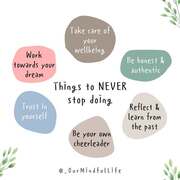
Don’t shoot yourself in the foot to start the new year. Let’s change the way we view new year’s resolutions and also the way we make them.We’ve all been there; set a resolution to lose weight or quit smoking and by the first fortnight in January we’ve fallen off the wagon and giving yourself a good old guilt trip for it.New Year's resolutions can be harmful if they are set in an unrealistic way, or if they are not accompanied by strategies to help you achieve them: Unrealistic goals can lead to anxiety, depression, and issues with self-image. Resolutions that are set in a win-or-lose mentality can lead to feelings of failure if you don't achieve them. Resolutions set for tradition's sake may lack motivation. Without strategies to help you achieve your goals, you're less likely to succeed. You might make resolutions when you're relaxed and surrounded by friends and family, but temptations are always available. Some tips for making resolutions that are more effective include:Set S.M.A.R.T. goals: Goals should be specific, measurable, attainable, realistic, and timely. Break goals into smaller chunks: Set challenging but measured goals to motivate yourself and celebrate small wins. Identify obstacles: Create plans to avoid obstacles and reduce the chance of failure. Hold yourself accountable: Write down your goals and find a way to be accountable to someone else to help you achieve them. It takes an average of 66 days to form a new habit, but the range can be from 18 to 254 days. The time it takes to form a habit depends on the person, the behavior, and the circumstances. Consistent repetition: Consistent daily repetition is the biggest factor in forming a habit. Tracking progress: Tracking your progress can help you change your behavior over time. For example, you can use a mobile app to record your steps if you want to increase the number of steps you take each day. Replacing an old habit: Instead of going cold turkey, it's more effective to replace or adjust small parts of an old habit. For example, if you always have a glass of alcohol at 6 PM, you can keep the time and glassware but replace the alcohol with soda. Writing down goals: Writing down goals can increase completion rates by 42 per cent. Having an accountability person: Having an accountability person can increase success by 70 per cent. Being reminded of a new habit: Being reminded of a new habit can lead to 12 per cent more completed goals. Progress is never linear.People can sometimes become a little obsessed with their progress, crumbing when they reach a plateau or can no longer see the progress.You need to trust the progress, as it is there.We all envision change as, “When I reach this goal, I will be happy,” or imagining and predicting the result will happen at a certain date, and will become despondent when it does not happen.We all need to remember life isn’t like that.Growth does not happen overnight, and once we hit that finish line we have in our heads, does not meant the growth is going to be there forever. We never stop learning and we never stop growing. This is why instead of resolving to lose 30kg by July, or to just get healthier, we should make specific changes to incorporate this into a lifestyle change.The ‘let’s get healthier’ resolution could have many different subheadings;*Jan 1 – starting aiming to drink more water every day. Go for a walk around the block every day.You can no doubt see what I am driving at; start small and work up. Visualising and imagining your goals can make you twice as confident in achieving them. Only 31 percent of those who don’t visualise feel confident about achieving their goals, as opposed to 59 percent of those who visualise.A study by Forbes found that people who vividly describe their goals in written form are 1.2 or 1.4 more likely to be successful than those who don’t.A study by the Journal of Applied psychology states that presenting weekly progress reports of your goal increases your success rate by 40 percent.14 percent of people with goals are 10 times more successful than those without goals. People have a 65 percent chance of reaching a goal if they have an accountability partner.In 90 percent of the studies, challenging and specific goals resulted in better performance than easy goals, no goals, or “do your best” goals.35 percent of all people cannot accomplish their goals set during New Year’s Resolution because of unrealistic goals.Over 1,000 studies show that setting high goals results in better task performance, motivation, and persistence compared to vague goals.Research suggests that 92 percent of people who set goals fail to achieve them. So give it a good hard crack, and use these tips to set apart this New Year's as the one where you got through without the obligatory guilt over a resolution gone awry.

How people celebrate the new year around the world

31 December 2024, 7:00 AM

Australia is one of the first countries in the world to celebrate the New Year because of its location near the International Date Line.So, in Australia we have many things we like to on New Year’s Eve.If you’re close to a major city, there will usually be some hustle and bustle to get to where they will set off fireworks.We usually celebrate in our laid back, relaxed way; barbecues, drinks, seafood, and salad.Around the world, they have somewhat different traditions to see in the new year. At midnight in Ecuador, people burn scarecrows and old photos to get rid of bad luck and memories from the past year. Families in Ireland bang loaves of Christmas bread on walls and doors to ward off evil spirits and ensure a prosperous New Year. The tradition of dropping a giant ball in Times Square, New York City originated in 1907 when the publisher of the New York Times commissioned a sign-maker to build it. At midnight in Brazil, people jump through seven waves while making a wish with each wave. They also wear white to symbolize peace and harmony, and give gifts to Lemanja, the sea goddess. Families in the Phillipines gather 12 round fruits, such as oranges, peaches, and plums, to represent each prosperous month of the coming year. People wear red underwear for luck, and in Spain the underwear must also be new. In Italy, people also throw old items out the window to symbolize the new things to come. Buddhist temples in Japan ring bells 108 times to remove 108 types of earthly desires. The tradition is called Joya no Kane, where "Jo" means "to throw away the old and move on to the new" and "Ya" means "night". The last day of the old year in Scotland is celebrated with festivities, such as a torch procession and street party. Wherever and however you are ringing in the New Year, make sure it is one to remember.

Part two of Tupra Station's battle of the shears

31 December 2024, 4:00 AM

Former manager of ‘Tupra Station’, near Oxley Chris McClelland sat down with The Riverine Grazier journalist Kimberly Grabham and delved into the union uprest that reached our region. This is part two of the incredible story. “One day, two union representatives were seen walking towards the shed after parking their car on the other side of the river, but came no further than the concealing edge of the timber near the sheep yards,” Mr McClelland remembers. “Upon seeing the number of men working in the sheep yards, they would have decided that retreat would have been wiser, no doubt realising the hostile reception that they would have received from the shearers – the strike breakers! "More likely they would have been visually confirming the fact that we were joyfully going against the union’s directive. Crutching proceeded without mishap for a week or so and I can remember one of the young South Australian employees we brought up saying that he thought all of the precautions we were taking were all a great big joke after I reprimanded him for excessive drinking in the jackeroo quarters after work. "If not for the circumstances, I would have told him to pack his bags. By this time there was a lot of publicity in the media, perhaps more locally than in the city, except when there was a bashing by unionists somewhere. This was more good news for the metropolis as it sells papers. Banter between Ian McLachlan and the AWU Secretary, Ernie Ecob was a regular occurrence, and all manner of threats were made by Ecob, including blackmail. There was always the false reminder of the strength of the Union members stand on the issue at hand. Once, Ecob phoned me at home on the station, and with common, uncouth drawl, laced with alcohol, demanded, ‘Where’s McLachlan, I wanna speak to him!’ One evening about 6 o’clock, the publican of the Maude hotel phoned me to say that there was a gathering of perhaps twenty odd men in his bar, and maybe more outside.He thought form the gist of snippets of their fairly guarded conversation that trouble was brewing for the Tupra woolshed, and we should expect a raid within the next hour. I immediately phoned the Hay police to ex plain the situation. The sergeant on duty in formed me that they could not just turn up at Tupra on the off chance that there might be trouble. I then explained to him that we were not going to treat the matter so lightly, from our end, and that I was going to order 30 odd men armed with cudgels to conceal themselves in the dark on our side of Tupra bridge to wait for a likely incursion by up to 30 alcohol inspired unionists and hangers on. The cautionary reply was, ‘Let it be on your own head if anything serious happens, but inform us immediately if a confrontation does occur.’ I told our own staff of the unfolding events before going down to the shearer’s quarters to prepare the shearers for the day. We would assemble in the dark on this side of the bridge strictly armed with only our pine cudgels. I fitted my ‘hard hat’ polocrosse helmet for safety, and gave a spare polo helmet to one of the jackeroos. I grabbed a first aid kit and a few long black plastic ties from the workshop bench in case we needed to restrain someone for the police. We had hand held radios, with us to keep in contact with Margie (McClelland, Chris’ wife), who would be manning the station UHF and VHF receivers and satellite phone. Unfortunately, Bob White the contractor was away for a few days. The only way anyone could easily access the Lachlan River was over the bridge and the entry of a large mob of insurgents would be restricted by the truck chained on the bridge. I doubted whether they would use a boat, so I suggested we let no more than five hostile individuals over the bridge before isolating and apprehending them. Then, using the element of surprise, repulse any further trespass on the bridge with cudgels if necessary. It was too dark to use the horses. And so, an army of men waited in the dark on the Lachlan River bank amongst the red gums, the men cradling their cudgels and busting for a fight. Several men were smoking, and I asked them not to as the glow would be a dead give away to anyone approaching the bridge. The vigilantes may well leave their cars nearer to the main road, about half a kilometre away, and walk in unseen. So, I put two of our men across the bridge on the edge of the timber, with a two-way radio to watch for car lights coming down the road. We must have waited in the dark for about an hour in silence when car lights appeared, coming form the direction of the homestead. Margie had pulled up to say it was all over. The police had phoned and told her that the Maude mob had been broken up and one man would face charges. My men were very disappointed, and reluctantly left the scene to re turn to their quarters. Evidently, after leaving the Maude Pub, the mob of up to 30 shearers and sympathisers, decided to give the small property, Newmarket, near the Oxley/Tupra turnoff, a bit of a touch up before coming on the next 40 kilometres to deal with us. The shed was right on the side of the road, and had been spotted shearing by patrolling unionists, and was full of woolly sheep. Some of the unruly mob were obviously armed, as gunshots were fired high through the walls of the Newmarket shearing shed. The manager, after calling the police, had crawled through the sheep pens in an endeavour to let sheep out into the yard, in case they were smothered from fright, or injured by misplaced gunshots. During the confrontation, a shotgun had accidentally and carelessly gone off in one of the vehicles, injuring a passenger by ricocheting pellets form the blast. This quickly brought the foolhardiness of this exercise to a sobering head. When the police arrived in very short time, the mob a cused the manager of firing at them from the woolshed and causing personal injury. This was soon disproved, and the culprit placed on charges for giving false information. Guns were confiscated, and the mob was told by police to disperse and return to their homes. Meanwhile back at Tupra, I decided to keep watch at the bridge so spent the night sleeping in the back of a four-wheel drive vehicle hid den just off the road in the timber. At first light I checked that the truck was secure on the bridge, and returned to the station for break fast. Crutching was finally completed without further trouble. Bob White continued to receive life threatening taunts from unionists, and at times was in fear of his family’s safety in the town of Mandurama. Mr McLachlan Senior suggested and organised for the purchase of two trained Doberman guard dogs, which Bob White kept at home as security for his family. Tragically, he died some years later when a car engine on a hoist fell on him. This dreadful incident followed a tumultu ous time in his life. Although suspected foul play by some, no conclusive evidence was found. There was one amusing incident during the crutching operation when Bob White had left the station on business and returned to the shed late at night, a day earlier than I expected him back. As you remember I placed a truck on the bridge and padlocked it in place with a very heavy high-tensile drag chain. The key was secured in the station office. When Bob appeared the next morning, I was surprised to see his car outside the wool room and asked him how in hell did he get his car over the bridge without a key. He replied, “Easily, the heavy steel loop at the end of the chain that you attached the pad lock to was held only by a steel link pin and split pin. I simply pulled out the split pin hold ing the steel link pin in place, removed the chain, towed the truck backwards off the bridge with the chain, and pulled it back when I had driven across.” Eventually, because of the strength and leadership of the NFF under Ian McLachlan, the wide comb dispute was settled once and for all. Credit must also be given to the cou rage of a widely travelled and many times champion shearer, John Allan, who main tained the supply of wide gear throughout the strike by setting up a Heiniger wide comb and cutter importing business against threats to him ‘commercially,’ and ‘physically’ from the AWU. The union went into oblivion in the bush. "There have been a great many changes in the shearing industry for the better, and one must realise that throughout our history, shearers played a vital role in the Australian economy and the wool-growing industry, besides giving a lot of colour and character to our lifestyle. "They are still probably the hardest working people in the world.”
1141-1160 of 1538
Back Country Bulletin
News from the Back Country

Get it on the Apple StoreGet it on the Google Play Store