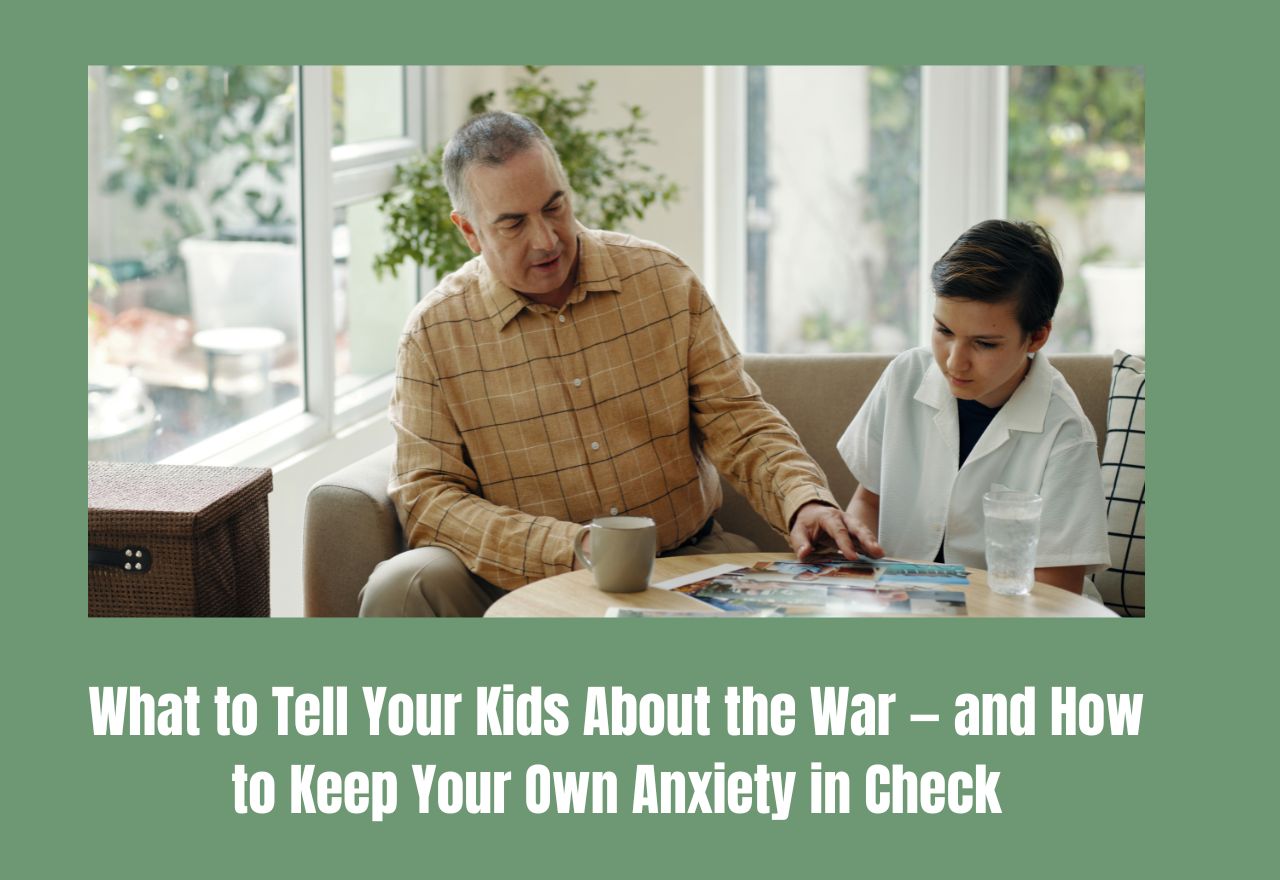
What to Tell Your Kids About the War — and How to Keep Your Own Anxiety in Check

Kimberly Grabham
09 March 2026, 7:00 PM
In Short
- Children take their emotional cues from adults, staying calm and honest is more important than having all the answers, and brief, grounded reassurance goes a long way.
- Keeping routines rock solid including meals, bedtimes, school and sport is the single most powerful thing parents can do to help children feel safe during uncertain times.
- Limiting children's exposure to rolling news and social media, and giving them a small, active role in family preparedness, significantly reduces anxiety and builds resilience.
When the world feels unstable, children look to the adults around them for cues. Not primarily for information, but for feeling. They want to know, before anything else, whether the grown-ups are alright. Whether the family is safe. Whether ordinary life is going to continue. The words we choose matter, but our tone and our steadiness matter far more.
The temptation when frightening news breaks is to either dismiss it entirely or to become consumed by it. Neither serves our children well. Telling a child that everything is absolutely fine when you yourself are anxious creates a disconnect they can feel, even if they cannot name it. On the other hand, allowing them to absorb the full weight of adult worry about a distant conflict plants seeds of fear that can grow quietly into anxiety.
The most helpful approach is honest and brief. Something like: there is a big conflict happening in a country very far away, and the grown-ups are paying attention to it. We are safe here. Our job is to go to school, eat dinner together and keep doing the things we do. That is genuinely true, and children can hold it.
Questions will come, especially from older children who have access to phones and social media. Answer them as directly as you can without expanding into speculation or worst-case scenarios. Match the depth of your answer to the depth of the question. A seven-year-old asking whether there will be a war needs a different answer than a fourteen-year-old asking about Australia's military alliances. Both deserve honesty, calibrated to what they can reasonably process.
Limiting exposure to news and social media is important for children of all ages right now, and frankly for adults too. Social media in particular tends to amplify the most frightening and speculative content during a crisis, often well ahead of verified facts. The rolling cycle of alarming images and commentary serves anxiety rather than understanding. One or two reliable news checks per day, from outlets such as ABC News, is enough to stay genuinely informed without being overwhelmed.
Routine is the most powerful tool available to parents during a period of uncertainty. The predictability of mealtimes, bedtimes, sport training, school drop-off and family rituals tells a child's nervous system that the structure of their world is intact. Keep the routines even when you do not feel like it. Especially when you do not feel like it.
Giving children something active to do also helps. Let them help pack a few extra tins into the pantry. Ask them to find the torch and check the batteries. Give them a small, concrete role in the family's preparedness. Action is the antidote to helplessness, for children and adults alike.
For teenagers, the conversation can be more direct. Acknowledge that the situation is serious and that it is normal to feel unsettled by it. Talk about what Australia is doing and what our emergency systems look like. Remind them that Australians have navigated world wars, recessions, droughts, pandemics and fires, and that communities like ours have shown remarkable resilience through all of it. Encourage them to talk to you rather than processing their fears alone through a screen.
Managing your own uncertainty is the foundation of all of this. It is difficult to be a steady presence for your children if you are consumed by anxiety yourself. The same advice applies: limit the news, take practical action where you can, talk to people you trust. If you find the worry is becoming intrusive or affecting your sleep and daily function, speak to your GP or a counsellor. That is not weakness; it is exactly the right response.
The truth, which is worth saying plainly, is this: rural New South Wales is a long way from the Persian Gulf in every meaningful sense. We are safe. Our community is intact. The uncertainty is real, but so is our capacity to face it together. Keep that in view.
NEWS

SPORT


RURAL
COMMUNITY