Children set to be banned from e-bikes as NSW cracks down on illegal high-powered models

Kimberly Grabham
08 March 2026, 7:00 PM
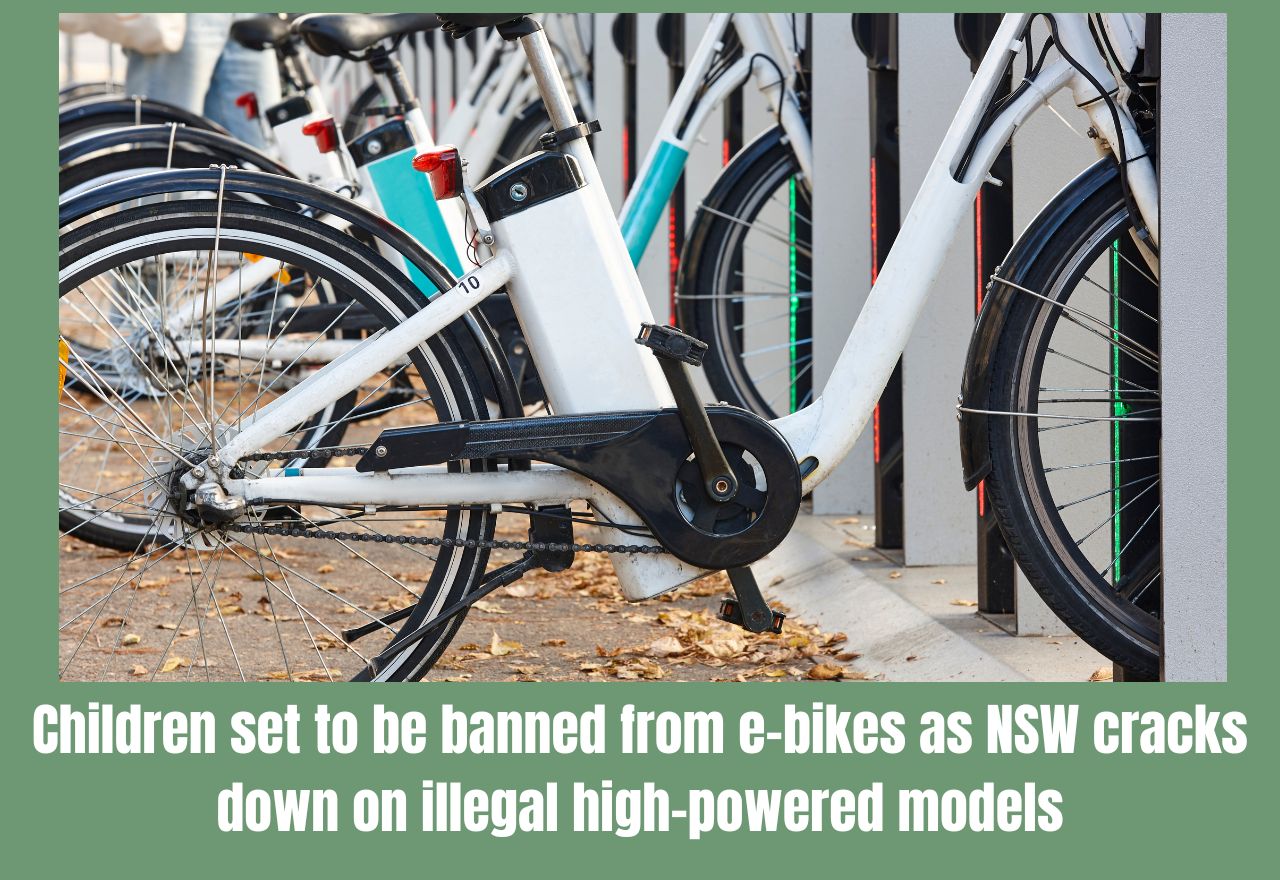
Children will soon be banned from riding e-bikes in New South Wales, with the State Government moving to overhaul the rules governing the rapidly growing technology amid mounting concerns about safety and the surge of illegal high-powered models on public streets.
In Short
- Age limits coming: An expert review will recommend a legal minimum riding age of between 12 and 16 for e-bikes in NSW, with a decision expected after June 2026.
- Stricter standards from March: NSW is adopting the European EN15194 safety standard, capping e-bikes at 250 watts and 25 km/h — and reversing the former government's decision to allow 500-watt models on public roads.
- Three-year transition: Higher-powered e-bikes purchased legally under previous rules can remain on the road until 1 March 2029, after which only EU-standard bikes will be road legal in NSW.
Under sweeping reforms, NSW will introduce a minimum riding age and adopt strict European safety standards, targeting bikes that critics say behave more like motorbikes than bicycles. An expert review led by Transport for NSW will recommend a legal minimum age of between 12 and 16 for riding an e-bike. The review will also consider whether children and teenagers have the skills, maturity and road awareness required to safely carry passengers.
With an estimated 760,000 e-bikes already in circulation across the state, the rapid rise of the technology has sparked both a transport revolution and growing safety fears. Under current NSW road rules, a child of any age can ride an e-bike and riders of any age can carry passengers if the bike's design allows it. But unlike traditional bicycles, e-bikes are heavier and faster, increasing the force involved in a crash, heightening the risk of serious injury and making them considerably more difficult to control, particularly for younger riders.
The government will consult experts in child development and road safety as part of the review process, including the NSW Office for Youth and Young People, as well as seeking feedback from parents and young people directly. Advice will be provided to the Transport Minister and Roads Minister by June, with a final decision on the age threshold and passenger rules to follow.
Transport Minister John Graham said the reforms were about striking a balance between encouraging active transport and addressing mounting safety concerns.
"We want children outdoors and active but keeping them safe is paramount," he said.
"I am concerned that we have primary school-aged children trying to control e-bikes that in some cases are heavier than them."
He said community concern about teenagers riding together on high-powered fat bikes had also prompted closer scrutiny. "I acknowledge the concern in the community about groups of teens piling onto fat bikes — often three to a bike, and sometimes breaking simple road rules."
The proposed age limits build on reforms already announced by the government, including new powers for NSW Police to seize and crush illegal e-bikes and a trial of portable dyno units to measure e-bike speeds during roadside compliance checks. The government has also reversed the former Coalition's 2023 decision to allow 500-watt e-bikes on NSW roads, and introduced tighter standards for lithium-ion batteries to reduce fire risks linked to e-bikes and e-scooters.
From March, NSW will adopt the European safety standard EN15194, joining Western Australia in requiring the benchmark. Under the standard, e-bikes must have a maximum power output of 250 watts, with power assistance cutting out at 25 km/h. No power assistance can be delivered above 6 km/h unless the rider is pedalling. The standard also includes strict battery, electrical and fire-safety requirements, along with anti-tampering protections designed to prevent speed and power limits from being altered.
"The community has spoken against souped-up motorbikes masquerading as e-bikes," Mr Graham said, "and this new standard makes clear that e-bikes must perform like bicycles, not motorbikes."
Recognising that hundreds of thousands of higher-powered e-bikes were purchased legally under previous rules, the government will introduce a three-year transition period. From 1 March 2029, only e-bikes meeting the European standard will be road legal in NSW.
The transition period reflects the typical lifespan of an e-bike and is intended to give households, retailers and manufacturers time to adjust. Following consultation, retailers will also be required to clearly specify whether a bike meets the EU standard and is road legal in NSW.
Police Minister Yasmin Catley said officers were already seeing the consequences of misuse first-hand.
"By introducing sensible age settings and cracking down on illegal, high-powered bikes, we are helping police prevent dangerous behaviour before more people are seriously hurt," she said.
NEWS
COMMUNITY