NSW moves to reform broken native title system

Krista Schade
31 January 2026, 7:00 PM
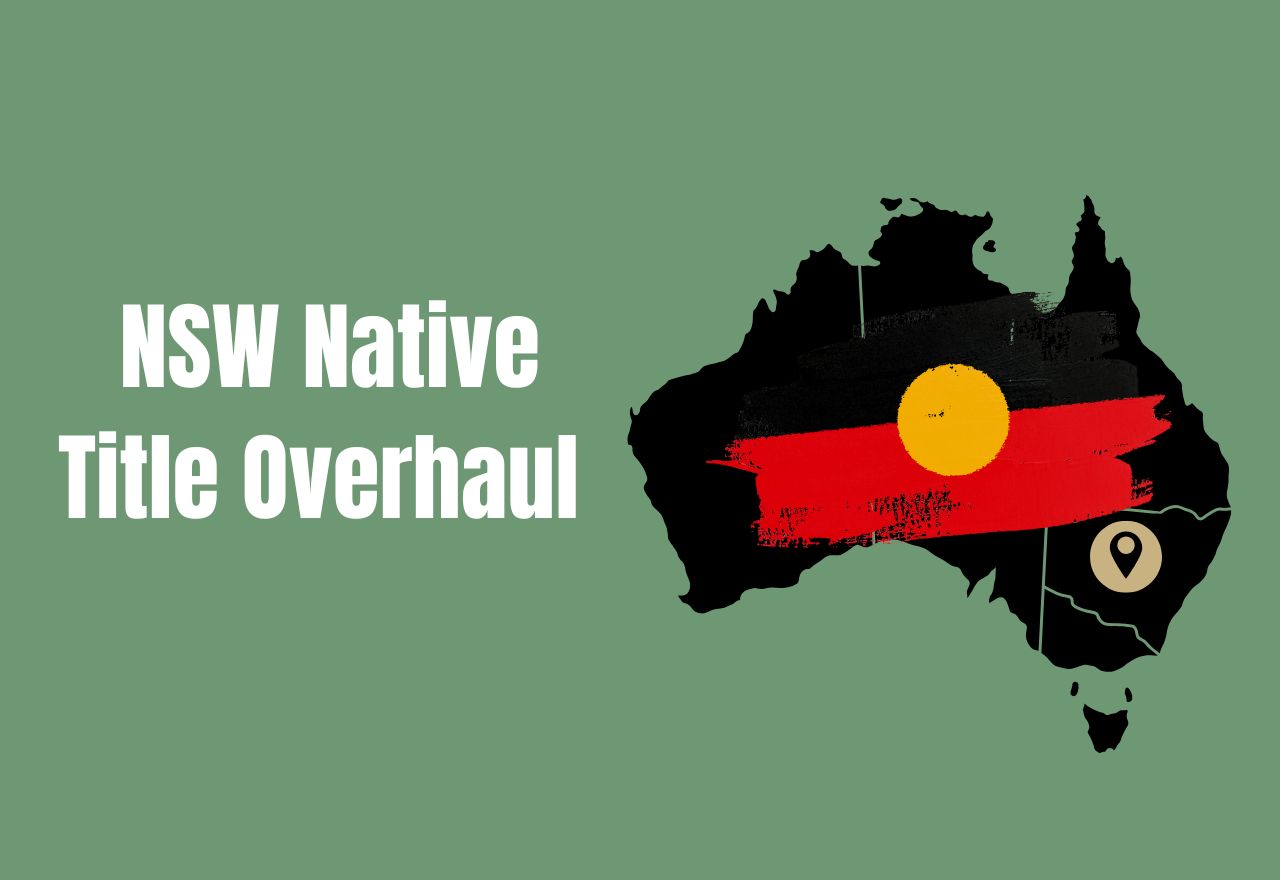
NSW Native Title Overhaul: Ending the 'Adversarial' Era or More Red Tape?
In Short
Policy Pivot: The NSW Government is shifting away from lengthy court battles toward "non-litigated settlements" to resolve land claims faster and reduce massive legal costs.
Regional Deadlock: Communities like White Cliffs remain in limbo, with mining claims frozen and residents denied freehold titles due to the complex overlap of state and federal laws.
Compensation Pressure: Following the landmark Timber Creek ruling, NSW faces significant financial liability for "cultural loss," a primary driver behind the push for new Indigenous Land Use Agreements (ILUAs).
NSW Department of Planning, Housing and Infrastructure has unveiled a new draft policy aimed at overhauling how the state handles native title claims. For decades, the NSW Government has been criticised for a slow and sometimes adversarial approach to land justice. This new framework sees a shift toward non-litigated settlements, but it comes amid deep-seated community scepticism regarding the delivery of land rights and the impact on regional industries.
The legal foundation: Mabo and the Federal Framework
To understand the new NSW policy, it is necessary to look at the federal legal architecture that dictates what any state government can and cannot do.
The Mabo Decision (1992): The High Court of Australia famously overturned the legal fiction of terra nullius - the idea that the land belonged to no one. It established that native title exists where Aboriginal and Torres Strait Islander people have maintained a continuous connection to their land through traditional laws and customs.
The Native Title Act 1993 (Cth): In response to Mabo, the federal government passed this legislation to create a process for claiming and protecting these rights. It also validated past government acts that might have been invalid due to the Racial Discrimination Act 1975.
NSW Legislation: The Native Title (New South Wales) Act 1994 was subsequently passed to align state laws with the federal framework. This ensures that while NSW manages its own Crown land, it must adhere to the federal rules regarding how native title is recognised or extinguished.
How Federal Court cases have shaped NSW laws
Several landmark cases have placed significant constraints on how native title operates in highly settled states like NSW:
The Yorta Yorta Case (2002): This was a turning point for NSW. The High Court ruled that the Yorta Yorta people, whose lands cross the NSW-Victoria border, had lost their native title because the tide of history had washed away their traditional connection to Country.
This case set a high bar for proof, and First Nations advocates claim it made it extremely difficult for groups in heavily colonised areas of NSW to succeed in court.
The Timber Creek Case (2019): This case established how governments must pay for the loss of native title. It broke compensation into economic loss (50 per cent of the freehold value of the land) and cultural loss (spiritual and emotional damage).
NSW may now be set for a wave of compensation claims following this precedent, which commentators say is a primary driver behind the new policy's focus on out-of-court settlements to avoid massive legal bills.
The promise of reform
The Law Council of Australia has broadly supported these types of amendments, noting that greater flexibility allows native title claim groups to determine their own internal decision-making structures.
Legal experts suggest that moving toward majority decision-making as the default position assists in the fair and efficient operation of a complex area of law.
However, barrister Tony McAvoy SC, Australia’s first Indigenous silk, has previously highlighted systemic biases.
He argues that the current system often puts traditional owners under duress, forcing them to approve developments like mining or risk losing any form of equitable compensation.
Affected communities: The White Cliffs crisis
The policy shift comes as regional communities grapple with the practical fallout of existing native title determinations.
In the opal mining town of White Cliffs, the situation has reached a breaking point.
Miners in limbo: The White Cliffs Miners’ Association claims that the town is being demoralised by a decade-long moratorium on new mining claims.
Association president Troy Karkoe says that no one is allowed to mine and the town is losing its livelihood. Hundreds of mineral claim applications remain pending, awaiting a specific federal determination.
Residents of the town’s famous underground dugouts feel betrayed.
Many were promised freehold title to their homes for years, only to have those hopes extinguished by the 2015 Barkandji native title determination.
Instead of ownership, they have been offered perpetual leases. Locals view this as a devastating setback that prevents them from securing finance or making safety improvements to their homes.
Land Rights vs Native Title: A uniquely NSW conflict
A major source of confusion in NSW is the coexistence of two different systems:
- Aboriginal Land Rights Act 1983 (NSW): A state-based system that grants freehold title to Aboriginal Land Councils as compensation for dispossession. It does not require proof of traditional connection.
- Native Title Act 1993 (Cth): A federal system that recognises traditional customs.
In NSW, land granted under the state Land Rights Act can still be subject to a federal Native Title claim. This creates a complex legal overlapping where different Aboriginal groups may have competing interests in the same piece of land, further complicating the government’s attempt to create a uniform policy.
The NSW Native Title Policy seems to be an attempt to repair a failing system. By pushing for Indigenous Land Use Agreements and out-of-court settlements, the government hopes to clear a decades-long logjam and mitigate the financial risks highlighted by the Timber Creek decision.
However, for those whose livelihoods are frozen in red tape, success will be measured by economic survival rather than bureaucratic principles.
The consultation process
The Department is holding face-to-face consultation sessions about the proposed new policy with native title groups in February, March and April 2026.
These sessions will be independently facilitated by Mr Jack Beetson.
Born in Nyngan Mr Beetson is one of only 12 people worldwide to receive the UN Unsung Hero Award in 2001.
He also played a role in drafting the UN Declaration on the Rights of Indigenous Peoples.
Native title groups that have an existing determination or registered claim will receive an invitation to and attend a consultation session in February, March, or April 2026.
For other native title groups, sessions will be advertised throughout January – April 2026.
The first of these general sessions will be held on Saturday 21 February 2026 in Tweed Heads.
If you are not part of a native title group but would like to share your thoughts on the proposed native title policy, you can use the Department’s online feedback form
NEWS

SPORT


RURAL