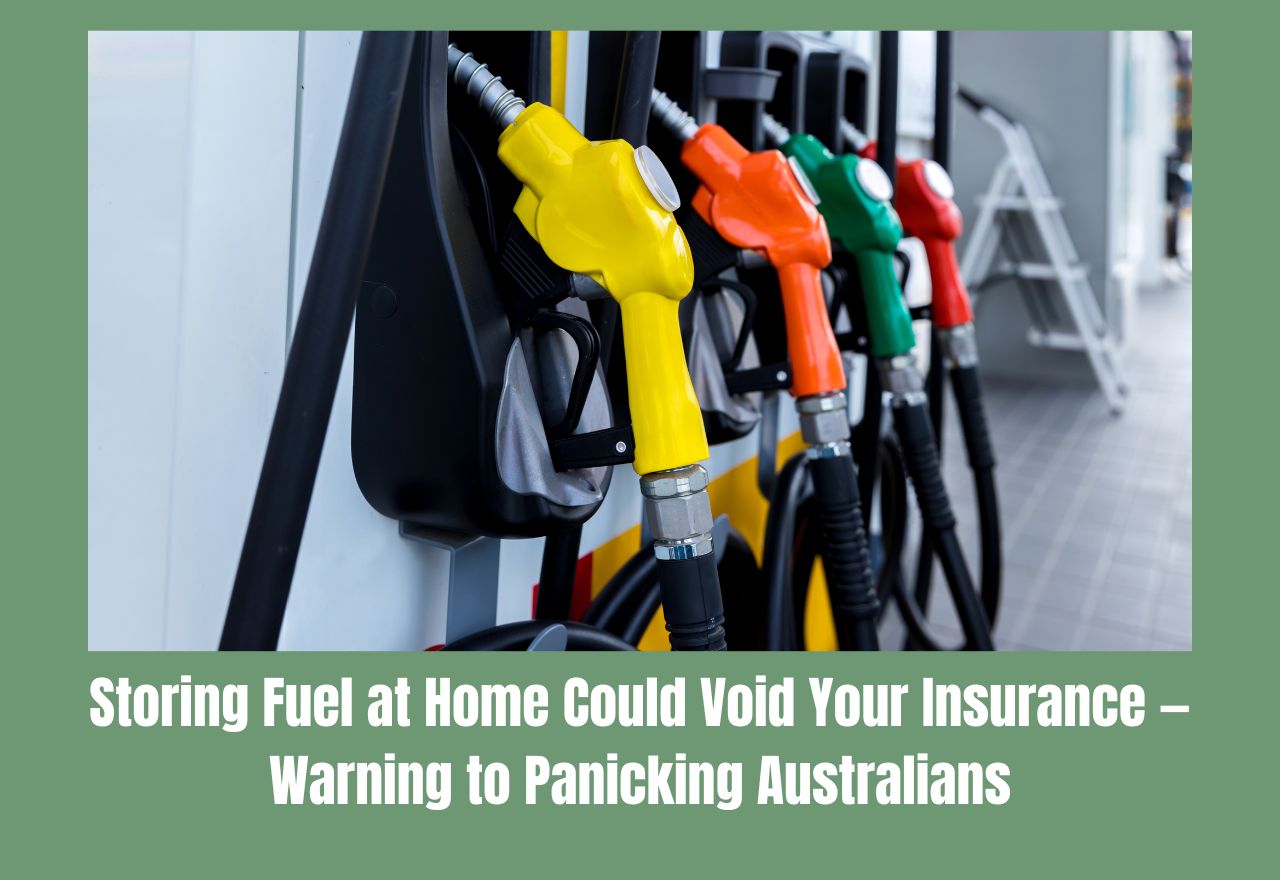
Storing Fuel at Home Could Void Your Insurance — Warning to Panicking Australians

Kimberly Grabham
11 March 2026, 7:00 PM
IN SHORT
- The Insurance Council of Australia has warned that homeowners storing large quantities of fuel risk voiding their home insurance, with standard policies specifically excluding damage from hazardous materials not stored in accordance with the law.
- Any accident involving improperly stored fuel could leave a homeowner personally liable for the full cost of property damage, clean-up and liability to neighbours — with no insurer cover.
- Energy Minister Chris Bowen repeated this week that there is no need to stockpile fuel, saying Australia has more than 34 days of diesel and 36 days of petrol in reserve, and that refining companies have confirmed confidence in supply through to May.
Australians who have been rushing to store extra petrol and diesel at home since the outbreak of the US-Israel war against Iran have been handed a stark financial warning — their home insurance could be void if something goes wrong.
The Insurance Council of Australia has cautioned that most standard home insurance policies have specific exclusions for damage caused by hazardous materials, and that bulk fuel storage at a residential property may constitute a change in the risk profile that policyholders are legally required to disclose to their insurer.
"Policyholders have a duty to disclose anything that materially changes the risk profile of their property and significant fuel storage may constitute such a change," an Insurance Council spokesperson said.
"Home insurance policies have exclusions for loss or damage arising from failure to comply with laws. Those considering storing large quantities of fuel on premises must comply with applicable standards for storage of dangerous goods."
In plain terms, this means a fire, explosion or fuel spill caused by improperly stored petrol or diesel could leave a homeowner facing the entire bill themselves — clean-up costs, damage to their own property and legal liability if a neighbouring property is also affected.
Suncorp Insurance has confirmed its home policy does not cover loss, damage or legal liability arising from hazardous materials if not stored or used in accordance with relevant law and manufacturer's instructions. Queensland already has a precedent case in which a homeowner lost an insurance claim for a leaking underground petroleum tank, with the policy found to exclude damage from pollutants.
Standard home policies typically exclude damage or liability from hazardous materials like stored fuel, pollution or contamination from chemical spills, materials not stored according to legal requirements and any bulk fuel storage above basic domestic purposes.
Queensland's peak motoring body the RACQ has also issued a safety warning, noting that only approved metal or plastic fuel containers meeting Australian standards should be used, that fuel should never be carried inside a vehicle or caravan, that most fuels have a shelf life of only about three months under ideal conditions, and that containers should always be placed on the ground before filling, never filled while sitting in a ute tray or trailer.
The RACQ has separately referred major fuel retailers to the Australian Competition and Consumer Commission for investigation after prices surged within hours of the war breaking out — well ahead of the two-week timeframe that global oil price changes normally take to reach Australian bowsers.
Energy Minister Chris Bowen again urged Australians this week not to panic buy or stockpile, saying the country had more than 36 days of petrol, 34 days of diesel and 32 days of jet fuel in reserve. He said refining companies had told him they had confidence in oil supplies through to May.
"There is no need to rush to the service station and fill up. There is no need for panic buying. That will just make the situation worse," Mr Bowen said.
The RACQ's principal economic and affordability specialist Dr Ian Jeffreys advised consumers to use price monitoring services to find the cheapest fuel nearby and reward competitive retailers with their business, rather than hoarding.
For rural landowners with legitimate on-farm bulk fuel storage, the rules are different — dedicated farm fuel tanks meeting relevant safety and dangerous goods standards are generally treated separately from household insurance. Anyone uncertain about their coverage should contact their insurer directly and review their Product Disclosure Statement.
NEWS


RURAL
COMMUNITY