Ivanhoe: One man's dream
Contributor
29 December 2025, 10:00 PM
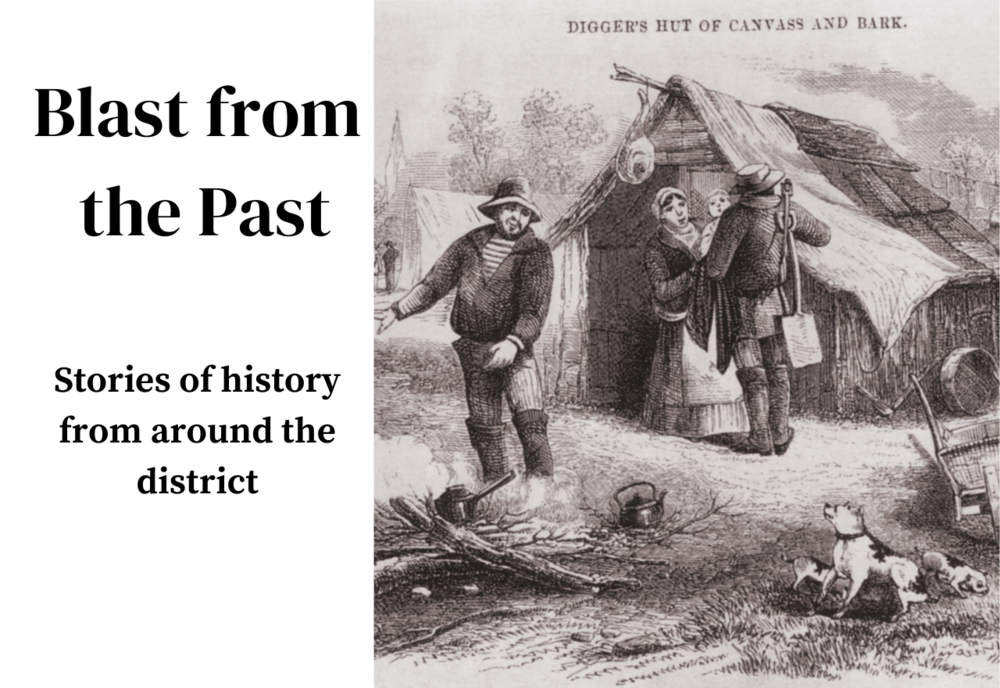
In 1869 George Brown Williamson, the postmaster and a storekeeper at Booligal, purchased 40 acres (16 hectares) from the "Waiko" pastoral run at the site which was to become the township of Ivanhoe.
It is believed the new township was named by Williamson after Sir Walter Scott's work of historical fiction, ‘Ivanhoe’. Williamson selected the location as a business opportunity, being the junction of two roads from Booligal and Balranald leading to Wilcannia on the Darling River. Williamson began operating a branch store at the loca tion under the charge of his employee Charles Hiller. Initially the nearest water supply to Ivanhoe was at Kilfera Lake, 25 kilometres away, from which drinking water had to be carted by dray. A hotel was built at Ivanhoe in 1871 (the Ivanhoe Hotel); the licensee was James Eade, who remained publican until 1875 (apart from during 1873 when Joshua Smith held the license). A post office opened at Ivanhoe on 1 January 1874 at Williamson's store (renamed ‘The Post Office Store’), with Charles Hiller in charge (though Williamson was the designat ed Postmaster).
On 1 February 1876, after a ten-year stint at Booligal, George Williamson moved to Ivanhoe. In 1876 two new hotels opened at Ivanhoe: The Horse and Jockey (licensee, Duncan McGregor) and Mac's Ivanhoe Hotel (licensee, Henry Gayson).
The licensee of the Ivanhoe Hotel in 1876 was Roderick MacKenzie. In 1879 a police presence was maintained at Ivanhoe to pro tect local residents from the Hatfield Bushrangers.
The Ivanhoe Hotel ceased operating from 1882, leaving two hotels in the township. During 1882 work commenced on the erection of a tele graph line from Booligal to Wilcannia. A telegraph station was opened at Ivanhoe on 5 February 1883 under the charge of Alfred Webber Rice, who had been promoted from his posi tion at Campbelltown. The township was described in 1883 as having about 50 res idents, a blacksmith's shop, two hotels, two stores (Williamson's and Stewart's), and "a few cottages".
By 1884 Ivanhoe was a major change-station for Cobb & Co's horses on the coach routes to and from the Darling River. In 1884 businesses in the township included the Cobb & Co Chaff House and Millie's Stable and Yards (Henry Thomas Millie was the licensee of Mac's Ivanhoe Hotel at that time). The mounted police were established at Ivanhoe in 1885 and the Ivanhoe Jockey Club held its first race meeting in May 1885. From 1887 race meetings were held twice a year (until the late 1930s) on a course which formed part of the town common. In 1889 a school opened in the township. The summer heat was a significant problem for the school. Refrigerating paint and a veranda were used to ward off the sun but the school was closed during the extended drought of 1904 to 1907.
Ivanhoe was officially proclaimed a township in 1890. A new Post Office building was constructed, which opened in January 1898.
The Ivanhoe Post Office building, though it has been renovated in recent years, still stands adjacent to its original site. In 1925 Ivanhoe was linked by the Broken Hill railway line to Sydney via Parkes. Two years later the extension to Broken Hill was completed. The line through Ivanhoe later became part of the transcontinental east-west rail corridor connecting Sydney to Perth.
NEWS

SPORT
RURAL
COMMUNITY