How NSW's oldest Riverina settlement was left behind by history

Kimberly Grabham
28 December 2025, 4:00 AM
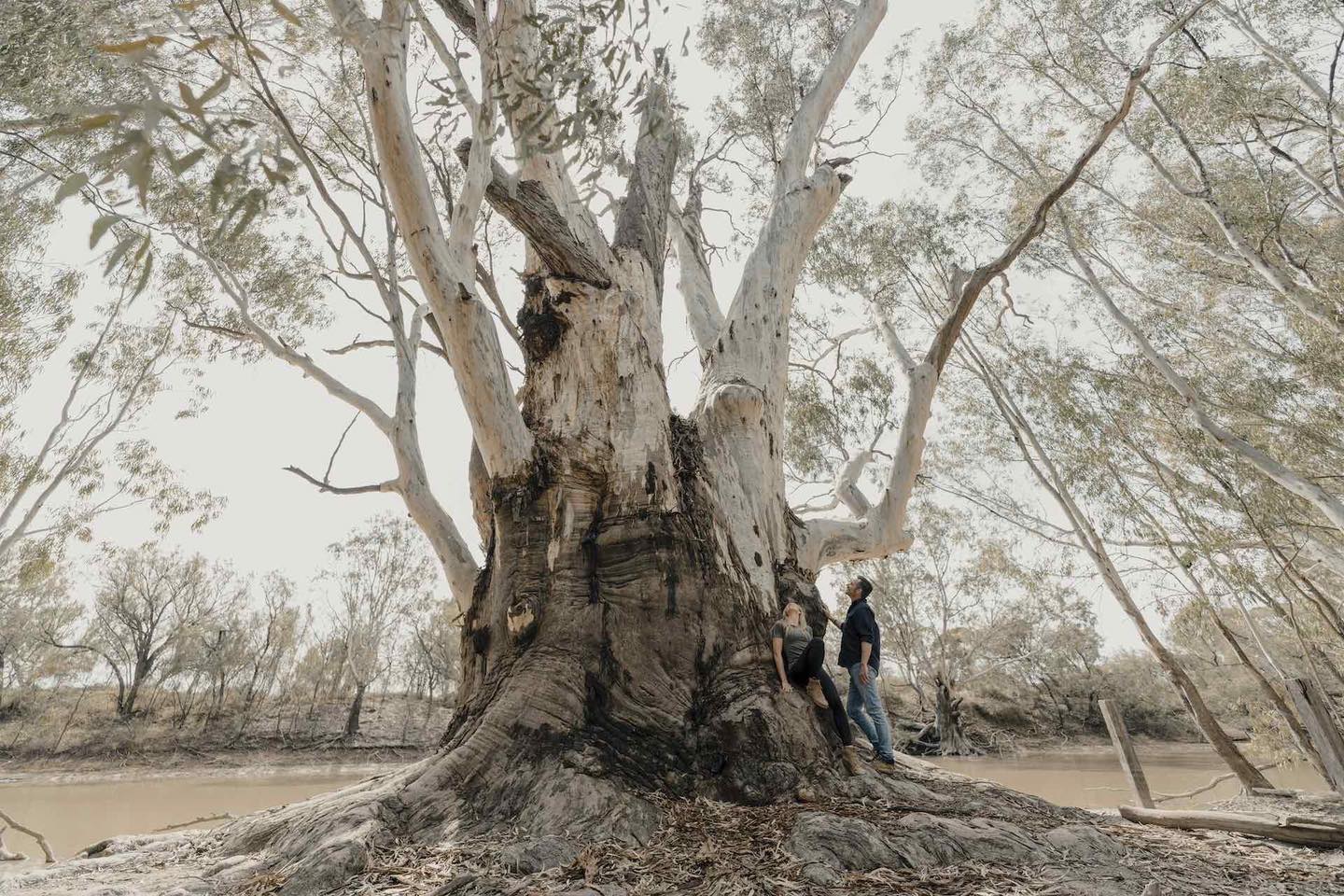
In the vast expanse of the NSW Riverina, where golden wheat fields stretch to the horizon and the Murray and Murrumbidgee rivers carve their ancient paths through red earth, lies a town that history has largely forgotten.
Yet Moulamein, now home to fewer than 600 residents, holds one of the most remarkable distinctions in Australian colonial history.
It is the oldest European settlement in the entire Riverina region, predating even Deniliquin by several crucial years.
The story of Moulamein begins in the 1830s, when the first Europeans arrived in what was then uncharted wilderness.
Europeans arrived in the Moulamein district as early as 1830, making it the oldest town in the Riverina, establishing pastoral runs and trading posts along the Edward River.
In about 1842 Augustus Morris came to the Riverina seeking grazing land in association with the entrepreneur and speculator Benjamin Boyd.
Morris took up pastoral runs on the Edward River and explored the country surrounding the site of present-day Moulamein.
The town's unusual name has sparked considerable debate among historians. Some think that it's an Aboriginal word that means the meeting of the water.
The general consensus is that in 1842 the town was named by Augustus Morris after the Burmese seaport that shares the name. This exotic naming choice reflected the global outlook of early Australian settlers, who often drew inspiration from far-flung corners of the British Empire.
By the 1840s, Moulamein had established itself as more than just another pastoral outpost. There was a time when this tiny town was more important than Albury.
It boasted a police court (records go back to 1845) and the town's chief constable was paid £105 a year – a substantial salary that reflected the settlement's importance as an administrative centre for the vast surrounding district.
The early decades of European settlement were marked by rapid growth and increasing significance. Before Deniliquin was even proclaimed a township, prisoners were being brought to Moulamein for trial, establishing it as the region's first centre of colonial justice and administration.
The courthouse, built in the 1840s, became a symbol of European law and order extending into the Australian frontier.
During the wool boom of the 1870s and 1880s, Moulamein reached its peak.
The town's position on the Edward River made it a crucial port for the thriving pastoral industry. Wool bales from vast sheep stations across the western Riverina were brought to Moulamein's wharves, where they were loaded onto riverboats bound for Adelaide and the international markets beyond.
The streets bustled with drovers, merchants, publicans, and government officials. Hotels did roaring trade, and the town's business district expanded to serve not just local residents but visitors from across the region.
The riverboat trade was the lifeblood of early Moulamein. Paddle steamers regularly navigated the Edward River, connecting the town to the Murray River system and from there to the port of Adelaide. These vessels carried more than just cargo – they brought news, mail, passengers, and manufactured goods to communities that would otherwise have remained isolated from the broader world. The sound of a steamer's whistle echoing across the red gum flats was the sound of connection to civilisation.
Yet even as Moulamein prospered, the seeds of its eventual decline were being sown. The development of railway networks in the late 19th century began to change the economics of transport and trade. Towns with railway connections gained significant advantages over those dependent on river transport, which was subject to droughts, floods, and seasonal variations in water levels.
More importantly, Moulamein's neighbours were beginning to outpace it in development and population. Deniliquin, proclaimed as a town in 1856, capitalised on its strategic position and better transport links to become the major centre of the central Riverina. Hay, further north, developed into a crucial railway junction. Balranald, to the west, secured its own railway connection in 1926. Even distant Wagga Wagga, initially much smaller than Moulamein, grew to become one of NSW's major inland cities.
As the decades passed, Moulamein watched its younger neighbours surge ahead in terms of development, population, and economic importance. What was once the Riverina's administrative and commercial heart gradually became a quiet backwater. The courthouse that had once been the centre of justice for hundreds of square kilometres began handling fewer and fewer cases. The wharves that had once groaned under the weight of wool bales fell silent as trade moved to rail and road.
The transformation was not immediate but rather a slow fade from prominence. Government offices relocated to larger centres. Banks closed their branches. The steamboat trade dwindled and eventually ceased altogether. Young people left for opportunities in bigger towns and cities, leaving behind an aging population and a diminishing economic base.
By the mid-20th century, Moulamein had become something of a historical curiosity – a town whose greatest days lay firmly in the past. The grand buildings of its heyday began to show their age, and the bustling commercial district contracted to serve only local needs. Yet this decline preserved something valuable: Moulamein became a living museum of 19th-century Riverina life, its heritage buildings and quiet streets telling the story of Australia's rural development more clearly than any textbook.
Today, visitors to Moulamein can still see evidence of its former importance. The old courthouse, carefully restored, stands as a reminder of the town's role as the Riverina's first centre of colonial administration. Historic buildings line the main street, their facades speaking of more prosperous times. The Edward River still flows past the town, though no steamboats disturb its waters now.
The story of Moulamein is not merely one of decline, however. It is a fascinating case study in how geography, transport technology, and economic forces can transform a region's hierarchy of settlements. It demonstrates how quickly fortunes can change in rural Australia, and how towns that seem permanent and essential can be left behind by the march of progress.
Local historians and community groups have worked hard to preserve Moulamein's unique heritage and to tell its story to a broader audience. They argue that the town's pioneering status deserves greater recognition, not just as a historical curiosity but as a reminder of the courage and enterprise of Australia's early settlers.
Moulamein's legacy extends beyond its own boundaries. As the first European settlement in the Riverina, it was the seed from which the region's entire network of towns and cities eventually grew. Its early establishment of law courts, administrative offices, and commercial enterprises provided the template that other settlements would follow. In many ways, the success of later Riverina centres can be traced back to the foundations laid in this quiet town on the Edward River.
For contemporary Australians, Moulamein offers valuable lessons about the nature of regional development and the importance of transport infrastructure.
Its rise and relative decline illustrate how technological changes – from riverboats to railways to roads – can reshape entire regions.
The town's story also highlights the resilience of rural communities, which continue to find ways to survive and maintain their identity even as their economic circumstances change.
Perhaps most importantly, Moulamein reminds us that history is not always made in capital cities or major centres.
Sometimes, the most significant developments occur in quiet places that few people have heard of – places where pioneers first established European settlement, where legal systems first took root, and where the patterns of Australian rural life were first established.
The town that was first to rise was also first to experience the cycles of boom and bust that would characterise much of rural Australia.
In that sense, Moulamein's story is not just the story of one forgotten town, but a preview of challenges and changes that many Australian communities would later face.
Its pioneering status extends beyond chronology to encompass the entire experience of European settlement in the Australian interior.
NEWS


COMMUNITY









VISIT HAY


JOBS


VISIT BALRANALD

VISIT OUTBACK NSW


LOCAL WEATHER