Environmental law reforms spark debate over regional impact

Kimberly Grabham
10 December 2025, 1:00 AM
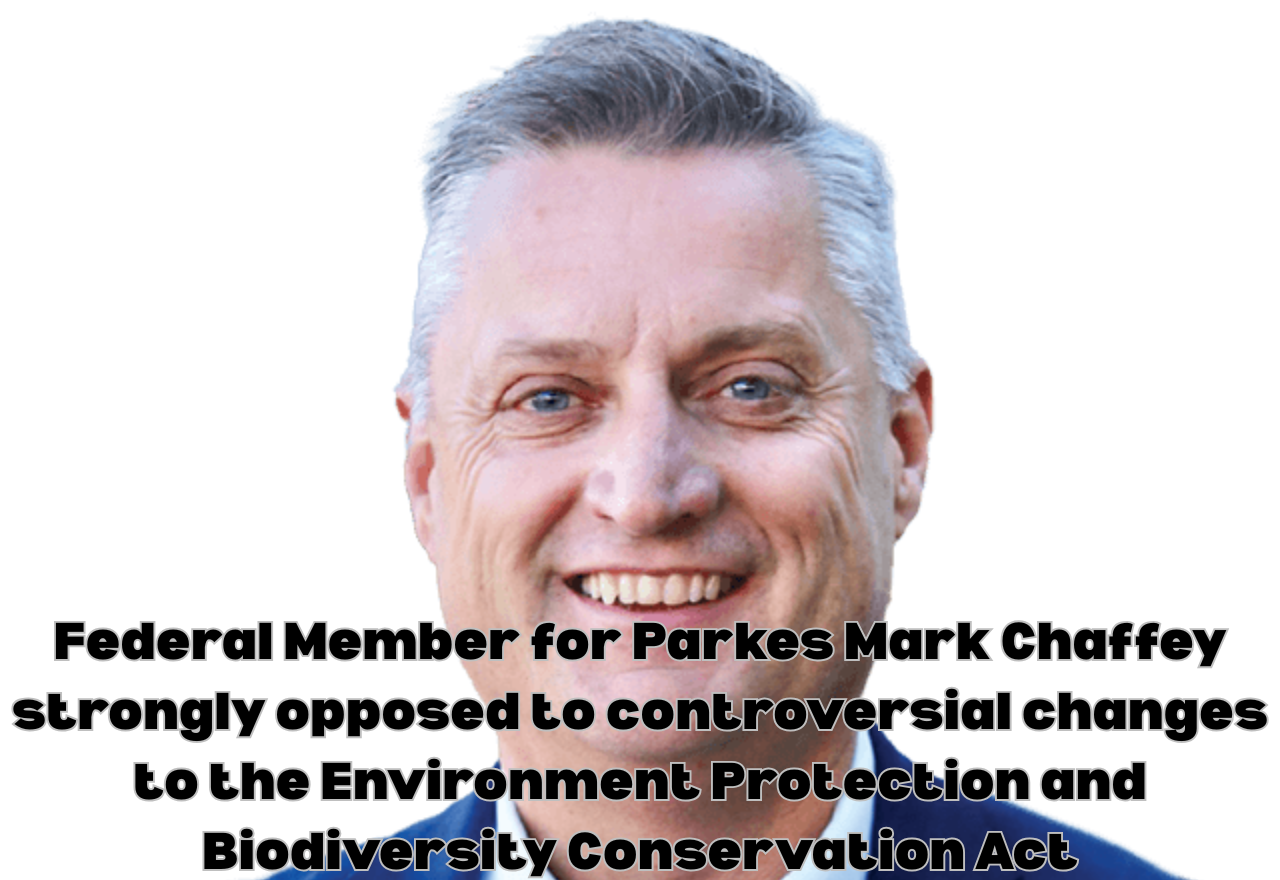
Controversial changes to the Environment Protection and Biodiversity Conservation Act passed through Federal Parliament in the final week of 2025 have sparked intense debate about their potential impact on regional communities, with stakeholders offering sharply contrasting views on the reforms.
The amendments, which passed with support from Labor and the Greens, represent a significant shift in Australia's environmental legislation framework.
Supporters argue the changes strengthen protections for threatened species and ecosystems, while critics warn of negative consequences for development and economic activity in regional areas.
Federal Member for Parkes Mark Chaffey has been among the most vocal critics of the reforms, describing the legislative process and outcome in stark terms.
"In the final week of Parliament for 2025, Labor and the Greens cooked up a dirty deal to push through changes to the Environment Protection and Biodiversity Conservation Act in the final moments of Parliament," Chaffey said.
The Member for Parkes warned the changes would have widespread implications.
"This last-minute pact will have implications that will be felt throughout the electorate of Parkes and far beyond, causing significant problems for councils, for farmers, for miners, for forestry, for the construction industry and for everyday Australian families. It will impact on jobs, productivity and investment," he said.
Chaffey characterised the deal as breaking a previous government commitment.
"This move comes after Anthony Albanese's promise he would not do deals with the Greens to pass legislation.
But here we have it, a deal that will further block appropriate projects in regional areas, that will limit regional Australia's growth by slowing down the approval process, that places additional power in the hands of the minister of the day, and that will push power prices even higher," he stated.
Industry groups have expressed concerns about the practical implications of the reforms.
The National Farmers Federation said it was "bitterly disappointed" by the changes, with concerns they could lead to worse environmental outcomes and increased bushfire risk.
The Business Council of Australia called the reforms a "missed opportunity," while the Minerals Council of Australia described the outcome as "an inferior and disappointing outcome" that will increase red tape.
Australian Energy Producers warned the reforms "threaten Australia's energy security," arguing the Albanese Government has chosen more red tape and uncertainty instead of enabling new gas supply.
The reforms have created particular concern among farming communities about how the new rules will apply to agricultural properties.
According to Chaffey, "The Albanese Government has not been able to guarantee farmers won't experience a financial loss as a result of the reforms, and there has been no industry consultation or information for farmers about how the rules will apply to their property."
He added that "farmers who are concerned and confused about the new rules have no idea how this will apply to their properties."
The mining sector, which contributes significantly to the national economy and provides substantial employment in regional areas, faces what critics describe as increased regulatory challenges under the new framework.
Chaffey argued for a different approach to environmental protection.
"The way to approach the protection of our landscape is not to give in to the Greens, but to consider all the implications and the consequences of these reforms. Not only is this a dark day for farmers and industry, but it may leave Australians in the dark," he said.
The reforms place additional decision-making authority with the federal environment minister, a change that has raised questions about the balance between centralised oversight and regional autonomy in environmental approvals.
Proponents of the reforms argue they are necessary to address gaps in environmental protection and to meet Australia's international obligations regarding biodiversity conservation. Environmental groups have long campaigned for stronger protections under the EPBC Act, citing concerns about species extinction rates and habitat loss.
The legislation's passage in the final sitting week of Parliament has raised questions about the consultation process and whether sufficient time was allowed for stakeholders to provide input on the changes.
Separately, Chaffey thanked community members who attended Cheaper, Better, Fairer Community Energy Forums held in Dubbo and Dunedoo, where Senator Matt Canavan joined him to discuss the Nationals' energy and emissions policy in the Central-West Orana Renewable Energy Zone.
The Member for Parkes also announced plans to attend end-of-year school presentation ceremonies throughout the electorate in coming weeks.
Many secondary schools have included the Member for Parkes Vocational Student of the Year award among their honours, recognising students pursuing trade and vocational pathways.
"There are many ways to make your way in this world, and becoming a tradie or following a vocation is a great path to follow," Chaffey said.
The long-term impact of the EPBC Act reforms will depend on their implementation and how the changes affect approval processes for development projects across regional Australia.
The debate highlights ongoing tensions between environmental protection objectives and regional economic development priorities.
NEWS


SPORT


COMMUNITY