The Good Old Days - Richard Cox

Kimberly Grabham
16 December 2025, 10:00 PM
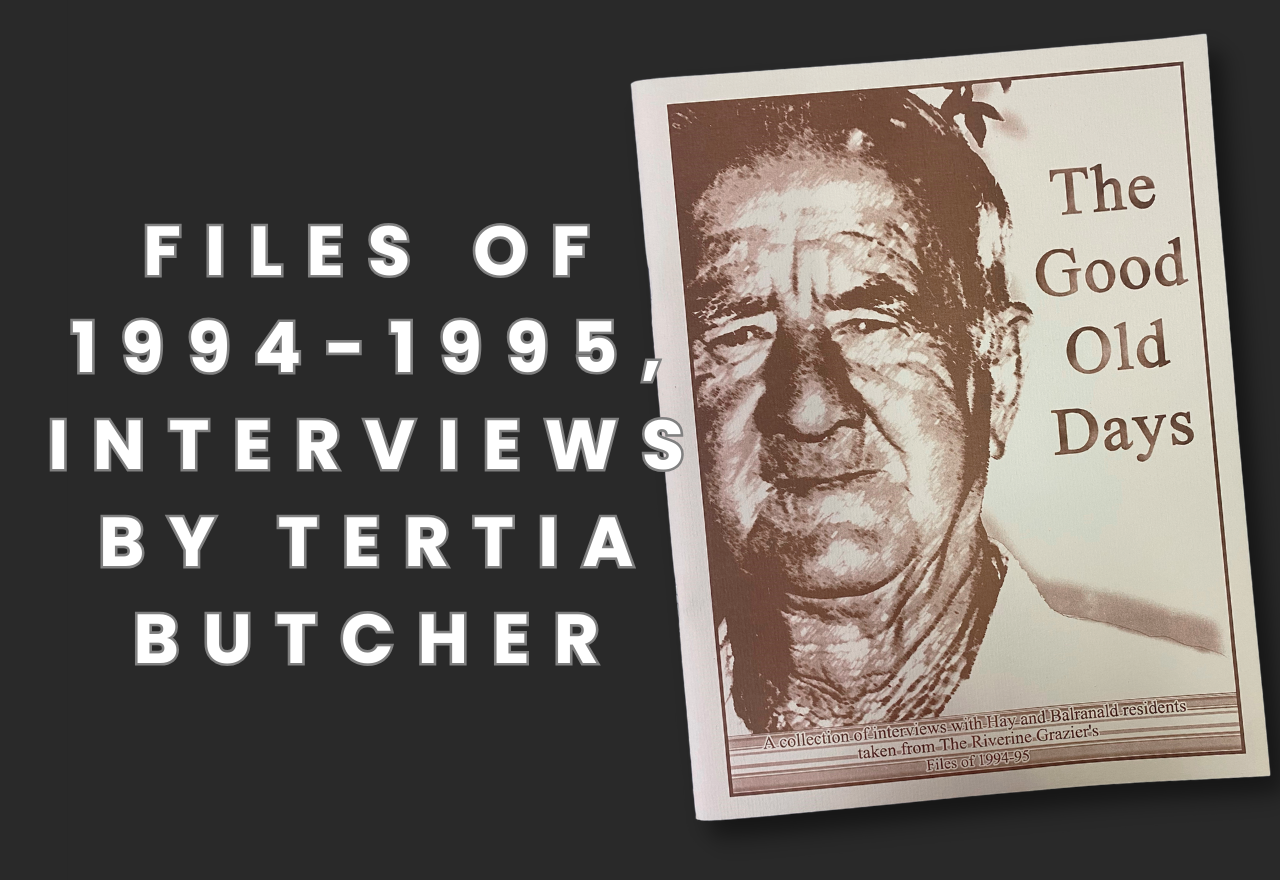
Seventy year-old Richard Cox returned to Hay last week to be part of the Anzac Day march and ceremony. “Of course there have been many changes,” he said. “But the biggest change, and also the most disappointing, is the condition of the river. “
The water was always clear and you could drink straight from the river. “I tried to do that the last time I visited Hay, and was sick for days. “I can remember the river being so dry that there were only a chain of puddles between Bushy Bend and Orson Beach. “But the river was always clean.”
Richard was born in Hay and grew up in his grandmother, Ethel Waters’ house near the gaol. From there the family moved to the railway cottage in Murray Street and later to South Hay. “My father, Bert, was a shepherd, and in those days the stock trains which arrived in Hay were a mile and a half long. “One of my father’s jobs was to crawl along the train, and with his shepherd’s crook, had to get sheep back on their feet if they were down.”
Bert Cox joined the Army in 1940 and enlisted in the 8th Division Cavalry. He was later transferred to the 9th Division and was injured in the Middle East while in combat as a ‘Rat of Tobruk’. “I come from a fighting family,” Richard claims. “My father, brother, sister and I all served in the war. “I was in the Navy from 1939 to 1947, when I returned to the district shearing sheds as roustabout and later wool presser “The contractors I used to work for were Fred Brown, Ray Congdon, O.J. Smith who was a former Hay mayor, and his two sons, Ron and Tom. “I also drove sheep with my uncle, Ernest Victor Cox and two cousins C.D. and Graham. “We drove the sheep from Ivanhoe to Echuca and back to Booligal.”
“For pocket money to go to the movies I had great pleasure in helping to clean the collection of antique firearms of John Houston. “I also mowed his lawn and washed and cleaned Dickie Campbell’s greyhounds. “Dickie was the delivery man for Ringer Store. “And there was the time in 1931 that I helped Captain Sloan from the Salvation Army to drag logs from flooded areas. “These were cut up and placed into potato bags. “They were either delivered to the needy or sold for two shillings a bag.”,
Richard was dux of Hay Public School in 1937, together with Nancy Duncan. It was a depressing journey to the cemetery to visit his mother’s grave last year and see how many of his school friends have also found their way to the cemetery.
The old Hay which had eight hotels, with the [Commercial] Inn being the newest. “The shops stayed open until late Friday nights, and you couldn’t move in Lachlan Street for property owners,” he remembers. “We had more people on properties in those days. “But we lost all that when the drought wiped out the saltbush. The saltbush was the mainstay of this country. “When it went, a lot of people had to go too.”
NEWS


SPORT
RURAL
COMMUNITY