New ‘Carbon Stacking’ Rules to Slash Red Tape for Riverina and Far West Landholders
Krista Schade
15 January 2026, 7:00 PM
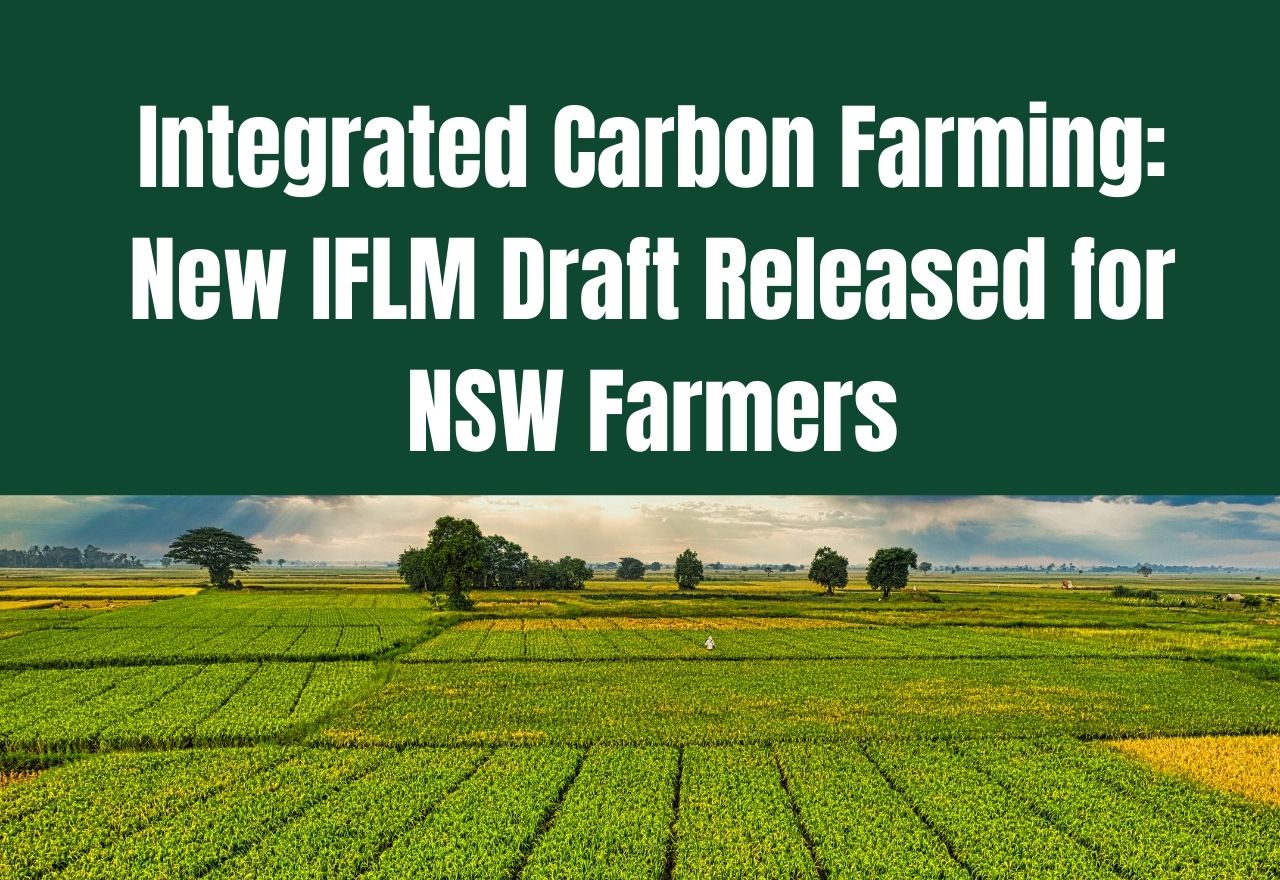
A new era of carbon farming is on the horizon for landholders across the Hay, Balranald, Carrathool, and Central Darling shires.
In Short
• Red Tape Reduction: The new IFLM method allows landholders to combine soil carbon, tree planting, and forest regeneration under a single contract, ending the "one project per area" rule.
• Hybrid Verification: The framework moves to a "model-plus-measurement" system, using high-tech computer modelling backed by physical on-ground soil and timber testing.
• Consultation Window: Public feedback on the draft opens January 27, 2026, for 28 days, with the final legislation expected to be active by mid-year.
The federal government has unveiled the draft for the Integrated Farm and Land Management (IFLM) method—a policy shift designed to strip away the red tape that has long prevented farmers from running multiple carbon projects on a single paddock.
For producers in the Riverina and Far West, the "one project per area" rule has been a persistent hurdle. Currently, a property cannot physically overlap a soil carbon project with a tree-planting initiative, leading to fragmented management and doubled-up reporting. The IFLM method aims to fix this by allowing a "modular" approach where activities can be stacked under one administrative roof.
What This Means for Local Paddocks
The IFLM framework allows landholders to combine activities like soil carbon sequestration, native forest regeneration, and environmental plantings. Instead of managing three separate contracts with different rules, a producer in the Central Darling or Hay districts could theoretically manage them as one.
The Department of Climate Change, Energy, the Environment and Water (DCCEEW) confirms that the method uses a hybrid model for verification, blending high-tech computer modelling with physical on-ground measurements of soil and timber to ensure accuracy.
“This is the first Australian Carbon Credit Unit (ACCU) Scheme method to allow multiple activities that store carbon in the land to occur on the same property... giving greater flexibility to land managers,” a DCCEEW spokesperson said.
Industry Reaction: Opportunity vs. Food Security
While the method promises a more streamlined revenue stream, the National Farmers Federation (NFF) remains focused on ensuring that "carbon crops" don't push out traditional grazing and cropping.
The NFF’s stance is clear: carbon should be an additional income stream, not a replacement for cattle, sheep, or grain production in regions like Carrathool or Balranald.
The federation is pushing for enforceable codes to ensure farmers aren't sidelined by city-based consultants, who often take a significant cut of carbon profits.
Meanwhile, the Carbon Market Institute (CMI), which represents the companies assisting farmers with project setup, has criticized the government for the time it has taken to reach this stage. While they view the IFLM as essential for Australia’s carbon goals, they have expressed deep frustration at "protracted delays." CMI co-chairs have labeled the current progress as “inadequate” in its urgency, noting the method was originally promised years ago.
Have Your Say
The shift toward integrated carbon farming could significantly impact land valuation and land use across our local government areas.
Local landholders are encouraged to review the draft and participate in the upcoming feedback window.
Public Consultation Opens: January 27, 2026
Duration: 28 days
Expected Legislation: Mid-2026
The DCCEEW has acknowledged there are still “considerable technical issues involved in making sure the integrity of the improvements are real,” making local input from those actually working the land vital.
NEWS

SPORT

RURAL