From Drought to $25.5 Billion: NSW Farming Hits Record-Breaking Highs

Krista Schade
15 February 2026, 7:00 PM
Record Harvests and High Prices Drive $25.5 Billion Ag Boom
In Short
- Record Performance: The Gross Value of Production (GVP) has reached a historic $25.5 billion, more than doubling the value recorded just a decade ago.
- Profitability Surge: Average broadacre farm cash income hit a record $419,000, with farm equity ratios climbing to a robust 91.9%.
- Global Demand: NSW agricultural exports reached $13 billion, underpinned by record pulse production and exceptionally strong global prices for lamb and beef.
Primary industries across New South Wales have achieved a milestone result, with the sector’s Gross Value of Production (GVP) hitting an unprecedented $25.5 billion for the 2024–25 period.
The latest Performance Data & Insights report reveals a sector in full-throttle recovery. Since the height of the drought in 2019, the industry’s value has surged by 114 per cent, adding $13.6 billion to the state’s economy in just five years.
Minister for Agriculture Tara Moriarty said the results prove that NSW producers are more resilient than ever.
"These numbers show that NSW producers have not only recovered from the 2017–2019 drought, they have persevered through the volatility of environmental conditions and emerged stronger than ever," Minister Moriarty said.
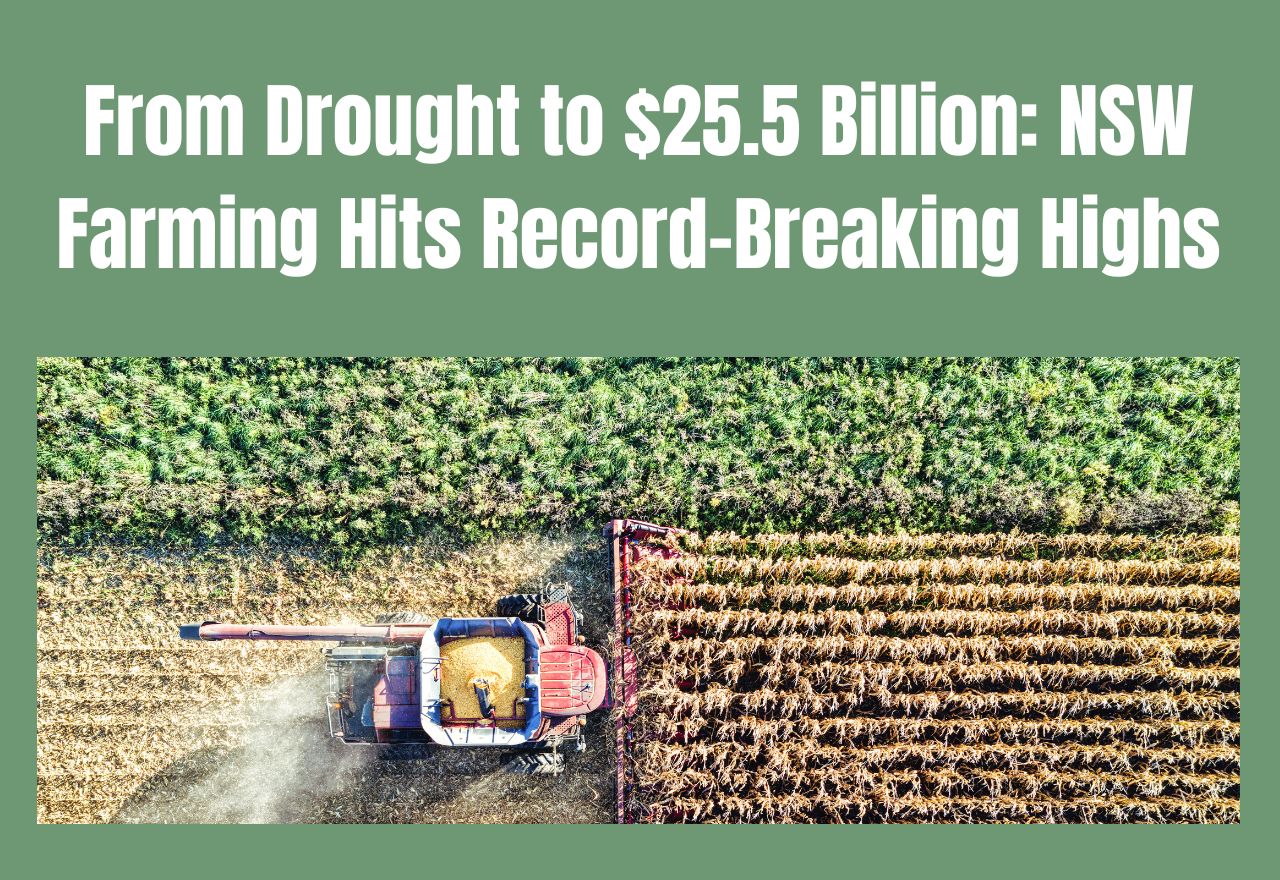
The boom was felt most acutely in the paddocks. Cropping GVP surged 33 per cent to $11.6 billion, buoyed by record-breaking pulse production and above-average yields. Meanwhile, the livestock sector leaped 28 per cent to $7.2 billion, a result of massive meat production volumes and gravity-defying lamb prices.
For local producers in the Hay and Balranald districts, these figures reflect a period of sustained global demand, with NSW agricultural exports hitting a massive $13 billion.
It isn't just the production volume that is breaking records; it's the financial health of the farmers themselves.
Farm Cash Income: The average broadacre farm income hit $419,000, a 24 per cent increase on previous highs.
Equity Ratios: Farm equity has climbed to 91.9 per cent, up from 84.5 per cent a decade ago.
Capital Value: The average NSW broadacre farm capital is now valued at $13.7 million.
Minister Moriarty said the NSW Government is reinvesting in this success, with $100 million committed to agricultural research and $1 billion toward biosecurity systems to protect these gains.
"Our government has invested heavily so that there is a helping hand and shared knowledge on innovation," she said. "This enables farm businesses to use recent strong seasons to build financial resilience."
While the forecast for the next year suggests a slight moderation, experts believe the sector is now exceptionally well-buffered against future risks, including the inevitable return of drier conditions.
NEWS


RURAL

COMMUNITY