Far West Councils Gathering in Cobar in March to Decide the Future of Their Regional Alliance — and Carrathool Wants In
Kimberly Grabham
25 February 2026, 7:00 PM
IN SHORT
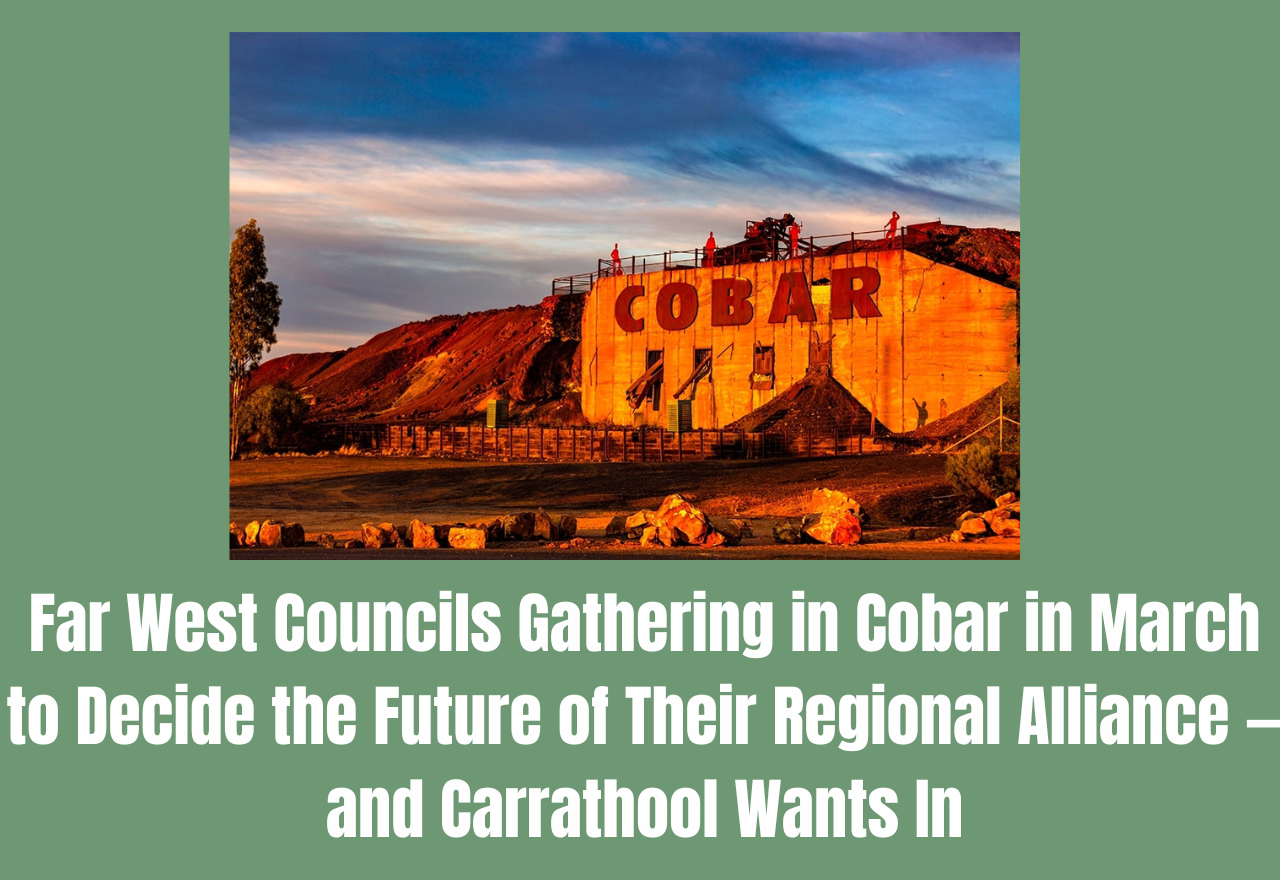
The Annual General Meeting of the Western Division of Councils of NSW is scheduled for 5 and 6 March 2026 in Cobar, with discussions expected to address the future direction of the organisation. Carrathool Shire Mayor Darryl Jardine and General Manager Rick Warren are both expected to attend. Council has written to the Western Division formally requesting full membership should the organisation continue, aligning its position with that of other member councils including Central Darling Shire, which has also expressed a preference to remain within the Western Division framework.
The question of how far west councils organise themselves for regional advocacy is not merely a matter of administrative tidiness. It shapes the collective voice these communities can bring to bear on a state government that, despite the appointment of a dedicated minister for the region, still makes decisions in a building on Macquarie Street that is a very long way from Cobar, Hillston, Menindee or Wentworth.
The Western Division of Councils of NSW is holding its Annual General Meeting on 5 and 6 March 2026 in Cobar, and the agenda includes discussion about the future of the organisation itself. Mayor Darryl Jardine noted in his report to the February council meeting that both he and General Manager Rick Warren are expected to attend. Ahead of that meeting, Carrathool Shire has written formally to the Western Division requesting full membership of the organisation should it continue in its current form.
The timing of Carrathool's formal membership request is significant. The review of joint organisation boundaries across New South Wales has created some uncertainty about the alignment of western councils and the structures through which they will advocate collectively going forward. Central Darling Shire, which met the same week, has similarly expressed a preference to remain with the Western Division, and the Cobar meeting will go a long way toward determining whether enough member councils share that preference to sustain the organisation's future direction.
The value of a body like the Western Division lies in its ability to aggregate the advocacy of councils whose individual populations and rate bases give them limited leverage on their own. Roads funding, water infrastructure, emergency services resourcing, health service access and telecommunications connectivity are all issues where a coordinated regional voice carries more weight than seventeen small councils each making the same case independently. The Cobar meeting represents an important moment for western communities to decide what that collective advocacy structure looks like going forward and who sits at the table when the conversations with ministers and their departments take place.
NEWS

SPORT

RURAL