Squeaky Wheel Won't Stop: Rural Parents Push Federal Government to Fix a Boarding Allowance That's Falling Further Behind Every Year
Kimberly Grabham
24 February 2026, 7:00 PM
IN SHORT
As of December 2024, approximately 3,200 students are receiving the federal Basic Boarding Allowance, which sits at $10,338 per annum for 2025.The ICPA is calling for an immediate increase of more than $4,000 per child and for the allowance to be indexed to the education sub-index of the CPI rather than the general CPI, arguing that boarding fees rise at four to eight per cent annually while the allowance fails to keep pace. An ABC Landline story titled Boarding Blues, which aired on 15 February 2026, is giving rural families a national platform to put a human face to the financial and personal pressures they carry, with the ICPA crediting its members' willingness to share their stories as the driving force behind the campaign.
For families living across the Hay, Balranald, Carrathool and Central Darling local government areas and beyond, the path to a secondary education for their children runs through a decision that no family in urban Australia is ever required to make. There is no high school at the end of the street. There is no bus that can bridge the distance. If a child is going to complete Year 7 through to Year 12, they are going to have to leave home to do it.
Boarding school in this part of the world is not a lifestyle choice or a mark of privilege. It is the only option available, and it comes attached to a cost that has been climbing steadily beyond the reach of many rural incomes for years.
The federal government's Assistance for Isolated Children scheme, known as the AIC, was specifically designed to help rural and remote families carry that cost. The Basic Boarding Allowance component of the scheme was introduced by a Labor government in 1973 with a clear original intent: to cover approximately 55 per cent of average boarding expenses so that the financial barrier to secondary education for geographically isolated children was meaningfully reduced. The ICPA has been raising concerns with the federal government for many years that the allowance no longer meets the needs of families as educational expenses and associated costs continue to rise.
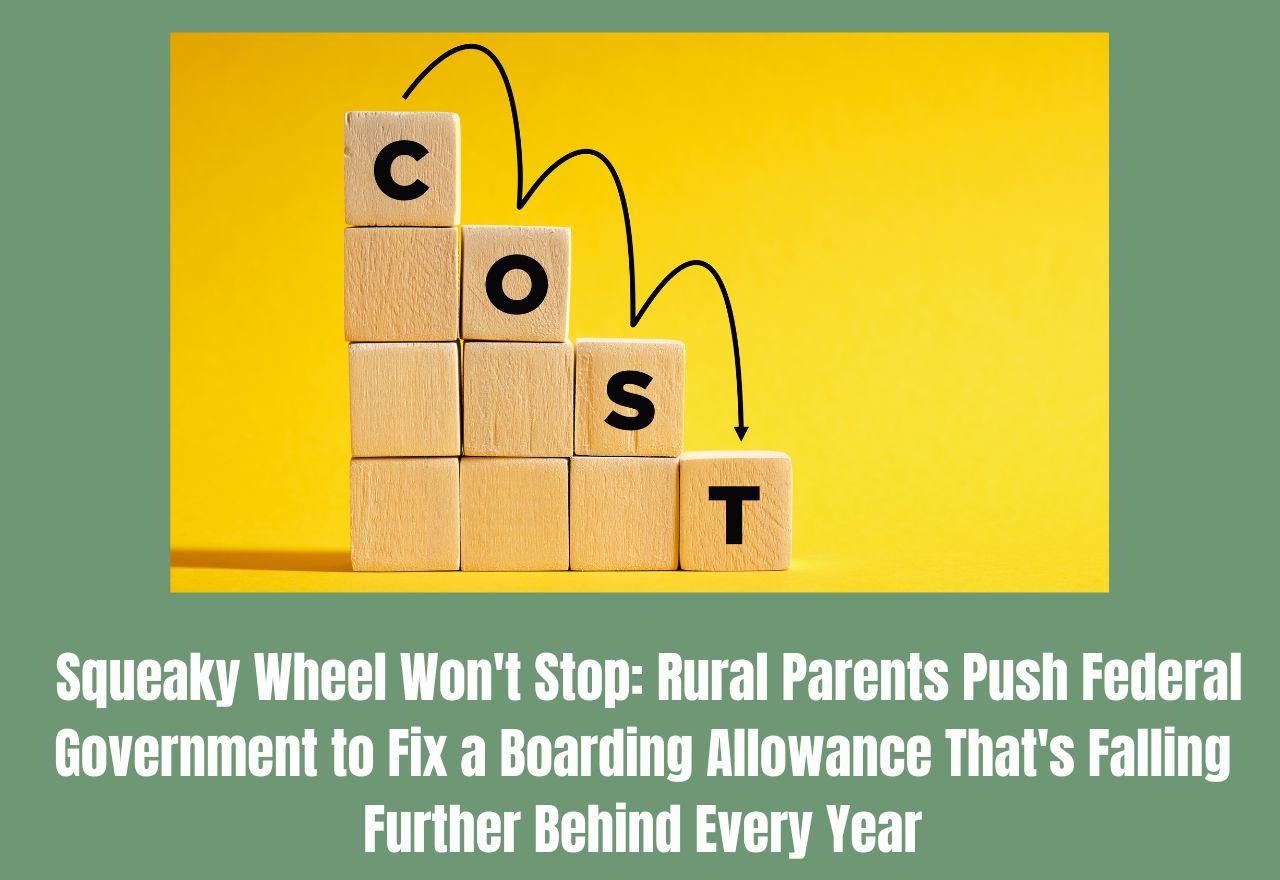
In 2025 the Basic Boarding Allowance sits at $10,338 per annum per student, with approximately 3,200 children across Australia currently receiving it.The problem is not the existence of the payment. The problem is the widening gulf between what the allowance provides and what boarding actually costs. The AIC is currently indexed annually in line with the Consumer Price Index, while boarding school fees continue to rise at a far greater rate, increasing on average by four to eight per cent per annum.Every year the allowance falls a little further behind. Every year rural families absorb a little more of the shortfall themselves.
ICPA Federal President Louise Martin said families are being crippled by outdated policies and support structures that do not reflect the reality of their lives. When the ICPA took a delegation to Canberra to press the case directly with federal ministers and senior officials, Martin was unambiguous in putting the numbers on the table. The organisation is seeking an immediate increase of more than $4,000 to the Basic Boarding Allowance, which at that level would begin to restore the coverage the payment was originally designed to provide.
Speaking directly to Education Minister Jason Clare during the delegation, Martin delivered a message that cut to the heart of the ICPA's position. "I said to Jason Clare, if you give us $16 million a year, which is loose change in the department, I will never have to bother you again, but until then expect this squeaky wheel to remain," she said
Martin also connected the education funding debate to the broader question of what it means to sustain viable rural communities. "If politicians want the agriculture industry and primary producers to clothe and feed the nation, and keep contributing to the GDP, they are going to have to start looking after us or eventually the plates will be empty," she said.
Those are not hollow words in country like this. The families carrying the greatest weight from boarding costs are the same families running the stations, grazing properties and farms that form the economic backbone of the western interior. Many rural and remote families are required to send their children to boarding schools for secondary education, especially in regions where high schools are unavailable, and the gap between the AIC Boarding Allowance and actual boarding fees continues to widen, straining the financial burden on rural families
The ICPA's ask from government is clear and specific: an immediate significant increase to the Basic Boarding Allowance, followed by a permanent shift in how future annual increases are calculated. The association wants to see the allowance cover at least 55 per cent of the average boarding fee and for the AIC to be aligned with the Consumer Price Index education sub-index, which would ensure the allowance did not erode over time and was reflective of the actual cost increases facing boarding families.
The federal government's current position, relayed by a Department of Social Services spokesperson during the delegation, is that indexation arrangements are already working as intended. A DSS spokesperson said there are already arrangements in place for increases to be applied to AIC payments on January 1 each year in line with CPI indexation processes, with the Basic Boarding Allowance increasing by $564 per annum on 1 January 2024 as a result.
The ICPA's response to that position is straightforward. An annual CPI increase of $564 applied against fees that are rising at four to eight per cent annually does not close the gap. It manages the rate at which families fall further behind.
Nationals leader David Littleproud, who met with the ICPA delegation in Canberra, said the organisation does critical work for the education of children in rural and remote areas and asks for very little in achieving that, adding: "We will make an announcement closer to the election with regard to the AIC payment."
With a federal election drawing closer, the ICPA has moved the issue into the national public conversation through ABC Landline's Boarding Blues, which aired on 15 February 2026. The Australian Boarding Schools Association and communications firm C7EVEN supported the campaign. ICPA members from across Australia, including families from western New South Wales, spoke directly to camera about what the financial pressure feels like from inside the family home, putting a human face to figures that can otherwise read as dry policy abstractions.
For the communities of Hay, Balranald, Carrathool and Central Darling, the story resonates at a level that is difficult to overstate. These are places where the nearest secondary school is often a three or four hour drive away, where isolation is a fact of geography rather than a personal choice, and where the question of whether a family can afford to educate their children beyond primary school shapes decisions about whether to stay on the land at all. The ICPA's position is that the federal government must significantly increase the AIC Basic Boarding Allowance so that it more accurately reflects the real and rising cost of boarding school education for geographically isolated students.
The boarding blues are real. The families living with them have been patient long enough.
Boarding Blues aired on ABC Landline on 15 February 2026 and is available on ABC iview. BCB recommends watching the full program. Readers can also view the full ICPA briefing paper and key recommendations on the ICPA national website at icpa.com.au.
BCB Editorial Note: All figures, positions and direct quotes have been sourced from ICPA official briefing documents, the ICPA key recommendations paper (January 2025) and contemporaneous coverage of the ICPA Canberra delegation. The federal government's position as stated by the Department of Social Services spokesperson has been included to provide a balanced account.
NEWS

SPORT

RURAL

COMMUNITY





VISIT HAY


VISIT BALRANALD