Cameron Corner: Where three states meet and history was made

Kimberly Grabham
07 December 2025, 4:00 AM
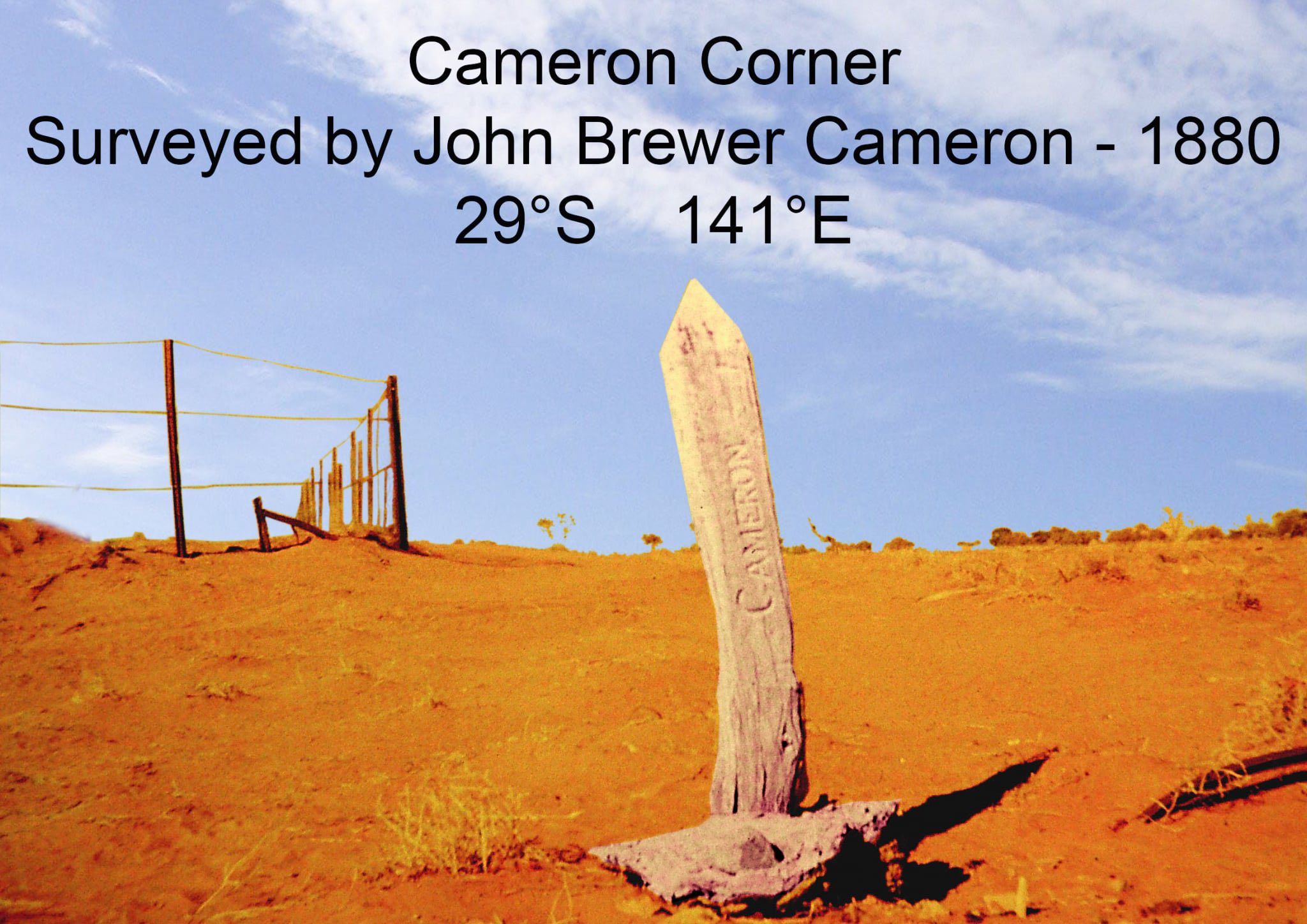
Deep in the outback, where Queensland, New South Wales and South Australia converge, stands a cement marker that has become an iconic stopping point for adventurous travellers. But long before the store, the fuel bowsers and the tourists, there was one man alone in the desert with nothing but a wooden post and an extraordinary tale of survival.
In 1879, surveyor John Brewer Cameron set out with a small team of men on a mission that would test the limits of human endurance. Their task was to mark the precise point where three colonial boundaries met, a seemingly straightforward job that would become anything but.
The journey pushed Cameron and his team to the brink of death. Water became desperately scarce, bringing them close to perishing in the unforgiving landscape. Scurvy began to ravage some of the men as their bodies deteriorated from malnutrition. One of their horses succumbed to the harsh conditions and died.
Despite these overwhelming challenges, or perhaps because his companions could go no further, John Cameron made it to the corner alone. Standing at that precise geographical point in the middle of nowhere, he faced another problem. The standard practice was to mark such important survey points with stone, creating a permanent monument that would withstand the elements for generations. But there was no stone to be found in that vast stretch of country. Instead, Cameron did what he could with what he had. He drove a wooden post into the ground, marking the spot where three states would forever meet.
That simple wooden post stood as testament to Cameron's determination and bloody hard work, a lonely sentinel in the outback for nearly a century. Today, that original post is preserved at the National Parks and Wildlife office in Tibooburra, a tangible link to those early days of surveying when men risked everything to map the boundaries of a young nation.
The wooden marker served its purpose for ninety years, but by 1969 it was clear that something more permanent was needed. Three men took on the task of creating a lasting monument at this historic spot. Working as a team, they represented two of the three states that meet at the corner. From New South Wales came David Vincent, while Queensland was represented by Doug Barsby. Notably, no one from South Australia could attend the work due to flooding that had cut off access, a reminder that the outback's challenges hadn't diminished much since Cameron's day.
The project became quite the adventure in itself. The men stayed at Fort Grey and travelled to the corner each day to complete their work. The journey there and back was no small feat, and the task of mixing and pouring cement in the remote location required considerable effort and planning. The photographs from that time show them on site, mixing cement for the post in the same harsh landscape that had nearly claimed Cameron's life almost a century earlier.
One of those three men who built the cement marker also provided the amazing historical photographs that allow us to see that moment in 1969 when the modern monument was created. The solid cement post they constructed has now stood for over fifty years, weathering the extremes of outback climate and becoming one of Australia's most photographed survey markers.
But Cameron Corner's story doesn't end with the survey marker. The location remained relatively inaccessible and largely visited only by the hardy souls who ventured into the far outback, until 1989 when the character of the place changed dramatically. That year, an ex-Vietnam soldier named Sandy Nall built the first store at the location, transforming the remote corner into a vital outback hub.
Nall became a well-known figure at the corner, greeting visitors and running the business with the kind of personality that makes remote outback stops memorable. By 1991, the store had established itself as an essential part of any journey through this region. What had once been just a survey marker in the middle of nowhere became a destination in its own right.
Today, the Cameron Corner store serves as a lifeline for travellers navigating the vast distances of outback Australia. The business provides meals and cold drinks, a welcome relief in the heat of the desert. Fuel is available for those running low after long stretches between towns. Minor repairs can be made, potentially saving a breakdown from becoming a disaster. The store has become more than just a commercial enterprise; it's a gathering point where travellers from across Australia and around the world converge, share stories, and take the obligatory photograph standing at the point where three states meet.
The journey from Cameron's solitary wooden post to today's bustling outback stop spans nearly 150 years of Australian history. It's a story of surveyors who risked their lives to map a continent, of workers who returned decades later to create a permanent monument, and of entrepreneurs who saw potential in one of the most remote corners of the country.
The challenges faced by John Brewer Cameron and his team in 1879 seem almost unimaginable today. Close to perishing from lack of water, watching their companions suffer from scurvy, losing horses to the harsh conditions, these were the realities of early surveying work in Australia. That Cameron made it to the corner at all was an achievement; that he marked it despite having none of the materials he needed shows remarkable resourcefulness.
The 1969 team faced their own challenges, albeit less life-threatening ones. Travelling from Fort Grey each day, mixing cement in the remote location, working in the elements to create something that would last, they were continuing Cameron's legacy of determination and practical problem-solving. The fact that flooding prevented South Australian participation reminds us that the outback remains unpredictable and unforgiving.
Cameron Corner stands today as a monument to all of these efforts. The cement post marks not just the meeting point of three states, but the intersection of past and present, of hardship and achievement, of isolation and community. Visitors who stop there for a cold drink and a photograph are standing on ground that nearly claimed John Cameron's life, at a spot that took extraordinary effort to reach and mark.
The original wooden post, safely preserved in Tibooburra, serves as a physical connection to that remarkable story of survival and determination. It's a reminder that before the roads, before the store, before the thousands of tourists who visit each year, there was one man alone in the desert, doing a job that had to be done, marking a point that would matter for generations to come.
From sheer bloody hard work in 1879 to the cement marker of 1969 to the thriving business of today, Cameron Corner has evolved while never losing sight of its extraordinary origins. It remains a place where history is tangible, where the stories of those who came before are honoured, and where the spirit of the outback, both its challenges and its rewards, can still be felt by anyone who makes the journey to where three states meet.
NEWS


SPORT

RURAL
COMMUNITY







JOBS