Boom Time in the Lowbidgee: Record Tadpole Numbers Spark Hope for Threatened Species

Kimberly Grabham
08 February 2026, 10:00 PM
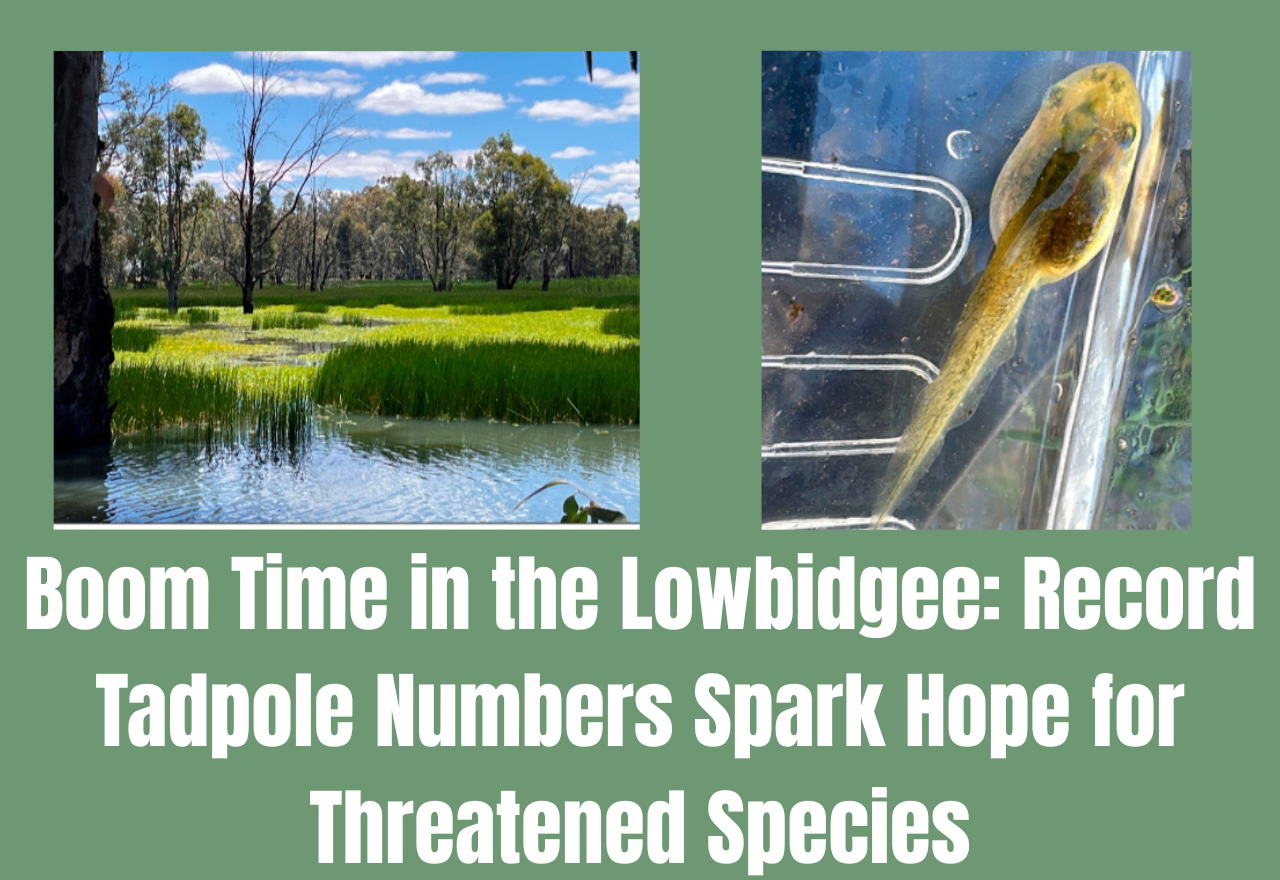
Lowbidgee Wetlands see unprecedented ‘baby boom’ as Southern Bell Frogs bounce back
In Short
- Record Discovery: Over 1,200 tadpoles were recorded at Murrundi Swamp, including 216 nationally threatened Southern bell frogs.
- The "Trigger": Precisely timed environmental water deliveries in late spring acted as a natural nursery, providing the food and shelter needed for the boom.
- Community Effort: The success is being hailed as a win for the collaborative work between local landholders and water managers across the region.
A record-breaking surge of tadpoles has been discovered in the Lower Murrumbidgee wetlands, marking a significant win for the environmental health of the Hay, Balranald, and Carrathool shires.
Monitoring teams from the Flow-MER program, the Commonwealth’s initiative to track the health of our waterways—recorded a staggering 1,244 tadpoles during a single survey in November. The standout performer was Murrundi Swamp, located within the North Redbank system, where researchers witnessed a "soaring" of species diversity.
For residents across the Central Darling and western river systems, the results offer more than just a biology lesson. They represent the direct impact of managed water deliveries on the local landscape. Among the count were 216 Southern bell frogs (Litoria raniformis), a species currently listed as nationally threatened. Other local residents found thriving in the nursery include the giant banjo frog, the plains froglet, and both barking and spotted marsh frogs.
The success of the breeding season is being credited to the close relationship between government agencies and the people on the ground. Project Lead Professor Skye Wassens emphasized that the result was no accident.
"This result is a credit to the dedication of water managers and local landholders across the North Redbank system who work together to support these water deliveries over multiple years," Professor Wassens said.
The timing of the water delivery was the critical "trigger." By reaching these seasonally dry wetlands in late spring, the water created a complex habitat—a giant natural nursery where thick vegetation and shallow pools provided the perfect protection and food source for the developing "froglings."
To ensure the boom translates into a permanent population boost, the team used a mix of overnight netting and evening spotlighting to assess development stages. The data gathered helps researchers understand how specific environmental conditions, like those found in our local LGAs, influence long-term survival.
While the early results are a "glowing report card" for the region, the work isn't over. Follow-up surveys are scheduled for February 2026 to track how the tadpoles fare through the peak of the summer heat.
NEWS

SPORT


RURAL

COMMUNITY







JOBS