"A Systemic Failure": Inquest reveals fatal diagnostic errors in Paul Harris' death at Hay Hospital

Krista Schade
15 January 2026, 10:19 PM
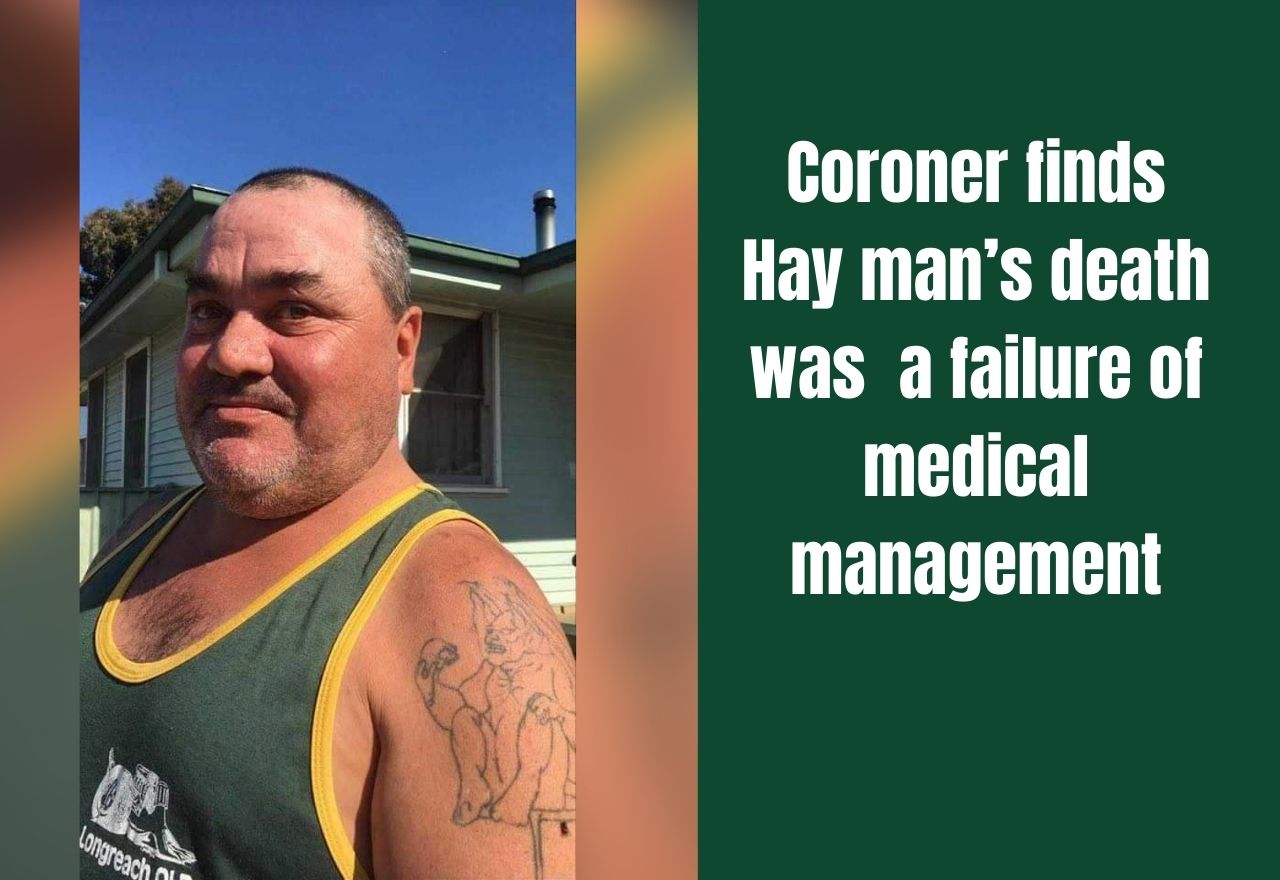
The coronial inquest into the death of Paul Harris, a 43-year-old Indigenous man and father of five, concluded this week.
In Short
Missed Diagnoses: Paul Harris died from an undiagnosed blood clot and Q Fever; doctors at Hay Hospital were found to have "tunnel vision," treating him only for pneumonia.
Systemic Failure: The Coroner ruled that a vital transfer to Griffith for specialized scanning should have occurred, which likely would have detected the fatal clot.
Call for Reform: Recommendations include mandatory staff training to bridge the communication gap between small rural facilities and regional hospitals to prevent future tragedies.
Deputy State Coroner Rebecca Hosking delivered the findings at the Lidcombe Coroners Court in New South Wales.
The inquest focused on the medical care Mr. Harris received at Hay District Hospital in the NSW Riverina region prior to his death on October 17, 2019.
Key Findings of the Inquest
The Coroner's findings highlighted several critical failures in the medical management of Mr. Harris’s condition.
Mr. Harris died from a blood clot in his lungs (pulmonary embolism) and Q fever (a bacterial infection typically spread from livestock).
Both conditions went undiagnosed during his time at the rural hospital.
The Coroner found that Mr. Harris should have been transferred from the small facility at Hay to a larger hospital in Griffith for a specialized scan (CT angiogram). This scan would likely have detected the blood clot.
Doctors at Hay Hospital treated Mr. Harris for community-acquired pneumonia. Expert evidence suggested they acted on "most likely" scenarios rather than escalating care to rule out more serious, life-threatening conditions when he failed to improve.
Given his work at a kangaroo meat processing plant, the Coroner noted that his high risk for Q fever should have been identified much earlier.
While the Coroner was unable to definitively rule whether earlier detection of the clot would have saved Mr. Harris's life, several recommendations were made to prevent similar tragedies, including staff training.
A recommendation was made for the Murrumbidgee Local Health District to provide training to strengthen relationships and communication between small rural hospitals and larger regional facilities.
When delivering her findings, the Coroner acknowledged the "enduring trauma" caused to the family by the six-year delay in reaching an inquest.
She described Mr. Harris as a "big personality" and a "larrikin" whose presence is deeply missed.
Q fever is a highly infectious bacterial disease caused by the organism Coxiella burnetii. In Australia, it is primarily a "zoonotic" disease, meaning it spreads from animals to humans.
While it is most commonly associated with livestock like cattle, sheep, and goats, it is also frequently found in native wildlife such as kangaroos and bandicoots.
The bacteria are incredibly hardy; they can survive for years in soil or dust and are resistant to many common disinfectants.
Because the infectious dose is extremely low - inhaling just a few organisms can cause illness - it is considered one of the most infectious diseases in the world.
Transmission typically occurs when people breathe in contaminated dust or aerosols containing the bacteria, which are shed in high concentrations in the birth products, milk, urine, and faeces of infected animals.
This makes people in rural occupations - such as abattoir workers, farmers, shearers, and kangaroo processors - particularly vulnerable.
Once infected, a person may experience severe flu-like symptoms, including high fevers, "drenching" sweats, and intense headaches.
While many recover with antibiotics, some develop chronic Q fever, which can lead to life-threatening complications like pneumonia, hepatitis, or inflammation of the heart valves (endocarditis).
In Australia, the Q fever vaccine (Q-VAX) is not just a medical recommendation; it is a workplace health and safety (WHS) requirement for anyone entering high-risk environments, particularly in the meat and livestock industries.
1. Mandatory Pre-Screening
The most unique aspect of the Q fever vaccine is that you cannot be vaccinated until you undergo a rigorous two-part screening process. This is because people who have had the disease previously (even if they didn't know it) can suffer a severe, dangerous reaction if they receive the vaccine.
Step 1: A detailed medical history and a blood test to check for existing antibodies.
Step 2: A skin test (similar to a TB test) to check for cellular immunity.
Waiting Period: You must return to the doctor exactly 7 days later to have the skin test read. Only if both the blood and skin tests are negative can the vaccine be administered.
2. Workplace Entry and The "15-Day Rule"
Under WHS legislation in states like NSW and Victoria, employers are responsible for ensuring workers are protected.
Immunity Lead Time: It takes approximately 15 days after the injection for immunity to develop.
Access Restricted: Many abattoirs and meat processing plants will refuse entry to high-risk areas (like the "kill floor" or rendering sections) until 15 days have passed since the vaccination.
PPE Requirements: If a worker must enter a high-risk area before they are immune, they are typically required to wear a fit-tested P2 respirator mask and full protective clothing.
3. The Australian Q Fever Register
Because the vaccine is usually a "one-and-done" (no boosters required), Australia maintains the Australian Q Fever Register.
Purpose: This is a centralized database that stores the immunity status of workers.
Employment: When applying for a job in the meat industry, employers will check this register. If you are on it, you don't need to be re-tested or re-vaccinated.
Documentation: Once registered, workers receive a "Q Fever Card" which acts as their "passport" for employment in rural and agricultural sectors.
4. Who Must Get It?
While abattoir workers are the most commonly cited group, the requirement extends to:
Kangaroo shooters and processors
Livestock transporters and shearers.
Veterinarians and agricultural students.
Contractors (plumbers, electricians, or cleaners) who perform work on-site at meat processing facilities.
NEWS


SPORT


RURAL