Underground opal capital: The extraordinary story of White Cliffs

Kimberly Grabham
28 December 2025, 1:00 AM
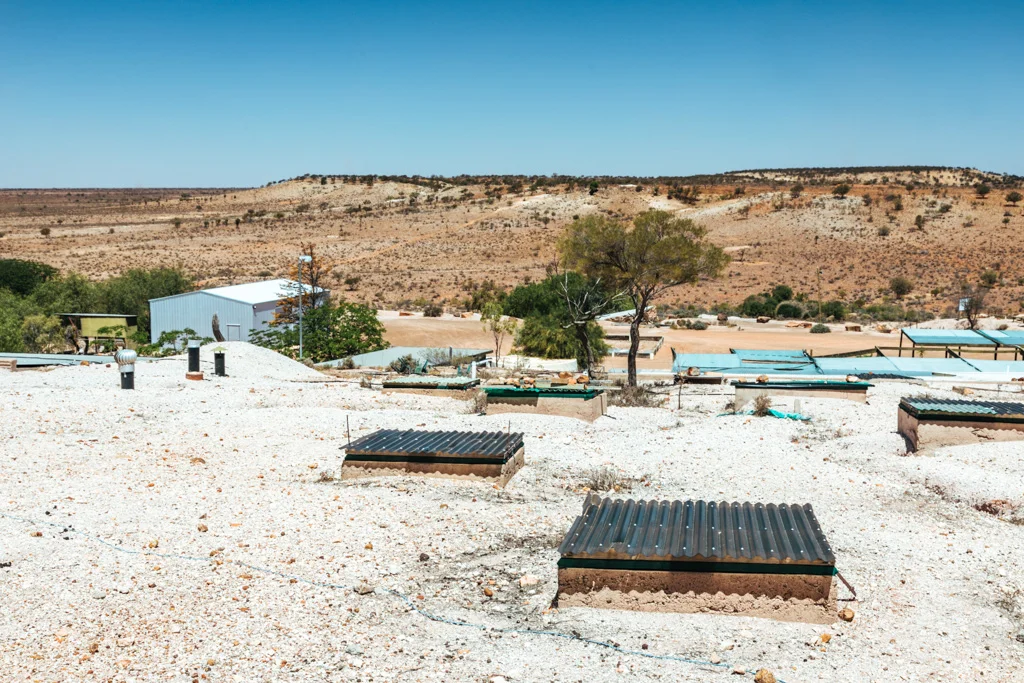
How a remote NSW town became famous for living beneath the earth
In the harsh, unforgiving landscape of far western New South Wales, where summer temperatures routinely soar above 45 degrees Celsius and the red earth stretches endlessly toward distant horizons, the residents of White Cliffs found an ingenious solution to one of Australia's most challenging environments, they moved underground.
What began as a practical response to extreme weather became one of the most unique communities in Australian history, earning White Cliffs its reputation as the continent's underground city.
White Cliffs was established in the late 19th century when opal was discovered, and opal has been mined ever since.
The town's story begins in 1884, when opal was first discovered in the area by kangaroo shooters who noticed the brilliant flashes of color in the sandstone outcrops. Word of the discovery spread quickly through the mining communities of NSW, and within months, prospectors were arriving from across Australia and beyond.
The early years of White Cliffs were typical of Australian mining settlements, a rough, transient community of men seeking their fortunes in harsh conditions. What made White Cliffs different was not just the precious stones hidden in its hills, but the way its residents adapted to the extreme climate that made surface life almost unbearable for much of the year.
The solution lay literally beneath their feet. The same soft sandstone that contained the opal deposits could be easily excavated to create cool, comfortable living spaces. The underground temperature remained constant at around 23 degrees Celsius year-round, regardless of the scorching heat or bitter cold on the surface. What began as temporary shelter for miners gradually evolved into permanent underground homes, creating a subterranean community unlike anywhere else in Australia.
By 1901, the population was officially recorded at 1,500 people, though estimates suggested closer to 3,000 as many locals weren't keen for their whereabouts to be known. This discrepancy in population figures reflects the frontier character of early White Cliffs, where many residents preferred to remain anonymous to avoid unwanted attention from tax collectors, creditors, or law enforcement officials from more settled areas.
The underground architecture of White Cliffs was remarkable for its sophistication and comfort. Unlike crude dugouts or temporary shelters, many of the underground homes were carefully planned and constructed with multiple rooms, proper ventilation systems, and even elaborate decorative features. Residents carved bedrooms, kitchens, living areas, and storage spaces directly into the hillsides, creating homes that were not only comfortable but often luxurious by mining camp standards.
The underground lifestyle extended beyond individual homes to encompass entire commercial districts. Hotels were carved into rock faces, offering visitors the unique experience of sleeping in rooms that never saw direct sunlight. Underground restaurants served meals in dining rooms hewn from sandstone, while shops and services operated in subterranean spaces that maintained perfect temperatures regardless of surface conditions.
The most famous of these underground establishments was the White Cliffs Hotel, a multi-story underground complex that became legendary throughout the mining districts of NSW. The hotel's underground bar and dining rooms could accommodate hundreds of guests, while its underground accommodation provided respite from the surface heat for travellers crossing the outback. The hotel's guest register included mining magnates, government officials, and international visitors drawn by curiosity about Australia's underground town.
The engineering challenges of underground construction at White Cliffs were considerable but were met with remarkable ingenuity. Ventilation was achieved through carefully designed air shafts and cross-ventilation systems that drew cool air through the underground spaces. Drainage systems prevented flooding during the rare but intense rainfall events that could overwhelm the arid landscape. Structural integrity was maintained through the careful design of pillars and supports that prevented collapse while maximising living space.
The opal mining that sustained White Cliffs was itself a remarkable industry. Unlike the large-scale industrial mining operations of gold or coal, opal mining remained largely a small-scale, individual enterprise. Miners worked alone or in small partnerships, following opal-bearing seams through the sandstone using hand tools and explosives. The work was dangerous and often unrewarding, but the possibility of discovering a valuable opal seam kept miners working in conditions that would have defeated less determined prospectors.
The quality of opals found at White Cliffs was exceptional. The town produced some of Australia's finest white opals, prized for their brilliant play of color and clarity. These opals found their way to jewelry markets in Sydney, Melbourne, and eventually to international buyers in London, Paris, and New York. The reputation of White Cliffs opals helped establish Australia's position as the world's leading producer of precious opals.
The social life of underground White Cliffs was as vibrant as any Australian mining town. The underground hotels and bars provided venues for entertainment, gambling, and socialising. Travelling performers and musicians found appreciative audiences in the underground venues, while local residents organised their own entertainment including underground dances, concerts, and theatrical performances. The constant temperature and acoustic properties of the underground spaces made them ideal venues for musical performances.
The town's isolation contributed to its unique character. Located hundreds of kilometres from the nearest major settlement, White Cliffs developed its own social codes and customs. Law enforcement was minimal, and disputes were often settled according to the informal justice systems common in frontier communities. This independence from outside authority contributed to the town's appeal for individuals seeking to escape their pasts or avoid unwanted attention.
Women played important roles in White Cliffs society, often as hotel keepers, storekeepers, and providers of essential services. The underground environment offered greater security and comfort for women than typical mining camps, and several women became successful business operators in their own right. The town's underground laundries, bakeries, and boarding houses were often run by women who recognised the commercial opportunities offered by the unique environment.
The peak years of White Cliffs coincided with the broader Australian gold rush era, when mining towns across the continent were experiencing rapid growth and prosperity. However, White Cliffs' focus on opal mining rather than gold gave it a different character from other mining settlements. Opal mining required different skills and attracted a different type of prospector – often more patient and persistent than the get-rich-quick seekers drawn to gold rushes.
The decline of White Cliffs began in the early decades of the 20th century, as easier opal deposits were exhausted and new discoveries elsewhere drew miners away. The town's remote location, which had initially protected it from outside interference, became a liability as transport and communication networks improved and more accessible mining opportunities became available.
World War I marked a significant turning point, as many of the town's younger residents enlisted in the Australian Imperial Force. Those who survived the war often chose not to return to the isolation and hardship of outback mining, seeking instead the opportunities offered by Australia's growing cities and towns. The town's population began a steady decline that continued through the 1920s and 1930s.
Despite its declining population, White Cliffs maintained its reputation for opal production. The remaining miners continued to work the deeper and more difficult deposits, often achieving remarkable success. Some of Australia's most famous opals were discovered at White Cliffs during these later years, including specimens that found their way into museum collections and royal jewelry.
The Great Depression of the 1930s brought a temporary revival to White Cliffs, as unemployed men from cities and towns sought opportunities in the opal fields. The underground accommodation provided cheap shelter for these depression-era miners, and several significant opal discoveries were made during this period. However, this revival was temporary, and the town's population continued to decline through the mid-20th century.
Today, White Cliffs exists as a fascinating relic of Australia's mining heritage. Many of the underground homes and businesses remain intact, preserved by the dry climate and stable underground environment. Some are still occupied by opal miners and their families, maintaining the town's connection to its mining origins. Others have been converted to tourist accommodation, allowing visitors to experience the unique sensation of living underground in the Australian outback.
The town's underground infrastructure represents one of Australia's most remarkable examples of environmental adaptation. The residents of White Cliffs demonstrated that with ingenuity and determination, even the most challenging environments could be made habitable and comfortable. Their underground city stands as a testament to the resourcefulness and adaptability that characterised Australia's mining frontier.
Contemporary White Cliffs continues to attract opal miners, though modern techniques and equipment have changed the nature of the work. Small-scale mining operations still discover valuable opals in the area, maintaining the town's reputation as one of Australia's premier opal-producing regions. The combination of ongoing mining activity and heritage tourism provides a modest economic base for the community that remains.
For visitors to White Cliffs, the experience of staying in underground accommodation provides a unique perspective on Australian mining history and environmental adaptation. The constant temperature, acoustic properties, and visual impact of the underground spaces offer insights into a way of life that developed nowhere else in Australia. The town's story demonstrates how necessity can drive innovation and how isolation can foster unique community development.
The legacy of White Cliffs extends beyond its contribution to Australia's opal industry. The town represents a unique solution to environmental challenges and demonstrates the lengths to which people will go to extract valuable resources from difficult terrain. Its underground architecture influenced other mining settlements and continues to inspire contemporary discussions about sustainable building and environmental adaptation.
White Cliffs remains one of Australia's most extraordinary communities; a place where the search for precious opals led to architectural innovation, where the harsh outback environment was conquered by moving beneath it, and where a unique way of life developed in response to the challenges of one of the continent's most demanding landscapes.