The story behind the famous photograph

Contributor
11 January 2026, 1:00 AM
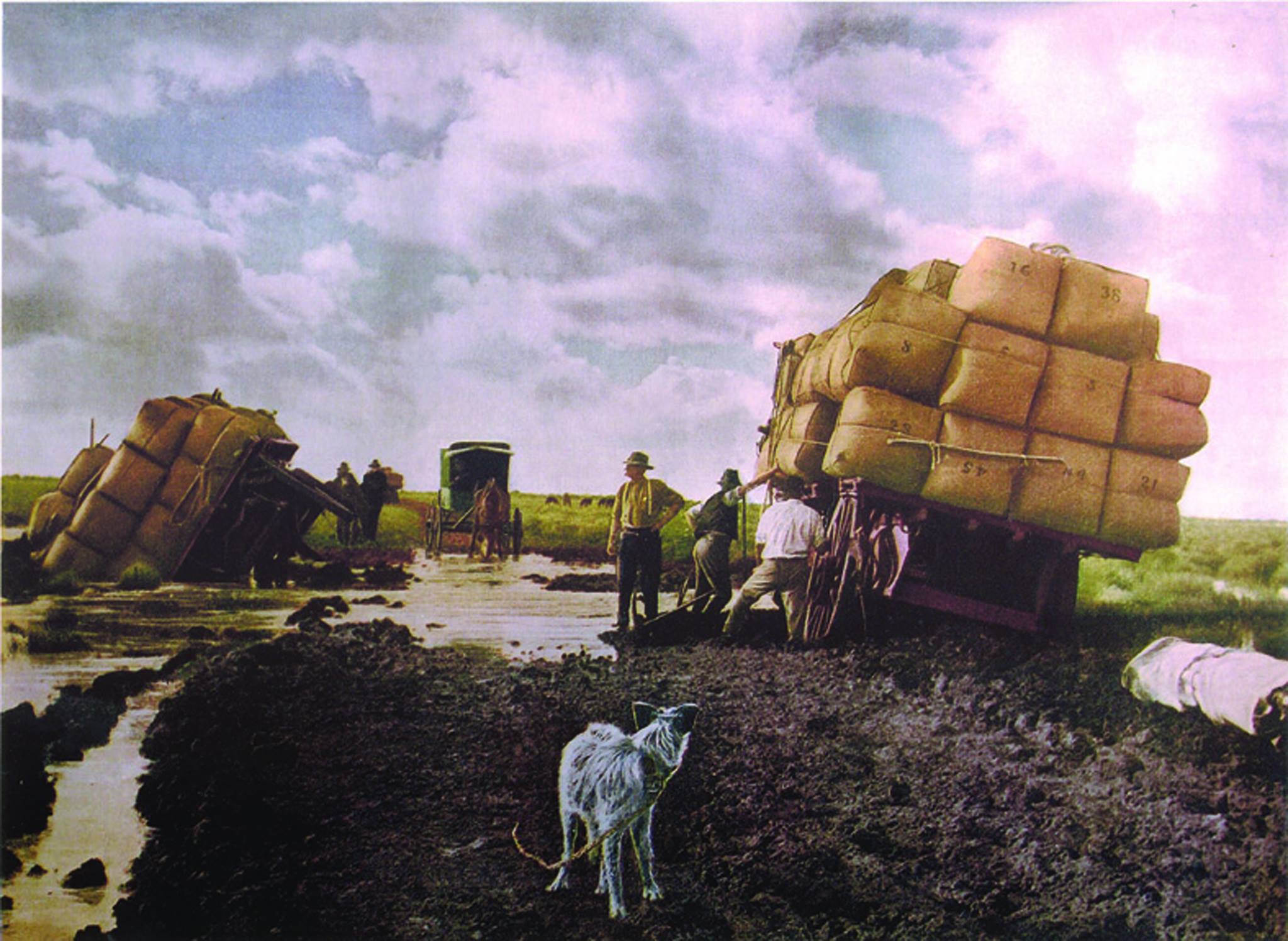
This article was created from an article written some years ago by the late Rod McCully and published in The Riverine Grazier.
A famous photograph hangs on the walls of hotels and buildings across southwestern New South Wales. It shows a horse-drawn wool wagon overturned in a bog, the huge load tipped sideways, horses straining, men frozen in the moment of disaster. For years it has fascinated locals and tourists alike, a dramatic snapshot of the hardships of early wool transport.
But behind that striking image lies a story of resilience, hard work and the remarkable people who hauled the wealth of the inland to market one wagon load at a time.
The woman who knew that story best recently shared it when a visitor brought a newspaper clipping to the Grazier office. The article, written by Joseph Glascott and published in the Sydney Morning Herald on 2 November 1985, had been carefully saved and now told the tale of one family's connection to that iconic photograph. The keeper of the story was Vera Howard, who lived on Church Street in Hay and who happened to be the daughter of the wagon owner himself.
At 77 years old when she spoke to the Herald, Vera had heard the full story of those overturned wagons only relatively recently, after the death of Chris Young who had worked for her father. The details she shared painted a vivid picture of a moment frozen in time but representing years of gruelling work on the roads between Hay and the western stations.
The wagons overturned in Willandra Creek at Mossgiel after the creek had come down following about 19 inches of rain in 1923. It was the kind of weather event that could transform a manageable crossing into a treacherous bog in a matter of hours. Her father, Henry Coleman, who was also known as Harry Biggar, and Chris Young were not visible in the famous photograph. They were at the back of the fallen wagon, fighting to save the precious wool from ruin.
The men captured in the photograph were identified with the kind of certainty that comes from family knowledge passed down through generations. On the left of the picture stood Charlie Tait and Jack Nelson. On the right were Bill Elliott, Alex Curtis and a man named Burns. These were the faces of the wool transport industry, ordinary men doing extraordinary work in conditions that would break lesser individuals.
The photograph itself was taken by a passing jackeroo with a Box Brownie camera. It's remarkable to think that this iconic image, reproduced countless times and displayed across the region, was a chance capture by someone who happened to be in the right place at the right moment with a simple camera. That jackeroo probably had no idea his snapshot would become part of the region's visual history.
In the chaos of the accident, Henry Coleman dropped his wallet in the creek. It contained 150 pounds, an enormous sum for the time and likely representing months of hard-earned income. The loss must have been devastating, but Coleman returned the next day and found the wallet intact, a small piece of good fortune amid the disaster.
Henry Coleman's working life tells the broader story of wool transport in the era before trucks and sealed roads made the journey routine. He carted wool from Mossgiel station to Hay between 1916 and 1925, first with bullock teams and later with horses. It was backbreaking, relentless work that kept him away from home for weeks at a time.
The family he supported numbered six children and their mother, all living in Hay while Henry walked the roads beside his teams. He didn't get home very much because he was always on the road, following the rhythm of the wool seasons and the demands of stations waiting to get their clips to market. Every month he would send home ten pounds on which his wife managed the entire family. It's hard to imagine stretching that amount to feed and clothe eight people, but somehow she made it work.
The distances Henry Coleman covered are staggering to contemplate. He walked 135 miles beside his teams from Hay to the western stations and back again, his boots eating up the kilometres while the wagons rolled along at the pace of the horses. In those days there were far more pubs along the way than exist now, welcome stops for a man who spent his life in the dust and heat of the road.
There was The Nine Mile out of Hay, a place whose name spoke to its distance from town. The One Tree marked another stopping point, its name suggesting a lonely landmark in flat country. The Booligal Hotel provided hospitality in that small settlement, and Mrs Lyons Hotel offered another welcome break. Then came the pubs at Mossgiel and Ivanhoe, each one a social centre and resting place for the men who hauled wool across vast distances. It was thirsty work, as Vera noted with the kind of understatement that speaks volumes.
When Henry Coleman was at home in Hay, he was known as a great storyteller. He would spin yarns about his adventures on the road, the characters he'd met, the challenges he'd faced, and then laugh like the devil at the memories. It's easy to imagine him holding court, his children gathered around, the stories bringing to life a world of dusty roads, stubborn horses, flooded creeks and near disasters like the one captured in that famous photograph.
Henry Coleman died in 1944 at the age of 66. He'd spent nearly a decade of his life walking beside wool wagons, surviving accidents like the Willandra Creek disaster, losing and miraculously recovering substantial sums of money, and supporting his family through the Depression years when every pound sent home kept food on the table. His daughter Vera lived long enough to ensure his story wasn't lost, that the famous photograph wasn't just an interesting historical curiosity but a window into real lives and real struggles.
The photograph that hangs in hotels across southwestern New South Wales isn't just about an overturned wagon or dramatic moment. It's about men like Henry Coleman and Chris Young, Charlie Tait and Jack Nelson, Bill Elliott and Alex Curtis and Burns, whose first name has been lost to time. It's about the women like Mrs Coleman who stretched ten pounds a month to feed a family of eight. It's about children who grew up with fathers who were mostly absent, walking 135 miles beside their teams. It's about a way of life that shaped the region, moving the wool that built fortunes and sustained communities.
The jackeroo with his Box Brownie camera captured more than he knew that day at Willandra Creek. He caught a moment that represented decades of hard work, thousands of miles walked, countless loads hauled, and the determination of people who did what needed to be done regardless of the cost. When you look at that photograph now, knowing the story behind it, you see not just an accident but the face of an era, preserved in black and white but alive in the memories of those who lived it and the descendants who ensure their stories aren't forgotten.
Gail Rosewarne's decision to bring that newspaper clipping to the Grazier office, her mother Norma's care in preserving it, and Vera Howard's willingness to share her father's story all ensured that the famous photograph would mean more than just a striking image. It would tell the truth about the people behind it, the lives they lived, and the world they inhabited when wool wagons ruled the roads and men walked beside their teams across the vast distances of inland Australia.