The Darling River's reign of death

Kimberly Grabham
30 December 2025, 1:00 AM
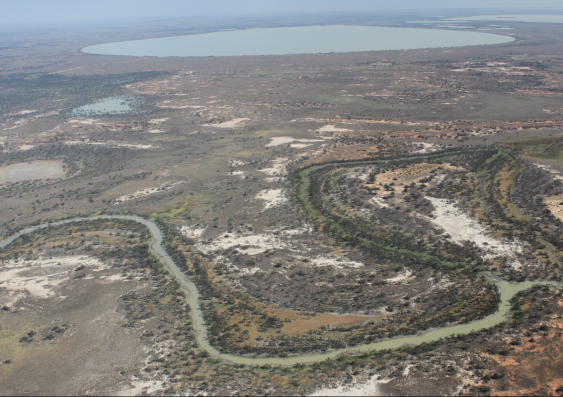
The town of Menindee sits like a lonely outpost beside the meandering Darling River in far western New South Wales.
For thousands of years, this waterway sustained the Barkindji people and countless generations of native wildlife.
Today, it has become synonymous with environmental apocalypse—a stretch of water that regularly transforms into a graveyard for millions of creatures.
In January 2019, residents of Menindee woke to a scene from a nightmare.
Along a 40-kilometre stretch of the Darling River, up to one million native fish floated belly-up in the murky water.
Murray cod—some weighing over 100 kilograms and decades old—bobbed alongside golden perch and silver perch in what authorities called the largest fish kill in Australian history.
The sight was so overwhelming that locals described the smell as unbearable for weeks afterwards.
The immediate cause was a sudden temperature drop that triggered the collapse of massive blue-green algae blooms, sucking oxygen from the water and suffocating everything that lived beneath the surface.
But this was no natural disaster—it was the culmination of decades of river mismanagement, drought, and human interference with one of Australia's most significant waterways.
What makes Menindee's environmental catastrophe particularly eerie is its repetitive nature. Between 2018 and 2023, at least five mass fish death events were recorded along this stretch of the Darling River.
Each time, the pattern was the same: algae blooms fed by agricultural runoff and stagnant water would flourish in the heat, then suddenly collapse, creating an aquatic killing field that stretched for kilometres.
The scale of these disasters defies comprehension. During the worst events, dead fish carpeted the riverbanks in layers several feet deep.
The stench was so overpowering that it could be detected from kilometres away, and locals reported that the smell penetrated clothing and homes, lingering for weeks after the dead fish were removed. Emergency services had to use bulldozers to collect the rotting carcasses, which were then buried in mass graves in the desert.
The river that once ran clear and supported thriving ecosystems has become a toxic soup of agricultural chemicals, urban runoff, and over-extracted water.
Native species that survived ice ages and countless droughts have been wiped out in a matter of days by human-induced environmental collapse.
The critically endangered Murray cod, some of which were older than European settlement in the area, have been particularly hard hit.
Scientific analysis of the dead fish revealed the brutal efficiency of environmental collapse.
Many of the Murray cod found floating in 2019 were over 50 years old—living libraries of river ecology that had survived multiple droughts, floods, and previous fish kills.
Their deaths represented not just individual tragedies but the erasure of genetic diversity that had taken decades to develop.
The toxicity of the algae blooms poses dangers beyond fish mortality. Blue-green algae, technically cyanobacteria, produce neurotoxins and liver toxins that can kill livestock, pets, and even humans who come into contact with contaminated water.
During the worst blooms, the river water resembled green paint, and the mere act of touching it could cause severe skin irritation and illness.
Local Aboriginal elders describe the fish kills as a spiritual catastrophe as much as an environmental one.
The Barkindji people have maintained their connection to this country for over 40,000 years, and the river was central to their cultural and spiritual life.
Traditional fishing practices, passed down through countless generations, became impossible when the river turned toxic.
Sacred sites along the riverbank were contaminated with rotting fish, making cultural ceremonies dangerous or impossible to perform.
The economic impact on Menindee has been devastating. Commercial fishing, once a significant industry in the region, has been virtually eliminated.
Tourism, already limited in this remote area, disappeared entirely during the worst of the fish kills. Property values plummeted as potential buyers were deterred by the smell and health risks associated with living near a contaminated river.
The town of Menindee itself has become a symbol of environmental injustice.
Once a thriving river port with a population of over 2,000, it now struggles to maintain 500 residents. The river that gave the town life has become unreliable and unsafe.
During the worst of the fish kills, locals were advised not to swim in or draw water from a river their grandparents had depended on for everything.
Meteorological records reveal the perfect storm of conditions that create these disasters. Extended periods of drought reduce river flow to a trickle, concentrating nutrients and pollutants. When temperatures soar above 40 degrees Celsius, as they regularly do in western NSW, the stagnant water becomes a breeding ground for toxic algae. The algae multiply exponentially, creating blooms visible from space, before suddenly collapsing when temperatures drop or nutrients are exhausted.
The Murray-Darling Basin, of which the Darling River is a crucial component, has been described by scientists as one of the world's most over-allocated river systems. Water extraction for irrigation and urban use has reduced natural flows to levels that cannot sustain healthy ecosystems. Cotton farming upstream has been particularly controversial, with critics arguing that water-intensive crops should not be grown in one of Australia's driest regions.
Historical records reveal that the relationship between European settlers and the Barkindji people was so violent that prospective pastoralists avoided the region for years. In 1853, police were brought in to forcibly relocate Aboriginal people to government missions, beginning a pattern of displacement and environmental exploitation that continues today. The current ecological crisis can be seen as the culmination of 170 years of treating the landscape as something to be conquered rather than sustained.
The science behind the fish kills reads like a horror story. Blue-green algae produce toxins with names like microcystin and cylindrospermopsin—compounds so potent that a few drops can kill a large dog. When these blooms collapse, they create what scientists call "blackwater events"—stretches of river so depleted of oxygen that nothing can survive. The water turns the colour of black tea and carries the stench of death for hundreds of kilometres downstream.
Government responses to the crisis have been widely criticised as inadequate and reactive. Emergency water supplies have been trucked to Menindee at enormous cost, while long-term solutions remain mired in political disputes between state and federal governments. The town's main water treatment plant was overwhelmed during the worst algae blooms, leaving residents dependent on bottled water for months at a time.
Satellite images of the Darling River during fish kill events reveal the scale of the catastrophe. Dark plumes of dead water can be seen snaking across the landscape like veins of poison, carrying destruction far beyond Menindee itself. The river system that once supported one of Australia's most diverse freshwater ecosystems has become a conveyor belt of environmental death.
Climate change projections suggest that conditions conducive to fish kills will become more frequent and severe. Higher temperatures, more extreme weather events, and altered rainfall patterns are expected to increase the likelihood of toxic algae blooms. Scientists warn that without dramatic changes to water management, the Darling River could become permanently toxic.
Perhaps most disturbing is how routine these disasters have become. Local newspapers that once treated fish kills as front-page emergencies now report them with the weary resignation of communities that have witnessed too much destruction. Children growing up in Menindee today have never seen the river run clear or tasted fresh-caught fish—environmental catastrophe has become their normal.
The psychological impact on remaining residents cannot be understated. Many describe a sense of grief that goes beyond sadness—a deep mourning for a way of life that has been lost forever. The river that once provided recreation, food, and spiritual connection has become a source of anxiety and despair.
The Darling River's transformation into a serial killer of aquatic life represents more than environmental mismanagement—it's a microcosm of how human activity can turn life-giving systems into instruments of death. In the red dirt country around Menindee, the apocalypse doesn't come with fire and brimstone, but with the quiet floating of a million fish and the silence of a river that has forgotten how to sustain life.
NEWS

SPORT


COMMUNITY

RURAL