Linking Communities Network’s strong presence in Hay

Kimberly Grabham
04 January 2026, 1:00 AM
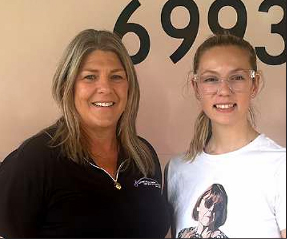 Madeleine Rossiter (right), Links for Women/Staying Home Leaving Violence (SHLV) Manager, and Ann Jones who covers Women’s Domestic Violence Court Advocacy Services.
I was recently lucky enough to sit down with a trio of inspiring women; Alice Watts from Links for Women, Madeleine Rossiter, Links for Women/Staying Home Leaving Violence (SHLV) Manager, and Ann Jones who covers Women’s Domestic Violence Court Advocacy Services.
These women often have multiple clients they are supporting, each with their own complex tandem issues, including mental health, culture, religion, and other complex issues.
These various compounding issues can truly impact on the decision to leave, and they are often supporting women who have not yet made the choice.
When asked how they continue and survive in a role which most would find emotionally draining and difficult to navigate, the trio agreed it was all about self-care.
“You have to take care of yourself,” they said.
“Be good to yourself; go to the gym, have a glass of wine at the end of the day, whatever it means for you,” they said.
“We also are a big support for each other, with the office being a space where we can debrief and support each other, a non-judgmental space.”
The three colleagues agree the system works hard for victims and survivors, but the court process and outcomes are not consistent.
“The police do their jobs, but the court process is wanting,” Ms Jones said.
“Magistrates really need external domestic violence training and trauma informed responses for the victims.”
Linking Communities Network (which is the umbrella in which the different programs these women cover sit under) has a no wrong door approach to their services.
Clients can come to LCN through any of justice system right away, there are so many ways we can help.” their services and programs for support.
If they can’t directly assist someone, they will direct them to another service.
LCN services the entire Western Murrumbidgee District including Griffith, Darlington Point, Leeton, Narrandera, Coleambally, Hay, Hillston, Lake Cargelligo, Ardlethan, Barellan and West Wyalong.
Their services include Early Intervention and Prevention, Rapid Rehousing Response, Crisis and Transitional Response, Intensive Support and Complex Trauma Response, Emergency Accommodation Options and Outreach Services.
There have been many changes in the delivery of service over time.
The Court Advocacy Service is now located in the police station, so they can hear and have access to potential people in need.
Even in the last decade, services have become so much more coordinated, meaning the clients can experience a more holistic help and support.
There have been cases in the past where a person has been let down so profoundly, they will not engage services again.
“I have had women refuse to report it, as they fear when it goes to court it will be reported on and people will know it was them,” Ann said.
“That has indeed happened in the past, where the woman was not named, but the circumstances were described in such specific detail it was known who it was.”
The trio say support before a person leaves is just as important as support for those who have already fled domestic violence situations. “Knowing what to do in the lead up, steps to take and ways to prepare yourself to leave, these are important things to consider,” they said.
“Even if a person does not want police or to go through the formality of going through the The Griffith Women’s Refuge is still open 24 hours a day, seven days a week, even on Christmas Day.
The trio agree one of the hardest obstacles faced is lack of understanding of what constitutes domestic violence.
“There are so many different ways a person can be a victim of abuse,” they said.
“Coercive control has seen a big rise in understanding and consequence for a perpetrator.
“If you are feeling unsafe, needing to walk on eggshells, are unhappy and being made to change who you are and the way you are, then there is something wrong in a relationship.”
This is another aim of the programs, to try and educate on what are healthy and unhealthy relationships.
While there is an increase in the number and variety of services and resources victims can access over the years, sometimes the one size fits all approach in the delivery of these resources can prove hard.
“Say it’s a $5000 payment, which is fantastic, but then there is a mum with five or six kids,’ Alice said.
“Once you’re doing something such as paying $1500 in rent you need to catch up on because your partner would not pay it, or catching up in other ways, or needing to buy all new furniture and beds, it doesn’t go a long way,” Alice said.
Alice will engage with local services, to see if they are aware of anyone who may need help or assistance due to domestic violence, before she quietly and discreetly offers help.
“Sometimes people just aren’t aware of what is out there, and until they do they cannot get that help.”
Staying Home Leaving Violence Program is for women who have left their partner, and are in stable accommodation. Madeleine Rossiter (right), Links for Women/Staying Home Leaving Violence (SHLV) Manager, and Ann Jones who covers Women’s Domestic Violence Court Advocacy Services.
The program can assist with establishing a safety plan, conducting a safety audit of the property, investigating safety upgrades to maximise safety, assist with court support and advocacy, information and referrals to other services such as counselling and financial referrals. They offer support for women to continue to live free from violence.
Madeleine’s grandmother was part of the women’s refuge movement for over 45 years.
Her mother was also heavily involved for over 20 years, so she was part of a family of strong helpful women and was inspired to keep it going.
“I love my job, I love to see women and children become safe and to help them achieve good positive outcomes,” she said. The bottom line for articles such as this is to let people know they are not alone, there are many different ways to get help. Reach out and grab help, contact Linking Communities Network to get the ball rolling.