From Two Kilometres to Four: How Carrathool Shire Is Quietly Winning the War on Corrugated Bush Roads

Kimberly Grabham
26 February 2026, 7:00 PM
IN SHORT
Carrathool Shire Council has been applying Polytahr pavement stabilisation to its unsealed local roads since August 2023, with 26 roads across the shire now treated covering a combined distance of 262 kilometres.
The product has reduced the frequency of maintenance grading required on treated roads and doubled the daily grading output of crews from two kilometres to four kilometres per day.
Council has resolved to continue the program as part of its scheduled works, with the treatment costing approximately $2,451 per kilometre at a daily output cost of $4,902 per two kilometres.
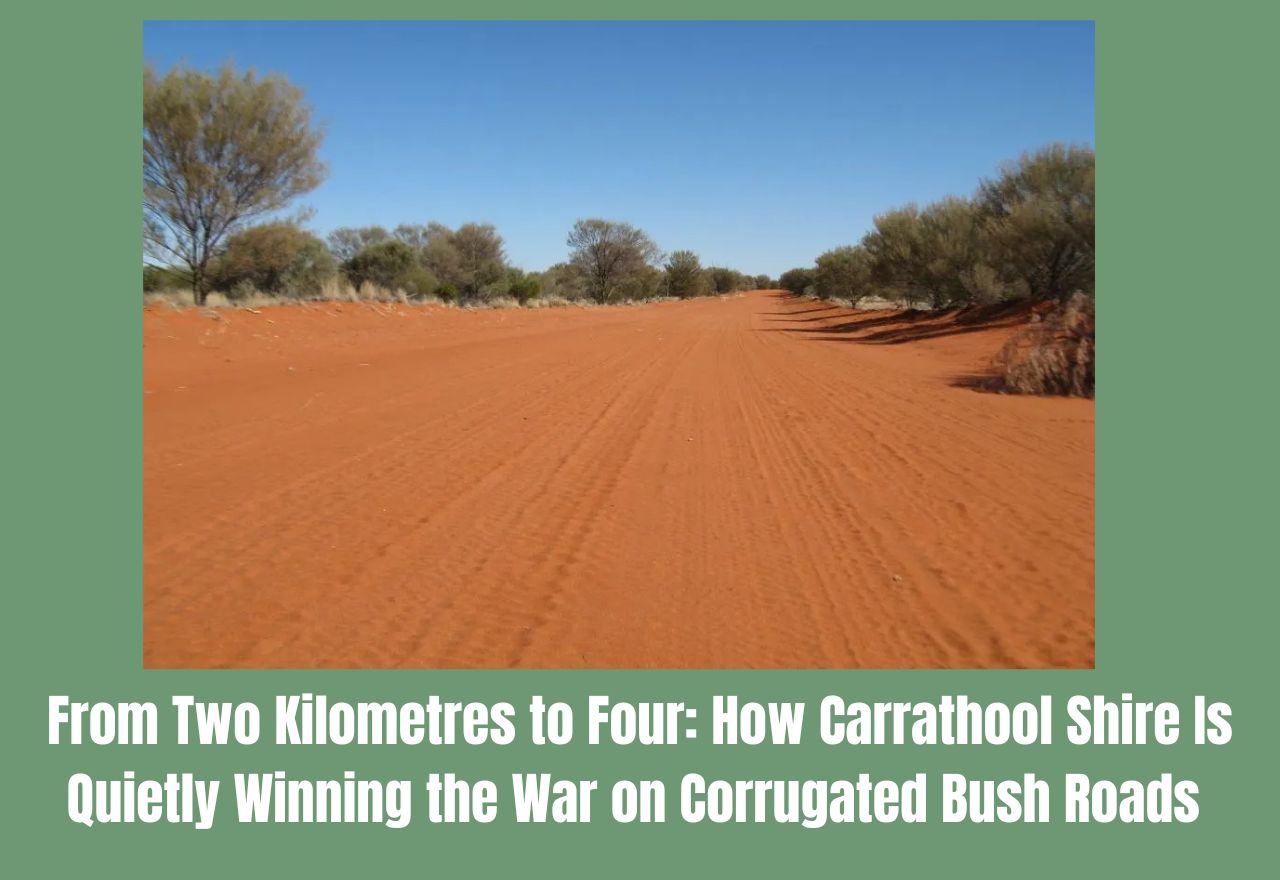
Anyone who has driven the back roads of the Carrathool Shire in summer knows the particular misery of a heavily corrugated dirt road.
The rhythmic shuddering that rattles your spine, loosens your fillings and sends a full cup of tea airborne is not just uncomfortable.
It slows travel, damages vehicles, increases fuel consumption and makes road maintenance a never-ending exercise in catching up with what the last rain event undid.
Which is why a quiet but significant piece of road engineering news out of Carrathool Shire's February ordinary council meeting deserves more attention than it is likely to get.
Council received a detailed status report on the ongoing use of Polytahr as a pavement stabilisation agent on its unsealed local road network, and the results are genuinely encouraging.
The product, which is incorporated into the road surface gravel by blading, adding moisture and compacting, has been shown to reduce corrugations on corners and bends, improve vehicular ride quality, help the road formation maintain its shape and reduce the amount of potholing that occurs after rain compared to pre-treatment conditions.
For a shire managing hundreds of kilometres of unsealed road across some of the most variable soil country in New South Wales, those outcomes matter.
The trial began in August 2023 on sections of Mt Daylight Road and has since expanded significantly. Ten roads in the northern area of the shire have been treated, covering 180 kilometres, while sixteen roads in the southern area have received treatment across 82 kilometres.
The list of treated roads spans some of the most heavily used routes in the shire's local network, including Mossgiel Road at 20 treated kilometres, Lowlands Road at 27 kilometres and Whealbah Road at 85 kilometres in the north, and Camerons Road at 13 kilometres, Euratha Road at 10 kilometres and Green Hills Road at 7 kilometres in the south.
The infrastructure report presented to councillors noted that the treatment has been effective across most soil types, including the high clay constituent soils that characterise roads like Lowlands Road, which becomes extremely adhesive and slippery when even minimal rainfall has taken place.
Post-treatment photography from Lowlands Road taken one year after application showed that the road pavement had retained reasonable formation with minimal water ponding, a result that the infrastructure manager described as encouraging given the challenging nature of that particular subgrade.
Melbergen Road and Euratha Road have been treated using a slightly different method, with Polytahr incorporated directly into the gravel on the road surface during the blading and compaction process. The infrastructure manager's report noted that while this process is slightly more time consuming than standard application, "the end result is functionally much improved hence economically viable in the long term."
That assessment sits at the heart of why council has resolved to continue the program.
The most compelling practical statistic is the doubling of daily grading output on treated roads.
When grading crews work on untreated roads, the daily output runs to approximately two kilometres.
On Polytahr-treated roads, the same crew achieves four kilometres in the same working day. The road surface holds its formation better, requires less cutting and reshaping and responds more predictably to the grader blade.
The result is that the shire's road maintenance budget effectively stretches further on every kilometre of treated road the crews cover.
For property owners, farmers and freight operators across the Carrathool Shire and the broader region including Hay and Balranald, the condition of the unsealed local road network is not an academic question.
It is the difference between getting a load to market in reasonable time and arriving with damaged product, between a smooth school bus run and one that has parents calling the council office, between a workable paddock access road and one that becomes impassable after twenty millimetres of rain.
NEWS


SPORT


RURAL
COMMUNITY