From lockup to lifeline: The complex history of Hay Gaol

Kimberly Grabham
30 December 2025, 10:00 PM
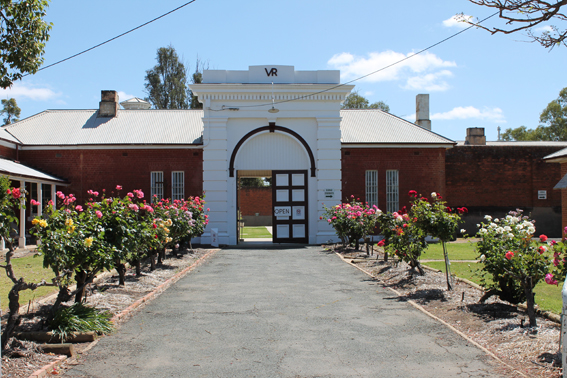
In the heart of Hay, New South Wales, stands a building that has witnessed nearly 150 years of Australian social history. The Hay Gaol, constructed in 1878, has lived through more incarnations than most buildings could dream of, serving as a prison, a maternity hospital, an institution for girls, and finally a museum. Each transformation tells a story not just of changing architecture, but of evolving social attitudes, community needs, and both the best and worst aspects of institutional care in Australia.
When Hay Gaol was completed in 1878, it represented the arm of colonial law extending into the remote Riverina district. The building was constructed during a period when the Australian frontier was still being defined, and institutions of law and order were essential symbols of civilisation's advance into what Europeans considered the wilderness.
The gaol was built using local materials and labour, reflecting the practical approach that characterised much of colonial Australian construction. Its thick stone walls and small, barred windows were designed not just for security, but to withstand the harsh climate of the inland—scorching summers and bitter winters that could test both buildings and the people within them.
The original design followed standard colonial prison architecture: a central corridor with cells branching off either side, administrative areas at the front, and exercise yards at the rear. The building incorporated the latest theories in prison design of the era, which emphasised isolation, routine, and moral reformation through hard work and religious instruction.
The early years of Hay Gaol saw it house a variety of offenders, from petty thieves to violent criminals, reflecting the rough-and-tumble nature of frontier life. The prisoners included bushrangers, cattle thieves, drunk and disorderly individuals, and those who had run afoul of the complex web of colonial regulations that governed everything from land use to licensing laws.
Prison records from the period reveal the harsh realities of life in colonial Australia. Many inmates were there for crimes of desperation—stealing food during hard times, vagrancy during economic downturns, or infractions of the complex laws that governed the movement and employment of workers in the pastoral industry.
The gaol also served as a temporary holding facility for prisoners awaiting trial or transport to larger institutions. Its location made it a crucial link in the colonial justice system, serving communities across a vast area of the Riverina where the nearest alternatives might be hundreds of kilometres away.
By the early 20th century, changing attitudes towards crime and punishment, combined with improved transportation links that made it easier to transfer prisoners to larger facilities, had reduced the need for small regional gaols. Rather than abandon the substantial building, the community found a new use that would serve a very different but equally vital function.
The transformation of Hay Gaol into a maternity hospital represented a remarkable shift from a place associated with society's failures to one celebrating its future. The solid construction that had once contained criminals now provided security and shelter for mothers and newborns. The small, individual rooms that had been cells became private recovery rooms, and the exercise yards became areas where new mothers could recuperate in the fresh air.
This transformation reflected the growing recognition in early 20th-century Australia of the need for proper medical facilities in rural areas. Childbirth, which had previously been handled by local midwives or family members, was increasingly seen as requiring professional medical supervision. The gaol's conversion addressed this need in a practical, cost-effective manner that exemplified rural Australian ingenuity.
The conversion to a maternity hospital required significant modifications to the building's interior. Former cells were opened up and refurbished to create comfortable rooms for patients. New plumbing and electrical systems were installed to meet medical standards. The former prison kitchen was expanded to provide meals for patients and staff, and areas that had once housed prison workshops were converted into medical facilities.
Despite its origins, the building proved well-suited to its new role. The thick walls provided excellent insulation, keeping the interior cool in summer and warm in winter. The solid construction minimised noise between rooms, providing the quiet environment essential for recovery. The central corridor design, originally intended for surveillance of prisoners, now allowed medical staff to efficiently monitor patients.
As medical facilities in the region improved and purpose-built hospitals became available, Hay Gaol underwent another transformation in 1961. This time, it became the Hay Institution for Girls, a maximum-security facility that would become synonymous with some of the worst abuses in Australia's child welfare history.
The institution was opened as "a place of punishment for girls who would not comply with the strict regime" of Parramatta Girls Home, effectively serving as a prison for girls aged 15 to 18. Many were Indigenous children, and many had long been state wards from poor socio-economic backgrounds.
What was presented as rehabilitation was, in reality, a regime of systematic abuse, cruelty, and punishment that went far beyond anything authorised by law. The Royal Commission's report highlighted that, although it was operating under the Child Welfare Act 1939, evidence from former residents suggests they were treated severely and received punishment well beyond what the Act allowed.
The girls imprisoned at Hay were subjected to horrific physical, sexual, and verbal abuse. They were forced into gruelling labour, including scrubbing floors daily and undertaking pointless, demoralising tasks such as paving footpaths only to be forced to rip them up and repave them again—a cruel form of psychological torture designed to break their spirits.
The thick stone walls that had once contained colonial criminals now trapped vulnerable young women in a cycle of abuse and degradation. The isolation of the rural location meant that the cruelty inflicted within those walls went largely unnoticed by the outside world for years.
Life at the institution was characterised by extreme control and punishment. Girls were subjected to solitary confinement, physical violence, and sexual abuse by staff members who were meant to care for them. The regime was designed not to rehabilitate, but to break down any resistance or independence these young women might possess.
The very architecture that had served the building well as a gaol and hospital became a tool of oppression in this context. The solid construction that had once provided security for new mothers now trapped young women in conditions that would not have been tolerated in adult prisons.
Both Parramatta Girls and the Hay Institution were closed in 1974 after a public outcry about conditions. The closure came after years of advocacy by former inmates and their supporters, who fought to expose the systematic abuse that had been hidden behind the respectable facade of "child welfare."
The Royal Commission heard evidence from 16 former inmates of Parramatta Girls, four of whom also spent time at the Hay Institution. Their testimonies revealed a pattern of abuse that shocked the nation and led to significant reforms in how Australia approached juvenile justice and child welfare.
From Darkness to Light: The Museum Years
Today, the building serves as a museum, where visitors can learn about its complex history. The transformation from a place of punishment and abuse to one of education and remembrance represents both Australia's capacity for change and the importance of acknowledging difficult truths about our past.
The museum doesn't shy away from the darker chapters of the building's history. Instead, it serves as a reminder of the importance of oversight, accountability, and the protection of vulnerable people in institutional care. The stories of the young women who suffered within these walls are finally being told, their experiences acknowledged, and their courage in speaking out honoured.
The story of Hay Gaol is more than just the tale of a building's changing uses. It's a reflection of Australia's evolving approach to justice, healthcare, and child welfare. From colonial punishment to medical care, from systematic abuse to historical education, each chapter reveals something about the society that shaped its use.
The building stands today as both a monument to human adaptability and a warning about the abuse of power. Its thick walls have seen the best and worst of human nature, witnessed both birth and trauma, contained both criminals and innocents. In its current incarnation as a museum, it serves perhaps its most important function: ensuring that the stories within its walls—particularly those of the young women who suffered there—are never forgotten.
The transformation of Hay Gaol from lockup to lifeline is incomplete. True redemption lies not just in preserving the building, but in ensuring that the lessons learned from its darkest period continue to inform how we protect the most vulnerable members of our society. The voices of those who suffered within these walls must continue to be heard, their experiences a constant reminder of our collective responsibility to do better.