Banjo Patterson and the Back Cuuntry

Krista Schade
04 January 2026, 4:00 AM
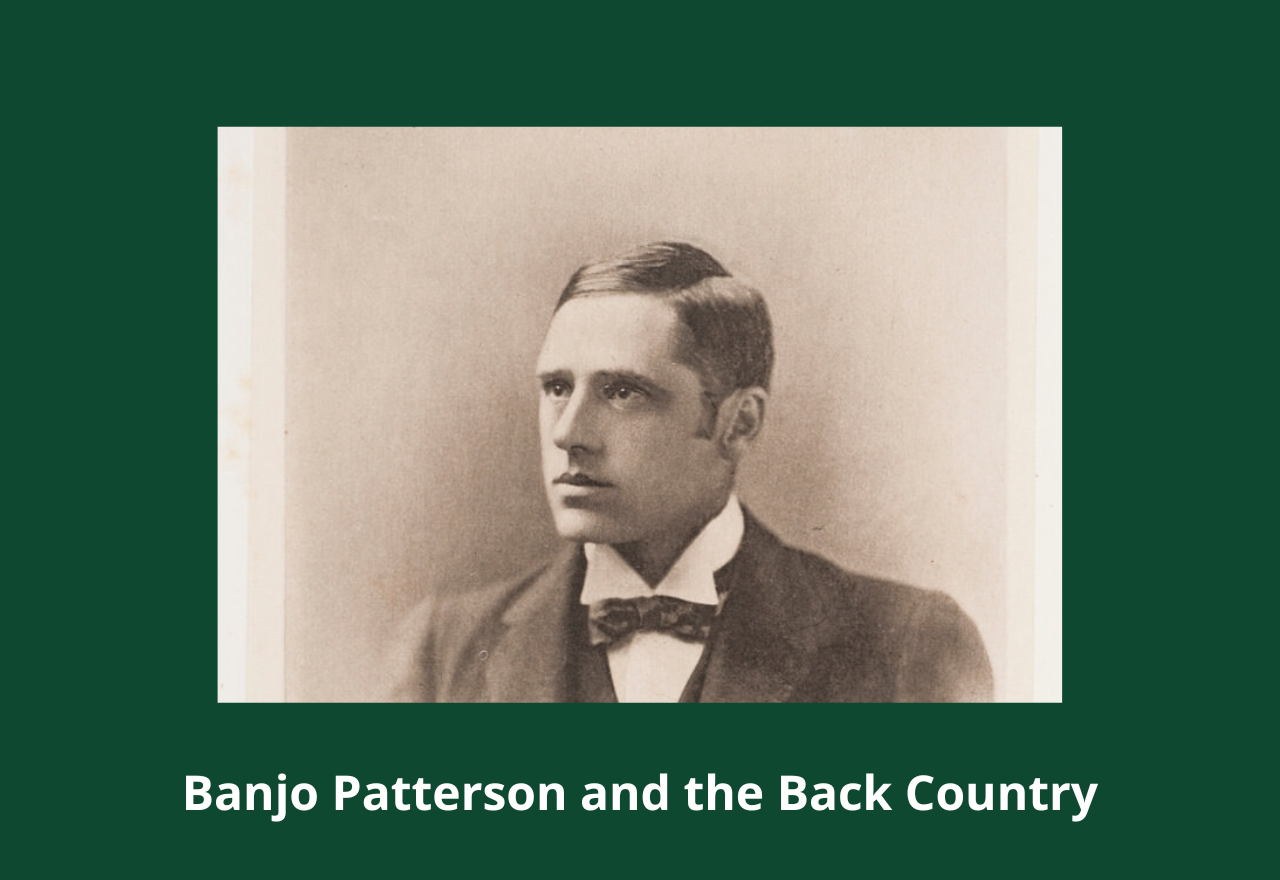
Andrew Barton ‘Banjo’ Paterson (1864 1941) (pictured bottom right) was a highly celebrated Australian bush poet, journalist, and solicitor. He romanticised life in the Australian outback, writing iconic ballads like “Waltzing Matilda” and “The Man from Snowy River”.
His career also included time as a war correspondent during the Boer War and service in World War I, cementing his place as an essential figure in Australian culture. Paterson was born near Orange but spent his childhood living in Yeoval and Yass.
As an adult he practised law in Sydney. After marrying in 1903, he and his wife settled in Woollahra, (Sydney) but in 1908, he moved back to the country to manage a property at Coodra Vale, near Wee Jasper, He eventually resumed his career as a journalist in Sydney and after his death in 1941 was buried in the northern suburbs.
For those of us living in and around Hay and Booligal, one of Banjo’s most famous poems has become a slogan for the region - cars and eskies across the country boast that infamous sticker “Hay, Hell and Booligal”. What is interesting is that the poet had no first-hand knowledge of the conditions of the track that ran between Hay and Booligal in 1896, when the poem first appeared in The Bulletin Magazine. Working as a lawyer in Sydney at the time, it is thought Banjo was likely influenced by the detailed accounts of country life, that were regularly published in Sydney and Melbourne newspapers, by far flung correspondents.
In fact, a 1943 article in The Riverine Grazier, stated that “we think we are right in saying that Banjo only paid Booligal one visit, and that was years after he wrote his familiar lines”. Once again, The Grazier was able to record facts for future history buffs and researchers, amongst its pages. The poet was issued a formal invitation to attend the opening of the Booligal War Memorial Hall in May 1936. He declined, explaining that he was “getting too far on in years to make the journey”. Banjo Paterson cannot lay claim to the catchy title of his work, which has since spawned numerous t-shits, stickers and stubby holders.
The expression “Hay, Hell and Booligal” was apparently already a very popular figurative phrase in the Australian vernacular, used by drovers and teamsters who worked in the harsh conditions. The phrase became a popular expression to designate a journey or a place of the greatest imaginable discomfort (especially during drought or summer). Bit harsh, I thought, from the comfort of my climate controlled desk, in the year 2025! Local legend says that “Hell” refers to the One Tree Plain, the particularly isolated stretch of the stock route that lies between Hay and Booligal. In 1905 Paterson published a collection of poetry, including one piece titled “Flash Jack from Gundagai”.
The shearer Flash Jack boasts about all the places he has visited in his travels, his favourite being “Old Tom Patterson’s place” “I've shore at Burrabogie and I've shore at Toganmain I've shore at Big Willandra and out on the Coleraine But before the shearing was over I longed to get back again Shearing for old Tom Patterson on the One Tree Plain” Flash Jack is apparently a mixture of a few characters known to Banjo, but Tom Patterson actually existed. He married Jane Esplin, the widow of George Esplin, who was publican of the Tattersall’s Hotel in Lachlan Street, Hay.
Patterson hailed from Tasmania, but in 1870 took up a 300,000 acre station on the Hay Plains, called Ulonga. By all accounts Tom Patterson was a decent man. When the publicans of the nearby One Tree Hotel died from typhoid, Patterson took in their children and raised them as his own. When the legendary lone tree at the hotel burned down on New Year’s Even 1897, Tom Patterson dug up saplings from Ulonga and replanted them at the One Tree Hotel. Another of Banjo Paterson’s famous poems “Clancy of the Overflow” is also reputed to have ties to the region. It is widely claimed that a man named Thomas Michael MacNamara is the real-life inspiration for Banjo’s character, Clancy.
It is reported that Thomas Michael MacNamara was known by the nickname "Clancy" and worked at "The Overflow" station, which is mentioned in the poem. Thomas MacNamara is buried at Griffith, NSW, having passed away at the age of 94. MacNamara's family also claim another close link; his wife was the sister of Jim Troy, who is considered one of the inspirations for “The Man from Snowy River,” written by Banjo Paterson, and MacNamara himself is included in that poem as a skilled horseman (“No better horseman ever held the reins”). Thomas MacNamara and wife Theresa gave an interview to the Forbes Advocate newspaper in 1939, sharing their part in the famous chase that was the inspiration for The Man from Snowy River.
“The inclusion of “Banjo” Paterson in the New Year honours list recalls his famous poem “The Man From Snowy River”. “Clancy of the Overflow” and his wife, a sister of “The Man From Snowy River,” are living quietly in Brisbane, and on Christmas Eve “Clancy” was 90 years old. Outside the realm of poetry, “Clancy” is Mr Thomas Michael MacNamara. His wife, Theresa Mary, formerly Miss Troy, is aged 83.
She is tall, graceful, and quick-witted, and her hair is as white as the legendary beard of her big brother, Tom Troy, who commanded the horsemen in the hills at the back of Wagga 58 years ago. “I well remember the ride as if it took place yesterday,” said Mr MacNamara. “From Troy's place near Wagga, you can see the hills in the direction of Tumut. Our adventure was not down Kosciusko side, as Paterson sang. ‘Banjo’ shifted the mountain into our country to make the tale epic.
“Three fine horses broke away from Troy's place, including the £1000 colt, from Old Regret, and they joined the wild horses in the hills. “The horsemen who rode that day were Tom Troy, my cousin, Andy MacNamara, Jim Troy and myself.” Despite Mr and Mrs MacNamara’s recorded memories, Banjo Paterson told a different tale. The origin of the poem, according to Paterson himself, was an experience he had while working as a lawyer. He was asked to send a letter to a man named Thomas Gerald Clancy to request a payment. Paterson said he sent the letter to "The Overflow" station.
He received a famously laconic reply from Clancy's shearing mate: “Clancy's gone to Queensland droving, and we don't know where he are”. This single, evocative reply, seemingly written with a “thumb-nail dipped in tar,” was the catalyst for the poem, according to Paterson.